Wine labels tell you the ABV, but almost nobody does the maths at the table. I didn’t either, until I started logging what I drank and realised how much the size of the glass and the strength of the wine change the numbers.
The short answer: a standard 750ml bottle of wine at 13.5% ABV contains 10 UK units, according to the NHS. At 12% it is 9 units, and at 14.5% it is about 11. To work out any wine, multiply the volume in millilitres by the ABV and divide by 1,000.
This guide covers the formula, units for every common glass size, what the weekly guideline says and how I keep track without spoiling the pleasure of a good bottle. It is general information, not medical advice. If you have questions about your own drinking, speak to your GP.
What is a unit of alcohol?
In the UK, one unit is 10ml or 8g of pure alcohol. The NHS describes this as around the amount of alcohol the average adult can process in an hour, although that varies from person to person.
Units exist because drinks vary so much. A pint of lager, a shot of gin and a glass of Shiraz look nothing alike, but units let you compare the alcohol in each on one scale.
How do you calculate units in wine?
The NHS formula is simple:
ABV (%) × volume (ml) ÷ 1,000 = units
So a 750ml bottle of 13.5% wine is 13.5 × 750 ÷ 1,000 = 10.1, which the NHS rounds to 10 units. You will find the ABV printed on every wine label, often written as “% vol”.
How many units are in a bottle of wine?
Here is a bottle of 750ml at common strengths, calculated with the NHS formula:
| Wine strength (ABV) | Typical styles | Units in a 750ml bottle |
|---|---|---|
| 9% | Some off dry German Riesling | 6.8 |
| 11% | Lighter whites, many sparkling wines | 8.3 |
| 12% | Many everyday whites and rosés | 9 |
| 13.5% | Most reds and fuller whites | 10.1 |
| 14.5% | Riper reds such as some Zinfandel or Shiraz | 10.9 |
| 15% | The ripest reds | 11.3 |
The typical styles are a rough guide. Always read the label, because the same grape can vary by two or three percentage points depending on where and how it was made.
Other bottle sizes scale the same way. A half bottle (375ml) at 13.5% is about 5 units, and a magnum (1.5 litres) at 13.5% is about 20.
How many units are in a glass of wine?
The NHS unit table uses 12% wine as its example:
- Small glass (125ml): 1.5 units
- Standard glass (175ml): 2.1 units
- Large glass (250ml): 3 units
At 13.5%, those become about 1.7, 2.4 and 3.4 units. Pub and restaurant glasses in the UK come in these three sizes, since wine by the glass must be sold in 125ml, 175ml or multiples of either. A large glass is a third of a bottle. For the full pour maths, see my guide to how many glasses are in a bottle of wine.
Home pours are the hidden variable. Modern wine glasses are big, and it is easy to pour 250ml while thinking you poured a standard glass.
What is the weekly guideline for alcohol?
The NHS advice is clear. To keep health risks low, men and women are advised not to drink more than 14 units a week on a regular basis. If you regularly drink that much, spread it over three or more days, and if you want to cut down, have several drink-free days each week.
The NHS calls this “low risk” rather than “safe”, because it says there is no safe drinking level. It also advises that if you are pregnant or think you could become pregnant, the safest approach is not to drink alcohol at all.
In wine terms, 14 units is about:
- 10 small glasses of lower strength wine, which is the NHS’s own example
- just under 7 standard 175ml glasses of 12% wine
- fewer than 5 large 250ml glasses of 12% wine
- about a bottle and a third of 13.5% wine
Is a UK unit the same as a standard drink elsewhere?
No, and this trips up travellers and anyone reading American articles. The US National Institute on Alcohol Abuse and Alcoholism defines a standard drink as about 14g of pure alcohol, roughly a 5 ounce glass of 12% wine. A UK unit is 8g. So one American standard drink is close to 1.75 UK units.
How can you keep track of units without spoiling the wine?
Here is what works for me:
- Read the ABV before you pour. A 12% Riesling and a 15% Zinfandel are very different evenings.
- Choose smaller pours. Ask for 125ml in restaurants. At home, use a smaller glass or pour a measured amount.
- Drink better, not more. One great bottle shared with friends beats two forgettable ones.
- Look for lighter styles. My guide to low calorie and low alcohol wines has bottles that taste good at lower strength.
- Mind the calories too. Alcohol brings calories with it. My wine calories calculator and the guide to calories in a glass of wine show how they add up.
- Keep a record. Writing down what you drink is the easiest way to notice patterns.
How does Sommo help you drink more mindfully?
I built Sommo for people who love wine and want to get more from every glass. That includes drinking with intention.
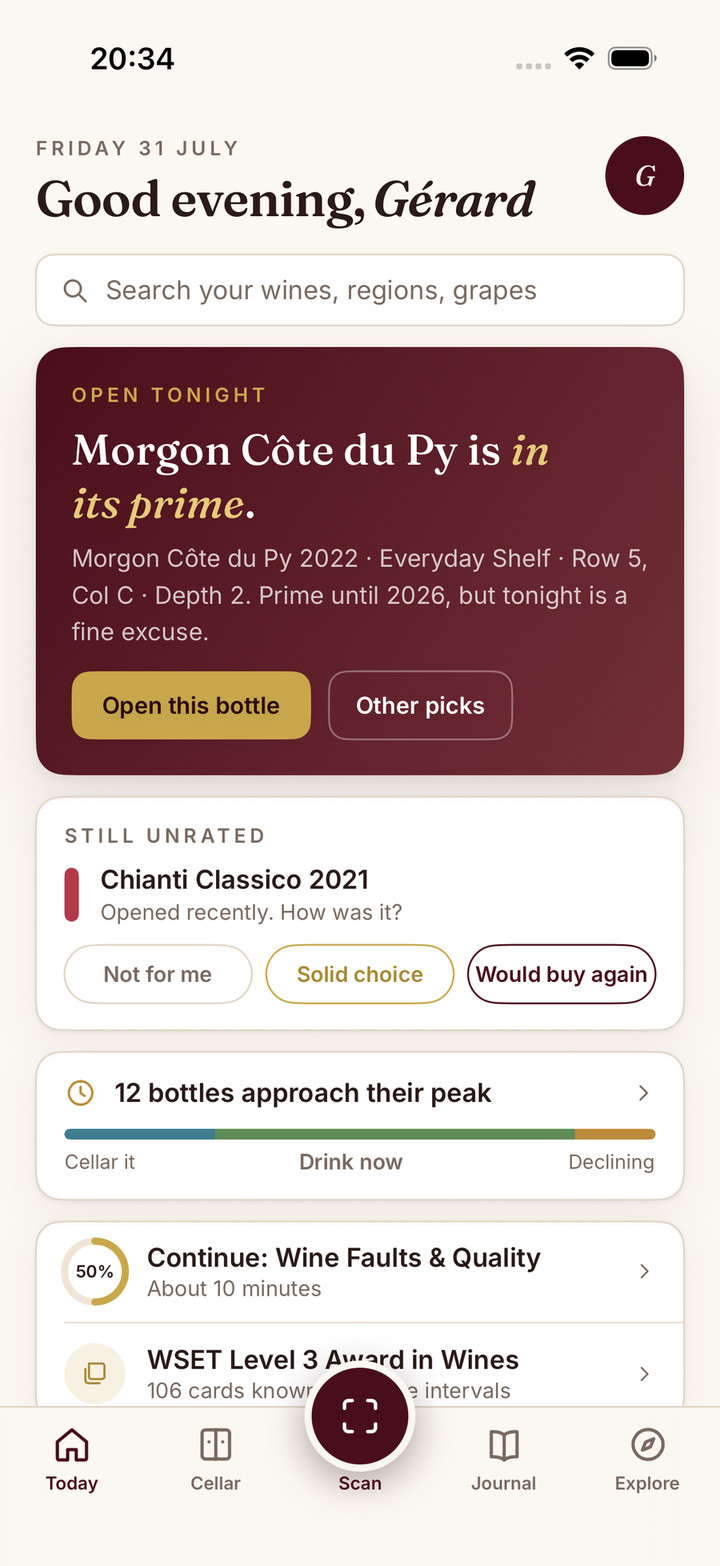
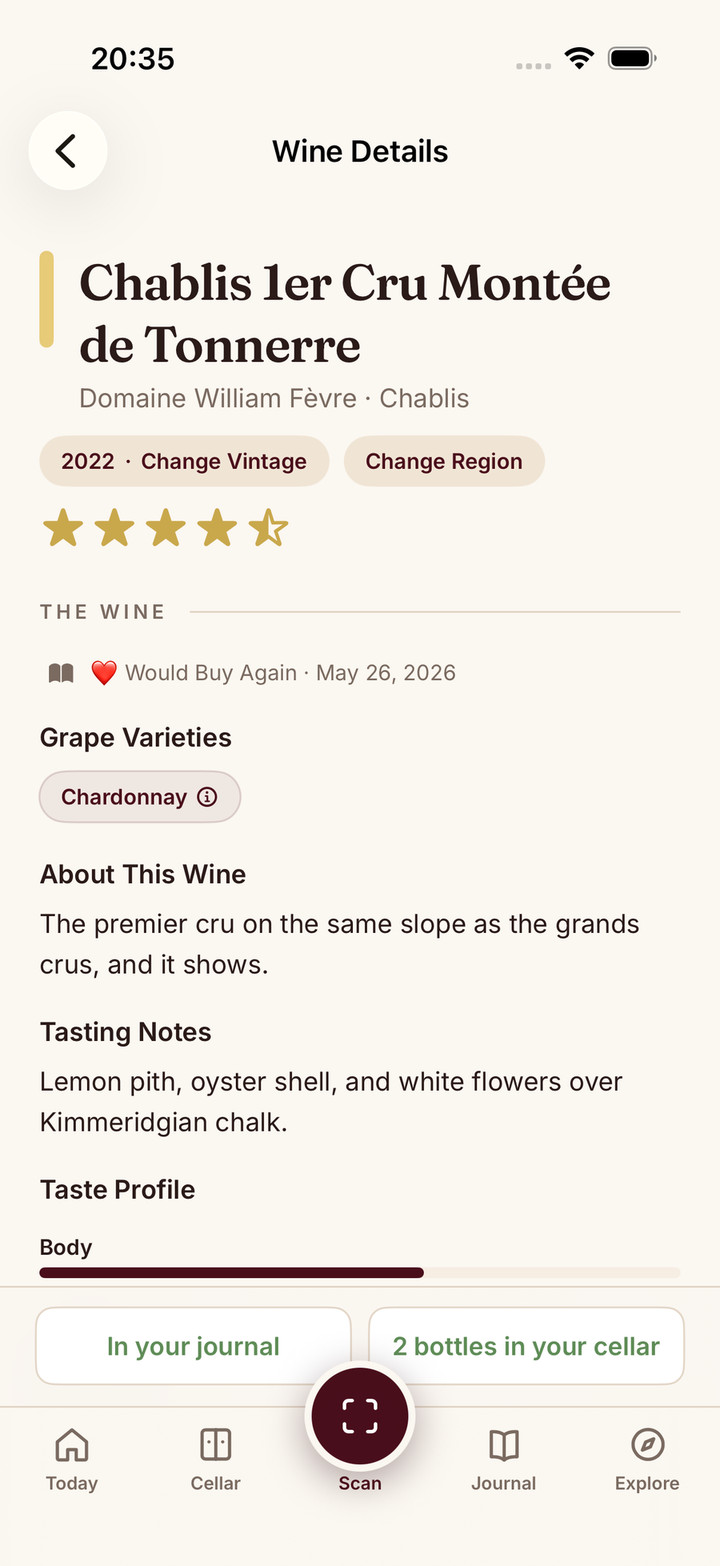
Know what is in the bottle. Scan any label and Sommo builds the wine’s profile, including body, acidity, tannin and alcohol percentage, plus pairings and serving temperature. A label scan takes about 10 seconds.
Log every glass in your journal. Rate a wine when you drink it and it goes into your wine journal, so you can look back at what you drank and when. A scan saves the wine; your rating logs the glass. On iPhone, re-scanning a wine shows your past verdict and the date, so you remember whether it was worth it.
Pick bottles worth drinking. Sommo gives you picks shaped by the wines you’ve rated, and with Premium, Ask Sommo picks from the bottles you own, so fewer bottles are disappointments and more are worth savouring.
It all runs on proprietary wine-tuned AI grounded in a hand-maintained wine library. The free tier gives you 5 lifetime AI scans per device, shared across label, menu and shelf scans, plus the journal and 30 days of journal history. Premium unlocks unlimited scans, lifetime history, Taste DNA, AI tasting feedback and Tasting Mode for $4.99 a month or $29.99 a year in the US; prices vary by country and store. Sommo runs on iPhone, iPad, Android, HarmonyOS and the web.
Download Sommo and start your wine journal.
The bottom line
A 750ml bottle of 13.5% wine contains 10 UK units, and a 12% bottle contains 9. For any wine, multiply ABV by millilitres and divide by 1,000. The NHS advises no more than 14 units a week on a regular basis, spread over three or more days. Read the label, keep pours honest, and spend your units on wines you will remember.