WSET Spirits: Levels 1 to 3 Explained, and Who They Suit
What the WSET spirits qualifications cover at Levels 1, 2 and 3: exam formats, tasting technique, indicative costs, and whether to study wines or spirits first.
One awarding body, two ladders
The Wine & Spirit Education Trust has spirits in its name for a reason: alongside the famous wines ladder it runs a parallel spirits track, with Level 1, Level 2, and Level 3 Awards in Spirits taught through the same global network of approved providers. The structure will feel familiar to anyone who has read what WSET is: short taught courses, a fixed syllabus, an invigilated exam, and a certificate and pin at the end. What changes is the subject. Vineyards give way to stills, and the Systematic Approach to Tasting is adapted for drinks that arrive at 40% alcohol and above.
The ladders are independent. Nothing on the spirits side requires a wines qualification, and nothing on the wines side, up to Level 3, requires spirits. The one place they meet is the Level 4 Diploma, which sits on the wines ladder only; there is no spirits equivalent.
What each level covers
Level 1 Award in Spirits is the one day introduction. It covers how spirits are made in outline, the principal categories and styles, and the basics of service and cocktails. The exam is a short multiple choice paper, commonly around 30 questions in 45 minutes, sat at the end of the course day. It suits complete beginners and new bar staff who need the map before the detail.
Level 2 Award in Spirits is the qualification most of the trade actually holds. It works through production properly: fermentation, the difference between pot and column distillation, maturation, and blending, then applies that framework across the world’s categories, from Scotch and Bourbon through Cognac and Armagnac, rum, Tequila and mezcal, gin, vodka, and liqueurs. The exam is a multiple choice paper, commonly around 50 questions in an hour. Tastings run throughout the course, but the tasting is not examined.
Level 3 Award in Spirits is the expert level and the newest of the three. It goes deep on production science, asks you to explain cause and effect rather than recognise facts, and adds an assessed tasting using WSET’s systematic approach adapted for spirits: nosing at full strength and diluted, and structured conclusions about quality and style. The exam pairs a theory paper, which includes written answers rather than multiple choice alone, with a blind tasting. Check the current WSET specification for exact question counts and timings, which are the awarding body’s to change.
WSET also runs smaller ladders in sake and in beer; they follow the same pattern of short taught levels, and are worth knowing about if your bar programme is broader than spirits.
How the spirits track differs from wines
Three differences matter in practice. First, the knowledge axis rotates: wines study is dominated by geography, because place drives style, while spirits study is dominated by process, because the still, the mash bill, and the cask drive style far more than the postcode. Second, tasting technique changes: high strength means smaller samples, careful nosing, deliberate dilution, and a shorter palate, and the adapted tasting approach reflects that. Third, the ladder is shorter: with no Diploma above it, Level 3 in Spirits is a destination rather than a staging post, which changes the calculation about how far to climb.
Wines or spirits first?
Take the track your work actually needs, because employers read the specific award, not the brand alone. Bartenders, bar managers, brand ambassadors, and distillery and distributor staff get more immediate value from spirits; retailers, sommeliers, importers, and most enthusiasts get more from wines, and the wines comparison pages cover the alternatives on that side. If you genuinely need both, the common sequence is to finish one track to Level 2 before starting the other, so the exam technique from the first purchase carries into the second. People aiming at restaurant floors should also weigh the sommelier route, which examines service and blind tasting in ways neither WSET track does.
Indicative costs
Prices are set by providers, not centrally, so treat these as rough shapes rather than quotes: Level 1 in Spirits typically sits in the low hundreds, Level 2 in the several hundreds, and Level 3 around a thousand or more, with big variation by country and by whether the course is in person or online. The pattern and its drivers are the same as on the wines side, which the WSET costs breakdown covers in detail: the fee bundles tuition, materials, samples, and one exam sitting, and the sample budget is a real cost at spirits strength too.
Where Sommo fits
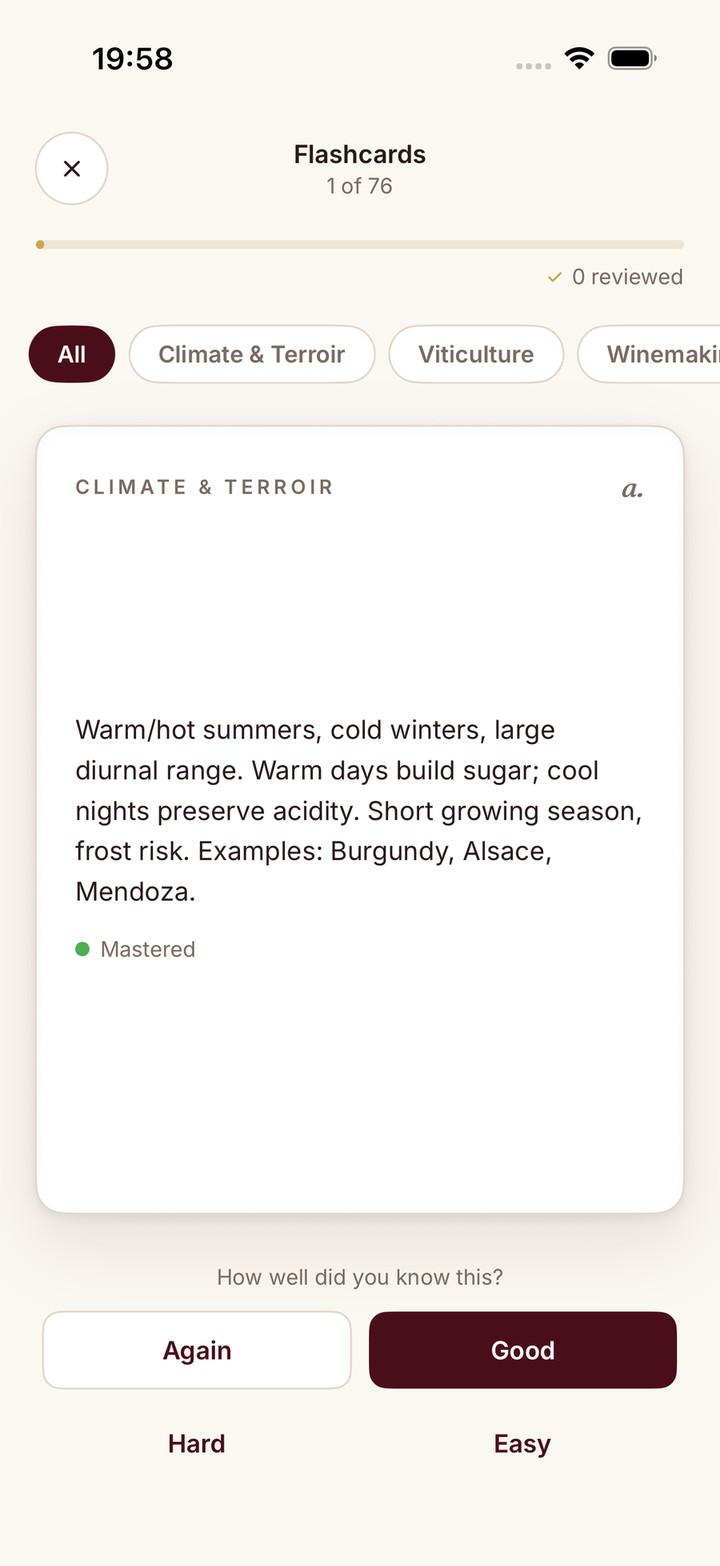
Plainly: Sommo’s WSET practice tools cover the wines qualifications today. The mock tests, flashcards, and cheatsheets span wines Level 1 to Level 4, and there is no spirits question bank on the site. For dual-track students the wines tools still earn their place, because WSET’s multiple choice house style, timed papers, distractors built from near misses, cause and effect phrasing, is consistent across both ladders, and sitting a free WSET Level 2 mock test is the cheapest possible rehearsal for exam day nerves in either subject.
Common questions
No. As of 2026 the spirits ladder stops at Level 3, which WSET positions as its expert level qualification for the category. The Level 4 Diploma exists only on the wines side, although it does include some fortified wine and spirits-adjacent content. If you want postgraduate depth in spirits specifically, Level 3 in Spirits plus industry experience is the current ceiling.
No. The wines and spirits tracks are separate ladders with no shared prerequisite, so you can start Level 1 or Level 2 in Spirits with no wine study at all. The only overlap worth planning around is study skill: if you already hold a WSET wines level, you know how the multiple choice papers are written and how the systematic tasting method works, and both carry across.
Only at Level 3, where spirits are assessed using WSET's systematic approach adapted for the category. At Levels 1 and 2 you taste spirits in class as part of the course, but the exams themselves are multiple choice theory papers with no assessed tasting. That mirrors the wines side, where tasting also enters the exam at Level 3.
For most working bartenders, Level 2 in Spirits is the sweet spot: broad category coverage, production knowledge that makes back bar conversations credible, and a qualification distributors and brand teams recognise. Level 1 suits new starters, and Level 3 makes sense for brand ambassadors, buyers, and educators who need depth and an examined palate rather than a broad survey.
Not yet. Sommo's WSET practice tools, the mock tests, flashcards, and cheatsheets, cover the wines qualifications at Levels 1 to 4 today, and there is no spirits question bank on the site. If you are studying both tracks, the wines mock tests are still useful for the shared exam technique: timed multiple choice papers written to the same house style.