Best WSET Level 1 Books and Workbooks: What to Buy
The official course material is enough for WSET Level 1. See the only companion books worth buying, what to skip, and how to turn reading into exam recall.
The correct WSET Level 1 reading list is short. Use the official course material first, then add one visual companion only if it helps you see the difference between grapes and styles. Level 1 is an introduction, not a library-building exercise. A second textbook often creates more reading while leaving the actual exam skill, quick recall, untouched.
What the Exam Actually Requires
The official WSET Level 1 qualification page describes a beginner course with a minimum six hours of study and a closed-book paper of 30 multiple-choice questions. It covers the main wine types and styles, common grapes, storage and service, food pairing and the Level 1 tasting framework.
That scope should control what you buy. You do not need producer histories, obscure appellations or advanced winemaking chemistry. You need to recognise the main grapes, connect climate to style, handle a bottle correctly and predict how food changes the way wine tastes.
Start with the free Level 1 study pack so the official specification, cheatsheet, flashcards and mock sit in one order.
Buy First: The Material from Your Provider
Your Approved Programme Provider supplies the official course material. Treat it as the syllabus, not as one opinion among several. Every companion book on this page has a different job: making the official material easier to picture, explaining a point in friendlier language or giving you a wider reference for later.
Read the supplied material once for the shape of the course. Read it a second time with the specification beside you, marking each learning outcome you can explain without looking. Do not measure progress in pages finished. Measure it in questions you can answer cold.
Best Visual Companion: Wine Folly, Magnum Edition
Wine Folly is useful at Level 1 because it turns structure into pictures. Acidity, body, tannin, sweetness, serving temperature and food pairing appear as comparable scales rather than paragraphs. That is exactly the mental model a beginner needs.
Its weakness is the same as its strength: simplification. Treat the charts as memory aids, not as the wording of the exam. If a chart and the current official material differ, follow WSET.
Best Book to Keep: The World Atlas of Wine
The World Atlas of Wine is more book than Level 1 needs, but it is the companion most likely to remain useful after the exam. Maps explain why a cool region produces a different style from a warm one, and geography makes later study easier.
Do not try to read it cover to cover. At Level 1, use it to locate the regions mentioned in class and to connect the principal grapes with their best-known homes. The Level 1 hub keeps the exam-sized version of that knowledge separate.
Best Beginner Narrative: The Wine Bible
The Wine Bible is a readable way to understand why people care about the subject. It gives grapes and regions a story, which can make isolated facts easier to retain. It is not a workbook and it is not organised around the Level 1 paper, so use it for curiosity rather than for coverage.
If the official guide feels dry, read the matching chapter here after class, then return to the official learning outcome and explain it in your own words.
What Not to Buy
Avoid unofficial books that promise past papers, real exam questions or guaranteed passes. WSET exams are closed book and current materials are protected. A legitimate companion should help you learn the subject without pretending to be the examining body.
Also skip advanced encyclopedias for now. The Oxford Companion to Wine is excellent, but looking up every term at that depth is a poor use of a six-hour introductory course. Buy it when questions become more specialised.
Turn Reading into a Pass
After each short reading block, close the book and retrieve the answer. Name the principal grapes. Explain why acidity helps with fatty food. State how sweetness in a dish changes a dry wine. That is the transition from recognition to recall.
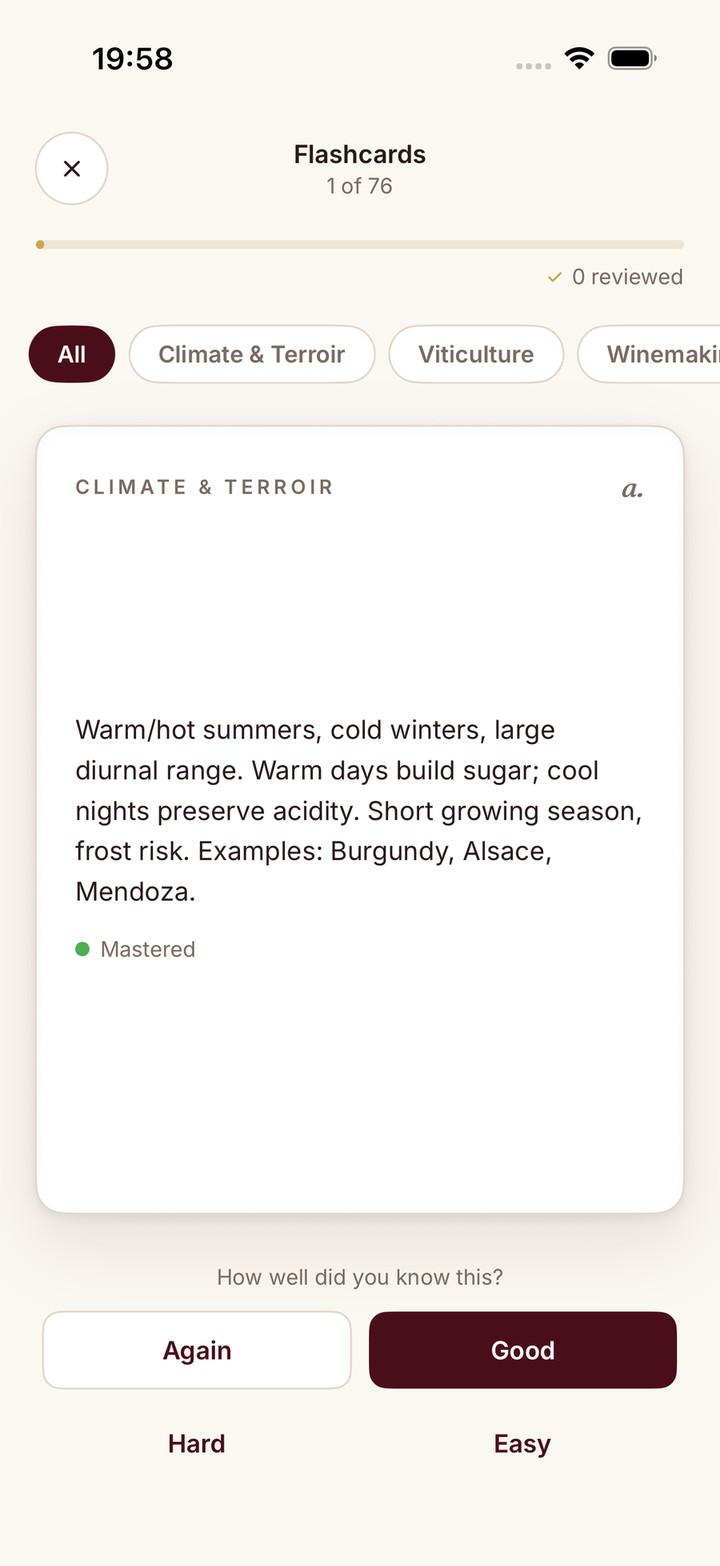
Use the Level 1 flashcards for daily retrieval, the Level 1 cheatsheet for the final overview and the 30-question mock exam under the real time limit. Books build the map. Practice proves you can navigate it.
Download Sommo to keep the reading, flashcards and bottle notes in one study routine.