WSET Level 1 Study Guide: Award in Wines
Start WSET Level 1 with a clear study route, wine-style explanations, food-pairing practice, flashcards and an independent quiz alongside your official course.
- Qualification
- Award in Wines
- Study Time
- ~6 hours
- Exam Format
- 30 MCQs
- Pass Mark
- 70%
Understand
Keep the core ideas close, then follow the connections between grapes, places and styles.
View CheatsheetRecall
Cover the answer, retrieve it from memory, and revisit anything that needs another look.
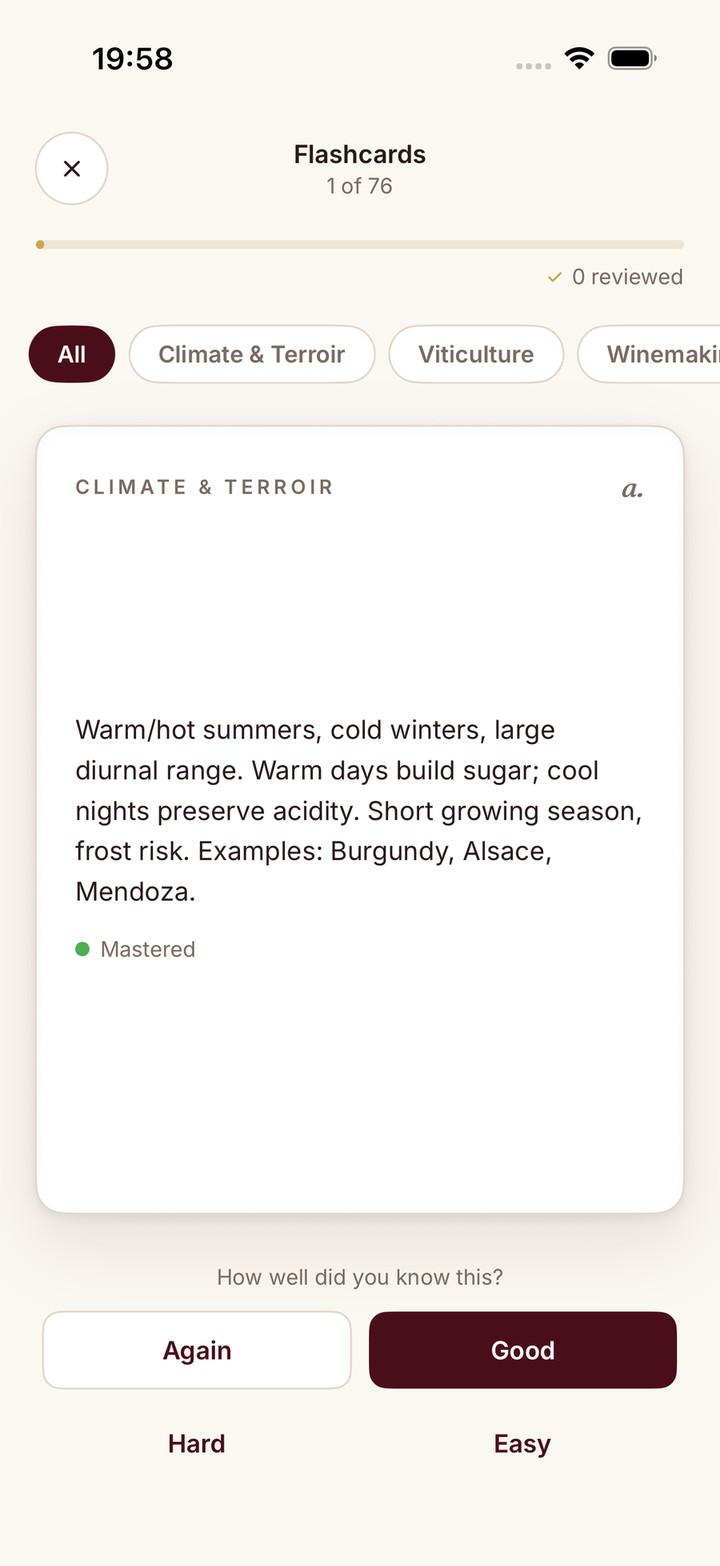
Study FlashcardsPractise
Put your knowledge to work and use the explanations to plan your next study session.
Take the Mock TestWhat Is WSET Level 1?
The WSET Level 1 Award in Wines is the entry point into the world’s most recognised wine qualification framework. Designed for absolute beginners, it covers the main types and styles of wine, the principal grape varieties, basic winemaking, storage and service, and food pairing. It is ideal for hospitality professionals, curious consumers, and anyone exploring whether a career in wine is right for them.
Use the official Level 1 qualification page and specification to check requirements with your provider. Sommo is independent of WSET and does not award the qualification.
Your First Three Study Sessions
Start with styles: describe whether a wine is still, sparkling or fortified, then separate sweetness, acidity and body. In the next session, connect the grape examples in your official study pack to those descriptions. Finish with storage, service and food-pairing principles, checking that you can explain a choice rather than only remember a name.
The free Level 1 resource route puts the tools in a useful order. Read the cheatsheet after your course lesson, attempt a few flashcards without looking and keep a short list of the ideas you need to ask about in class. Our quizzes contain original practice questions, not official WSET examination papers.
Syllabus Overview
The Level 1 syllabus covers five core areas:
- Types and styles of wine: still (dry to sweet, light to full-bodied), sparkling (Champagne, Prosecco, Cava), and fortified (Port, Sherry)
- Principal grape varieties: four white (Chardonnay, Sauvignon Blanc, Pinot Grigio, Riesling) and four black (Cabernet Sauvignon, Merlot, Pinot Noir, Syrah/Shiraz), as listed in the official specification. The additional examples below provide wider context rather than expanding that principal-grape list.
- How wine is made: fermentation basics, red vs. white production, oak ageing, sparkling and fortified methods
- Storage and service: ideal temperatures (6-18°C range), common wine faults (cork taint, oxidation)
- Food and wine pairing: match weight, consider acidity, respect sweetness, work with tannin
White grape varieties in detail
- Chardonnay: most versatile white grape. Lean and citrusy in cool climates (Chablis), tropical and buttery when oaked (Napa Valley, Australia). Know oaked vs. unoaked styles.
- Sauvignon Blanc: intensely aromatic with grassy, gooseberry, lime notes. Loire Valley (flinty, mineral) vs. Marlborough (explosive tropical). Almost always unoaked, high acidity.
- Pinot Grigio: light-bodied, easy-drinking with lemon and apple notes. Northern Italy is the benchmark style.
- Riesling: high acidity, lime, peach, green apple aromas. Can be dry or sweet. Develops a petrol note with age. Germany and Alsace are key regions.
- Muscat: the most obviously grapey wine. Fresh grape, orange blossom, rose petal aromas. Often sweet and lightly sparkling (Moscato d’Asti).
Red grape varieties in detail
- Cabernet Sauvignon: full-bodied, firm tannins, blackcurrant, cedar, green pepper. Bordeaux Left Bank and Napa Valley. Excellent ageing potential.
- Merlot: softer and rounder than Cabernet. Medium to full body, plum, chocolate flavours. Bordeaux Right Bank and Chile.
- Pinot Noir: light to medium body, silky tannins, cherry, strawberry, earthy complexity. Burgundy, Oregon, Central Otago. Also used in Champagne.
- Syrah/Shiraz: bold, full-bodied, blackberry, black pepper, spice. Peppery and structured in the Northern Rhone; richer and fruit-forward in Australia’s Barossa Valley.
- Tempranillo: Spain’s signature grape. Medium to full body, cherry, plum, leather, vanilla. Rioja (American oak ageing) and Ribera del Duero.
Storage, service temperatures, and wine faults
Storage: Keep bottles at 10-15°C, away from light and vibration, on their side if cork-sealed.
Serving temperatures:
- Sparkling: 6-10°C
- Light whites and rosés: 7-10°C
- Full-bodied whites: 10-13°C
- Light reds: 12-14°C
- Full-bodied reds: 15-18°C
Common faults:
- Cork taint (TCA): musty, wet-cardboard smell
- Oxidation: flat, stale taste, brownish colour
Food and wine pairing principles
- Match weight: light wine with light food, full-bodied wine with rich food
- Acidity: high-acid wines (Sauvignon Blanc) cut through fatty and oily dishes
- Sweetness: wine should be at least as sweet as the food
- Tannin: pairs well with protein and fat (red wine + steak), clashes with oily fish
- Flavour bridges: herbaceous wine with herb-forward dishes, spicy Syrah with peppery lamb
Exam Day
The exam is a closed-book, 30-question multiple-choice test with 45 minutes to complete. You need 21/30 (70%) to pass. There is no tasting component. Expect heavy emphasis on grape varieties, several questions on food pairing, and a handful on storage, service, and winemaking.
For a legal no-cost revision route, use the free WSET Level 1 study resources: current official specification, cheatsheet, flashcards, topic quizzes, a tasting guide and a full timed mock in one order.
Is There a Tasting Component at Level 1?
Wine tasting is part of the course, but it is not assessed in the Level 1 examination. The official specification includes recommended tasting samples and a basic Systematic Approach to Tasting so that grape, style and food-pairing ideas connect to real wine. Your result still comes entirely from the 30 multiple-choice questions.
That distinction matters. Do not spend revision time trying to identify wines blind or memorising poetic aromas. Use tasting to make theory stick:
- Compare a light Pinot Grigio with a fuller Chardonnay.
- Compare aromatic Sauvignon Blanc with a less aromatic white.
- Compare light Pinot Noir with fuller Cabernet Sauvignon or Syrah.
- Taste one dry and one sweet wine, then test a small sweet or salty food beside them.
The free wine tasting-notes guide keeps observations in a repeatable order. It is a learning tool, not an exam simulation. Use the independent Level 1 practice quiz to identify knowledge gaps. Its practice question count may differ from the official 30-question, 45-minute examination.
Common confusion comes from Levels 2 and 3. Level 2 also teaches SAT tasting without a tasting examination. Level 3 is where a blind two-wine tasting becomes formally assessed. The WSET Level 1 versus Level 2 guide explains the progression.
Study Tips
- Use adaptive practice daily: Sommo’s AI-powered practice sessions select questions based on your weak areas, so every session targets what you need most
- Grape varieties first: the most heavily tested topic. Use flashcards for each grape’s body, aromas, and key regions
- Temperature ladder: memorise from coldest (sparkling) to least chilled (full-bodied reds)
- Pairing logic: internalise the principles rather than memorising specific pairings
- Don’t neglect wine faults and winemaking: easy marks once reviewed
- Check your AI study plan: Sommo generates a personalised readiness score and focus areas based on your performance
- Practice tests: review every question (even correct ones) and aim for 80%+ before exam day
What Comes After Level 1
If you want broader study after Level 1, explore the Level 2 learning route. You can also continue building confidence through ordinary tasting, reading and service practice without immediately booking another qualification. Speak to your provider about the best next step for your knowledge and aims.