Wachau Wine Region Guide: Austria's Most Dramatic Vineyard Landscape
Explore the Wachau, a UNESCO World Heritage wine region along the Danube in Austria. Discover its unique classification system, world-class Grüner Veltliner and Riesling, and terraced vineyards.
Key Grapes
Climate
Continental climate moderated by the Danube River, with warm days and cool nights. Steep south-facing terraces maximise sun exposure on ancient gneiss and granite soils.
Notable Wines
- F.X. Pichler Unendlich Grüner Veltliner Smaragd
- Prager Achleiten Riesling Smaragd
- Hirtzberger Singerriedel Riesling Smaragd
- Knoll Vinothekfüllung Grüner Veltliner Smaragd
Highlights
- UNESCO World Heritage cultural landscape
- Unique Vinea Wachau classification: Steinfeder, Federspiel, Smaragd
- Steep terraced vineyards on ancient primary rock soils
- World-class Riesling rivalling top German examples
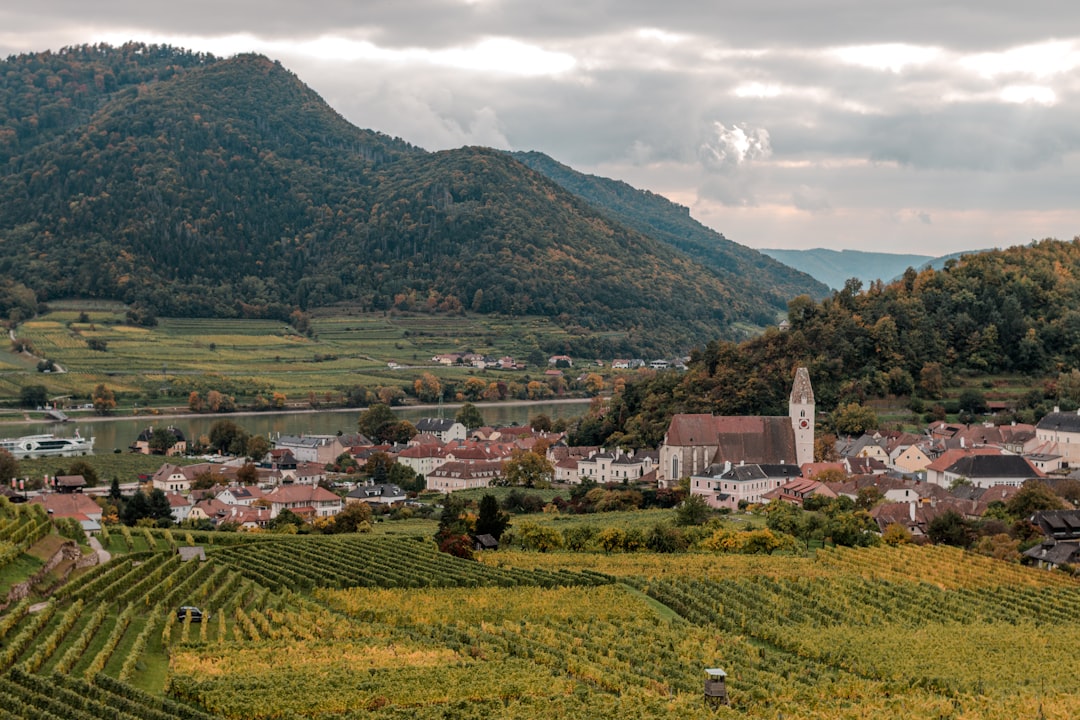
The Wachau is a UNESCO World Heritage cultural landscape: a roughly 33 km stretch of the Danube valley between Melk and Krems in Lower Austria. Vines are trained on steep terraced slopes that rise from the river, often worked by hand because machinery cannot safely climb the grades. The combination of medieval villages, monastery towers, and ribbon-like vineyards makes this one of the world’s most beautiful wine landscapes, and the bottle rewards match the view. Grüner Veltliner and Riesling from here routinely rank among Austria’s, and the world’s, most distinctive dry whites.
The Vinea Wachau Classification
The Wachau uses a three-tier system overseen by Vinea Wachau, a growers’ association. It is unique to this region and runs parallel to, rather than replacing, broader Austrian DAC rules. Steinfeder covers the lightest, freshest wines, bottled at up to 11.5% ABV; the name refers to a local grass that grows wispy and bright green along the stone terraces. Federspiel marks a medium-bodied middle band at 11.5–12.5% ABV, named after falconry and the feathered lure used in the sport, evoking precision and lift. Smaragd begins at 12.5% ABV and upward: these are the richest, fullest wines, named for the emerald lizards that sun themselves on the vineyard walls. Smaragd is the tier most collectors chase for depth, extract, and aging potential.
Terroir and Climate
Underfoot, ancient primary rock dominates the steepest sites: gneiss and granite that force vines into stress and low yields. Loess appears on lower, gentler benches, lending a rounder, sometimes more immediately aromatic profile. The climate is continental, but the Danube tempers extremes, reflecting light and moderating temperature swings along the corridor. Extreme slopes and favourable aspect give exceptional sun exposure, so grapes ripen fully while cool nights and retained acidity keep the wines from feeling heavy. Drainage is rapid on the terraces, which concentrates flavour in small berries.
The Grapes
Grüner Veltliner and Riesling dominate serious vineyard plantings. Wachau Grüner Veltliner often reads richer and more mineral than many Kamptal counterparts: broader texture, stone fruit and white pepper, and a stony finish tied to primary rock. Riesling from the Wachau’s best crus can stand beside top German examples for precision, length, and age-worthiness, with a Danube signature of ripe citrus, smoke, and salinity. For a deeper look at Austria’s flagship variety, see our Grüner Veltliner guide.
Key Villages and Producers
The classic route threads through Spitz, Weißenkirchen, Dürnstein (with its iconic blue church of Stift Dürnstein visible from the river), and Loiben, each with named Rieden that appear on premium labels. Reference producers include Domäne Wachau (the region’s large cooperative, also a quality benchmark), F. X. Pichler, Prager, Hirtzberger, and Knoll, all names synonymous with structured Smaragd wines and site-specific bottlings that define the modern Wachau style.
Explore Wachau with Sommo
Whether you are decoding Steinfeder on a wine list or comparing two Smaragd Rieslings from neighbouring terraces, Sommo helps you learn in context: scan labels, track what you taste, and connect Austrian geography to what’s in the glass. Continue along the Danube corridor with our Kamptal region guide to see how Austria’s other great white-wine valleys express the same grapes on different soils.
Photo by Roman Vasylovskyi on Unsplash
This grape features in the WSET Level 3 Cheat Sheet. Studying for your exam? Try the free Level 3 mock exam.