Champagne Wine Region Guide
Discover Champagne, the only region that produces true Champagne. Learn about the traditional method, famous houses, and what makes these bubbles special.
Key Grapes
Climate
Cool continental climate at the northern limit of viticulture, creating high-acid grapes perfect for sparkling wine
Notable Wines
- Dom Perignon
- Krug
- Veuve Clicquot
- Bollinger
Highlights
- Only region legally allowed to call wines Champagne
- Traditional method (methode champenoise) originated here
- Famous houses dating back centuries
- Complex blending of three grape varieties
The Home of Celebration
Champagne holds a unique place in wine - the only sparkling wine that can legally bear this name must come from this small region in northeastern France. For centuries, Champagne has marked life’s greatest moments.
The Traditional Method
What makes Champagne special is the methode champenoise:
- Base Wine: Still wine is made from Chardonnay, Pinot Noir, and/or Pinot Meunier
- Blending: The chef de cave blends wines from different vineyards and vintages
- Second Fermentation: Wine is bottled with yeast and sugar, creating bubbles
- Aging: Wines age on lees, developing complexity (minimum 15 months, often years)
- Riddling & Disgorgement: Yeast is removed, dosage is added
Champagne Styles
Non-Vintage (NV)
The house signature, blended for consistency across years.
Vintage
Made from a single exceptional year, showing the character of that vintage.
Blanc de Blancs
100% Chardonnay, elegant and mineral-driven.
Blanc de Noirs
Made from red grapes (Pinot Noir/Meunier), richer and more structured.
Rose
Pink Champagne, made by adding red wine or skin contact.
Famous Houses vs. Grower Champagnes
Large houses (Moet, Veuve Clicquot, Dom Perignon) offer consistency, while smaller grower producers offer unique terroir expression.
Enjoy Champagne with Sommo
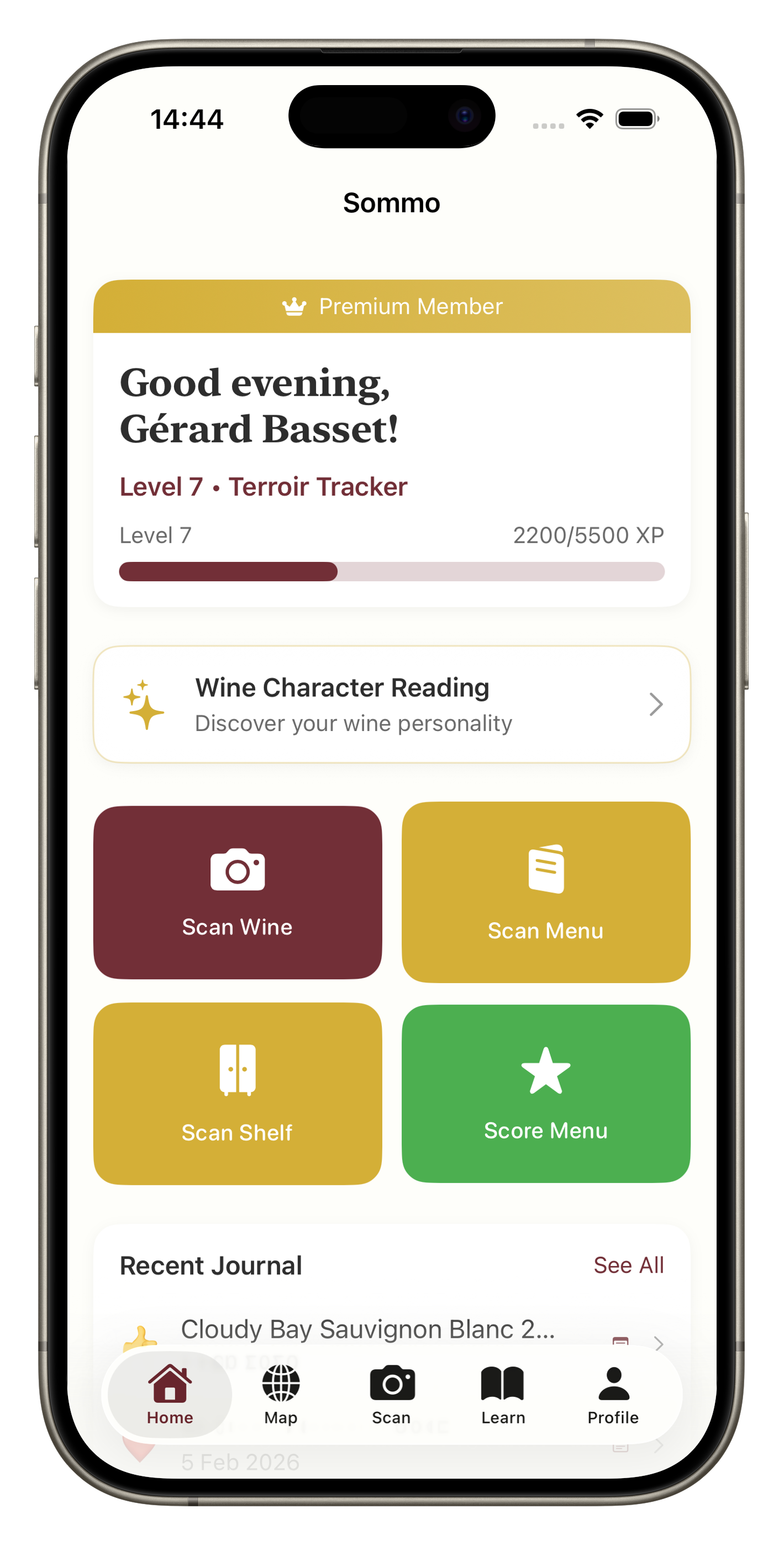
Scan any Champagne with Sommo to learn about the house, style, and ideal occasions for enjoying your bottle.
This grape features in the WSET Level 3 Cheat Sheet. Studying for your exam? Try the free Level 3 mock exam.