Alsace Wine Region Guide
Discover Alsace, France's aromatic white wine paradise. Learn about Grand Cru vineyards, Riesling, Gewurztraminer, and its Germanic winemaking tradition.
Key Grapes
Climate
Semi-continental climate sheltered by the Vosges Mountains, creating one of France's driest and sunniest vineyard areas
Notable Wines
- Trimbach Clos Sainte Hune
- Zind-Humbrecht
- Hugel Jubilee
- Domaine Weinbach
Highlights
- 51 Grand Cru vineyards producing France's finest aromatic whites
- Unique Germanic influence in winemaking and grape varieties
- Paradise for aromatic white varieties: Riesling, Gewurztraminer, Pinot Gris, Muscat
- Single-varietal tradition unique among French wine regions
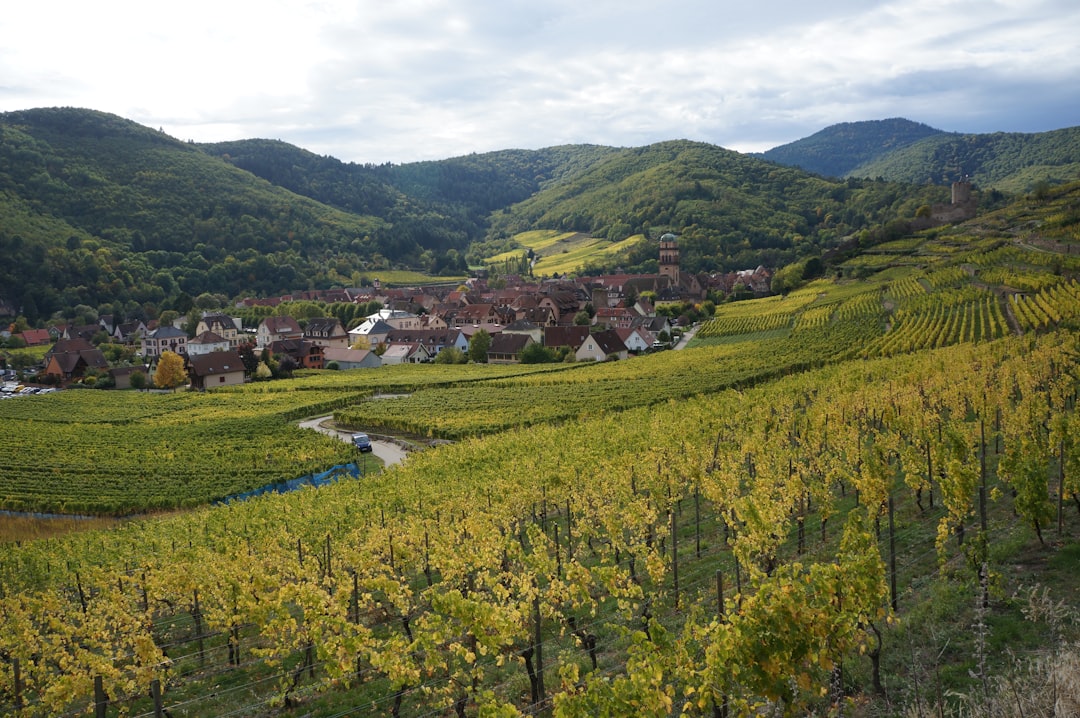
Alsace occupies a unique place in the French wine landscape. Nestled in the northeastern corner of France between the Vosges Mountains and the Rhine River, this narrow strip of vineyards produces some of the world’s finest aromatic white wines in a style found nowhere else in France. With its half-timbered villages, flower-lined streets, and steeply terraced hillside vineyards, Alsace looks and feels more Germanic than French – and its wines reflect that dual heritage, combining German grape varieties with French winemaking philosophy and a fierce devotion to terroir.
A Region Between Two Worlds
Alsace has changed hands between France and Germany multiple times over the centuries, and this contested history is written into every aspect of its wine culture. The grape varieties – Riesling, Gewurztraminer, Pinot Gris, Muscat, Sylvaner – are the same as those found across the Rhine in Germany. The tall, slender flute bottle is distinctly Germanic. Yet the winemaking approach is thoroughly French: wines are fermented dry as a default (unlike the sweeter German tradition), and the emphasis on terroir expression over varietal character aligns with broader French philosophy.
The result is a wine region unlike any other. Alsace is the only major French wine region where single-varietal wines are the norm and the grape name appears prominently on the label. This makes Alsace unusually accessible for wine newcomers, even as its finest Grand Cru wines demand the attention and study of the most dedicated connoisseurs.
The Noble Grapes of Alsace
Alsace recognizes four “noble” grape varieties permitted in Grand Cru wines:
Riesling
The king of Alsace grapes and arguably the variety best suited to expressing the region’s diverse terroirs. Alsatian Riesling is typically fermented bone-dry, producing wines of steely precision, racy acidity, and mineral depth, with flavors of citrus, white peach, and petrol that develop extraordinary complexity with age. The finest Grand Cru Rieslings rank among the world’s greatest white wines and can age gracefully for decades.
Gewurztraminer
Alsace’s most immediately recognizable grape, producing richly aromatic wines with intoxicating perfume of lychee, rose petal, ginger, and Turkish delight. These full-bodied wines are often slightly off-dry, with low acidity and exotic spice that make them one of the world’s best matches for Asian cuisine and bold flavors.
Pinot Gris
Producing rich, full-bodied whites with flavors of baked apple, honey, and smoke, Alsatian Pinot Gris delivers far more weight and complexity than its Italian Pinot Grigio counterpart. The finest examples approach the concentration of great white Burgundy while maintaining a distinctly Alsatian aromatic signature.
Muscat
Unlike the sweet Muscats produced elsewhere, Alsatian Muscat is typically vinified dry, creating wines that taste exactly like biting into a fresh grape – intensely aromatic, refreshing, and perfect as an aperitif. Muscat d’Alsace is made from both Muscat Blanc a Petits Grains and Muscat Ottonel.
Understanding Alsace Classifications
Grand Cru
Alsace’s 51 Grand Cru vineyards represent the finest hillside sites, each with specific geological and microclimatic characteristics. Grand Cru wines must come from a single vineyard, a single vintage, and one of the four noble grape varieties. These are Alsace’s most terroir-driven and age-worthy wines, often requiring five to ten years of cellaring to reach their full expression.
Vendange Tardive (VT)
Late-harvest wines made from noble varieties picked at elevated sugar levels. These wines range from off-dry to medium-sweet, with concentrated fruit flavors and remarkable complexity. Vendange Tardive wines showcase the ability of Alsatian grapes to achieve extraordinary ripeness while maintaining balancing acidity.
Selection de Grains Nobles (SGN)
The pinnacle of Alsatian sweet wine, made from individually selected botrytis-affected berries. These lusciously sweet, nectar-like wines are among the world’s rarest and most extraordinary dessert wines, with aging potential measured in decades.
Cremant d’Alsace
The region’s traditional-method sparkling wine, primarily made from Pinot Blanc, is France’s best-selling cremant and offers outstanding value as an alternative to Champagne.
The Vosges Mountain Effect
Alsace’s viticultural success hinges on a remarkable geological gift. The Vosges Mountains to the west form a natural barrier that blocks Atlantic rain systems, creating a pronounced rain shadow effect. As a result, Alsace is one of the driest and sunniest regions in all of France, with the town of Colmar receiving less annual rainfall than many Mediterranean cities. This dry, sunny climate allows grapes to ripen slowly and fully while maintaining the high acidity that gives Alsatian wines their remarkable freshness and aging potential.
The east-facing slopes along the foothills of the Vosges provide ideal vineyard sites, with elevations between 200 and 400 meters offering excellent drainage, sun exposure, and air circulation. The geological diversity is staggering: within a few kilometers, soils shift from granite to limestone, sandstone to volcanic rock, clay to marl, creating a mosaic of terroirs that produces distinctly different wines from vineyard to vineyard.
Notable Producers
- Trimbach – The benchmark for crystalline, bone-dry Alsatian Riesling, with their Clos Sainte Hune widely regarded as one of the world’s greatest white wines
- Domaine Zind-Humbrecht – Biodynamic pioneer producing profoundly expressive wines across all varieties, with particular excellence in Pinot Gris and Gewurztraminer from Grand Cru sites
- Hugel et Fils – Historic family house founded in 1639, producing consistently excellent wines across all tiers, from everyday Gentil blend to legendary Vendange Tardive bottlings
- Domaine Weinbach – Exquisite, terroir-driven wines from the Grand Cru Schlossberg and surrounding vineyards, known for exceptional purity and elegance
- Domaine Marcel Deiss – Controversial visionary who pioneered field-blend Grand Cru wines, challenging the single-varietal tradition and producing some of Alsace’s most complex bottlings
Why Alsace Matters for Wine Lovers
Alsace is one of the wine world’s best-kept secrets for quality and value. While the Grand Cru wines command appropriate prices, the broader appellation offers some of France’s finest white wines at remarkably accessible prices. For anyone who loves aromatic white wines, Alsace is an essential region to explore. The Rieslings offer an alternative perspective to German and Australian versions, the Gewurztraminers are without peer anywhere in the world, and the Pinot Gris provides a compelling contrast to both Italian Pinot Grigio and white Burgundy.
Alsace also serves as an outstanding educational region. Because wines are labeled by grape variety, it allows drinkers to learn how different varieties express themselves in different terroirs without the complexity of Burgundy’s appellation system or Bordeaux’s blending traditions.
Explore Alsace Wines with Sommo
Use the Sommo app to scan Alsace wines and discover the grape variety, Grand Cru vineyard, and producer behind each bottle. Whether you are exploring a crisp Riesling or an opulent Vendange Tardive, Sommo provides the expert guidance to deepen your appreciation of this extraordinary region.
Explore this region in the app
Track wines by region, build your tasting map, and never forget a great discovery.