01
Wine
Riesling
Look for an off-dry example with fresh acidity and lower alcohol; check the bottle's actual style.
- From
- Mosel
- Also
- Alsace
Choose wine for spicy food by chilli heat, sauce and your taste. Compare off-dry whites, rosé and light reds, with label clues for buying the right style.
Look for an off-dry example with fresh acidity and lower alcohol; check the bottle's actual style.
Off-dry Chenin Blanc combines sweetness and acidity for richer sauces; dry examples suit a different pairing.
A gently tannic Grenache rosé or light red can suit milder heat; check the alcohol level before choosing.
Off-dry Riesling is a useful starting point for chilli-hot food, but choose the bottle by its sweetness and alcohol level, not just its grape. Lower alcohol, gentle tannin and a little sweetness often make the pairing more comfortable. They do not guarantee that a hot dish will stop burning.
Start with the hottest sauce at the table, then consider richness, sweetness and whether you prefer red or white. Aromatic spice without much chilli needs a different decision from a fiery curry.
These are starting points to test with a mouthful of your food, rather than rules that every bottle must follow.
| What is on the plate? | Start here | Check before buying |
|---|---|---|
| Hot chilli, with a savoury or sour sauce | Off-dry Riesling or Chenin Blanc | Confirm some sweetness and compare the bottles’ actual alcohol levels |
| Sweet, rich sauce with moderate heat | Off-dry Chenin Blanc or Gewürztraminer | Match the sauce’s sweetness without losing freshness |
| Mild heat and a preference for red | Light Gamay, a gentle Grenache or slightly sweet Lambrusco | Look for low tannin and moderate alcohol; do not assume every Grenache is light |
| Mixed dishes, including mild chilli and fried food | Rosé or crisp sparkling wine | Taste against the hottest dish; bubbles or a dry style may not suit everyone |
For a particular dinner, try the wine pairing finder. The printable pairing chart gives you a broader reference for dishes without much chilli.
Chilli can make alcohol feel more burning and a tannic wine seem harsher. WSET’s guidance on pairing drinks with spice, checked in October 2026, recommends considering alcohol, sweetness, tannin and personal sensitivity together.
A little sweetness can soften the perception of heat. Fresh acidity can make a rich sauce feel less heavy, while fruit and floral aromas can complement ginger, coriander or warm spices. None of this means that wine chemically neutralises chilli or that there is one alcohol percentage that works for everybody.
If a dish feels hotter after a sip, try a wine with lower alcohol or more sweetness, take a smaller taste, or choose another drink. The aim is a meal you enjoy, not a test of how much heat you can tolerate.
Kabinett, Spätlese and Auslese are Prädikat categories based on grape ripeness at harvest, not a ladder of finished-wine sweetness. Spätlese can be dry. Wines of Germany explains the categories and the separate sweetness terms.
For this pairing, check three things:
A lower-alcohol, off-dry Mosel Riesling is a practical option. A dry Spätlese is a different choice even though the familiar word appears on both labels.
Riesling combines fresh acidity with citrus, floral or stone-fruit character. An off-dry example can be a useful partner for Thai curry or chilli-hot dishes. Mosel is a good place to look, but check the bottle’s sweetness and alcohol rather than treating the region as a promise.
Gewürztraminer’s floral and spice-like aromas can suit fragrant Indian or Southeast Asian food. Choose an off-dry example if you want sweetness, and check its alcohol: aromatic does not automatically mean gentle with chilli.
Chenin Blanc, including demi-sec Vouvray, is an alternative when you want sweetness and acidity with a richer sauce. Dry Chenin is a different style and may be more comfortable with mild heat.
Rosé offers a lighter-tannin option for a table with several dishes. Try it with moderately spicy grilled pork or tacos, then taste it with the sauce. Dry rosé is not automatically a substitute for an off-dry white when the chilli is intense.
Sparkling wine can be refreshing with fried food and milder spice. Compare the actual sweetness and alcohol, and remember that Extra Dry is sweeter than Brut. If bubbles feel uncomfortable with a very hot dish, choose a still wine instead.
For red wine drinkers, a light Gamay or lower-alcohol, gently tannic Grenache is a starting point with mild heat. Serve slightly chilled. Fuller Grenache can have substantial alcohol, so grape name alone is not enough.
A slightly sweet Lambrusco offers a red-wine option with bubbles. Check the sweetness description because Lambrusco also comes in dry styles. Try it with moderately spicy sausage or a sweet-savoury sauce rather than assuming it will suit every hot dish.
With green or red curry, begin with verified off-dry Riesling and adjust to the chilli and coconut sauce. Pad Thai’s sweet-sour balance may work with dry or off-dry styles depending on the recipe. Use the Thai food pairing guide for the individual dishes.
Separate fragrant spice from chilli heat. An aromatic biryani and a hot vindaloo do not need identical wines. Try off-dry Riesling, Gewürztraminer or demi-sec Vouvray with heat; gentler reds or rosé may suit milder, smoky dishes. The Indian food guide explores those differences.
Japanese curry often combines savoury richness with sweetness. Off-dry Riesling or demi-sec Vouvray is a useful starting point, with the final choice depending on the roux and added chilli. With katsu, a crisp sparkling wine is another option alongside the fried coating.
Choose for the salsa as much as the meat. Mild grilled dishes can suit rosé or a gentle red; a hotter salsa may be easier with an off-dry white. Taste the sauce before committing to a bottle for the table.
Sweet-savoury marinades, fermented flavours, chilli and Sichuan pepper can pull a pairing in different directions. Start with a verified off-dry Riesling or Chenin Blanc, then taste it with the sauce. Do not use Spätlese or Auslese alone as proof that a bottle is sweet enough.
Take a small sip with a representative mouthful, including the sauce. Ask whether the wine feels more burning, more bitter or pleasantly balanced. If you are sharing, choose for the most heat-sensitive person or offer more than one drink. There is no need to force a wine pairing with food you would rather enjoy another way.
Keep a note of the dish, chilli level, bottle and what you would change next time. A Sommo tasting journal gives you a place to remember the combinations you enjoyed.
Japanese roux has its own sweetness and texture. Use the dedicated wine with Japanese curry guide for kare raisu, katsu and hotter styles.
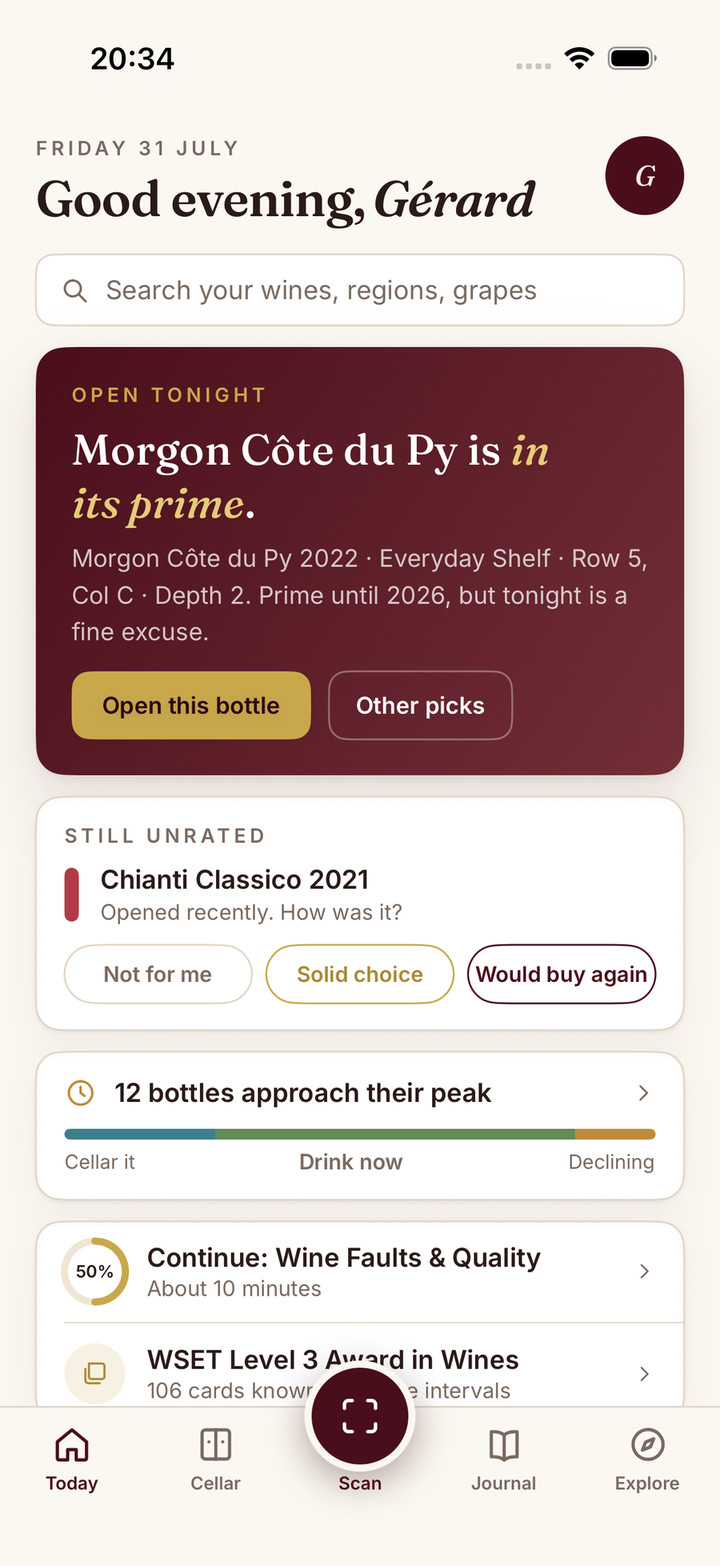
Sommo reads your cellar, checks how each bottle tastes right now, and picks the wine that fits the meal. Built by a sommelier-trained model.
 Or point your camera here