01
Wine
Pinot Noir
Earthy, forest floor notes in aged Pinot Noir are the textbook match for mushrooms' umami depth.
- From
- Burgundy
- Also
- Willamette Valley
Pinot Noir for risotto, Nebbiolo for porcini and rich Chardonnay for cream sauces. Find the best wine for nine mushroom dishes and varieties.
Earthy, forest floor notes in aged Pinot Noir are the textbook match for mushrooms' umami depth.
Truffle, tar, and dried rose petal aromas in Nebbiolo naturally echo the earthy intensity of wild mushrooms.
Leathery, earthy aged Tempranillo from Rioja shares mushrooms' rustic, savory character.
Few ingredients have a more natural affinity with wine than mushrooms. The reason is simple and profound: mushrooms and wine share a common aromatic language. The earthy, forest-floor, umami-rich character of mushrooms echoes the secondary and tertiary aromas that develop in many aged wines. When a mature Burgundy Pinot Noir releases aromas of dried leaves, damp earth, and truffle, it is speaking the same flavor language as a plate of sauteed wild mushrooms.
This shared vocabulary makes mushroom and wine pairing one of the most reliable and rewarding in all of food and wine. Whether you are working with humble button mushrooms or prized fresh truffles, there is a wine that will create something magical on the palate.
Mushrooms are one of the richest natural sources of umami, the fifth taste that creates a deep, savory satisfaction on the palate. Umami in food can make tannic wines taste smoother and more integrated, which is why mushroom dishes work with a surprisingly wide range of red wines. The umami in mushrooms also amplifies the savory, earthy notes in aged wines, making both the food and the wine taste more complex.
Mushrooms have a meaty texture that gives them substance and weight, allowing them to pair with medium to full-bodied wines that would overwhelm more delicate vegetables. A portobello mushroom cap has enough heft to stand alongside a glass of Barolo.
From raw shaved mushrooms in a salad to a deeply reduced mushroom demi-glace, mushrooms span a range of preparations and intensities. This versatility means they work with wines from light, crisp whites to powerful, aged reds.
These common, mild mushrooms are the workhorses of everyday cooking. Their subtle earthy flavor does not demand especially complex wines.
Pinot Noir from any region is a reliable partner. A village-level Burgundy (Savigny-les-Beaune, Marsannay) or a Willamette Valley Pinot Noir offers the earthy, cherry-fruit character that complements these mild mushrooms.
Chardonnay (oaked or unoaked) works well when mushrooms appear in cream sauces, risottos, or quiches. A Pouilly-Fuisse or Saint-Veran has the body and richness for mushroom cream dishes.
Shiitake mushrooms have a more assertive, slightly smoky flavor with a chewy, meaty texture. They are common in Asian cuisine, where they appear in stir-fries, soups, and noodle dishes.
Pinot Noir with a few years of age, where earthy secondary flavors have developed, is excellent with shiitake.
Grenache from the Southern Rhone or a Garnacha from Spain, with its warm, spice-driven character, complements shiitake in Mediterranean preparations.
For Asian preparations with soy sauce and ginger, off-dry Riesling provides the balance of acidity and sweetness that bridges the mushroom’s earthy flavor with the dish’s seasoning.
Porcini are among the world’s most prized mushrooms, with an intense, nutty, deeply earthy flavor. They are a cornerstone of Italian and French cuisine.
Nebbiolo from Piedmont is the legendary porcini partner. Barolo and Barbaresco develop truffle, leather, and dried rose aromas that harmonize with porcini’s depth. Even a younger Langhe Nebbiolo has enough earthy character to complement these prized fungi.
Burgundy Pinot Noir at the Premier Cru level (Gevrey-Chambertin, Nuits-Saint-Georges) offers the complexity and earth that porcini demand.
Sangiovese from Chianti Classico or Brunello di Montalcino is another Italian classic with porcini, especially in pasta and risotto preparations.
Golden chanterelles have a delicate, slightly fruity, peppery flavor that requires wines with some finesse. They are less intensely earthy than porcini, with a more elegant character.
White Burgundy (Meursault, Puligny-Montrachet) is stunning with chanterelles sauteed in butter. The wine’s richness and hazelnut notes complement the mushroom’s golden, buttery character.
Burgundy Pinot Noir at the village level (Volnay, Beaune) provides the delicacy and earth that complement chanterelles without overwhelming them.
Chenin Blanc from Savennieres in the Loire Valley, with its honeyed richness and mineral edge, is an unexpected but wonderful chanterelle partner.
Morels have a distinctive honeycomb texture and a complex, nutty, almost smoky flavor. They are a spring delicacy often paired with cream, asparagus, and eggs.
Burgundy Chardonnay (especially Meursault) is the classic morel companion, particularly when the morels are in a cream sauce. The wine’s richness and complexity meet the morel’s depth on equal terms.
Aged Burgundy Pinot Noir with developed secondary aromas is beautiful with morels in red wine sauces.
Vin Jaune from the Jura, with its oxidative, nutty character, is an extraordinary pairing for morels. The wine’s walnut and curry-like notes interweave with the mushroom’s complexity.
Morels and Chardonnay are a classic pairing when butter, cream or poultry jus rounds the mushroom’s earthy, nutty intensity. Reach for white Burgundy with enough texture to meet the sauce and enough acidity to keep it from feeling heavy.
| Morel preparation | Chardonnay style | Why |
|---|---|---|
| Morels in cream | Meursault or a rich, restrained-oak Chardonnay | Nutty lees and oak echo the mushroom; acidity resets the cream |
| Morel risotto | Saint-Aubin, Rully or quality Mâcon | Texture without overwhelming the rice |
| Morels with roast chicken | Puligny-Montrachet in style or cooler-climate Chardonnay | Citrus and mineral freshness lift the bird and sauce |
| Morels with eggs or asparagus | Lightly oaked, high-acid Chardonnay | Keeps the pairing fresh and avoids excessive vanilla |
| Morels in a reduced brown sauce | Mature white Burgundy or aged Pinot Noir | Development mirrors deeper savoury flavours |
Avoid heavily toasted, high-alcohol Chardonnay. Morels are intense but precise, and sweet vanilla oak can cover their forest character. If the dish includes Vin Jaune, pour Vin Jaune; matching the cooking wine is more coherent than forcing Chardonnay.
The Chardonnay food-pairing guide covers the grape’s full range, while wine with chicken handles the most common morel main course.
Mild and slightly sweet, oyster mushrooms have a delicate, velvety texture. They need gentle wines that will not overpower them.
Pinot Gris from Alsace or Pinot Grigio from Alto Adige offers subtle fruit and texture that complement oyster mushrooms.
Soave Classico from the Veneto provides the mild, almond-scented character that works well with these gentle mushrooms.
Truffles are the ultimate mushroom luxury, and they deserve the finest wines.
Black truffle (Tuber melanosporum): Aged Barolo or Barbaresco is the canonical pairing. The Nebbiolo grape develops truffle-like aromatics as it ages, creating an almost mystical connection. Aged Burgundy Pinot Noir also works beautifully. Hermitage or Cote-Rotie from the Northern Rhone, with their complex, savory depth, complement black truffle well.
White truffle (Tuber magnatum): This intensely aromatic Piedmontese treasure is best served simply, shaved over pasta, eggs, or risotto. Barolo, Barbaresco, or even a top-quality Barbera d’Alba are the traditional partners. The wine should be complex but not so powerful that it competes with the truffle’s intoxicating aroma.
Simply sauteed mushrooms in butter, garlic, and herbs are versatile and pair with a wide range of wines. Pinot Noir (from any region) is the safest bet. For white wine, an oaked Chardonnay provides richness to match the butter.
The creamy, starchy richness of risotto, combined with mushroom earthiness, calls for wines with body and complexity. Nebbiolo (Langhe or Barolo) is magnificent. Barbaresco offers slightly more elegance. Among whites, Meursault or another rich Burgundy Chardonnay handles mushroom risotto beautifully.
Cream-based mushroom soup is rich and velvety, needing wines with matching texture. Oaked Chardonnay (White Burgundy, quality Californian) is ideal. For a lighter mushroom broth, an unoaked Chardonnay or a Chenin Blanc provides clean, refreshing accompaniment.
The pastry adds a buttery element that pairs well with Chardonnay. A Pouilly-Fuisse or a Macon-Villages is an excellent choice. For red, a light Pinot Noir works nicely.
Depending on the stuffing (breadcrumbs, cheese, sausage), the wine varies. Cheese-stuffed mushrooms pair with a rounder Chardonnay. Sausage-stuffed mushrooms can handle a more structured red like Sangiovese or a Rhone blend.
The smoky, meaty character of grilled portobello mushrooms can handle medium-bodied reds with some oak influence. Rioja Crianza, Chianti Classico, or a Willamette Valley Pinot Noir all complement the char and earthiness.
Beef Wellington with its mushroom duxelles layer creates a perfect bridge to red wine. The earthy mushroom layer connects the beef to wines like Bordeaux, aged Burgundy, or Napa Cabernet.
While red wine is the default mushroom partner, several white wines work exceptionally well:
Mushrooms are a cornerstone of vegetarian and vegan cooking, where they provide the umami and meaty texture that plant-based diets sometimes lack. The same wines that pair with mushrooms in meat dishes work equally well in vegetarian contexts:
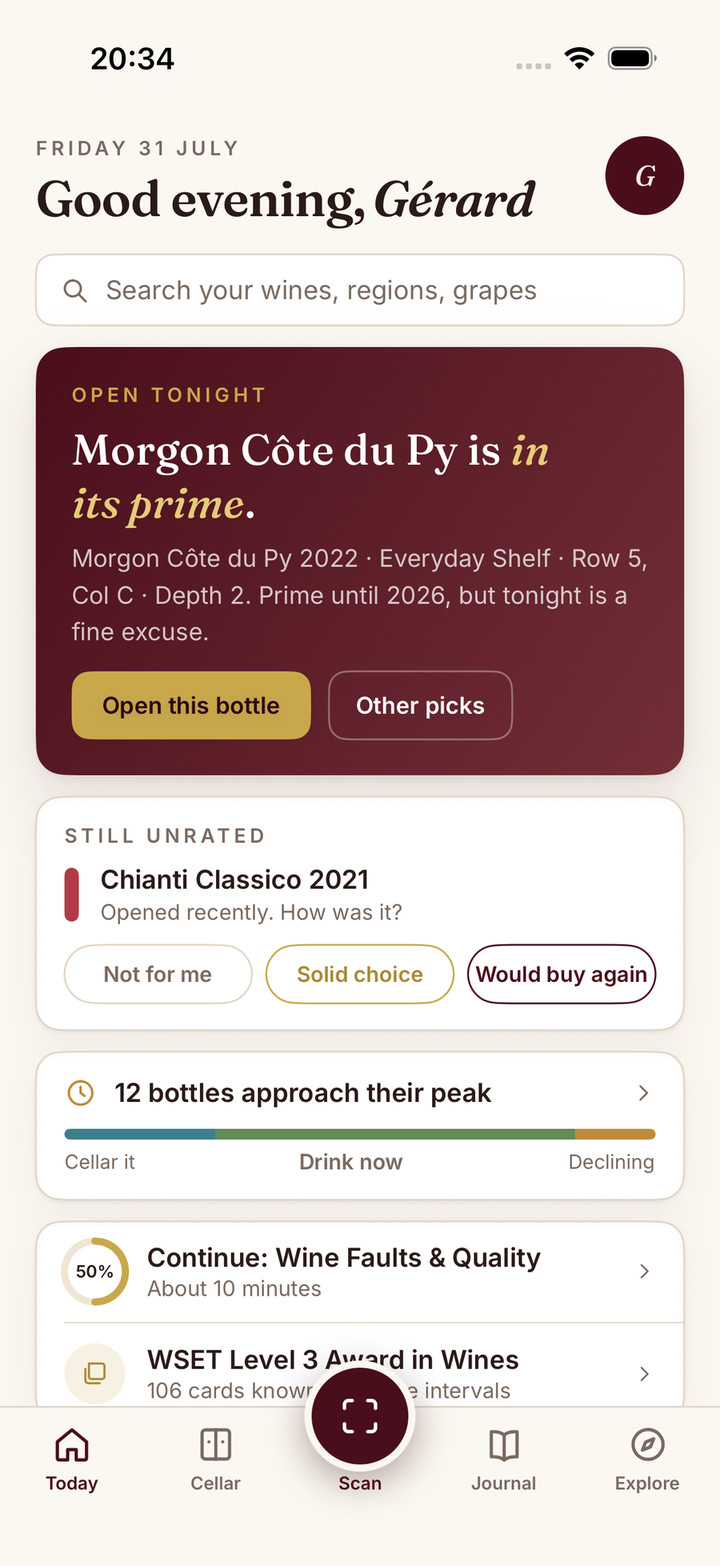
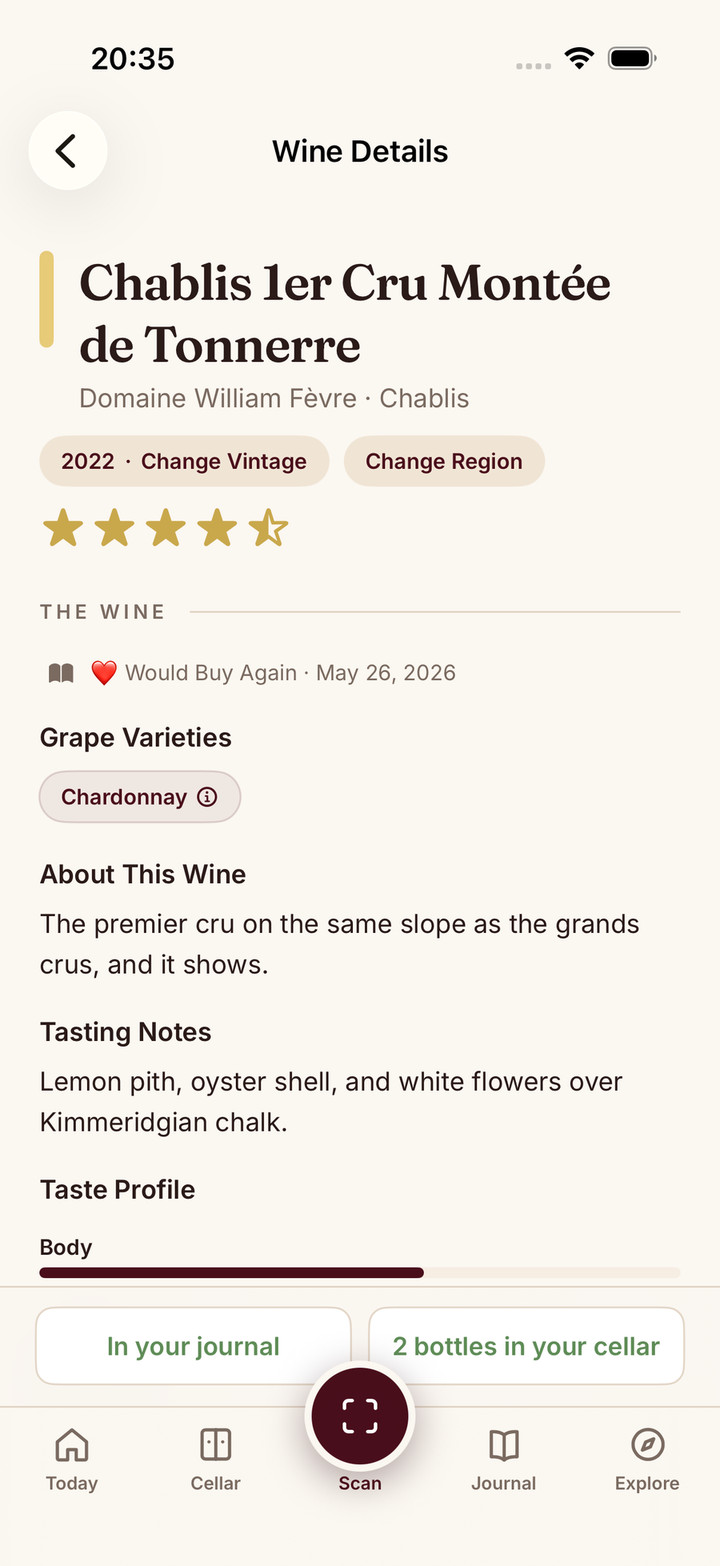
Mushrooms and wine share one of the food world’s deepest connections, and the Sommo app helps you explore it fully. Scan any wine label to discover its food pairing potential, including mushroom dishes. Browse earthy grape varieties like Pinot Noir and Nebbiolo, explore the wine regions of Burgundy and Piedmont, and track your favorite mushroom and wine pairings in your tasting journal. Download Sommo and let your next mushroom dish reach its full potential.
Sommo reads your cellar, checks how each bottle tastes right now, and picks the wine that fits the meal. Built by a sommelier-trained model.
 Or point your camera here