Sangiovese is the best wine for classic beef lasagne because its high acidity matches tomato, moderate tannin handles meat and savoury cherry echoes herbs. Barbera is a softer alternative. Choose dry rosé for tomato based vegetables, Pinot Noir for mushroom lasagne and a textured Chardonnay or Soave for white sauce. Everyday fresh wine usually performs better than a delicate mature bottle.Quick answer
Pairing guideWhat to pour for
Best Wine with Lasagne: Beef, Vegetable and White
Sangiovese is best with beef lasagne, but sauce changes the bottle. Match tomato, vegetable, white sauce and spicy versions with practical price guidance.
PicksThree to open
Top picks.
01
Wine
Sangiovese
High acidity matches tomato while savoury cherry, herbs and moderate tannin fit beef and cheese.
- From
- Chianti Classico
- Also
- Tuscany
02
Wine
Barbera
Bright acidity cuts tomato and béchamel while softer tannin keeps a rich tray easy.
- From
- Piedmont
- Also
- Asti
03
Wine
Chardonnay
Body matches béchamel, chicken and cheese while acidity prevents white lasagne feeling heavy.
- From
- Burgundy
- Also
- Alto Adige
Pair the Sauce, Not the Pasta Sheets
Classic beef lasagne needs a high acid, medium bodied red. Sangiovese is the first choice because its sour cherry and herbal character meet tomato while moderate tannin handles beef and cheese.
Change the sauce and the pairing changes with it. White lasagne wants textured white wine; mushroom lasagne welcomes Pinot Noir; chilli asks for softer tannin and lower alcohol. The broader pasta pairing guide starts with the same sauce first rule.
Lasagne Pairings at a Glance
| Lasagne style | Best wine | Why it works |
|---|---|---|
| Beef ragù and tomato | Chianti Classico | Acidity matches tomato; tannin meets meat |
| Rich meat and béchamel | Barbera d’Asti | High acid cuts cheese; softer tannin keeps it easy |
| Vegetable and tomato | Dry rosé or Barbera | Freshness carries tomato without burying vegetables |
| Mushroom | Pinot Noir | Earthy red fruit echoes mushrooms and herbs |
| White chicken lasagne | Chardonnay | Body matches béchamel; acidity prevents heaviness |
| Spinach and ricotta | Soave or Verdicchio | Citrus and almond suit greens and cheese |
| Spicy sausage | Montepulciano d’Abruzzo | Ripe fruit and moderate grip handle meat and chilli |
Classic Beef Lasagne
Choose Chianti or Chianti Classico from Tuscany. Tomato makes low acid wine taste flat, so Sangiovese’s freshness is essential. The grape’s dried herbs also echo oregano and basil. Barbera is a softer, fruitier alternative when the table dislikes tannin.
Vegetable and Mushroom Versions
Tomato based vegetable lasagne still needs acidity, but not a powerful red. Dry rosé or Barbera preserves courgette, aubergine and pepper. Mushroom lasagne shifts towards earth and cream, making low tannin Pinot Noir a stronger choice. See the mushroom pairing guide for truffle and porcini variations.
White Lasagne
Béchamel, cheese and chicken need breadth. Choose a restrained Chardonnay or Soave with enough acidity to keep the cream moving. For spinach and ricotta, Verdicchio or Soave brings citrus, herbs and a subtle almond note without heavy oak.
Budget and Service
Lasagne is generous food and rarely needs a rare bottle. Everyday Chianti, Barbera d’Asti and Montepulciano d’Abruzzo offer the right acidity and fruit in an accessible tier. Save mature Barolo or fine Burgundy for a quieter plate.
Serve reds around 15 to 17 degrees Celsius, slightly cooler than a warm room. Whites can sit around 9 to 12. Decant a young firm Chianti for 20 to 30 minutes.
Explore with Sommo
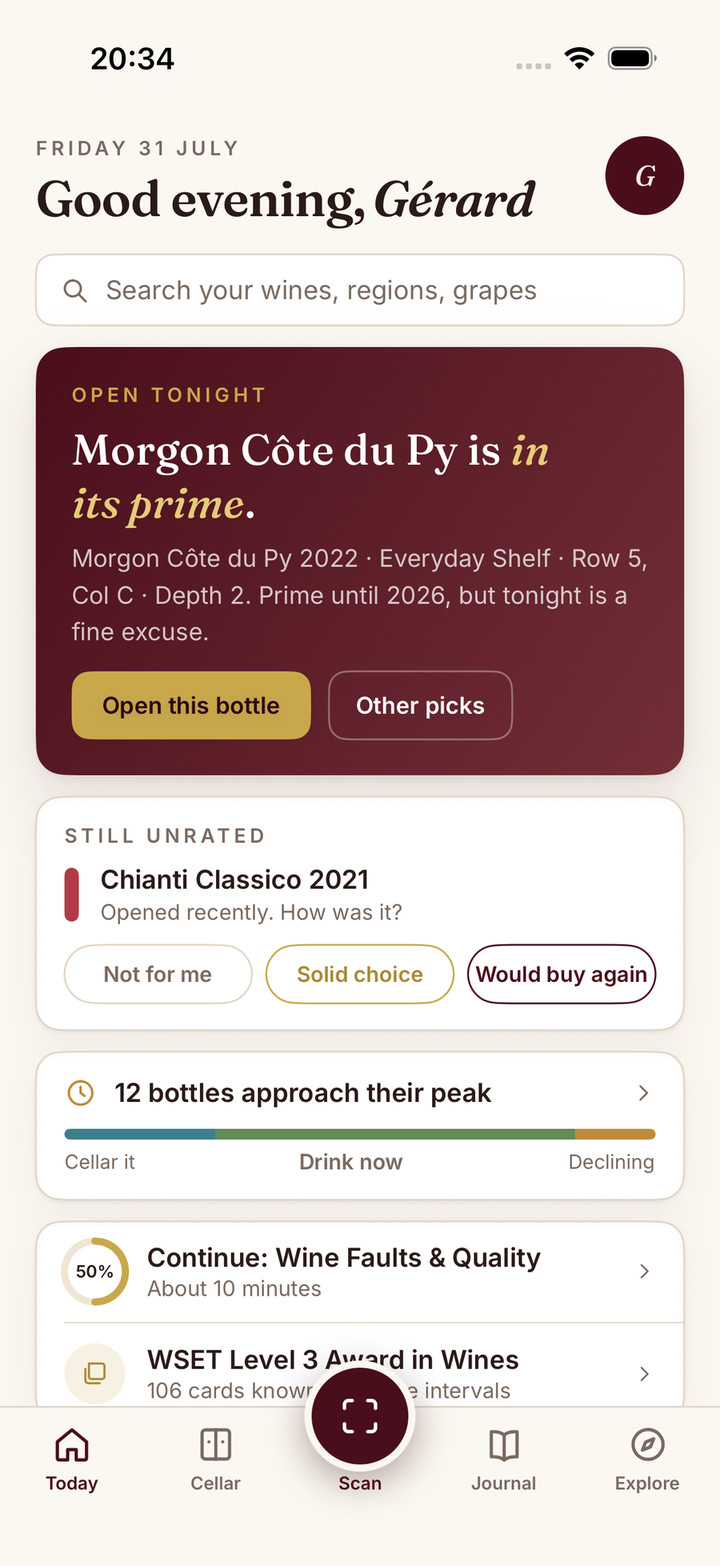
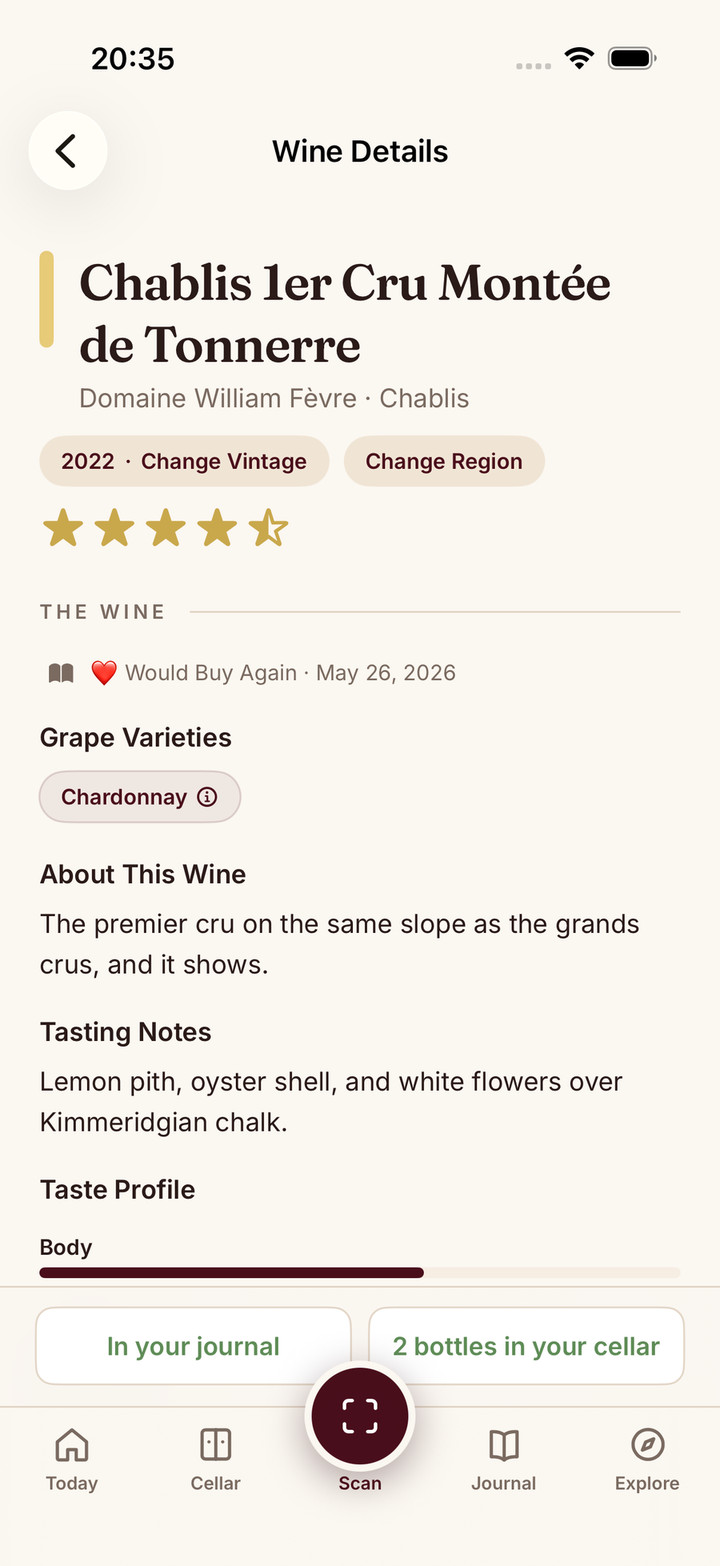
Use the pairing finder above with the filling and sauce, or scan a bottle to test whether its acidity and tannin fit the tray. Download Sommo and save the match for the next batch.
Pairing principles.
- Pair the sauce and filling, not the pasta sheets.
- Tomato requires a wine with matching acidity.
- Use softer tannin when vegetables are the focus.
- White sauce requires texture plus freshness.
Sommelier tips.
- Serve medium reds around 15 to 17 degrees Celsius.
- Decant a young Chianti for 20 to 30 minutes.
- Use Soave or Verdicchio when spinach and ricotta replace meat.
Avoid.
- Low acid, heavily oaked red with tomato sauce
- Delicate mature wine beside dense meat and cheese
- Thin neutral white with béchamel
Questions worth asking
01.What is the best wine with beef lasagne?+
Chianti or another Sangiovese based red. High acidity matches tomato, moderate tannin handles beef and savoury cherry and herbs echo the sauce. Barbera is an excellent softer alternative.
02.What wine goes with vegetable lasagne?+
Choose Barbera or dry rosé for tomato based vegetable lasagne. For a version built around mushrooms, aubergine or squash, Pinot Noir adds earthy red fruit without overwhelming the vegetables.
03.What wine goes with white lasagne?+
A textured Chardonnay or Soave. With béchamel, chicken and cheese, the wine needs body for cream and enough acidity to reset the palate. Avoid a thin, neutral white that disappears beside the sauce.
04.Can I serve white wine with beef lasagne?+
Yes, but choose a substantial high acid white such as Verdicchio or a restrained Chardonnay. Red remains easier because tannin and savoury fruit meet beef and tomato together.
05.Should lasagne wine be expensive?+
No. Tomato acidity and melted cheese reward fresh, direct wine rather than prestige. Everyday Chianti, Barbera d'Asti or Montepulciano d'Abruzzo usually performs better than a delicate mature bottle.
Pairings in the app · All pairings
Skip the guesswork.
Pour with confidence.
Sommo reads your cellar, checks how each bottle tastes right now, and picks the wine that fits the meal. Built by a sommelier-trained model.

 Or point your camera here