Wine with Curry: Which Bottles Actually Work (and Why Tannins Ruin It)
Tannins clash with spice — that's the rule that makes most wine and curry pairings fail. Here are the wines that actually work: off-dry Riesling, Grenache, and a few surprises.
Top Wine Recommendations
Riesling
Residual sugar and laser-sharp acidity cool chili heat while the wine's floral aromatics harmonize with cardamom, cumin, and turmeric.
Grenache
Ripe red fruit, low tannins, and a generous warm palate complement tomato-based and moderately spiced curries without amplifying heat.
Chenin Blanc
Off-dry Chenin Blanc's honeyed fruit and balancing acidity soothe capsaicin burn while its weight handles creamy coconut-based curries.
Pairing Principles
- Residual sugar counteracts capsaicin: even a hint of sweetness provides a cooling effect on the palate.
- Lower alcohol is essential because high alcohol amplifies the burning sensation of chili heat.
- Aromatic wines with floral and stone-fruit notes complement the complex spice blends found in curries worldwide.
- Avoid heavy tannins, which intensify heat perception and create an uncomfortably dry, burning sensation.
Wines to Avoid
- High-alcohol, tannic reds like Cabernet Sauvignon or Barolo that amplify the burn of chili
- Heavily oaked wines whose wood tannins clash with aromatic spices
- Bone-dry, austere whites that offer no relief from heat and taste thin next to rich sauces
Price Guide
- Budget: A German Kabinett Riesling or South African Chenin Blanc is affordable and tailor-made for weeknight curries.
- Mid-Range: A Spatlese Riesling from the Mosel or a Vouvray Demi-Sec brings elegant sweetness to balance fiery dishes.
- Premium: A Grand Cru Alsace Riesling or a top Swartland Chenin Blanc creates a refined pairing with complex, layered curries.
Sommelier Tips
- Serve wine well-chilled when pairing with curry: cold temperature physically helps cool capsaicin heat.
- For coconut milk-based curries like Thai green curry, Chenin Blanc's weight and tropical notes create a seamless match.
- Japanese curry, which is milder and sweeter, pairs surprisingly well with a light Beaujolais or dry rose.
Why Curry and Wine Work Together
Curry is one of the most complex dishes in the global culinary repertoire. A single curry can contain dozens of spices, each contributing aroma, heat, sweetness, bitterness, or umami. This layered complexity might seem like a nightmare for wine pairing, but the opposite is true. The same aromatic intensity that makes curry so compelling also creates abundant opportunities for wine to find flavor bridges, complementary contrasts, and refreshing counterpoints.
The key lies in understanding what happens on the palate when spice meets wine. Capsaicin, the compound responsible for chili heat, binds to pain receptors on the tongue. Alcohol amplifies this sensation, while sugar soothes it. Tannins intensify the burn, while acidity and cold temperature provide relief. Once you understand these interactions, choosing a wine for curry becomes a matter of applied science rather than guesswork.
Curry traditions span continents, from the coconut-laced curries of Thailand and Sri Lanka to the dry-roasted spice blends of North India, the aromatic rendang of Malaysia, and the milder, sweeter Japanese katsu curry. Each style has its own heat level, sauce base, and dominant flavors, which means there is no single wine that works for every curry. Instead, a handful of versatile grape varieties cover the full spectrum beautifully.
Understanding the Key Principles
Sugar and Capsaicin
The most important principle in pairing wine with curry is the relationship between residual sugar and chili heat. Capsaicin dissolves in fat and alcohol but is soothed by sugar. A wine with even a small amount of residual sugar, such as an off-dry Riesling at 15-25 grams per liter, provides immediate relief from the burn and allows the complex spice flavors to come through. This is why bone-dry wines often taste thin and harsh alongside a spicy curry: they offer no counterbalance to the heat.
Alcohol and Heat
Alcohol is a capsaicin amplifier. High-alcohol wines (above 14% ABV) will literally intensify the burning sensation on your palate, making a moderately spicy curry feel unbearably hot. This is why lightweight, lower-alcohol whites like German Kabinett Riesling (typically 7.5-9% ABV) are such exceptional curry partners. They provide flavor without adding fuel to the fire.
Aromatics and Spice
Many of the aromatic compounds found in wine overlap with those found in curry spices. Terpenes in Riesling and Gewurztraminer are also present in coriander, cardamom, and lemongrass. This molecular overlap creates a sense of harmony between the glass and the plate, where the wine seems to belong alongside the curry rather than competing with it.
Tannins: The Enemy of Spice
Tannins from grape skins and oak barrels create a drying sensation on the palate. When combined with capsaicin heat, the effect is compounded: the mouth feels simultaneously dry, hot, and astringent. This is why tannic red wines like Cabernet Sauvignon and Barolo are poor choices for curry. If you want a red wine, choose low-tannin varieties like Grenache, Gamay, or Pinot Noir.
Best Wines for Different Curry Styles
Indian Curries
Tikka Masala and Butter Chicken
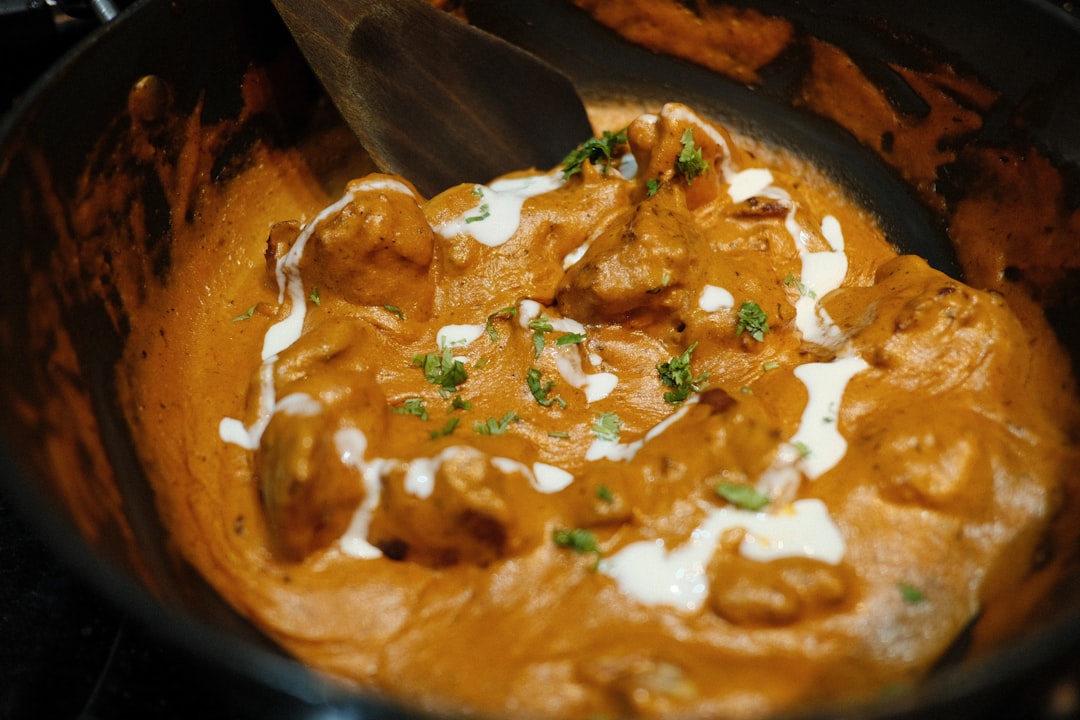
These creamy, tomato-based curries are moderately spiced with a rich, velvety sauce. The combination of cream, butter, and tomato creates a dish that is simultaneously rich, tangy, and gently warming. Off-dry Chenin Blanc from Vouvray is outstanding here. The wine’s honeyed fruit and balancing acidity cut through the cream while its moderate weight matches the sauce’s richness. Alternatively, a Spatlese Riesling from the Mosel provides enough sweetness to complement the tomato sweetness while its acidity keeps everything fresh.
Vindaloo and Madras
These fiercely hot curries demand wines with maximum cooling power. A Kabinett Riesling from the Mosel, served ice-cold, is the best choice. Its low alcohol (around 8%), residual sugar, and screaming acidity provide a triple defense against the capsaicin assault. The Riesling’s floral aromatics also find common ground with the curry’s spice blend. For those who prefer a slightly richer style, a Clare Valley Riesling from producers like Grosset or Jim Barry offers lime and mineral notes that pair well with the tangy vinegar base typical of vindaloo.
Rogan Josh and Korma
Korma, with its gentle, nutty, creamy sauce, is one of the easiest curries to pair. An off-dry Chenin Blanc from Stellenbosch, with its stone fruit and almond notes, mirrors the dish’s nuttiness beautifully. Rogan Josh, with its deeper spice profile of Kashmiri chili, cardamom, and cinnamon, pairs well with a fruit-forward Grenache from the Southern Rhone. A Cotes du Rhone rouge with ripe raspberry and a hint of warm spice echoes the curry without clashing.
Thai Curries
Green Curry
Thai green curry combines coconut milk, Thai basil, kaffir lime leaves, and green chili for a fragrant, moderately hot dish. The coconut base makes this curry especially welcoming to white wines with tropical fruit character. Chenin Blanc from South Africa’s Swartland, with its peach, guava, and melon notes, creates a seamless integration with the coconut cream. A dry Alsace Riesling with its firmer structure handles the green chili heat well.
Red Curry
Thai red curry is bolder and more pungent than green, with dried red chilies and a deeper spice base. A Grenache rose from Navarra or Provence bridges the gap between the curry’s warm spice and its fresh herb garnishes (Thai basil, cilantro). The rose’s red-fruit character and moderate body complement without overwhelming.
Massaman Curry
This milder, richly spiced Thai curry uses cinnamon, star anise, and peanuts, creating a warm, almost sweet profile. An off-dry Vouvray (Chenin Blanc) with its quince and ginger notes is a spectacular match. The wine’s subtle sweetness mirrors the curry’s warm spice character.
Japanese Curry
Japanese curry is the gentlest member of the curry family: sweet, mildly spiced, and thick. This opens up pairing possibilities that hotter curries preclude. A light, chillable red like Beaujolais (Gamay) from Fleurie or Morgon, served slightly cool, works beautifully. Its juicy red fruit and low tannins complement the curry’s sweetness. Even a dry Provence rose is excellent here.
Pairing by Sauce Base
Coconut Milk Curries
The rich, fatty base of coconut milk curries (Thai, Sri Lankan, South Indian) calls for wines with enough weight to match the texture. Chenin Blanc from Stellenbosch or Swartland, with its natural richness and tropical fruit character, is ideal. The wine’s acidity slices through the coconut fat and refreshes the palate.
Tomato-Based Curries
The natural acidity of tomatoes needs a wine with matching acidity, or the pairing will taste flat. Riesling’s acidity is perfectly calibrated for tomato-based curries. A dry or off-dry Alsace Riesling handles the tomato tang while its aromatic complexity complements the spice blend. A Grenache-based rose also works well.
Dry-Roasted Spice Curries
Dry curries with intense, concentrated spice flavors (like many Pakistani and North Indian preparations) benefit from the soothing effect of off-dry whites. A Spatlese Riesling or a demi-sec Vouvray provides relief and complementary sweetness.
Budget-Friendly Options at Three Price Tiers
Under $15
German Kabinett Riesling from producers like Dr. Loosen, Selbach-Oster, or Fritz Haag offers extraordinary value for curry pairing. At 8-9% alcohol with gentle sweetness and electric acidity, these wines are purpose-built for spicy food. South African Chenin Blanc from the Swartland or Stellenbosch, often priced under $12, is another outstanding value.
$15-$30
A Spatlese Riesling from the Mosel (Joh. Jos. Prum, Willi Schaefer) brings more concentration and complexity while maintaining the low alcohol that makes it such a good curry partner. Vouvray Demi-Sec from producers like Domaine Huet or Francois Chidaine offers honeyed richness for creamy curries.
$30-$60
A Grand Cru Alsace Riesling from Trimbach (Clos Sainte Hune) or Zind-Humbrecht (Rangen) brings extraordinary depth and mineral complexity. These wines are dry or barely off-dry, with enough concentration and structure to stand up to the most complex curry preparations. A top Swartland Chenin Blanc from producers like Mullineux or Sadie Family elevates the pairing to fine-dining territory.
Common Mistakes to Avoid
Reaching for Red Wine Automatically
Many people default to red wine with rich, meaty curries like lamb rogan josh or beef rendang. While the instinct to match weight is correct, most red wines have too much tannin and alcohol for spicy food. If you want red, choose a low-tannin, fruit-forward style: Grenache from the Southern Rhone, Gamay from Beaujolais, or a light Pinot Noir served slightly chilled.
Choosing Bone-Dry Wines
A completely dry wine with no residual sugar offers no relief from chili heat. It will taste thin, acidic, and unpleasant alongside a spicy curry. Even a small amount of residual sugar (10-20 g/L) makes a dramatic difference.
Serving Wine Too Warm
Temperature is a physical weapon against capsaicin heat. Cold liquid soothes the burn. Serve white wines for curry at 6-8 degrees Celsius (43-46 degrees Fahrenheit), colder than you normally would. If you are drinking a light red like Grenache or Beaujolais, chill it to 12-14 degrees Celsius (54-57 degrees Fahrenheit).
Ignoring the Curry’s Sweetness
Many curries contain sugar, honey, or naturally sweet ingredients like coconut milk and onions. If the curry is sweet, the wine needs to be at least as sweet, or it will taste sour by comparison.
Regional Curry and Wine Traditions
India and the New World
India does not have a historical wine-and-curry tradition, but its rapidly growing wine industry is beginning to explore this pairing space. Indian producers like Sula Vineyards are making Chenin Blanc and off-dry whites specifically designed to complement local cuisine.
Southeast Asia and Riesling
The pairing of German Riesling with Thai and Vietnamese food has become one of the most celebrated cross-cultural food-and-wine combinations of the past two decades. Sommeliers at top Thai restaurants in London, New York, and Sydney routinely recommend Mosel Riesling as the default curry pairing.
South Africa: Chenin Blanc’s Spiritual Home
South Africa’s Chenin Blanc (locally called Steen) is the country’s most planted white grape. Its natural affinity for spicy food has made it the house wine of Cape Malay cuisine, which features aromatic, moderately spiced curries influenced by the Cape’s multicultural history.
Frequently Asked Questions
Does red wine go with curry? Tannic reds make spicy food taste more bitter and astringent — a clash you want to avoid. If you prefer red wine with curry, go for a low-tannin, fruity option like Grenache, Gamay, or a light Barbera. Avoid Cabernet Sauvignon, Shiraz, and heavy Malbec with anything hot.
What wine goes with chicken tikka masala? Off-dry Riesling is the classic match — its residual sweetness counterbalances the tomato-cream sauce’s acidity and the warmth of the spices. A Viognier or Gewurztraminer also works beautifully, offering aromatic complexity that complements the dish’s fragrant spice blend.
Can you drink rosé with curry? Dry Provence-style rosé can work with milder curries (korma, mild tikka), but struggles with serious heat. A fruit-forward, slightly off-dry rosé from the Loire or Stellenbosch handles spice better and pairs beautifully with vegetable-based curries.
Explore with Sommo
Navigating the world of curry and wine pairing becomes effortless with the Sommo app. Scan any wine label to instantly see whether it will work with your Friday night curry order. Explore grape varieties like Riesling, Chenin Blanc, and Grenache in depth, and track your favorite curry pairings in your personal wine journal. Whether you are ordering a takeaway tikka masala or cooking a Thai green curry from scratch, Sommo helps you choose the right bottle every time. Download Sommo and start building your curry wine repertoire today.