01
Wine
Chardonnay
Rich, buttery Chardonnay complements creamy cheeses like Brie and Camembert beautifully.
- From
- Burgundy
- Also
- Napa Valley
Learn how to pair wine and cheese like a pro. From sharp cheddar to creamy brie, discover the best wine matches for every cheese style.
Rich, buttery Chardonnay complements creamy cheeses like Brie and Camembert beautifully.
Bold tannins and dark fruit pair wonderfully with aged, hard cheeses like mature Cheddar and Manchego.
Versatile acidity and honeyed notes make Chenin Blanc excellent with goat cheese and washed-rind styles.
Wine and cheese are often presented as a perfect match, a pairing so natural that it requires no thought at all. The truth is more nuanced. While some wine and cheese combinations are indeed sublime, others clash spectacularly. Many of the most popular assumptions about wine and cheese pairing are misleading, and the “red wine with cheese” default that most people follow often leads to disappointing results.
The good news is that once you understand a few key principles, navigating the world of wine and cheese becomes straightforward and deeply rewarding. The right pairing can make both the wine and the cheese taste significantly better than either does alone.
This may be the most important thing to learn about wine and cheese pairing: white wines are generally more versatile and successful cheese partners than reds. The reason comes down to tannins. The tannins in red wine can react with the proteins and fats in cheese to create a chalky, metallic, or bitter sensation on the palate. Softer, creamier cheeses amplify this effect, which is why a tannic Cabernet Sauvignon with Brie is often a poor match despite being a popular combination.
White wines, with their acidity, fruit, and absence of tannins, tend to complement cheese’s richness without clashing. Acidic whites cut through fat, off-dry whites balance salt, and aromatic whites complement the complex flavors that develop in aged cheeses.
This is not to say red wine never works with cheese. It certainly does, but the pairings require more thought and specificity.
Examples: Mozzarella, burrata, ricotta, chevre (fresh goat cheese), feta, cream cheese
Fresh cheeses are mild, moist, and often tangy. They need wines that are equally fresh and light. Heavy or oaked wines will overwhelm their delicate flavors.
Best pairings:
Examples: Brie, Camembert, Brillat-Savarin, Epoisses, Langres
These cheeses have bloomy or washed rinds and range from mild and buttery to pungent and powerful. The creamy, sometimes runny texture requires wines with enough acidity to cut through the richness.
Best pairings:
For pungent washed-rind cheeses like Epoisses, the classic pairing is a late-harvest Gewurztraminer from Alsace, whose aromatic intensity and sweetness balance the cheese’s assertive flavors.
Examples: Gruyere, Comte, Gouda (young to medium), Emmental, Manchego, Cheddar (mild to medium)
Semi-hard cheeses offer a wide range of flavors from nutty and sweet to buttery and tangy. Their firm texture and moderate intensity make them among the most versatile cheese partners for wine.
Best pairings:
Examples: Parmigiano-Reggiano, aged Cheddar, aged Gouda, Pecorino Romano, Gruyere d’Alpage
Aged cheeses develop intense, concentrated flavors: crystalline crunch, caramel sweetness, nutty depth, and sharp saltiness. They have enough intensity to handle bolder wines, including certain reds.
Best pairings:
Examples: Roquefort, Stilton, Gorgonzola, Danish Blue, Cabrales
Blue cheeses are among the most intense and challenging to pair. Their pungent, salty, sharp flavors can destroy most dry wines. The classic and most successful approach is to pair blue cheese with sweet wine.
Best pairings:
If you insist on dry wine, look for high-acid, fruit-forward options. A well-made Amarone or a ripe Zinfandel can handle milder blue cheeses like Gorgonzola Dolce.
For a simple gathering, select one cheese from three different categories:
This approach provides variety for guests while ensuring each cheese has an ideal wine partner.
For a more elaborate spread:
If you want one wine for an entire cheese board, choose a wine with good acidity, moderate body, and no harsh tannins. The best single-wine options are:
The principle of “what grows together goes together” holds particularly true for cheese and wine.
This is the most common mistake. A young, tannic Cabernet Sauvignon or Barolo will clash with creamy Brie or Camembert. The tannins combine with the cheese’s proteins to create unpleasant bitterness.
Salty cheeses need wines with sweetness or high acidity to balance. Dry, neutral wines are overwhelmed by the salt.
Pairing the strongest cheese with the strongest wine can be a battleground rather than a marriage. Sometimes a powerful blue cheese needs a sweet, gentle wine rather than a blockbuster red.
The honey, nuts, fruit, and crackers on your cheese board affect the pairing. Honey bridges blue cheese and dry red wine; quince paste connects Manchego to a wider range of wines; walnuts can soften the tannins in red wine.
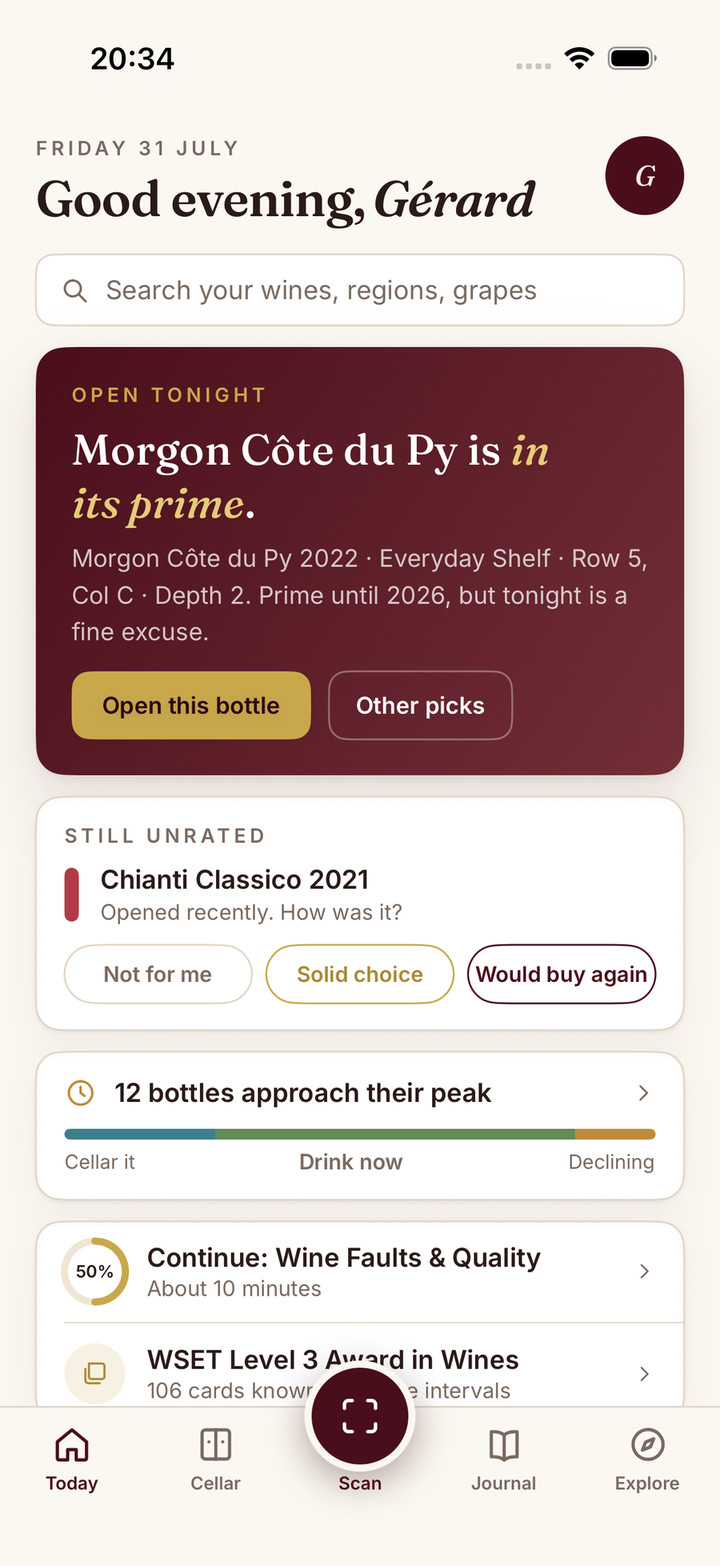
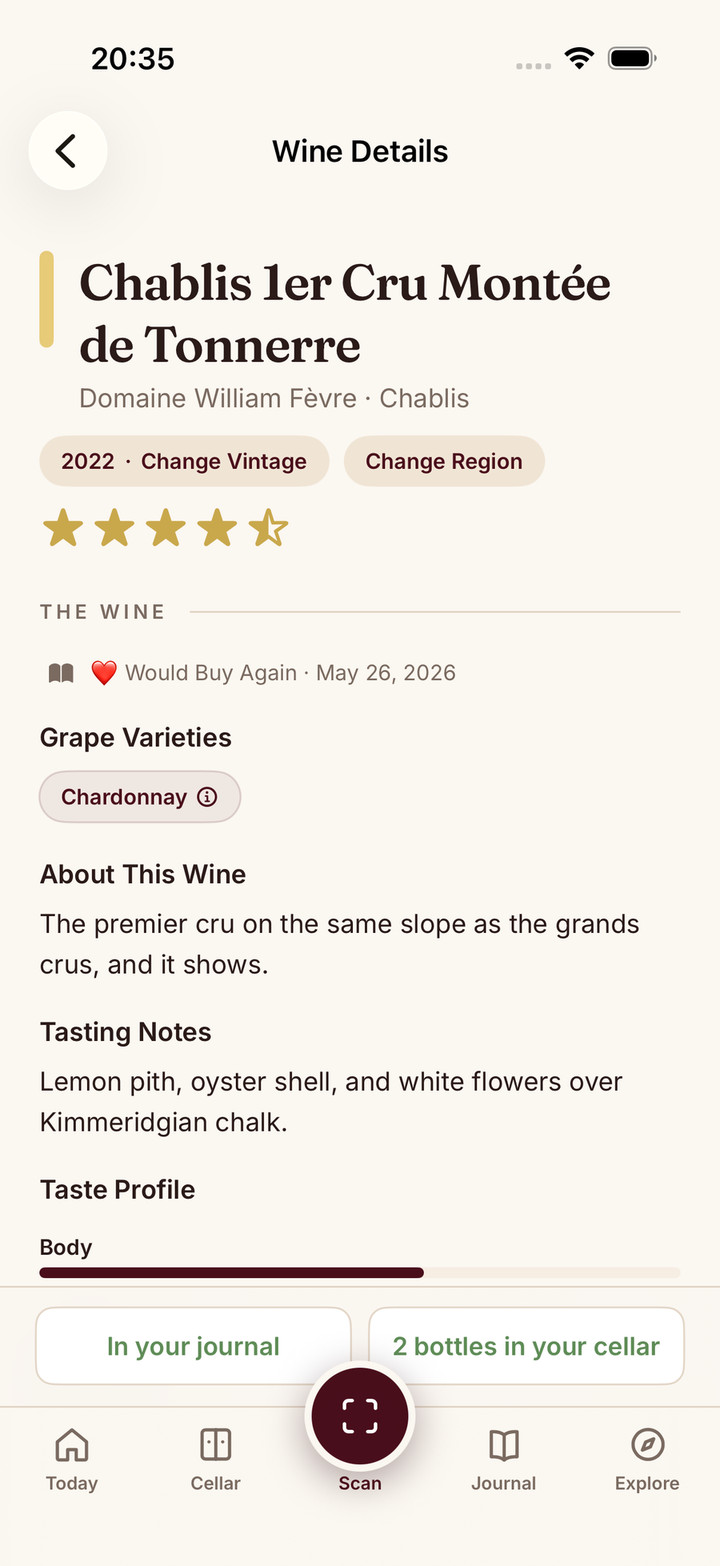
Navigating the complex world of wine and cheese pairing becomes effortless with the Sommo app. Scan any wine label to discover which cheeses it pairs best with, or explore cheese-friendly wine styles by grape variety and region. Whether you are assembling a cheese board for a dinner party or simply enjoying a quiet evening with a wedge of your favorite cheese, Sommo provides instant, expert guidance. Download Sommo and transform your wine and cheese experiences.
Sommo reads your cellar, checks how each bottle tastes right now, and picks the wine that fits the meal. Built by a sommelier-trained model.
 Or point your camera here