01
Wine
Gamay (Beaujolais)
Juicy, low-tannin Beaujolais is the charcuterie classic, fruity enough for fatty, salty meats.
- From
- Beaujolais
How to pair wine with a charcuterie board. The best reds, rosés and sparkling for salami, prosciutto and pâté, why acidity beats tannin, and what to pour.
Juicy, low-tannin Beaujolais is the charcuterie classic, fruity enough for fatty, salty meats.
A spicy, medium-bodied Grenache or GSM blend stands up to salami and saucisson.
Bright acidity and red fruit refresh the palate between rich, salty bites.
A charcuterie board is salty, fatty and full of spice, and that combination is quietly hostile to a lot of red wine. Salt amplifies tannin and alcohol, so a big, bold red can taste harsh and bitter next to a slice of salami. The wines that shine are the opposite: high in acidity, generous in fruit, and light to moderate in tannin. This is the rare savoury spread where bubbles and rosé genuinely outperform a serious red.
Gamay, in the form of juicy Beaujolais, is the charcuterie hero: fruity, fresh and low in tannin. Pinot Noir works for the same reasons. For spicier, richer sausages, a Grenache or southern Rhône blend brings warmth without aggression. A dry rosé is endlessly flexible across the whole board, and dry sparkling wine, from Champagne to Cava, cuts through fatty, salty meats beautifully.
Skip big, tannic, heavily oaked reds like a young Cabernet. The salt will make them taste tough and bitter, and the board will win every time. When in doubt, pour something light, fruity and cold.
What wine goes best with a charcuterie board?
Fruity, high-acid wines with low tannin shine. Juicy Beaujolais, Pinot Noir, a southern Rhône Grenache blend, dry rosé and dry sparkling wine all handle salty, fatty cured meats far better than a big, tannic red.
Why does tannic red wine clash with charcuterie?
Salt amplifies tannin and alcohol, so a bold, tannic red like young Cabernet tastes harsh and bitter next to cured meat. Lighter, fruitier reds with good acidity, served slightly chilled, work much better.
What is the best single wine for a charcuterie board?
A dry rosé is the most flexible choice, with enough acidity and fruit to span everything from prosciutto to spicy salami. Dry sparkling wine is a close second for the same reasons.
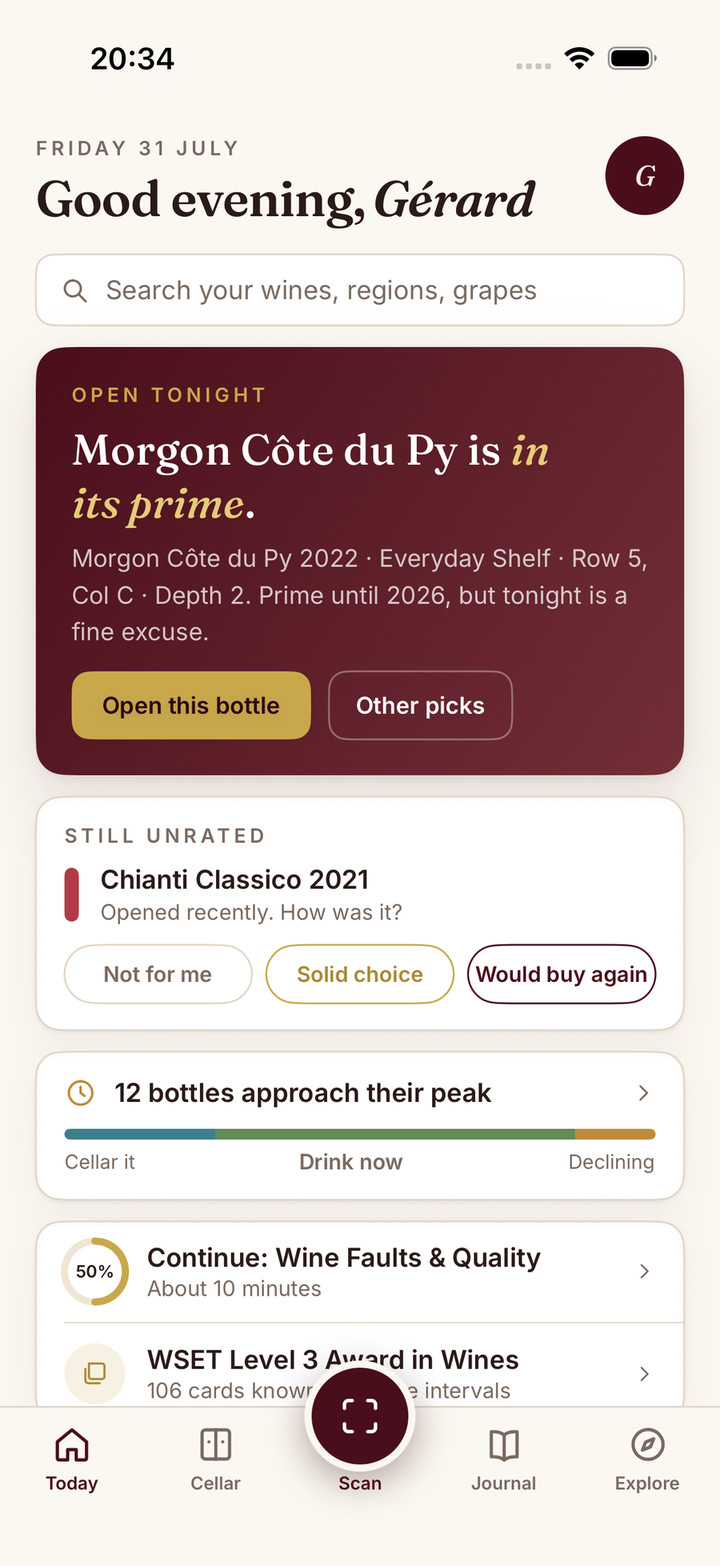
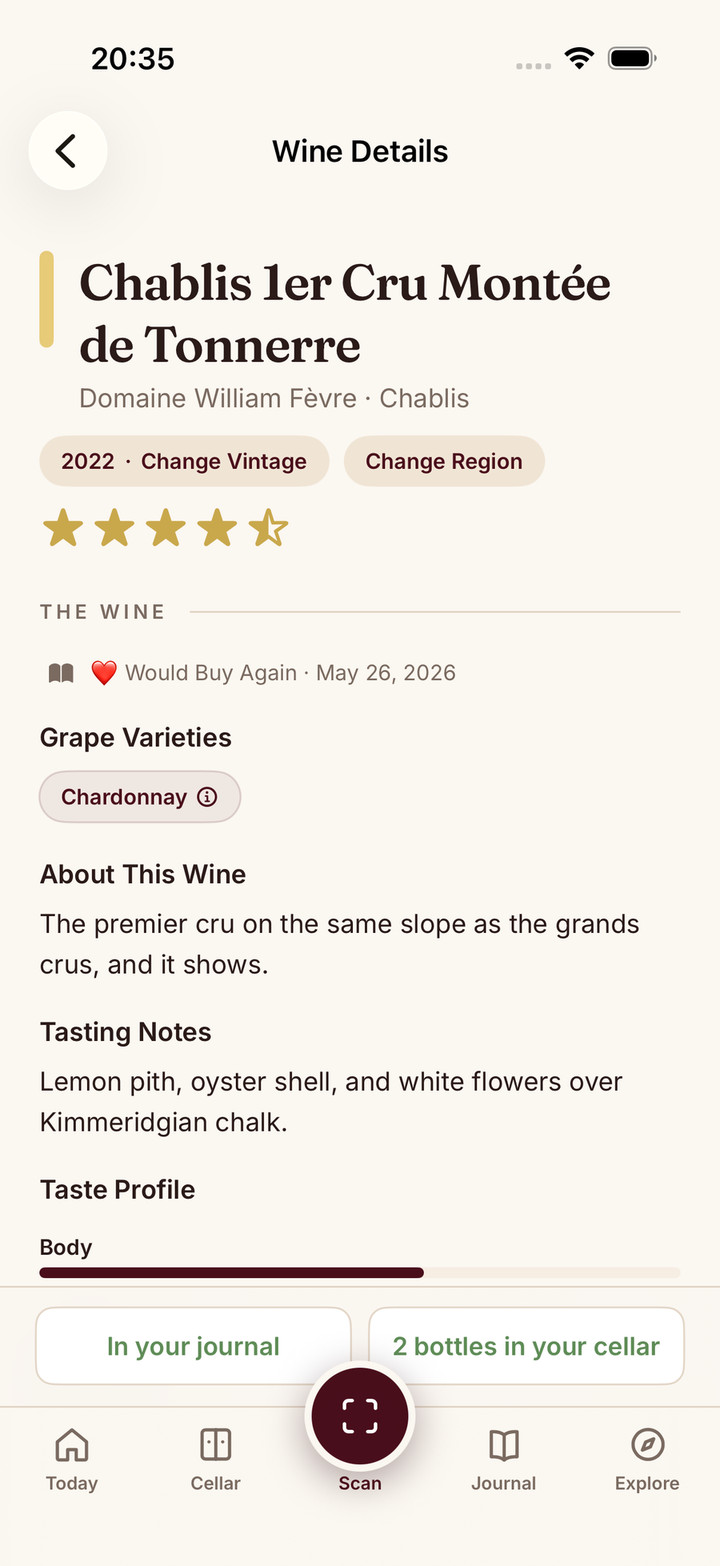
Sommo reads your cellar, checks how each bottle tastes right now, and picks the wine that fits the meal. Built by a sommelier-trained model.
 Or point your camera here