Merlot-led Bordeaux is the safest wine with beef Wellington. It has enough structure for beef, savoury depth for mushroom duxelles and softer tannin than a young Cabernet-led wine, which matters because fillet is lean. Choose concentrated Pinot Noir when mushrooms lead, Cabernet Franc for a herb-led jus and savoury Syrah for pepper sauce.Quick answer
Pairing guideWhat to pour for
Best Wine with Beef Wellington: Structure, Not Weight
Right-bank Bordeaux is the safest wine with beef Wellington. Compare Merlot blends, Pinot Noir, Cabernet Franc and Syrah by duxelles, pastry and sauce.
PicksThree to open
Top picks.
01
Wine
Merlot-led Bordeaux blend
Plum, earth and moderate tannin bridge fillet, mushroom duxelles, pastry and jus.
- From
- Saint-Émilion
- Also
- Pomerol
02
Wine
Concentrated Pinot Noir
High acidity cuts pastry while earthy perfume echoes mushrooms and respects lean fillet.
- From
- Burgundy
- Also
- Central Otago
03
Wine
Cabernet Franc
Fresh acidity, herbs and savour suit thyme, mushroom and a reduced red-wine jus.
- From
- Loire Valley
- Also
- Bordeaux
Merlot-led Bordeaux is the safest wine with beef Wellington. Beef needs structure, mushroom duxelles needs savoury depth, and pastry needs acidity rather than brute tannin. A right-bank style brings plum, earth and cedar with a rounder shape than young Cabernet. Pinot Noir is the elegant alternative when mushrooms and medium-rare fillet lead.
Match the Dominant Element
| Wellington style | Best wine | Why it works |
|---|---|---|
| Classic fillet and duxelles | Merlot-led Bordeaux blend | Structure for beef, earth for mushrooms, moderate tannin |
| Mushroom-heavy | Concentrated Pinot Noir | Savoury perfume echoes duxelles without overpowering fillet |
| Rich red-wine jus | Cabernet Franc or mature Bordeaux | Acidity and savour support the sauce |
| Truffle garnish | Aged Pinot Noir | Developed earth and perfume meet truffle |
| Peppery sauce | Northern Rhône Syrah | Pepper and savour mirror the seasoning |
| White-wine alternative | Mature white Rioja | Body and savour meet pastry and mushrooms |
Wellington Is Not a Ribeye
Fillet is tender but relatively lean. The broad beef guide often recommends tannic reds because fat and protein soften their grip. Wellington adds buttery pastry and mushroom duxelles, yet it does not add the marbling of ribeye.
That is why a very young Cabernet Sauvignon can feel severe. Choose moderate tannin, developed savour and enough acidity to refresh after pastry.
The Bordeaux Route
A Merlot-led blend from the right bank or another restrained Merlot blend supplies plum, black cherry, cedar and earth. Cabernet Franc in the blend can add freshness and an herbal, savoury line that works with mushroom and thyme.
If you already own a Cabernet-led Bordeaux, age helps. Mature tannins are less aggressive, and developed tobacco or forest-floor notes connect with the duxelles. Decant sediment carefully rather than automatically exposing an old wine for hours.
Pinot Noir for the Duxelles
Pinot Noir is the best alternative when mushrooms are generous and the meat remains pink. Its high acidity cuts pastry; low tannin respects lean fillet; earthy aromas echo the filling.
Choose a bottle with enough concentration. A very light red can disappear beside a reduced jus. The Pinot Noir pairing guide helps distinguish lighter fish styles from dinner-table examples.
Sauce Can Override the Base Pairing
A peppercorn sauce favours savoury Syrah. A truffle sauce strengthens the case for mature Pinot Noir. A sweet port reduction needs ripe fruit but not a wine that is drier and harsher than the sauce makes it seem.
Taste the jus before opening the bottle. Salt, sweetness and reduction concentration can matter more than the recipe name.
Serve medium-bodied reds around 15 to 17 degrees Celsius. Open a young bottle in advance and taste it before deciding whether it needs more air.
What to Avoid
- Highly alcoholic, jammy red that makes the pastry feel greasy.
- Very young, aggressively tannic Cabernet with lean fillet.
- Delicate mature Burgundy overwhelmed by a powerful sauce.
- Sweet red wine unless the dish itself has comparable sweetness.
The One-Bottle Answer
Choose a polished Merlot-led Bordeaux blend with some bottle age. It spans meat, mushroom, pastry and jus more reliably than a maximal steak wine.
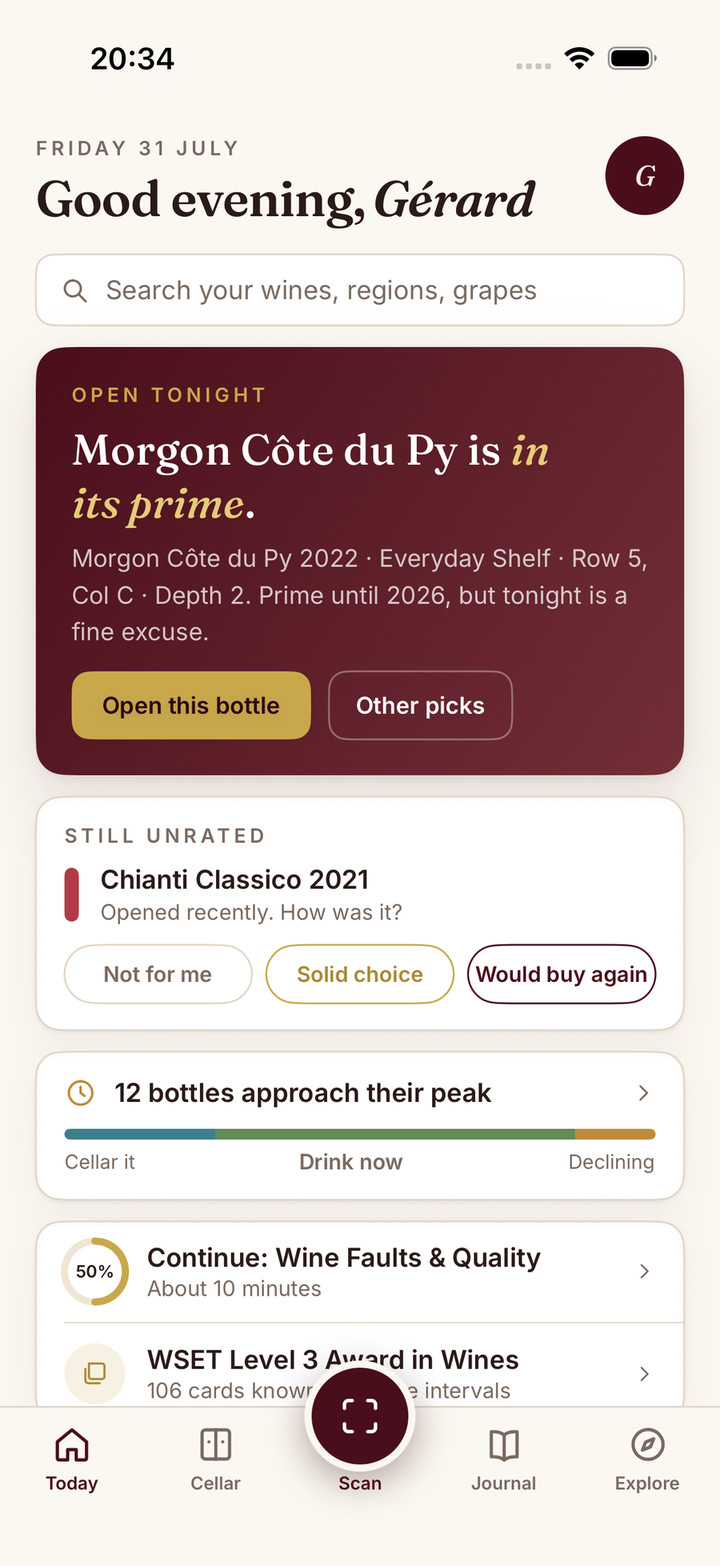
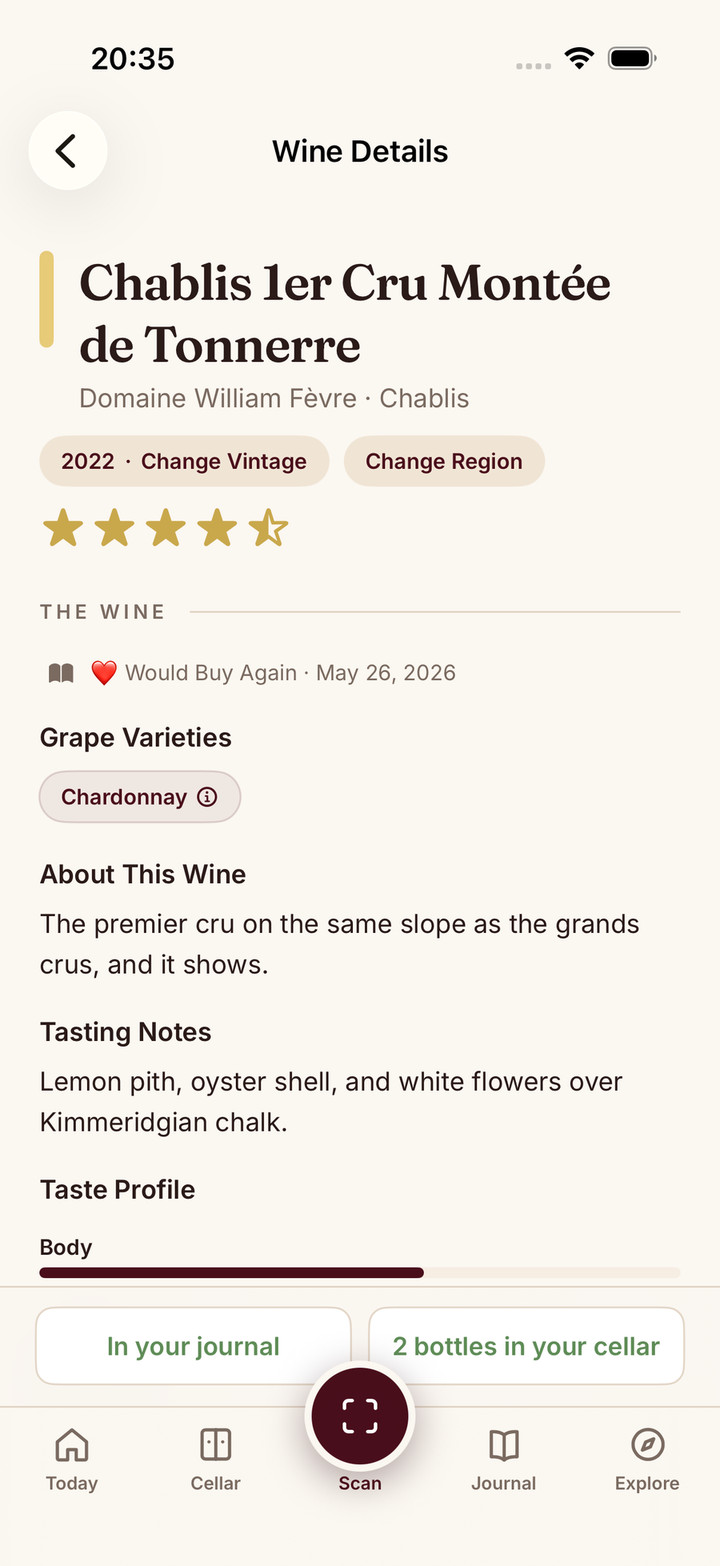
The roast beef pairing guide covers fattier cuts, gravy and horseradish. Sommo evaluates the finished Wellington one component at a time. Download Sommo to save the bottle that balanced all four.
Pairing principles.
- Treat fillet as lean beef rather than a fatty steak.
- Match mushroom duxelles with earthy or savoury aroma.
- Use acidity to refresh after butter-rich pastry.
- Let pepper, truffle or sauce concentration choose the final style.
Sommelier tips.
- Serve medium-bodied red at 15 to 17 degrees Celsius.
- Taste the finished jus before opening the bottle.
- Decant a young wine only after checking its aroma and tannin.
Avoid.
- Very young aggressively tannic Cabernet
- Jammy high alcohol red beside delicate fillet
- Fragile mature Pinot Noir with a powerful sweet reduction
Questions worth asking
01.What is the best wine with beef Wellington?+
A mature or approachable Merlot-led Bordeaux blend is the safest choice. It has enough structure for beef, earthy and cedar notes for mushroom duxelles, and softer tannin than a young Cabernet-led wine, so it does not bully the fillet.
02.Does Pinot Noir go with beef Wellington?+
Yes, especially when mushroom duxelles leads and the fillet is served medium-rare. Choose a concentrated Pinot Noir with savoury character rather than a very delicate bottle. It respects the lean meat and echoes mushrooms.
03.Can I serve Cabernet Sauvignon with beef Wellington?+
You can, but avoid a very young, heavily oaked or powerful example. Fillet is leaner than ribeye, while pastry and mushrooms are subtle. A mature Cabernet blend or a softer regional Cabernet is safer than a muscular steak wine.
04.What white wine goes with beef Wellington?+
A full-bodied, savoury white such as mature white Rioja or oaked Chardonnay can work for guests avoiding red, particularly when pastry and cream sauce lead. It is an alternative, not the classic structural match for beef.
05.Should the cooking wine and serving wine be the same?+
Not necessarily. Use a sound, dry wine for the sauce, then serve the bottle whose structure best fits the finished dish. Never cook with a faulty wine, but a premium serving bottle does not need to go into the pan.
Pairings in the app · All pairings
Skip the guesswork.
Pour with confidence.
Sommo reads your cellar, checks how each bottle tastes right now, and picks the wine that fits the meal. Built by a sommelier-trained model.

 Or point your camera here