Red Burgundy is the classic wine with beef bourguignon because Pinot Noir's acidity refreshes the braise while red fruit and earthy flavour echo wine sauce and mushrooms. Cru Beaujolais is the value alternative. Choose savoury Syrah for a darker, bacon-heavy pot and Sangiovese when tomato is prominent.Quick answer
Pairing guideWhat to pour for
Best Wine with Beef Bourguignon: Echo the Braise
Red Burgundy is the classic wine with beef bourguignon, but Gamay, Syrah and Sangiovese can win. Match the braise by sauce, mushrooms and richness well.
PicksThree to open
Top picks.
01
Wine
Red Burgundy
Acidity, red fruit and earth mirror the wine sauce and mushrooms without adding harsh tannin.
- From
- Burgundy
02
Wine
Cru Beaujolais
Juicy fruit, high acidity and low tannin give the braise lift at a lower price.
- From
- Beaujolais
03
Wine
Savoury Syrah
Pepper, smoke and moderate structure suit a bacon-heavy or deeply browned braise.
- From
- Northern Rhône
Red Burgundy is the classic wine with beef bourguignon. Pinot Noir brings the acidity to refresh a rich braise, red fruit to echo the wine sauce and earthy detail for mushrooms. Choose regional Bourgogne Rouge rather than sacrificing an expensive bottle. Cru Beaujolais is the value alternative; savoury Syrah suits a darker, bacon-heavy version.
Choose by the Finished Pot
| Bourguignon style | Best wine | Why it works |
|---|---|---|
| Classic beef, mushrooms and wine sauce | Red Burgundy | Acidity, red fruit and earth mirror the dish |
| Weeknight or budget pot | Cru Beaujolais | Fresh Gamay offers fruit and savour with low tannin |
| Bacon-heavy, peppery braise | Northern Rhône Syrah | Pepper, smoke and structure meet stronger flavours |
| Tomato-forward variation | Chianti Classico | Sangiovese acidity and savour fit tomato |
| Very rich, reduced sauce | Mature Bordeaux blend | Developed savour and softened tannin hold the depth |
| White-wine alternative | Savoury oaked Chardonnay | Body and acidity meet mushrooms and sauce |
Why the Regional Match Works
Beef bourguignon is built around browned beef, red wine, stock, mushrooms and slow concentration. Pinot Noir from Bourgogne is not powerful in the same way as young Cabernet, but power is not the only requirement. Acidity clears the palate and the wine’s red-fruit, spice and earth profile fits the sauce.
The regional connection is useful, not mandatory. The pot has already concentrated the cooking wine, so the glass should be fresh enough to create contrast.
Cooking Wine and Drinking Wine
Use a dry, sound wine you would willingly drink. A modest regional Pinot Noir or Gamay is sufficient. Heavy new oak, residual sugar and very high alcohol become more obvious as the liquid reduces.
The serving bottle can be better than the cooking bottle without being different in structure. Pour some wine into the dish, complete the braise, then open the serving bottle later so its fruit and aroma remain fresh.
Gamay Is the Value Move
Gamay from Beaujolais shares Pinot Noir’s red fruit, high acidity and low tannin. Beaujolais-Villages works for a lighter stew; Morgon or Moulin-à-Vent can meet a richer, longer-cooked pot.
The Gamay versus Pinot Noir guide shows the trade-off directly. Gamay is usually fruitier and cheaper; Pinot Noir often adds more earthy detail.
When Syrah or Sangiovese Wins
Bacon, black pepper and deeply browned meat can pull the dish towards Syrah. Choose a fresh, savoury style rather than a jammy, high-alcohol bottle.
A recipe with substantial tomato can favour Sangiovese. Its high acidity meets tomato while cherry and dried herbs fit the sauce. Cabernet Sauvignon is workable when mature, but a young tannic example can feel detached from the soft braise.
Serve reds around 15 to 17 degrees Celsius. A steaming bowl makes warm wine feel even heavier.
What to Avoid
- Sweet or jammy red reduced into the cooking sauce.
- Expensive mature wine whose nuance disappears in the pot.
- Very young, aggressively oaked Cabernet beside a soft braise.
- Low-acid red that adds weight without refreshing the palate.
The One-Bottle Answer
Buy two bottles of sound regional Pinot Noir if the budget permits: one for the pot and one for the table. For better value, use Gamay in both roles.
The general beef pairing guide covers steak, roast and other braises. Sommo can score the finished recipe by sauce, mushrooms and cooking method. Download Sommo and keep the result for the next batch.
Pairing principles.
- Use acidity to contrast a concentrated braise.
- Echo mushrooms with earthy, savoury flavour.
- Keep cooking wine dry, sound and moderate in oak.
- Add body only as bacon and sauce concentration increase.
Sommelier tips.
- Use sound wine for cooking but save the nuanced bottle for serving.
- Serve reds at 15 to 17 degrees Celsius.
- Match tomato-forward variations with high-acid Sangiovese.
Avoid.
- Sweet or jammy red reduced into the sauce
- Very young heavily oaked Cabernet beside a soft braise
- Low acid red that adds weight without freshness
Questions worth asking
01.What is the best wine to drink with beef bourguignon?+
Red Burgundy is the classic answer because Pinot Noir's acidity refreshes a long braise while red fruit and earthy notes echo wine sauce and mushrooms. A good regional Bourgogne Rouge is enough; Grand Cru is unnecessary.
02.Can I use the same wine for cooking and drinking?+
Yes, if the wine is sound, dry and balanced, but it need not be the same bottle. Cook with a modest Pinot Noir, Gamay or other dry red, then serve a better bottle in the same structural family. Avoid faulty or heavily oaked cooking wine.
03.Does Cabernet Sauvignon go with beef bourguignon?+
A mature or restrained Cabernet blend can work, especially with a dark, concentrated sauce. Young Cabernet may add more tannin and oak than the braise needs. Pinot Noir, Gamay or a fresh Syrah usually integrates more naturally.
04.What is a cheaper alternative to Burgundy?+
Cru Beaujolais or Beaujolais-Villages is the best-value alternative. Gamay supplies acidity, red fruit and low tannin, and its savoury side fits mushrooms and slow-cooked beef without competing with the sauce.
05.What if the stew contains lots of bacon?+
Move towards a savoury Syrah from the northern Rhône or a peppery cool-climate style. Smoke, pepper and firmer body can meet bacon, while fresh acidity still stops the braise feeling heavy.
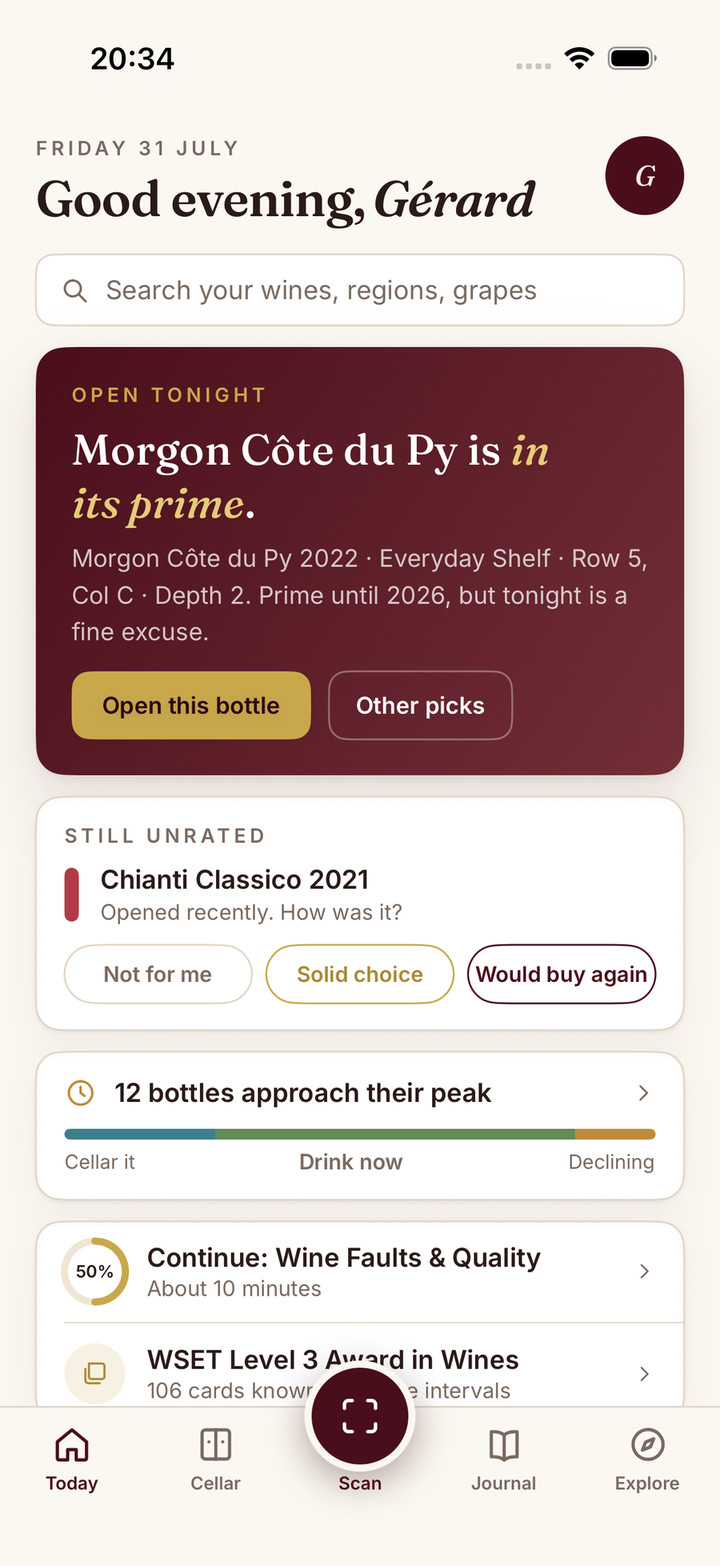
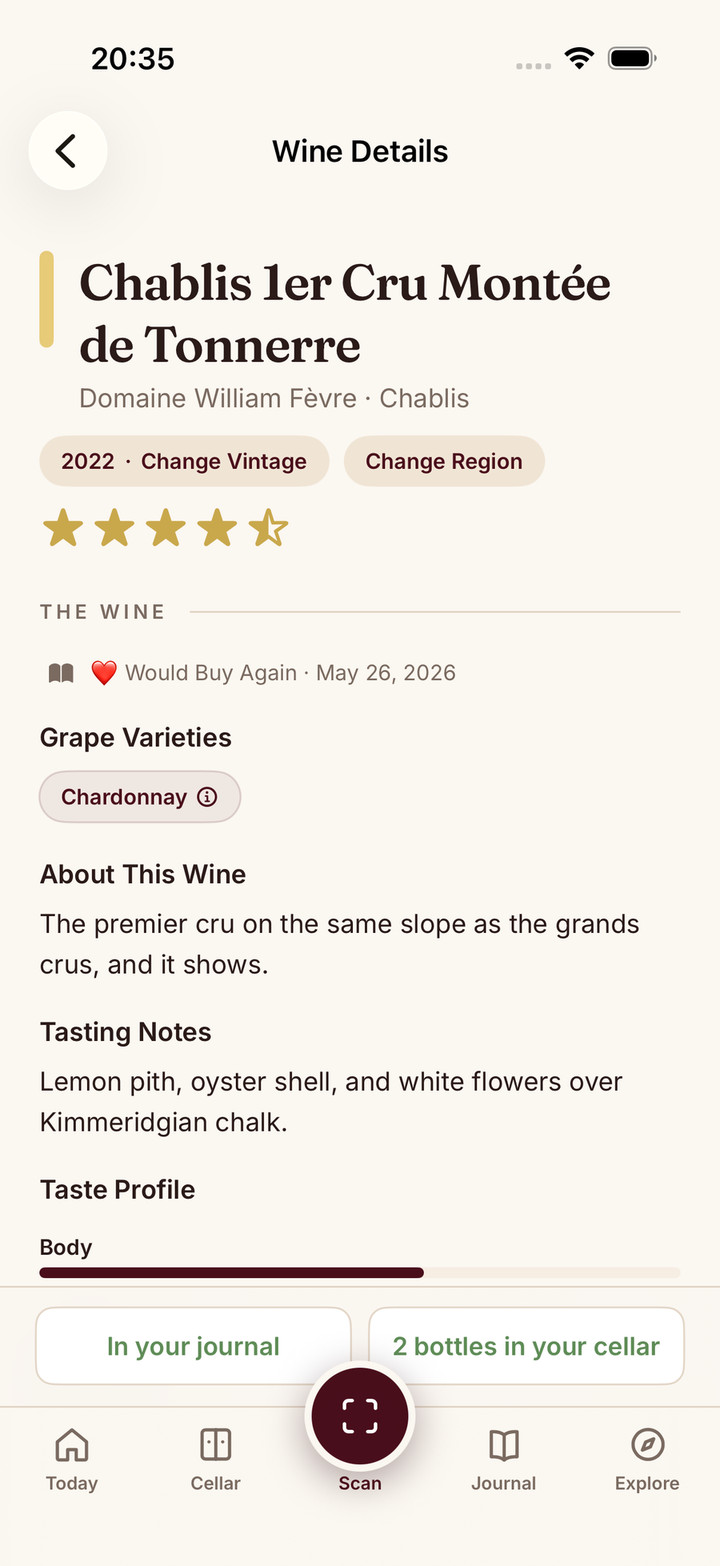
Pairings in the app · All pairings
Skip the guesswork.
Pour with confidence.
Sommo reads your cellar, checks how each bottle tastes right now, and picks the wine that fits the meal. Built by a sommelier-trained model.

 Or point your camera here