01
Wine
Duck
Soft fat and gamey sweetness need acidity to cut them and only gentle tannin to avoid stripping the meat. Our wine with duck guide covers each preparation.
- From
- Burgundy
- Also
- Willamette Valley
Duck is the best Pinot Noir food pairing, and salmon, mushrooms and roast chicken follow close behind. The full guide to what to eat with Pinot Noir.
Soft fat and gamey sweetness need acidity to cut them and only gentle tannin to avoid stripping the meat. Our wine with duck guide covers each preparation.
Salmon is oily enough to eat like meat, and low tannin means the wine never turns metallic against it. See the wine with salmon guide for cooking methods.
Forest-floor notes in a mature bottle amplify the same notes on the plate, which is umami meeting umami. More in the wine with mushrooms guide.
Duck is the best single pairing for Pinot Noir, and it is not a matter of taste. Duck carries a layer of soft fat and a sweet, faintly gamey depth that needs acidity to cut it and only gentle tannin to avoid stripping it, which is precisely the combination Pinot Noir is built on. Understand that logic and the rest of the grape’s range falls into place: this is the red wine that behaves like a white wine at the table.
Pinot Noir has thin skins and small berries, so it extracts far less tannin and color than Cabernet Sauvignon or Syrah. What lands in the glass is a light to medium body, fine-grained tannin you register as texture rather than grip, and high acidity that survives even in warm vintages. The wine is dry, usually 12.5 to 14 percent alcohol, and rarely buried in new oak: careful producers use mostly seasoned French barrels so the fruit stays visible.
The flavor arc matters as much as the structure. Young Pinot tastes of red cherry, cranberry, raspberry and rose petal. After five to ten years in bottle it turns savory: mushroom, forest floor, dried leaves, tea and cured meat. Some producers ferment with whole bunches, which adds a stemmy, peppery lift.
That gives you three tools. Acidity handles fat and salt. Low tannin means the wine will not clash with oily fish, delicate white meat or a tomato-based sauce. And the savory register is a direct bridge to umami: mushrooms, truffle, miso, soy, aged cheese. What Pinot cannot do is muscle: there is no wall of tannin for a charred, fatty steak, and no sugar to cushion chili heat.
| Dish | Why it works | Style of Pinot Noir to reach for |
|---|---|---|
| Duck breast | Fat and gamey sweetness meet acidity and red fruit | Village Burgundy or Oregon |
| Salmon | Oily enough to eat like meat, and low tannin never turns metallic | Light, barely oaked, served cool |
| Roast chicken | Sits neatly between the white meat and the roasting juices | Village-level red Burgundy |
| Mushrooms and truffle | Forest-floor notes in the wine amplify the same notes on the plate | Mature, eight years or older |
| Turkey and the trimmings | Acidity for the gravy and cranberry, weight light enough for the bird | Fruit-forward New World |
| Pork loin with apples | Sweet-savory pork mirrors the grape’s red-fruit edge | Juicy, unoaked, chilled slightly |
| Rack of lamb with herbs | A lean cut needs no tannin, and herbs meet whole-cluster spice | Structured Burgundy or Sonoma |
| Charcuterie | Salt softens tannin while cured savor mirrors older Pinot | Simple, mid-weight, chilled |
| Soft and bloomy cheese | Low tannin is the only polite choice for a creamy rind | Young, bright, low oak |
| Tuna nigiri and sushi | Red-fleshed fish and a cool light red share a delicate register | Very light, chilled to 12 C |
| Pasta with mushroom sauce | Umami on umami, with acidity keeping the cream in check | Savory, earthy, lightly oaked |
| Mushroom or white pizza | Works where a tomato base would fight the fruit | Juicy, unoaked, chilled |
| Beets, lentils and roasted roots | Earthy sweetness matches the grape’s savory side | Whole-cluster, herbal |
| Fried chicken | The surprise: acidity scrubs the fry like a squeeze of lemon | Chilled hard, simple and juicy |
In Burgundy the wine and the kitchen grew up together. Coq au vin, boeuf bourguignon, oeufs en meurette and jambon persille are all built on the same wine you pour beside them, so the acidity in the pot and the acidity in the glass agree by design. Order gougeres with a glass of village red and you have the region’s default afternoon.
Oregon settled on a different classic. Willamette Valley Pinot with Pacific salmon is the Pacific Northwest house pairing, and it works because the fish is oily enough to read as meat while the wine’s acidity keeps that richness moving. Cedar plank and light smoke only strengthen the match.
New Zealand’s Central Otago pours its darker, riper Pinot alongside farmed venison and spring lamb. The extra fruit weight of a warm southern site carries gamier meat than a lean Burgundy will, which is a useful reminder: the label tells you how much dish the bottle can take.
Serve at 12 to 14 degrees Celsius (54 to 57 Fahrenheit): twenty minutes in the fridge is enough for a bottle sitting in a warm room. Use a wide-bowled Burgundy glass so the aromatics have somewhere to go. Young village wines open up with twenty to thirty minutes in a decanter. Mature Pinot past ten years is fragile: stand it upright for a day, then pour cleanly off the sediment.
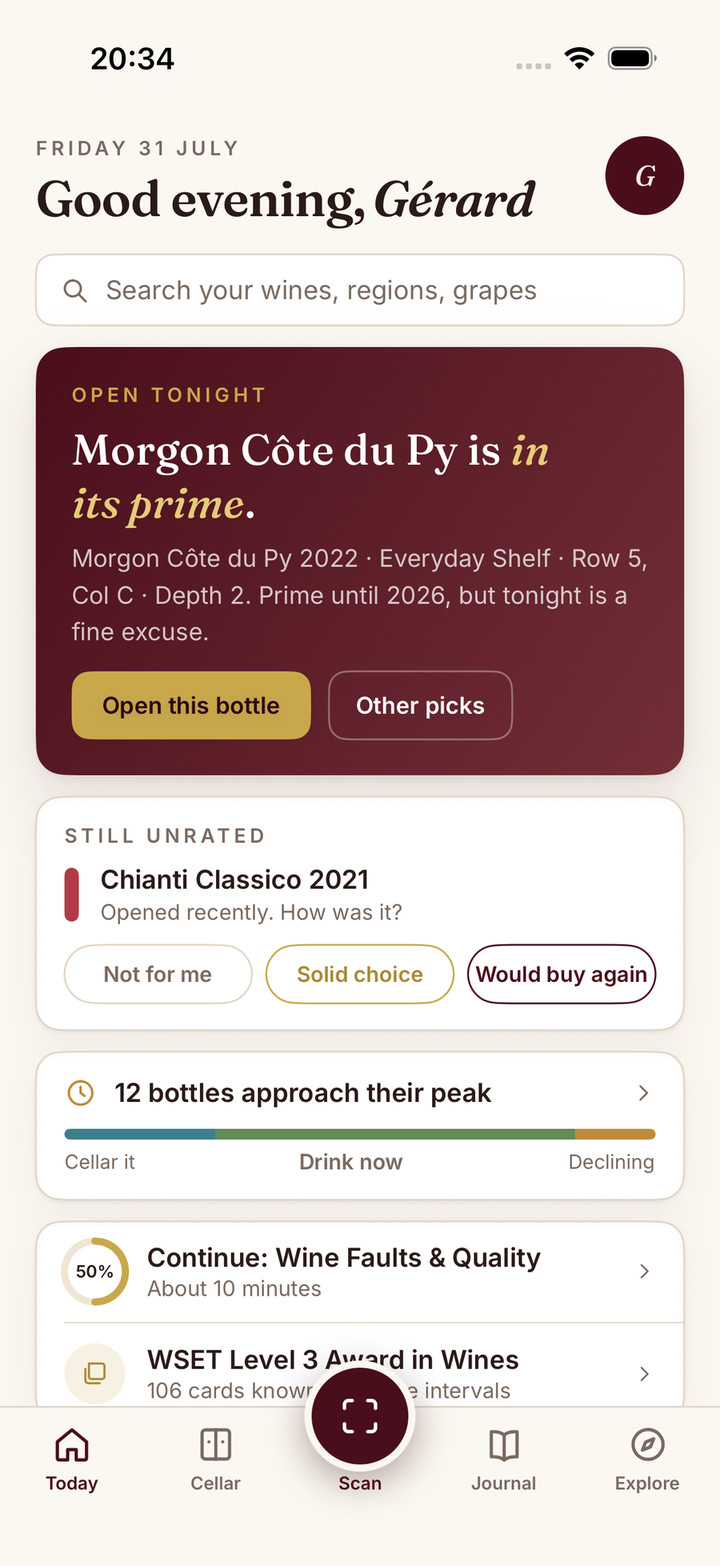
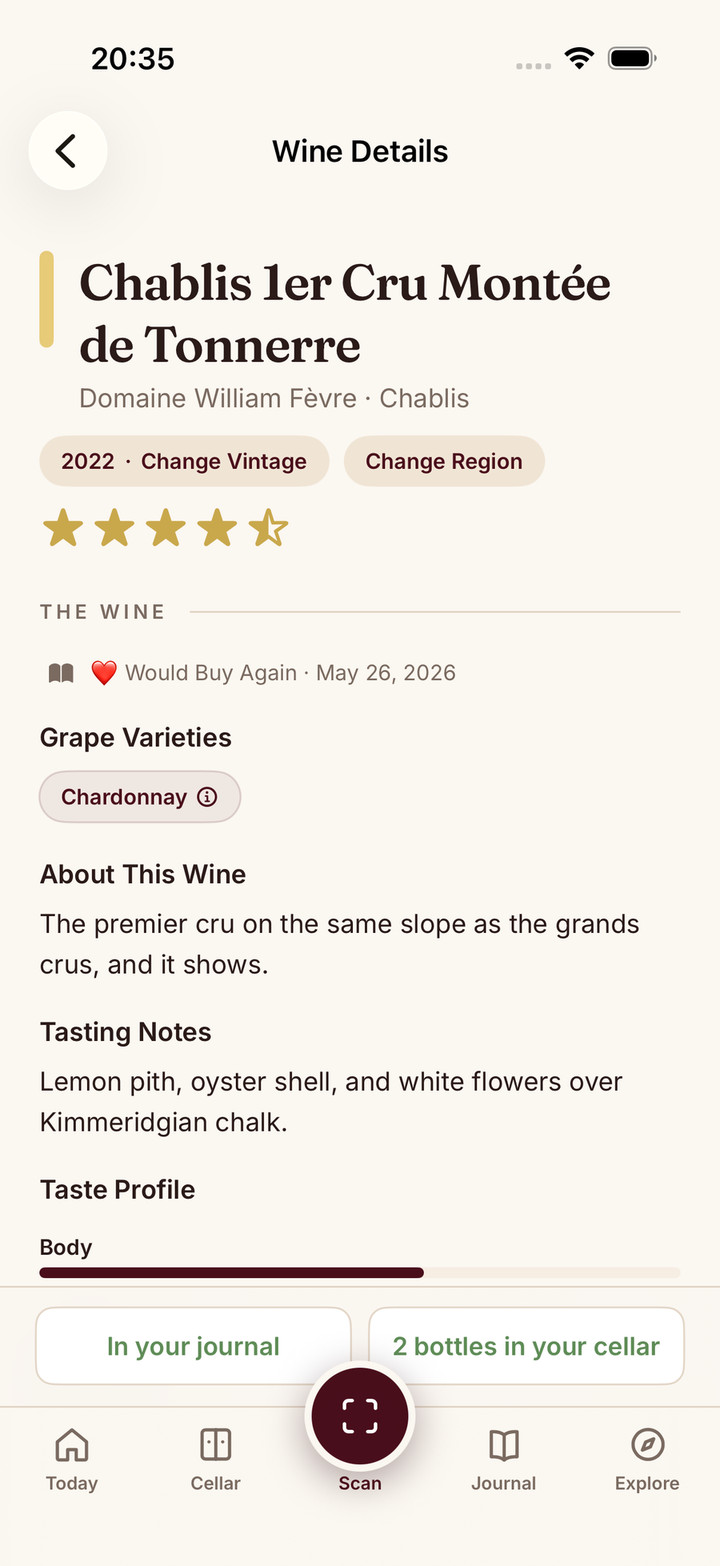
Pairing gets easier when you know what is actually in the bottle. Sommo reads a label, works out how ripe, how oaked and how mature that Pinot Noir is, and suggests the dishes that suit it tonight. Download Sommo free and let your own shelf do the work.
Sommo reads your cellar, checks how each bottle tastes right now, and picks the wine that fits the meal. Built by a sommelier-trained model.
 Or point your camera here