Recommended by style.
Sparkling
- Crémant de Loire or Cava Reserva Brut: The aperitif that should be open before coats are off. Same bottle fermentation as Champagne at a third of the price, so you pour the second one without thinking.
- Champagne Blanc de Blancs: Pure Chardonnay, chalky and citric, and the sharpest match on the table for a smoked salmon or shellfish starter.
White
- Alsace Riesling: High acidity is the only thing that resets the palate against goose fat, and the wine stays fresh for the whole course.
- Off-Dry Riesling Kabinett: Glazed ham is salty and sweet in the same mouthful. Dry wine tastes thin against it; a Kabinett meets the glaze directly.
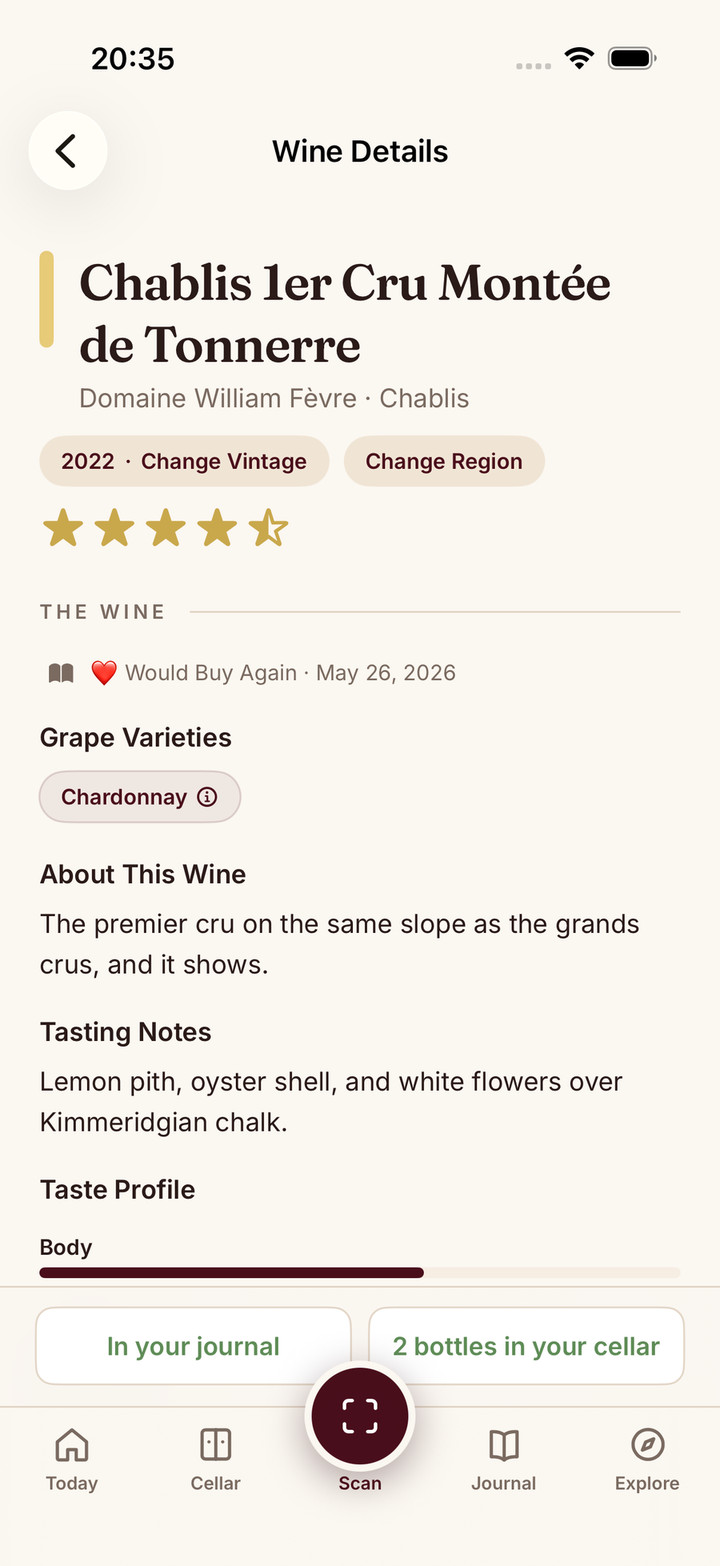
- Chablis: Chalky, unoaked Chardonnay for oysters, smoked salmon, and any cream-based starter.
Rosé
- Sparkling Rosé (Champagne or Crémant): Enough red-fruit weight to work at the table rather than only before it, especially with charcuterie and canapés.
Red
- Rioja Reserva: The most useful red on a Christmas table: dried fruit, vanilla, and leather that suit a nut roast or mushroom Wellington and that meat eaters drink happily too.
- Left Bank Bordeaux (Haut-Médoc, Saint-Julien): The one case for real tannin. Rib of beef and beef Wellington carry enough protein and fat to soften a structured Cabernet blend.
- Mature Burgundy or German Spätburgunder: Roast goose is the fattiest bird of the year. Silky, perfumed Pinot Noir gives you red wine without a tannin fight.
- Cru Beaujolais: For a turkey centerpiece. Lean, mild meat needs acidity and fruit, not structure.
Christmas is not one wine question, it is four: what you hand people at the door, what goes with the starter, what stands up to the main, and what finishes the cheese and the pudding. Solve them separately. A brut Crémant for arrivals and a Rioja Reserva for the main will carry most Christmas tables, and everything below is a refinement of that.
The Christmas wine decision table
| The course or dish | The bottle | Why it works | Rough price |
|---|---|---|---|
| Aperitif, as guests arrive | Crémant de Loire or Cava Reserva brut | Traditional method bubbles, a third the price of Champagne | $14 to $22 |
| Smoked salmon starter | Blanc de blancs Champagne or Chablis | Chalky acid against oily fish and cream | $25 to $60 |
| Charcuterie and canapés | Dry Fino Sherry or Cava | Salt loves acid, and both stay light before a heavy meal | $14 to $25 |
| Roast goose | Alsace Riesling or Grand Cru Alsace | Goose is very fatty, and only high acid resets the palate | $22 to $45 |
| Roast goose, if you want red | Mature Burgundy or German Spätburgunder | Silky Pinot with earthy depth, no tannin fight with the fat | $35 to $80 |
| Glazed Christmas ham | Off-dry Riesling Kabinett or dry Lambrusco | Salty and sweet at once needs sugar plus acid | $15 to $28 |
| Rib of beef or beef Wellington | Left bank Bordeaux (Haut-Médoc, Saint-Julien) | Tannin binds to protein and fat and softens on the palate | $30 to $70 |
| Roast turkey | Cru Beaujolais or Oregon Pinot Noir | Turkey is lean and mild, so tannin is the enemy | $18 to $35 |
| Nut roast or mushroom Wellington | Rioja Reserva or Crozes-Hermitage | Savory, earthy, and gently oaked, matching roasted nuts | $18 to $35 |
| Cheese board with Stilton | 10 year tawny Port | Sweetness and nuttiness against salt and blue mold | $25 to $40 |
| Christmas pudding or mince pies | Pedro Ximénez Sherry | Raisin and molasses run parallel to the dried fruit | $20 to $35 |
| Chocolate log or bûche | Banyuls, Maury, or LBV Port | Sweet fortified reds are the only safe chocolate partner | $18 to $30 |
| Mulled wine base | Inexpensive Languedoc Grenache or Merlot | Sugar and spice erase nuance, so never spend up here | $8 to $12 |
| Boxing Day leftovers | Côtes du Rhône or dry rosé | Cold cuts and sandwiches want something easy and chilled | $10 to $18 |
Working through the four questions
The aperitif should be sparkling, dry, and cheap enough that you open the second bottle without thinking. Crémant de Loire and Cava Reserva are made the same way as Champagne and cost a fraction of it. Pour it the moment people take their coats off, before anyone asks what there is to drink.
The starter is usually seafood, salmon, or charcuterie, and all three want acid and salt rather than fruit. Chablis and blanc de blancs Champagne both work. If your starter is soup or pâté, skip ahead and just keep the sparkling flowing.
The main is where the meal actually forks, and the four centerpieces want genuinely different wines.
Goose is the fattiest bird on any Christmas table, and fat is dissolved by acidity, not by power. Alsace Riesling is the classic answer. If the table expects red, a mature Burgundy has the perfume without the tannin.
Glazed ham is salty and sweet in the same mouthful. Dry wine tastes thin against it. An off-dry Riesling Kabinett meets the glaze directly, and a chilled dry Lambrusco is the fun version of the same idea.
Rib of beef is the one case where you should reach for tannin. Left bank Bordeaux, a Napa Cabernet, or a Ribera del Duero Reserva all have the structure that beef fat softens.
Nut roast and mushroom Wellington are savory and earthy rather than sweet, so treat them like a mushroom dish. A Rioja Reserva, with its dried fruit, vanilla, and leather, is the most reliable pick, and it is also the bottle the meat eaters will happily drink.
The cheese and the pudding need sweetness. The rule is simple: the wine has to be sweeter than the food, or it will taste sour. Tawny Port covers Stilton, Pedro Ximénez covers Christmas pudding, and Banyuls covers chocolate.
Christmas gift bottles at three tiers
Under $25. A 10 year tawny Port. It keeps for weeks after opening, so the recipient is not committed to finishing it in one night, and it drinks beautifully alone by a fire.
$30 to $60. A grower Champagne or a Rioja Gran Reserva. Grower Champagne carries more character than most large house cuvées at the same price, and a Gran Reserva with ten years of age costs a fraction of comparably aged Bordeaux.
$80 and above. A vintage Port from a declared year, a village Burgundy, or a classified Bordeaux from a birth year or wedding year. Write down why you chose it. The note is half the gift.
Buy Christmas wine with Sommo
Scan a bottle in the shop and Sommo tells you its style, its structure, and what it pairs with before you commit. Keep your Christmas list in your journal from October so you are not making decisions in a crowded store on December 23. Download Sommo and shop the holidays with a plan.
Pro tips.
- Treat the day as four separate questions: aperitif, starter, main, and cheese with pudding. Solving them separately is far easier than hunting for one wine.
- A sweet wine must be sweeter than the dessert or it tastes sour. Pedro Ximénez for Christmas pudding, tawny Port for Stilton, Banyuls for chocolate.
- Never spend up on mulled wine. Citrus, sugar, and clove erase nuance, so an $8 Languedoc red is the right choice.
- For eight guests: two sparkling, three red, two white, and one fortified or sweet. Then buy two spares.