Low tannin wines are reds with minimal astringency, made from thin-skinned grapes such as Gamay, Cinsault, and Pinot Noir with short skin contact and little new oak. They feel smooth rather than drying, and they are dry rather than sweet.Quick definition
Tannin is the reason many people decide red wine is not for them. It is the drying, gripping sensation on the gums and the roof of the mouth, and it varies enormously from grape to grape. A glass of Beaujolais and a glass of young Barolo are both red wine, but they land on the palate like two different drinks.
The chart below ranks the common red grapes from the softest to the fiercest, so you can pick by texture rather than by trial and error.
Tannin Levels by Grape
| Grape | Tannin | Body | Note |
|---|---|---|---|
| Gamay | Very low | Light | The Beaujolais grape: crunchy red berry, almost no grip |
| Cinsault | Very low | Light | Pale southern French red, floral and soft, good chilled |
| Frappato | Very low | Light | Sicilian, strawberry scented, red wine with the volume down |
| Pinot Noir | Low | Light to medium | Thin skins, silky texture, the classic gateway red |
| Corvina | Low | Light to medium | The Valpolicella grape: sour cherry, bright acid, low grip |
| Zweigelt | Low | Light to medium | Austrian, juicy dark cherry with a peppery edge |
| Barbera | Low | Medium | High acid, soft tannin, built for the dinner table |
| Grenache | Low to medium | Medium to full | Ripe strawberry and warm alcohol, tannin stays gentle |
| Merlot | Medium | Medium to full | Plummy and round, grip is present but rarely aggressive |
| Montepulciano | Medium | Medium to full | Abruzzo everyday red, dark fruit with a soft finish |
| Zinfandel | Medium | Full | Jammy fruit and high alcohol mask a moderate grip |
| Nero d’Avola | Medium | Full | Sicilian black cherry and herbs, plush rather than sharp |
| Tempranillo | Medium | Medium to full | Rioja style oak aging rounds the tannin further |
| Cabernet Franc | Medium | Medium | Leafy and aromatic, fine grained rather than heavy |
| Sangiovese | Medium to high | Medium | Firm and savory, Chianti is designed to be eaten with |
| Malbec | Medium to high | Full | Real tannin, but an unusually smooth texture |
| Syrah | Medium to high | Full | Peppery and dark, grip climbs in warmer climates |
| Mourvedre | High | Full | Dense and gamey, wants time or a fatty plate |
| Touriga Nacional | High | Full | Portuguese, floral, powerfully structured |
| Cabernet Sauvignon | High | Full | Thick skins plus oak, the benchmark tannic red |
| Aglianico | Very high | Full | Southern Italy, tannin that takes years to settle |
| Nebbiolo | Very high | Medium to full | Pale color, ferocious grip, the great tannin paradox |
| Tannat | Very high | Full | Named for its tannin, at home in Madiran and Uruguay |
Treat the levels as ranges rather than fixed values. A cool climate Syrah made without new oak can feel softer than a heavily extracted Merlot, and producer style shifts any grape by a notch in either direction.
What Tannin Actually Is
Tannins are polyphenolic compounds concentrated in grape skins, seeds, and stems, and also present in oak barrels. During fermentation the juice sits in contact with the skins, and the longer that contact lasts, the more tannin ends up in the finished wine. White wines are pressed off their skins immediately, which is why tannin is essentially a red wine question.
What you feel is not a flavor. Tannins bind with the proteins in your saliva and pull them out of solution, which is what produces the rough, dried out sensation on your gums. That makes tannin part of a wine’s texture, alongside body and acidity, rather than part of its taste. For the full definition, see tannins in the glossary.
Tannin earns its place. It gives a wine structure, holds up against rich food, and is the main reason certain reds improve for decades. The problem is not tannin itself, it is tannin in a wine you wanted to drink tonight.
Why Some People Are More Sensitive
The same glass genuinely feels harsher to some drinkers than to others, for a few reasons.
Saliva. Astringency is a reaction between tannin and salivary proteins, and saliva volume and composition vary between people and across the day. Less saliva means more perceived grip. Medications that dry the mouth make tannic wine noticeably rougher.
Bitterness. Tannin can register as bitter as well as drying, and sensitivity to bitter compounds is partly genetic. Drinkers who find black coffee, grapefruit pith, or dark chocolate too bitter often react the same way to a tannic red.
Headaches. Tannin takes most of the blame here, but the evidence is not settled, and alcohol, dehydration, and histamines are better documented triggers. If you are working through this question, red wine headaches covers what is known and what is folklore. The practical test is simple: if a low tannin red at 13 percent alcohol still causes trouble, the tannin was not the problem.
How Winemaking and Aging Change Tannin
Grape variety sets the ceiling. Everything after that is choice.
- Maceration time. Maceration is the skin contact period. A few days of gentle soaking extracts far less tannin than three weeks of vigorous extraction.
- Stems. Fermenting with whole clusters adds stem tannin, which is greener and more angular than skin tannin.
- Carbonic maceration. The technique behind most Beaujolais ferments whole berries in a sealed tank, extracting color and fruit while leaving most of the tannin behind.
- Press fraction. Free run juice is softer, hard pressed juice carries much more tannin, and blending decisions shift the final texture.
- Oak. New barrels contribute their own tannin, older neutral barrels contribute almost none, and stainless steel contributes nothing.
- Bottle age. Over years, tannin molecules link into longer chains that eventually precipitate as sediment. The wine feels rounder because there is literally less tannin held in solution.
The Lowest Tannin Reds to Buy
If you want a red with no drying finish, buy by style rather than by grape name alone.
- Beaujolais and Beaujolais-Villages. The safest bet in the category, and the cru bottlings such as Fleurie and Brouilly add depth without adding grip.
- Valpolicella Classico. Not Amarone or Ripasso, which are far heavier. The straightforward version is light, sour cherry driven, and gentle.
- Cool climate Pinot Noir. Silky by nature, and widely available at every price.
- Cerasuolo di Vittoria. Sicilian Frappato and Nero d’Avola blended into something perfumed and light footed.
- Barbera d’Asti. High acidity and low tannin, which makes it feel lively rather than heavy.
- Lightly chilled reds. Twenty minutes in the fridge suits all of the above.
For specific bottles and price bands, we keep two working lists: the best low tannin red wines and smooth low tannin reds for people who find most reds too harsh. If you are earlier in the journey, red wines for beginners starts from the same place.
How to Soften a Bottle You Already Own
Five adjustments, in order of how much difference they make.
- Eat with it. Protein and fat bind tannin before it reaches your saliva. Steak, roast lamb, aged cheese, or a bean stew will soften a tannic red more than anything else on this list.
- Decant it. An hour of air rounds young tannin measurably. See decanting for the method, or the longer walkthrough on how to decant wine.
- Serve it warmer, not colder. Cold accentuates tannin and bitterness. A tannic red at 60 to 65°F reads far smoother than the same wine at 50°F.
- Use a bigger glass. A wide bowl gives the wine more air and more room for the aromatics that distract from the grip.
- Wait a day. Recork it and try again tomorrow. Many young, structured reds are simply better on the second evening.
Frequently Asked Questions
Which red wine has the lowest tannin?
Gamay, the grape behind Beaujolais, sits at the bottom of the scale, along with Cinsault and Sicilian Frappato. All three have thin skins and are usually made with short skin contact and little or no new oak, so they taste of crunchy red fruit with almost no drying grip.
Does low tannin mean sweet wine?
No. Tannin and sugar are unrelated. Almost every low tannin red on this chart is fully dry, including Gamay, Pinot Noir, and Barbera. What softer tannin changes is texture rather than sweetness, so the wine feels smoother in the mouth without tasting sugary.
Do tannins cause red wine headaches?
Tannins get blamed most often, but the evidence is not settled and alcohol, dehydration, and histamines are better documented triggers. If low tannin reds still cause you trouble, the tannin is probably not the culprit. Lower alcohol wines and a glass of water per glass of wine are the more useful experiment.
How can I make a tannic red wine taste smoother?
Decant it for an hour, serve it at 60 to 65°F rather than cold, use a wide bowled glass, and drink it with protein and fat. Steak, hard cheese, and roasted lamb bind tannin so the wine reads noticeably softer. A cold, tannic red in a small glass is the harshest version of itself.
Does aging reduce tannin in wine?
It changes it more than it removes it. Over years in bottle the tannin molecules link into longer chains that eventually fall out as sediment, so an older wine feels rounder and less grippy. That process needs a wine built to age, and it will not rescue a cheap tannic bottle.
Explore with Sommo
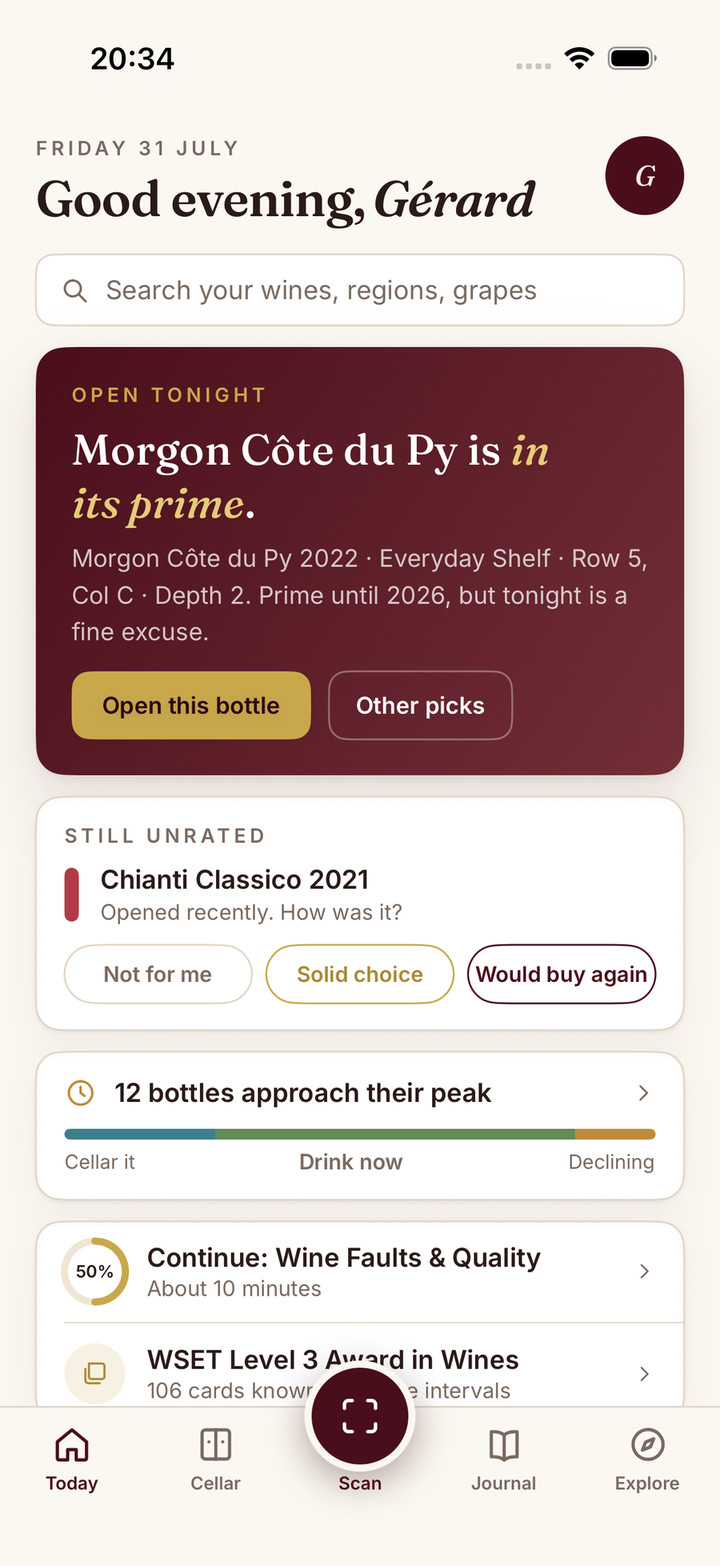
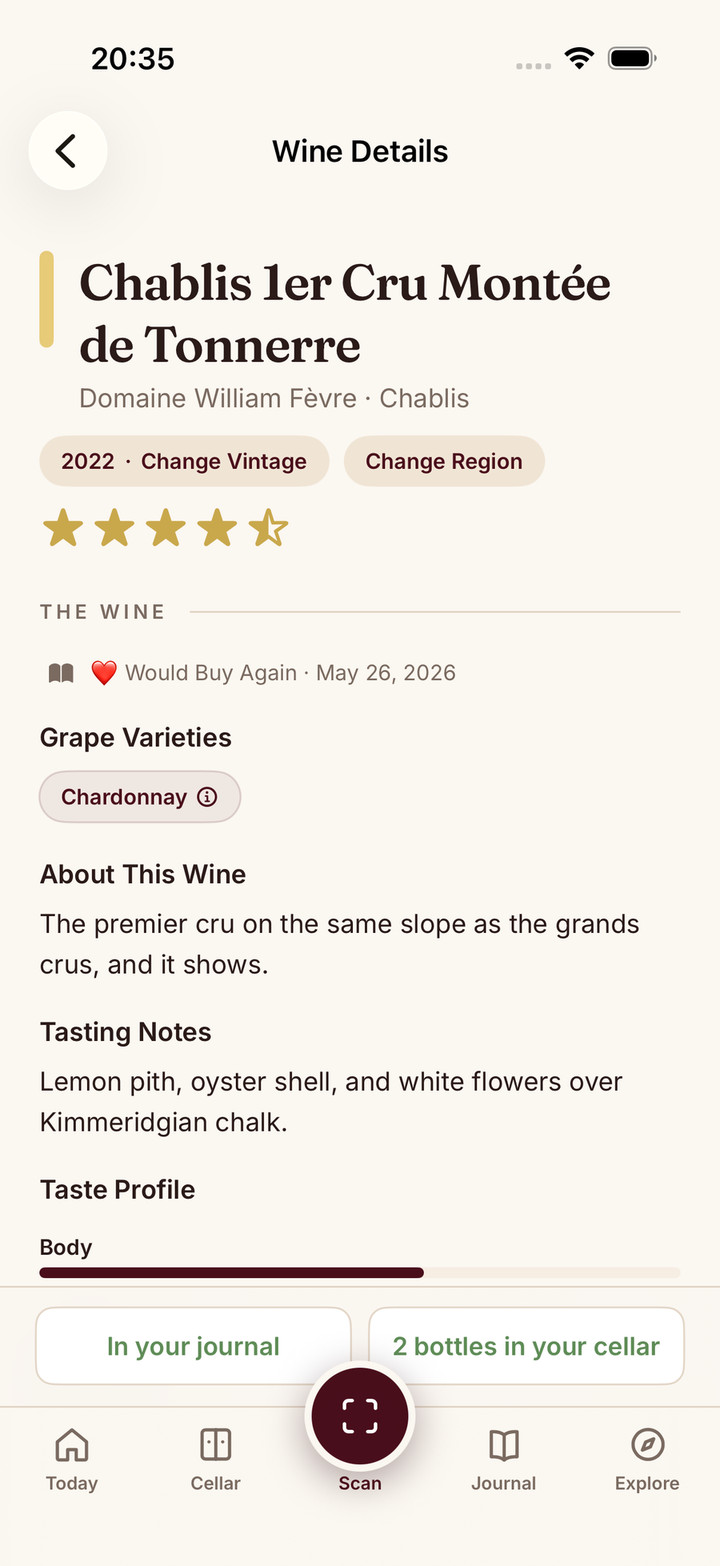
Tannin is easier to understand once you can compare it. Scan any red label with Sommo to see its typical structure before you open it, log how the tannin actually felt to you, and let the app build a picture of where your own tolerance sits. After a dozen entries you will know your grapes by texture, not by guesswork.
Related terms.
tannins · maceration · body