What Is Decanting Wine? How and Why to Decant
Learn what decanting is, why it improves wine, which wines benefit most, and how to decant properly. A practical guide for wine beginners and enthusiasts.
Decanting means pouring wine from the bottle into a separate container to expose it to air and separate it from sediment. It helps young wines open up and older wines serve clear.
Decanting is one of the simplest things you can do to improve your wine experience, yet many people skip it because it seems fussy or old-fashioned. In reality, decanting is a practical technique that can transform how a wine tastes, and it does not require any special equipment beyond a clean vessel.
What Is Decanting?
Decanting is the process of slowly pouring wine from its original bottle into a separate container, called a decanter. This serves two distinct purposes depending on the type of wine. For young wines, decanting is primarily about aeration: exposing the wine to oxygen so it can open up, release volatile aromas, and soften any harsh edges. For older wines, decanting is mainly about separating the wine from sediment that has accumulated during years of bottle aging.
The decanter itself can be any clean, inert vessel, though purpose-built decanters come in various shapes designed to maximize the wine’s surface area exposure to air. Wide-bottomed decanters are ideal for young wines that need aggressive aeration, while narrow-necked designs work well for delicate older wines that need minimal air contact.
Why Decanting Matters
Young, tannic red wines benefit enormously from decanting. When a bottle is opened and poured directly into glasses, the wine may taste tight, closed, or even harsh. The tannins might feel grippy and aggressive, the fruit might seem muted, and the overall impression can be underwhelming. Decanting these wines for thirty minutes to two hours gives the oxygen time to soften the tannins, release aromatic compounds, and allow the wine to express its full potential.
Think of it this way: when you wake up in the morning, you need a few minutes to shake off sleep and become fully alert. Young wines are similar. They have been sealed in a bottle with virtually no oxygen, and they need time to breathe before they show their best.
For older wines, typically those aged ten years or more, sediment is the primary concern. As wines age, tannins and pigment molecules bond together and fall out of suspension, forming a gritty residue at the bottom of the bottle. While sediment is harmless, it creates an unpleasant muddy texture if poured into your glass. Careful decanting separates the clear wine from this deposit.
Decanting in Practice
For young red wines, the process is straightforward. Remove the foil and cork, then pour the wine steadily into your decanter. You can be relatively vigorous with the pour since the goal is to splash the wine and maximize air contact. Let it sit for at least thirty minutes before serving. Bold wines like Cabernet Sauvignon, Syrah, Barolo, and Malbec often benefit from one to two hours of decanting. Some particularly tannic wines can improve with even more time.
For older wines, the technique requires more care. Stand the bottle upright for at least twenty-four hours before opening to let the sediment settle to the bottom. Open the bottle gently and pour very slowly into the decanter while holding a light source, such as a candle or phone flashlight, under the neck of the bottle. Watch for the sediment to reach the neck and stop pouring before it flows into the decanter. Serve the wine relatively soon after decanting, as very old wines are fragile and can fade quickly with too much air exposure.
Not every wine needs decanting. Most white wines and light-bodied reds are ready to drink straight from the bottle. Sparkling wines should never be decanted, as the process would cause them to lose their bubbles. However, full-bodied white wines, particularly aged Burgundy or oak-aged Chardonnay, can sometimes benefit from brief decanting.
If you do not have a decanter, pouring the wine into a clean pitcher or large glass and swirling it vigorously achieves a similar effect. Some people even pour wine into a blender for a few seconds, a technique called hyperdecanting, though purists might disapprove.
Explore with Sommo
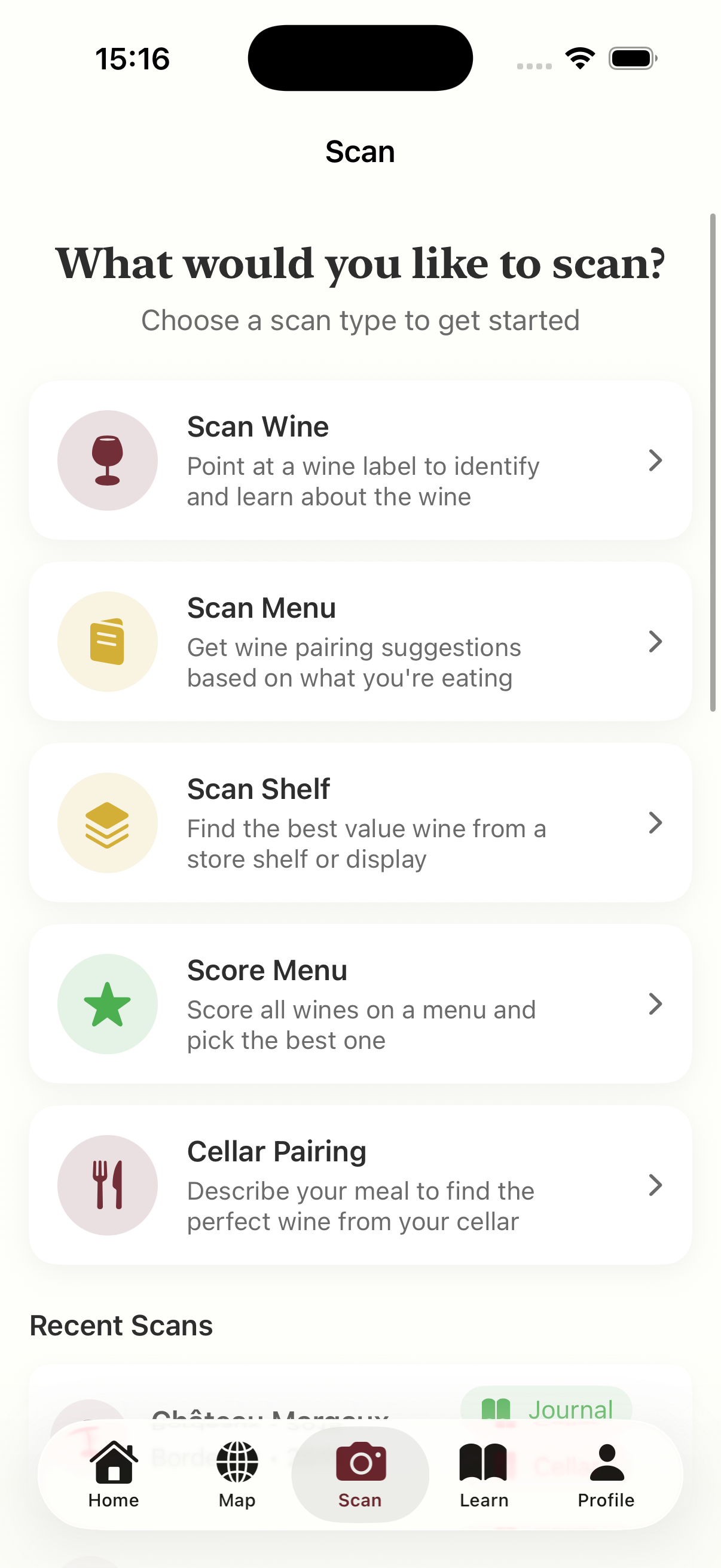
Knowing when and how to decant can dramatically improve your wine experience. With Sommo, you can scan any bottle to learn whether it benefits from decanting and for how long, along with optimal serving temperature and food pairing recommendations tailored to the specific wine.
Learn wine, one glass at a time
Go beyond definitions with guided lessons, tasting practice, and AI feedback.