Body in Wine: Light to Full-Bodied Guide
Understand what body means in wine tasting, what determines whether a wine is light or full-bodied, and how to use body to choose wines you will love.
Body describes how heavy or light a wine feels in your mouth, ranging from light-bodied to full-bodied. It is influenced by alcohol level, residual sugar, and extract concentration.
When someone describes a wine as “full-bodied” or “light-bodied,” they are talking about one of the most fundamental characteristics of how wine feels. Body is an essential concept for wine beginners and a key tool for choosing wines that match your preferences and the food on your plate.
What Is Body in Wine?
Body refers to the perceived weight and fullness of a wine in your mouth. It is a textural quality rather than a flavor, and it is one of the first things you notice when you take a sip. The simplest analogy is dairy: a light-bodied wine feels like skim milk in your mouth, a medium-bodied wine feels like whole milk, and a full-bodied wine feels like cream.
Several factors contribute to a wine’s body. Alcohol is the biggest driver, since ethanol has a heavier, more viscous texture than water. Wines with higher alcohol levels, typically above 13.5 percent, tend to feel fuller-bodied. Residual sugar also adds weight, as does extract, which refers to the dissolved solids from grape skins and pulp. Glycerol, a natural byproduct of fermentation, adds a slight oily richness as well.
Why Body Matters
Understanding body is one of the most practical skills in wine. It helps you select wines that match both your personal taste and the occasion. If you enjoy delicate, refreshing drinks, you will likely gravitate toward light-bodied wines. If you prefer bold, enveloping flavors, full-bodied wines will feel more satisfying.
Body is also crucial for food pairing. The general rule is to match the weight of the wine to the weight of the food. A light-bodied Pinot Grigio works beautifully with a delicate steamed fish fillet but would be overwhelmed by a hearty beef stew. Conversely, a full-bodied Cabernet Sauvignon would overpower subtle seafood but stands up brilliantly to a charred ribeye steak.
For WSET students, assessing body is a required component of the Systematic Approach to Tasting. You need to evaluate whether a wine is light, medium-minus, medium, medium-plus, or full in body, and consider how body relates to the wine’s overall balance and quality.
Body in Practice
Light-bodied wines include many whites like Muscadet, Vinho Verde, and Riesling from cooler climates, as well as reds like Beaujolais (Gamay) and some Pinot Noirs. These wines tend to have lower alcohol, higher acidity, and a refreshing, easy-drinking quality. They are excellent as aperitifs or with lighter fare like salads, shellfish, and fresh vegetables.
Medium-bodied wines occupy the versatile middle ground. Think of unoaked Chardonnay, Grenache rosé, Merlot, Sangiovese, and Tempranillo. These wines pair with the widest range of foods and are often the most crowd-pleasing choices at dinner parties. They have enough weight to complement pasta dishes, roasted chicken, grilled vegetables, and medium-intensity cheeses.
Full-bodied wines include Cabernet Sauvignon, Syrah, Malbec, and Zinfandel among reds, and oaked Chardonnay and Viognier among whites. These wines feel rich and mouth-coating, with high alcohol, concentrated flavors, and often significant tannins (in reds). They demand robust food partners: grilled red meats, braised short ribs, aged cheddar, and dark chocolate.
A simple trick to gauge body is to swirl the wine in your glass and watch the “legs” or “tears” that form on the inside of the glass. Thicker, slower-moving legs generally indicate higher alcohol and a fuller body, though this is not an exact science.
Explore with Sommo
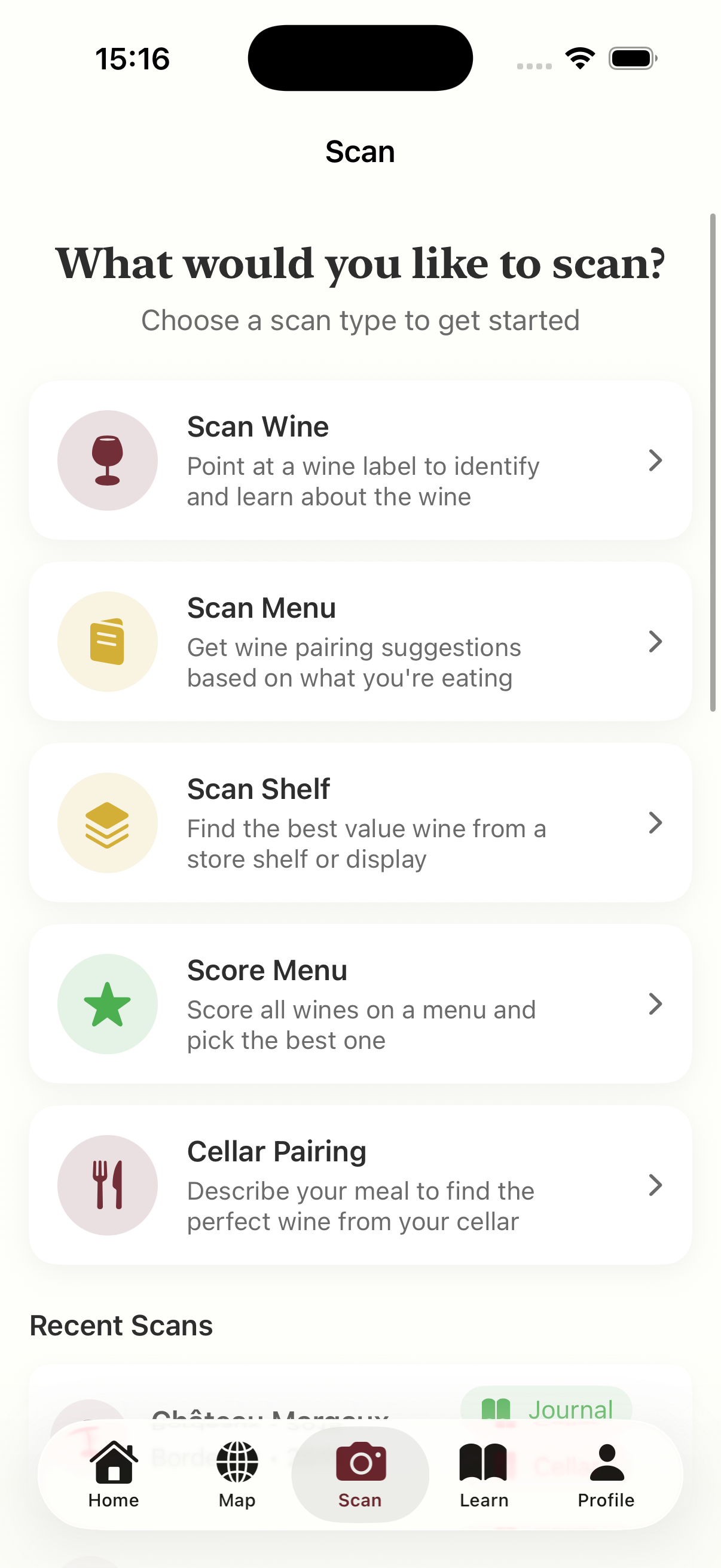
Learning to identify wine body is a skill that develops with practice. Sommo’s structured tasting notes walk you through evaluating body as part of the Systematic Approach to Tasting, helping you build confidence in describing what you taste. Scan any wine to see its body profile and discover food pairings that complement its weight and texture.
Learn wine, one glass at a time
Go beyond definitions with guided lessons, tasting practice, and AI feedback.