Appellation
ClassificationAn appellation is a legally protected wine-growing region with regulations governing grape varieties, yields, and winemaking practices. It guarantees geographic origin and a baseline standard of production.
Learn essential wine vocabulary. From tannins to terroir, our comprehensive wine glossary explains every term you need to speak confidently about wine.
From Appellation to Acidity.
An appellation is a legally protected wine-growing region with regulations governing grape varieties, yields, and winemaking practices. It guarantees geographic origin and a baseline standard of production.
Acidity refers to the tart, crisp quality in wine that makes your mouth water and provides freshness. It is a key structural component that affects balance, food pairing, and aging potential.
From Body to Biodynamic Wine.
Body describes how heavy or light a wine feels in your mouth, ranging from light-bodied to full-bodied. It is influenced by alcohol level, residual sugar, and extract concentration.
Bouquet refers to the secondary and tertiary aromas that develop in wine through aging, such as leather, tobacco, and dried fruit. It is distinct from the primary fruit aromas of a young wine.
Biodynamic wine comes from vineyards farmed on biodynamic principles: an organic base plus special preparations, a lunar calendar, and a holistic view of the vineyard as one living system, certified by bodies such as Demeter.
From Cuvee.
Cuvee is a French winemaking term for a specific blend or batch of wine. In Champagne, it often refers to the best juice from pressing; elsewhere, it typically indicates a special selection or flagship blend.
From Decanting to Demi-Sec.
Decanting means pouring wine from the bottle into a separate container to expose it to air and separate it from sediment. It helps young wines open up and older wines serve clear.
Demi-sec means 'half-dry' in French and describes wines with noticeable sweetness. In Champagne, it indicates a sweetness level of 32-50 grams of residual sugar per liter.
From Finish.
The finish is the taste and sensation that lingers in your mouth after you swallow wine. A long, evolving finish is a key indicator of wine quality.
From Lees to Light-Bodied White Wines.
Lees are the sediment of dead yeast cells that settle during fermentation. Aging wine on its lees (sur lie) adds richness, creaminess, and complex flavors like biscuit and brioche.
Low tannin wines are reds with minimal astringency, made from thin-skinned grapes such as Gamay, Cinsault, and Pinot Noir with short skin contact and little new oak. They feel smooth rather than drying, and they are dry rather than sweet.
Light-bodied white wines are dry or near-dry wines with modest alcohol, little oak and a delicate palate weight, commonly made from grapes such as Pinot Grigio, Melon, Picpoul, Vermentino and Riesling.
From Malolactic Fermentation to Minerality.
Malolactic fermentation is a process where bacteria convert tart malic acid into smoother lactic acid, giving wines a softer, creamier texture. It is standard in red wines and buttery-style Chardonnays.
Maceration is the soaking of grape skins, seeds, and stems in juice to extract color, tannins, and flavors. It is the key process that gives red wine its color and tannic structure.
Minerality describes stone-like, flinty, or chalky flavors and textures in wine. It is commonly associated with cool-climate white wines, though its exact origin remains scientifically debated.
From Nose.
The nose refers to the aromas and scents you detect when smelling a wine. It is the first step in wine evaluation and can reveal grape variety, age, winemaking technique, and potential faults.
From Oxidation to Oenology.
Oxidation occurs when wine is exposed to oxygen, altering its color and flavor. Controlled oxidation creates Sherry-like nutty flavors, while uncontrolled oxidation is a fault that makes wine taste flat and stale.
Oenology (also spelled enology) is the science of wine and winemaking, focused on how grape juice is transformed into finished wine through fermentation, ageing, blending, and stabilisation.
From Residual Sugar.
Residual sugar is the unfermented grape sugar left in wine after fermentation stops. It determines a wine's sweetness level, from bone-dry (under 4 g/L) to sweet (over 45 g/L).
From Sommelier.
A sommelier is a certified wine professional who specializes in wine service, food pairing, and cellar management. They guide guests through wine selections in restaurants and hospitality settings.
From Tannins to Tasting Notes.
Tannins are natural compounds from grape skins, seeds, and oak barrels that give wine its characteristic dry, astringent mouthfeel. They are most prominent in red wines and contribute to a wine's structure and aging potential.
Terroir is the combination of soil, climate, topography, and local conditions that give a wine its unique character and sense of place. It explains why the same grape variety tastes different when grown in different locations.
Tasting notes are the structured written record of a wine's characteristics (appearance, nose, palate, and conclusions) used to analyse, remember, and communicate about wine.
From Varietal to Vintage.
A varietal is a wine labeled by its dominant grape variety, such as Merlot or Chardonnay. Most wine laws require at least 75-85% of the named grape to use a varietal label.
Vintage refers to the year in which a wine's grapes were harvested. It indicates the growing conditions of that year and helps determine a wine's character and aging potential.
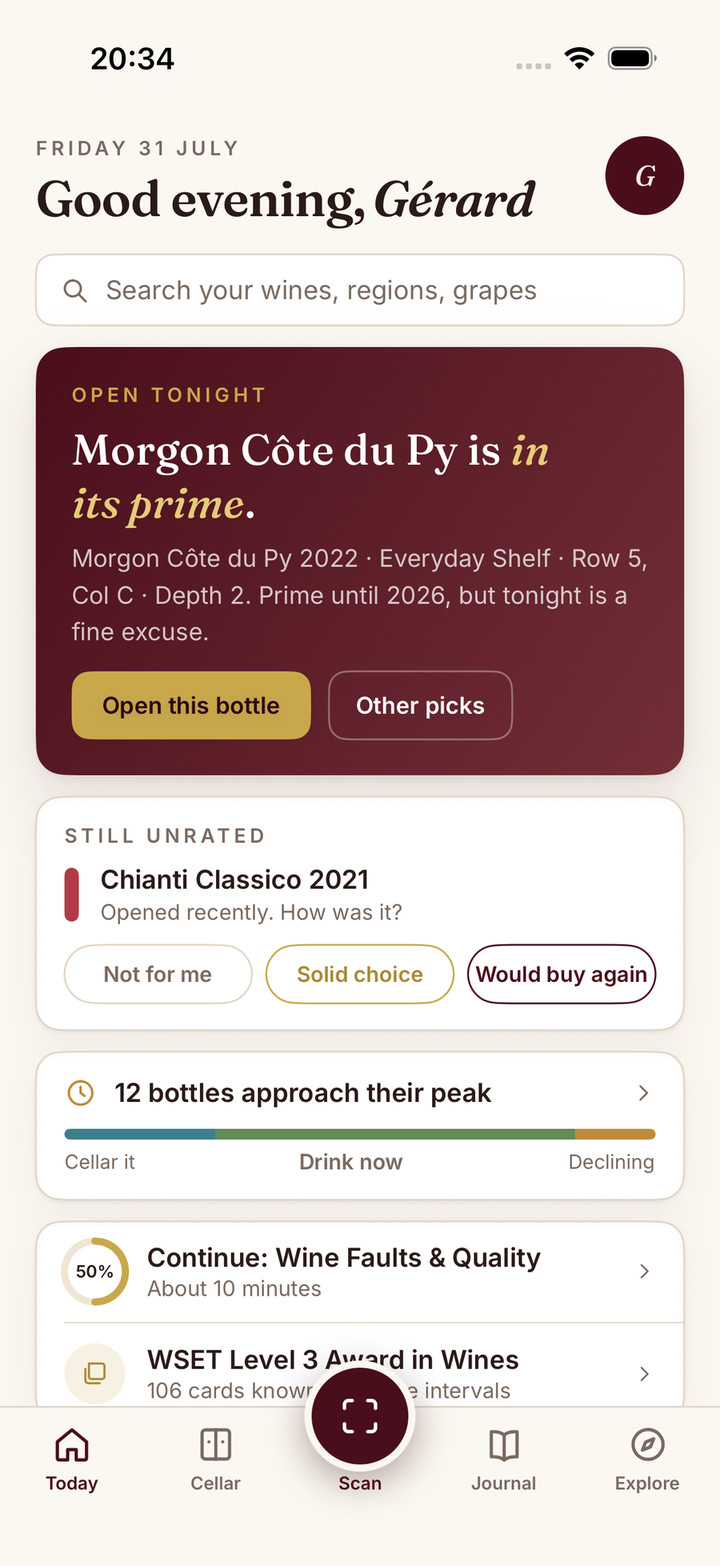
Tap any term in your Sommo journal to see the definition without leaving the page.
 Or point your camera here