Nebbiolo is the grape. Barolo and Barbaresco are neighbouring Piedmont appellations that must make their red wines entirely from Nebbiolo. A Langhe Nebbiolo usually offers the grape's rose, cherry, high acidity and tannin earlier and more cheaply. Barolo is normally the most structured and longest lived, with at least 38 months of ageing before release. Barbaresco requires at least 26 months and often opens sooner with finer perfume. Start with Langhe Nebbiolo, drink Barbaresco next, cellar Barolo longest.Quick answer
Side by side.
| Attribute | Langhe NebbioloRed | Barolo and BarbarescoRed |
|---|---|---|
| What it is | A grape and usually a broader regional wine | Two protected Piedmont appellations |
| Grape | Nebbiolo | 100% Nebbiolo |
| Body | Medium | Medium plus to full |
| Tannin | High but often earlier drinking | Very high in Barolo; high and finer in Barbaresco |
| Acidity | High | High |
| Minimum ageing | Depends on denomination and producer | Barolo 38 months; Barbaresco 26 months |
| Flavour profile | Rose, sour cherry, herbs and liquorice | Rose, cherry, tar, truffle, spice and dried flowers |
| Best use | Learning the grape and drinking earlier | A serious meal, ageing and mature complexity |
| Typical price | Usually the accessible entry | Higher, with Barolo usually the premium |
Taste profile, side by side.
Which Nebbiolo should you open?
When to choose which.
Langhe Nebbiolo
Choose Langhe Nebbiolo to learn the grape, drink it younger and spend less while keeping the rose, cherry, acidity and tannin that define the variety.
Barolo and Barbaresco
Choose Barbaresco for perfume and an earlier window, or Barolo for the firmest structure, longest cellar life and most powerful expression.
Nebbiolo is the grape. Barolo and Barbaresco are neighbouring Piedmont appellations that make their greatest red wines entirely from it. Langhe Nebbiolo is usually the accessible first bottle, Barbaresco the earlier-opening regional expression and Barolo the most structured cellar project. The shared signature is rose, sour cherry, high acidity and serious tannin.
The Three Names Explained
| Name | What it means | Best use |
|---|---|---|
| Nebbiolo | The grape variety | Learn the variety across several denominations |
| Langhe Nebbiolo | A broader Piedmont denomination | Earlier drinking and value |
| Barolo | A protected Nebbiolo appellation | Maximum structure and long ageing |
| Barbaresco | A protected Nebbiolo appellation | Perfume, finesse and an earlier window |
The name on the grape line and the name on the place line are not rivals. Nebbiolo can make wine across Piedmont. Barolo and Barbaresco tell you where a qualifying wine came from and which production rules it followed.
Why the Grape Feels So Distinctive
Nebbiolo can look pale while feeling severe. Its colour fades faster than the deep purple of many young reds, yet acidity and tannin remain high. Aromas begin with sour cherry, rose, violet, herbs and liquorice, then move toward tar, leather, dried flowers and truffle with age.
That combination explains the patience. Fruit can seem ready before the tannin has softened, especially in a young Barolo. The low tannin chart places Nebbiolo at the opposite end for a reason.
Langhe Nebbiolo: The Starting Bottle
Langhe Nebbiolo usually comes to market younger and with less extract or oak than Barolo. The broader denomination gives a producer flexibility, and some bottles include fruit from highly regarded vineyards that was not used for the flagship wine.
Choose it when you want the grape at dinner rather than in ten years. It is excellent with mushroom pasta, roast pork, salumi and hard cheese. It is still high in acid and tannin, so do not expect a soft red.
Barolo: The Firmest Structure
Barolo comes from a defined group of communes in the Langhe hills and requires at least 38 months of ageing before release, including time in wood. Riserva requires longer. The category contains many soils, exposures and producer styles, but the classic expectation is firm structure and a long life.
Buy it for braised beef, truffle, aged cheese or a cellar plan. The Barolo vintage chart helps separate a great year that still needs time from a modest year that is ready now.
Barbaresco: Finesse and Earlier Access
Barbaresco lies close to Barolo but has its own zone and rules. It requires at least 26 months before release, including wood, and its wines often seem more perfumed and approachable earlier. That is a tendency, not a quality ranking. A structured Barbaresco can outlive a soft Barolo.
Use the Barbaresco vintage chart to make the opening decision, then compare the regions directly in Barolo versus Barbaresco.
How to Buy Without Guessing
Start with producer and vintage, then denomination. A famous place does not rescue poor farming or storage. For a young bottle, look for a recent tasting note that describes tannin and balance rather than only a score.
Serve around 16 to 18 degrees Celsius. Give young wine a large glass and time. With mature bottles, stand the bottle upright for sediment and decant only as gently as needed.
Scan the Exact Bottle
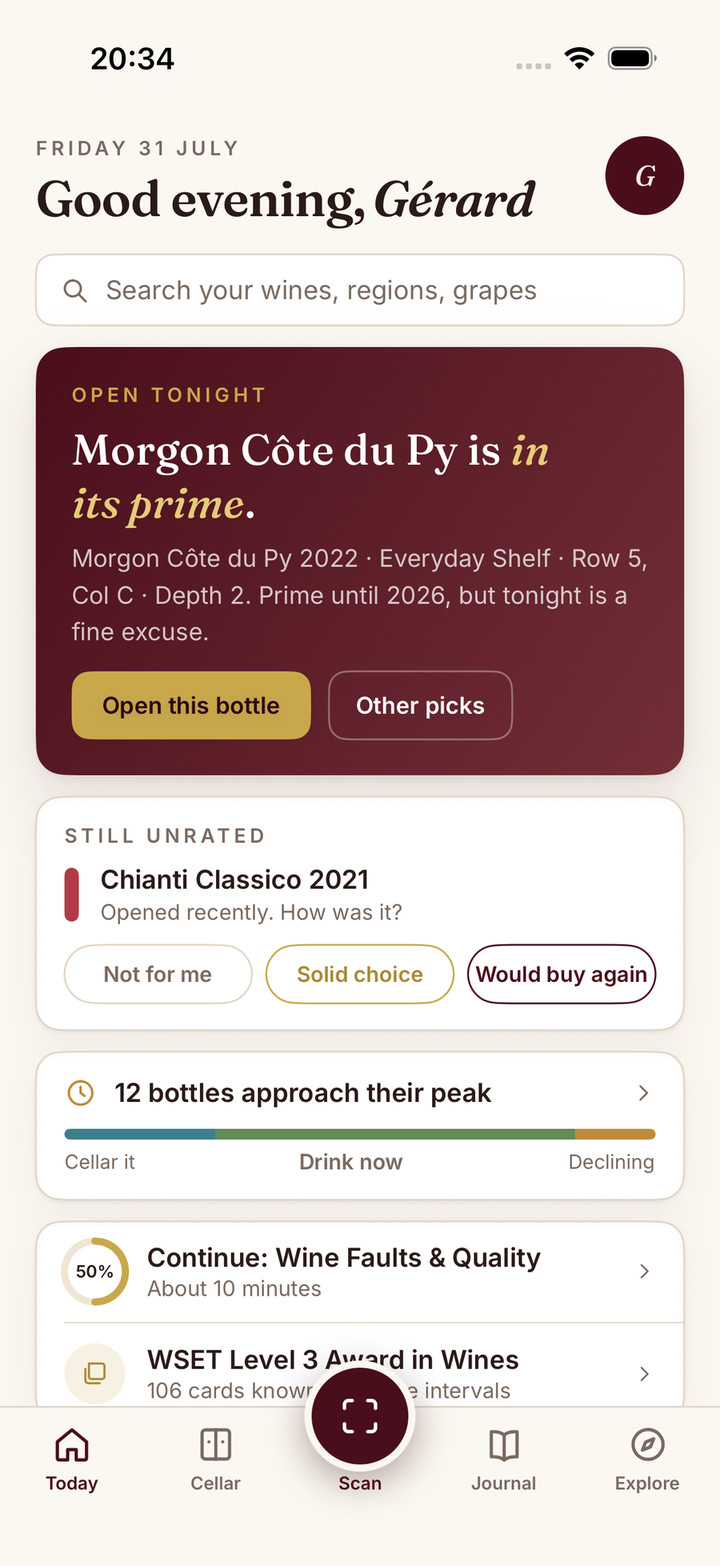
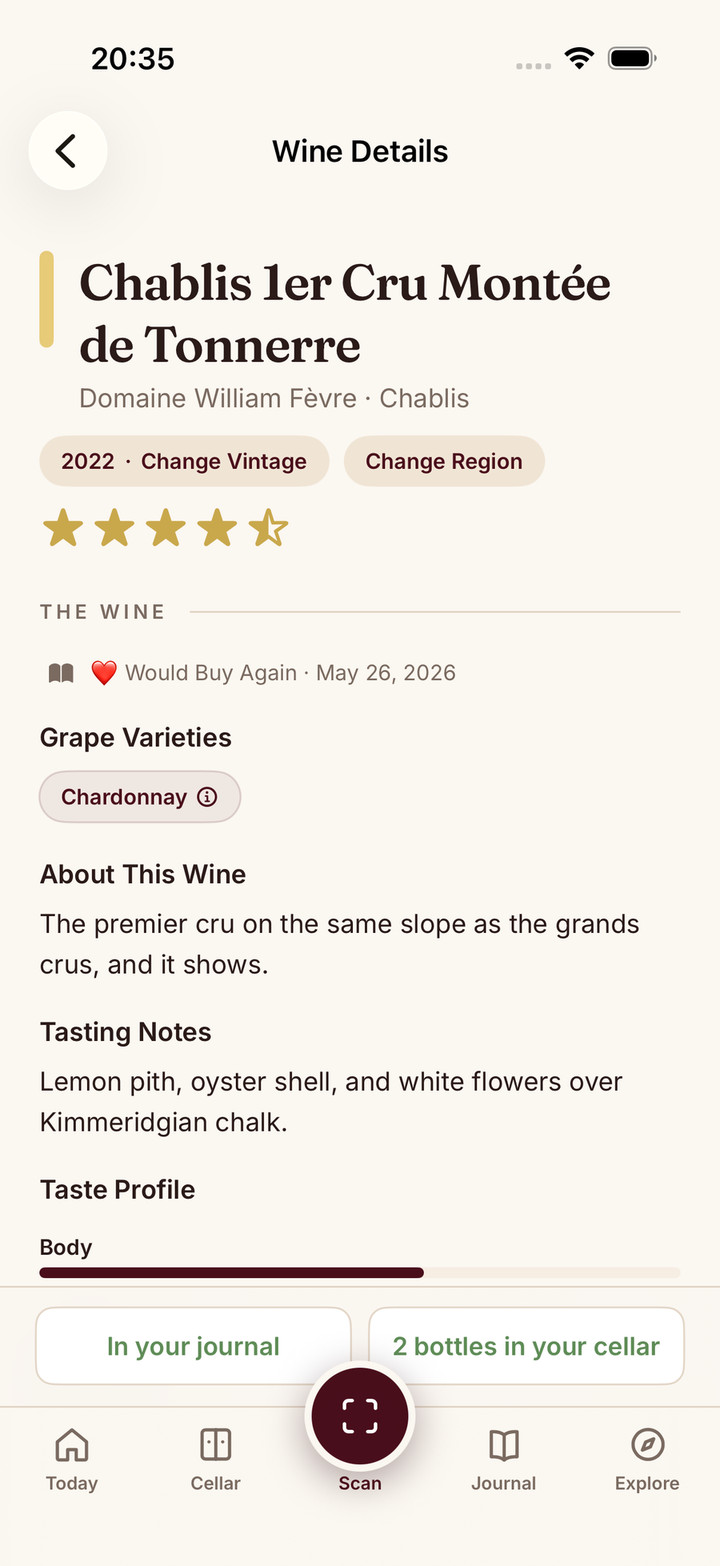
Sommo reads the producer, vintage and appellation together, then estimates a drinking window rather than treating every Nebbiolo alike. Download Sommo and decide whether this bottle is for dinner or the cellar.