Pinot Grigio is the crisper, lighter wine, and it tastes drier because it carries no oak, no butter, and less alcohol. Chardonnay wins on richness and range: unoaked Chablis is lean and mineral, while a barrel fermented California bottle turns creamy with vanilla and toast. Both are usually dry, so the perceived sweetness gap is texture, not sugar. Pinot Grigio suits aperitivo, light seafood, and hot afternoons; Chardonnay suits lobster, roast chicken, and cream sauces. If you dislike oak, Pinot Grigio is the safer order.Quick answer
Side by side.
| Attribute | Chardonnay | Pinot Grigio |
|---|---|---|
| Body | Medium to full | Light to medium |
| Texture | Creamy and broad when oaked | Light and brisk, rarely oaked |
| Acidity | Medium, high in Chablis | Medium to medium plus |
| Sweetness | Dry, though oak can read sweet | Dry |
| Typical alcohol | 12.5 to 14.5% | 11.5 to 13% |
| Flavor profile | Apple, pear, lemon, butter and vanilla when oaked | Green apple, pear, lemon zest, almond |
| Serving temperature | 48 to 55F (9 to 13C) | 45 to 50F (7 to 10C) |
| Price range | $12 to $200 plus, value under $25 | $8 to $30, value from Alto Adige |
| Aging potential | 2 to 10 years, top Burgundy longer | 1 to 3 years, drink young |
Taste profile, side by side.
Which one should you open tonight?
When to choose which.
Chardonnay
Choose Chardonnay when you want a richer, more complex white for lobster, roast chicken, or creamy pasta, especially if you enjoy buttery oak flavors or elegant mineral styles.
Pinot Grigio
Choose Pinot Grigio when you want a light, refreshing white for aperitivo, simple seafood, or warm-weather sipping without heavy oak or richness.
Pinot Grigio is the lighter wine, and if crisp and uncomplicated is what you want, you can stop reading there. It is fermented cleanly in stainless steel with no oak, which keeps it light bodied, neutral, and refreshing. Chardonnay covers far more ground: steely and mineral in Chablis, creamy and buttery in Napa, and almost always fuller in body than anything Pinot Grigio produces. They are two of the most commonly ordered white wines in the world and they sit at opposite ends of the spectrum, which is why ordering one expecting the other is such a common disappointment. For deeper dives, see our Chardonnay Without Apologies post and Pinot Grigio in 2026 post.
Light, Dry or Unoaked: Three Different Questions
Pinot Grigio is usually lighter. Both wines are normally dry. Oak depends on the Chardonnay producer, not the grape name alone.
| What you mean | Better starting point | Check next |
|---|---|---|
| “I want the lightest glass” | Pinot Grigio | Alcohol and region |
| “I do not want butter or vanilla” | Pinot Grigio or unoaked Chardonnay | The back label |
| “I want a crisp dry wine” | Either | Residual sugar and acidity |
| “I want richness with chicken” | Chardonnay | Oak and malolactic fermentation |
| “I want a neutral aperitif” | Pinot Grigio | A cool-climate origin |
Chablis proves that Chardonnay can be lean, mineral and unoaked in flavour. Alsace proves that Pinot Gris can be broad and sometimes off-dry. Use the regional name to refine the shortcut.
Overview of Chardonnay and Pinot Grigio
Chardonnay is the world’s most popular white grape variety, planted in virtually every wine-producing country on earth. It originated in Burgundy, where it has been cultivated for centuries and continues to produce some of the world’s most celebrated and expensive white wines. Chardonnay is often called a “winemaker’s grape” because of its remarkable malleability. It is a relatively neutral variety that acts as a canvas for winemaking techniques like oak fermentation, malolactic fermentation, and lees stirring, each of which dramatically shapes the final wine.
Pinot Grigio (known as Pinot Gris in Alsace and Oregon) is a mutation of Pinot Noir, recognizable by its grayish-pink berries. The grape found its commercial identity in the cool alpine valleys of northeastern Italy, where it produces clean, light, easy-drinking wines that have become enormously popular worldwide. Where Chardonnay is shaped by the winemaker, Pinot Grigio is defined by its simplicity and restraint.
Grape Characteristics
Chardonnay
Chardonnay is an early-ripening, vigorous vine that adapts to an extraordinarily wide range of climates and soils. In cool climates like Chablis and the Cote de Beaune, it produces lean, mineral wines with high acidity and citrus-driven flavors. In warm climates like Napa Valley and parts of Australia, it yields richer, tropical-fruited wines with lower acidity and fuller body.
What makes Chardonnay unique among white grapes is its affinity for oak. Unlike most aromatic white varieties, Chardonnay has a neutral aromatic profile that does not clash with the vanilla, toast, and butter notes imparted by oak barrel fermentation and aging. Additionally, Chardonnay readily undergoes malolactic fermentation (MLF), a process that converts sharp malic acid into softer lactic acid, creating the creamy, buttery texture that defines many popular Chardonnay styles.
Pinot Grigio
Pinot Grigio is a genetically unstable mutation of Pinot Noir, and it shares many of its parent’s viticultural challenges: it buds early, making it susceptible to spring frost, and its thin skin leaves it vulnerable to rot in wet conditions. However, unlike Pinot Noir, Pinot Grigio is typically vinified quickly and cleanly in stainless steel, with no oak contact and no malolactic fermentation.
The grape performs best in cool climates where it can ripen slowly while retaining its delicate acidity. In Italy’s Alto Adige, vines are planted at altitudes of 300 to 700 meters, where cool nights preserve freshness and the grapes develop subtle mineral complexity. The same grape in Alsace, where it is called Pinot Gris, produces a dramatically different style: richer, more aromatic, sometimes with residual sweetness and notes of honey and baking spice.
Flavor Profiles
What Does Chardonnay Taste Like?
Chardonnay’s flavor profile varies more dramatically by winemaking style than almost any other grape. This is why “I don’t like Chardonnay” is one of the most misleading statements in wine, since the grape produces wines so different they barely seem related.
Oaked Chardonnay (California, many Australian, some Burgundy): Rich, full-bodied, with aromas of butter, vanilla, toasted brioche, ripe tropical fruit like pineapple and mango, and a creamy, round mouthfeel. Producers like Rombauer, Chateau Montelena, and Penfolds have built their reputations on this generous style.
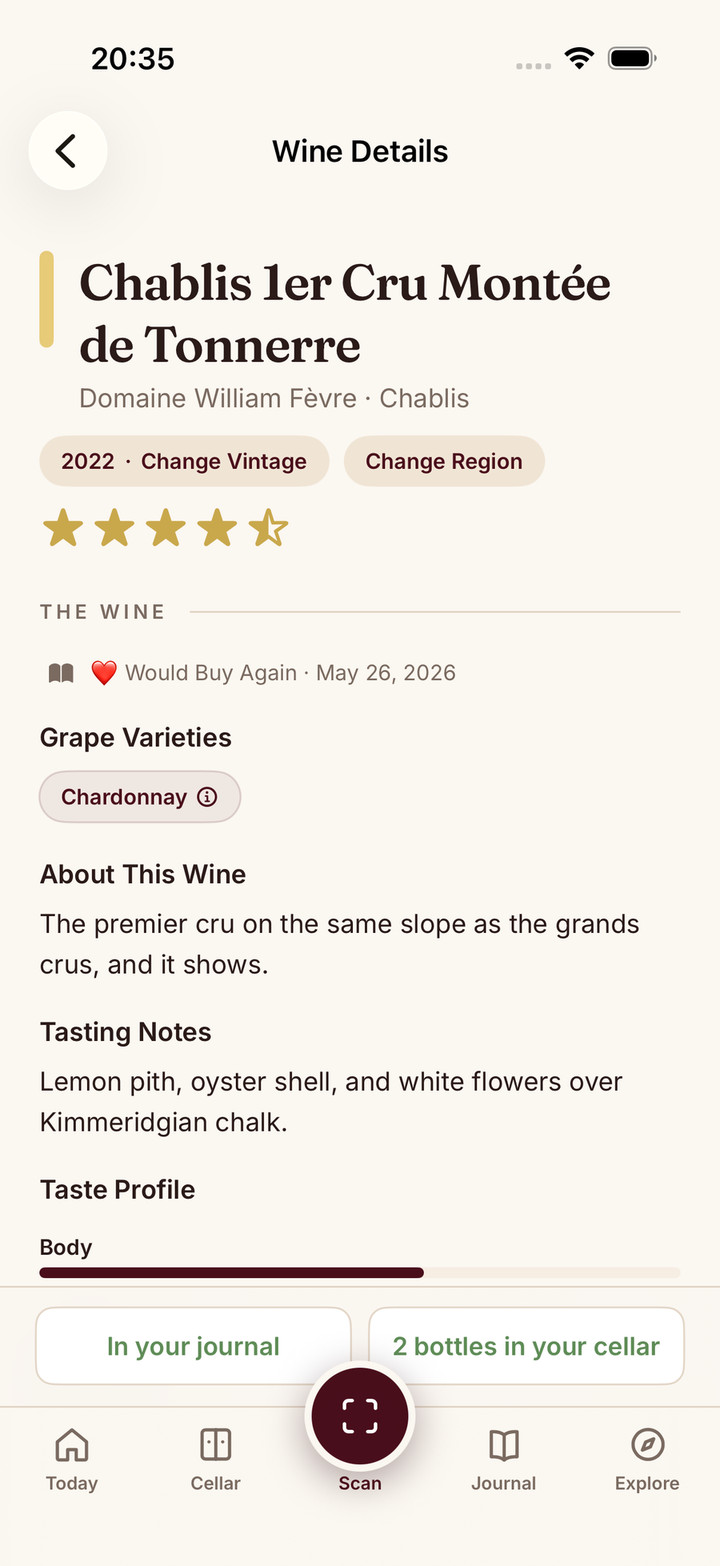
Unoaked Chardonnay (Chablis, Macon, many modern producers): Lean, mineral, and precise, with flavors of green apple, citrus zest, chalk, and wet stone. The best Chablis from producers like William Fevre, Raveneau, and Vincent Dauvissat is among the most compelling white wine in the world, with a steely minerality and precision that is completely unlike the oaked California style.
Middle ground (Burgundy Cote de Beaune, top Oregon): A judicious balance of fruit, oak, and acidity. Meursault is known for its rich, nutty character with notes of hazelnut and warm butter, while Puligny-Montrachet emphasizes elegance, citrus, and floral notes with seamless oak integration.
What Does Pinot Grigio Taste Like?
Pinot Grigio in the Italian style is deliberately understated. Expect clean aromas of green apple, pear, lemon zest, and white almond, with faint floral suggestions of acacia and white blossom. On the palate, the wine is light-bodied, smooth, and refreshing, with moderate acidity and a short, clean finish. There is an appealing simplicity to well-made Pinot Grigio: it does not demand attention or analysis, simply offering clean refreshment.
The best Italian examples show more nuance. Producers like Alois Lageder in Alto Adige produce single-vineyard Pinot Grigios with pronounced minerality, saline notes, and a textural richness that elevates the grape beyond its casual reputation. Vie di Romans in Friuli makes Pinot Grigio with stone fruit depth, subtle spice, and surprising complexity. These wines challenge the notion that Pinot Grigio is inherently simple.
In Alsace, Pinot Gris is a completely different wine: medium to full-bodied, sometimes off-dry, with notes of honey, ginger, stone fruit, and a rich, almost oily texture. Producers like Zind-Humbrecht, Trimbach, and Marcel Deiss produce Pinot Gris of extraordinary depth and complexity.
Acidity and Body Comparison
The body difference between Chardonnay and Pinot Grigio is the most immediately noticeable distinction. Oaked Chardonnay is medium to full-bodied, with a rich, weighty mouthfeel that coats the palate. The combination of oak aging, malolactic fermentation, and often higher alcohol creates a wine that can feel almost creamy. Unoaked Chardonnay from cool climates is lighter, but still carries more weight and texture than Pinot Grigio.
Pinot Grigio is firmly in the light to medium-bodied camp. Its texture is smooth and clean rather than rich or weighty. Acidity in Pinot Grigio tends to be moderate to medium-high, providing freshness without the sharp bite of, say, Sauvignon Blanc or Riesling.
For drinkers who find oaked Chardonnay too heavy or rich, Pinot Grigio offers a refreshing alternative. Conversely, for those who find Pinot Grigio too simple or thin, unoaked Chardonnay from Chablis or the Maconnais provides more complexity and texture without the heavy oak influence.
Key Growing Regions
Chardonnay Regions
- Burgundy, France: The ultimate expression of Chardonnay, from the flinty purity of Chablis to the nutty richness of Meursault and the crystalline elegance of Puligny-Montrachet. Grand Cru vineyards like Le Montrachet and Corton-Charlemagne produce some of the most expensive white wines in the world.
- Napa and Sonoma, California: Russian River Valley and Carneros produce exceptional Chardonnay that balances California ripeness with cool-climate freshness. Producers like Kistler, Peter Michael, and Aubert set the standard.
- Margaret River, Australia: A cooler Australian region producing Chardonnay with precision, citrus-driven fruit, and restrained oak influence. Leeuwin Estate’s Art Series is a benchmark.
- Maconnais, France: Excellent value Chardonnay from appellations like Pouilly-Fuisse and Saint-Veran, offering a taste of Burgundy quality at friendlier prices.
- Limari Valley, Chile: Cool-climate Chilean Chardonnay with mineral intensity and bright acidity, offering outstanding value from producers like Tabalí and De Martino.
Pinot Grigio Regions
- Alto Adige, Italy: Italy’s finest Pinot Grigio, from alpine vineyards with pronounced minerality and freshness. Terlano, Elena Walch, and Nals Margreid are top producers.
- Friuli-Venezia Giulia, Italy: The Collio zone produces richer, more textured Pinot Grigios with stone fruit and almond notes. Livio Felluga and Vie di Romans lead the way.
- Veneto, Italy: The volume producer, offering simple, clean Pinot Grigio at entry-level prices. Quality ranges widely.
- Alsace, France: As Pinot Gris, the grape produces a dramatically different, rich and sometimes off-dry style with complexity rivaling many Chardonnays.
- Willamette Valley, Oregon: Oregon Pinot Gris is more aromatic and textured than Italian versions, offering an interesting middle ground between Italian Pinot Grigio and Alsatian Pinot Gris.
Food Pairing
Pairing with Chardonnay
Chardonnay’s richer body and broader flavor spectrum make it suitable for more substantial dishes:
- Lobster with drawn butter or lobster thermidor
- Roast chicken with herbs and root vegetables
- Creamy pasta dishes like fettuccine Alfredo or carbonara
- Seared scallops with brown butter
- Rich, white-fleshed fish like halibut and dover sole with cream sauce
- Brie, Gruyere, and other rich, semi-soft cheeses
- Risotto with mushrooms or butternut squash
The key principle is matching the weight of the wine with the weight of the food. Oaked Chardonnay pairs best with richer preparations that can stand up to its body and oak influence. Unoaked Chablis, being leaner, works beautifully with oysters, sushi, and lighter seafood.
Pairing with Pinot Grigio
Pinot Grigio’s lightness and neutrality make it ideal for delicate dishes:
- Grilled white fish with lemon and olive oil
- Antipasti platters with fresh mozzarella, prosciutto, and melon
- Light pasta dishes with pesto or olive oil-based sauces
- Chicken piccata or veal scallopini
- Sushi and light sashimi
- Caesar salad and other composed salads
- Fresh, mild cheeses like ricotta and burrata
- Vietnamese spring rolls and other light Asian fare
Pinot Grigio shines when you need a wine that will not overpower subtle flavors. Its neutrality is a feature, not a bug, making it one of the most accommodating wines at the table.
Price and Value
Chardonnay spans an enormous price range. Everyday California Chardonnay starts around ten dollars, with the quality sweet spot between fifteen and thirty dollars for excellent examples from California, Chile, Australia, and the Maconnais. Mid-range Burgundy village wines run thirty to sixty dollars. At the summit, Grand Cru white Burgundy from producers like Coche-Dury, Leflaive, and Comtes Lafon commands hundreds to thousands of dollars per bottle.
Pinot Grigio is one of the most affordable white wines on the market. Entry-level Italian Pinot Grigio from the Veneto starts at seven to ten dollars. Premium Alto Adige and Friuli examples, which represent a significant step up in quality, generally fall between fifteen and thirty dollars. Even the finest Italian Pinot Grigios rarely exceed thirty-five dollars, making the grape one of the best values in white wine.
Aging Potential
Chardonnay has significantly more aging potential than Pinot Grigio. Everyday Chardonnay is best within two to four years, but quality examples from Burgundy’s Premier and Grand Cru vineyards can age magnificently for ten to twenty-five years, developing flavors of honey, hazelnut, toasted brioche, and mushroom. Even top California Chardonnays can evolve beautifully for five to ten years.
Pinot Grigio is almost universally a drink-young wine. Most bottles are best consumed within one to three years of release. The rare exceptions are top-tier Alto Adige examples, which can hold for three to five years, and Alsatian Pinot Gris from Grand Cru vineyards, which can age for a decade or more, developing honey, ginger, and complex spice notes.
Which Should You Choose?
Flip the search around to pinot grigio vs chardonnay and the answer holds: the choice depends on the setting, the food, and your personal taste:
- Choose Chardonnay when you want a richer, more complex white wine for substantial dishes like lobster, roast chicken, or creamy pasta. Whether you prefer the buttery California style or the mineral elegance of Chablis, Chardonnay offers depth and versatility that few white grapes can match.
- Choose Pinot Grigio when you want a light, refreshing, and uncomplicated white for aperitivo, light seafood, salads, or warm-weather sipping. Its clean simplicity makes it universally agreeable and effortlessly food-friendly.
Both wines have their place, and the most rewarding approach is to explore each across different regions and styles. The range within Chardonnay alone, from buttery Napa to steely Chablis, offers a wine education in itself. For adjacent comparisons, see Chardonnay vs Sauvignon Blanc, Pinot Grigio vs Sauvignon Blanc, and Riesling vs Chardonnay.
Explore Chardonnay and Pinot Grigio with Sommo
The Sommo app helps you navigate the vast world of white wine with confidence. Use the AI-powered label scanner to learn instantly about any bottle of Chardonnay or Pinot Grigio, including details on whether the wine is oaked or unoaked, its regional origin, and the best food pairings. Build your personal wine journal, track your preferences across different styles and producers, and deepen your knowledge with structured learning modules. Whether you are comparing Chablis with Alto Adige Pinot Grigio or discovering your favorite California Chardonnay, Sommo makes wine exploration effortless. Download Sommo and start exploring.