Pinot Grigio is the lightest and most neutral of the three: pear, lemon and almond with gentle acidity and almost never any oak. Sauvignon Blanc has the highest acidity and the loudest aroma, from grapefruit and gooseberry to cut grass. Chardonnay is the fullest and the only one regularly aged in oak, which can add vanilla, toast and a creamy texture. All three are normally dry. Choose Pinot Grigio to stay in the background, Sauvignon Blanc for snap and Chardonnay for richness.Quick answer
Side by side.
| Attribute | ChardonnayWhite | Pinot GrigioWhite | Sauvignon BlancWhite |
|---|---|---|---|
| Body | Medium to full | Light to medium | Light to medium |
| Tannin | None | None | None |
| Acidity | Medium, high in Chablis | Medium to medium plus | High |
| Oak | Often oaked; unoaked styles are common | Rarely oaked | Usually unoaked; white Bordeaux is the main exception |
| Sweetness | Dry, though oak can read sweet | Dry; some commercial bottles carry a few grams of sugar | Dry |
| Typical alcohol | 12.5 to 14.5% | 11.5 to 13% | 12 to 13.5% |
| Flavour profile | Apple, lemon and stone fruit; butter, vanilla and toast when oaked | Green apple, pear, lemon zest and almond | Grapefruit, lime, gooseberry, cut grass and passion fruit |
| Best food | Roast chicken, lobster and cream sauces | Antipasti, crudo and grilled white fish | Goat's cheese, salads, herbs and shellfish |
| Serving temperature | 9 to 13°C (48 to 55°F) | 7 to 10°C (45 to 50°F) | 7 to 10°C (45 to 50°F) |
| Price range | $12 to $200 plus, value under $25 | $8 to $30, value from Alto Adige | $10 to $40, value from Marlborough |
| Ageing | 2 to 10 years, top Burgundy longer | 1 to 3 years, drink young | 1 to 5 years, top Loire longer |
Taste profile, side by side.
Which of the three should you open?
When to choose which.
Chardonnay
Choose Chardonnay when the plate is rich, buttery or roasted and you want a white with weight, or when you want the one bottle of the three that can age for a decade.
Pinot Grigio
Choose Pinot Grigio when the wine should refresh without taking over: aperitivo, delicate fish, a mixed crowd or a first glass for someone new to white wine.
Sauvignon Blanc
Choose Sauvignon Blanc when you want the crispest, most aromatic glass, especially with goat's cheese, green herbs, vinaigrette or shellfish.
Choose in ten seconds. Pinot Grigio is the lightest and most neutral. Sauvignon Blanc has the highest acidity and the most aroma. Chardonnay is the fullest and the only one of the three that is often aged in oak. All three are normally dry, so the choice is weight, aroma and texture rather than sugar.
These are the three whites most people meet first on a list or a supermarket shelf, and they map neatly onto three moods: quiet, loud and rich. Once you know which mood you want, the rest of the white wine aisle becomes easier to read.
How the Three Line Up
Put them in order of weight and you get Pinot Grigio, then Sauvignon Blanc, then Chardonnay. Put them in order of acidity and Sauvignon Blanc moves to the front. Put them in order of aroma and Sauvignon Blanc leads again, with Pinot Grigio deliberately last.
That is why the same three bottles cause so much confusion. Pinot Grigio and Sauvignon Blanc are similar in body, but one whispers and the other shouts. Chardonnay and Pinot Grigio can share apple and pear, but Chardonnay carries more alcohol, more texture and, often, the vanilla and toast of oak barrels.
Why Pinot Grigio Feels Lightest
Italian Pinot Grigio is usually fermented cool in stainless steel, picked for freshness and bottled young. The grape is naturally low in aromatic compounds, so the glass offers pear, green apple, lemon zest and a faint almond note rather than a perfume. Alcohol often sits around 11.5 to 13%, which keeps the wine feeling light.
Its softer acidity is the other half of the story. It refreshes without the bite of Sauvignon Blanc, which makes it easy with antipasti and simple fish. Alsace and Oregon bottles labelled Pinot Gris are a different, richer style, so read the name as a clue.
Why Sauvignon Blanc Tastes Sharpest
Sauvignon Blanc is high in acidity and full of aromatic compounds that give grapefruit, gooseberry, passion fruit, cut grass and sometimes green pepper. Most producers keep it away from oak to protect that freshness. Marlborough leans tropical and exuberant; Sancerre and Pouilly-Fumé are more restrained, citrus-led and stony.
That acidity is what makes it the best of the three with tangy, green or salty food. It is also why some new drinkers find it too sharp. If that happens, a Loire bottle is gentler than a loud New Zealand one.
Why Chardonnay Feels Fullest
Chardonnay is a fairly neutral grape that responds strongly to the cellar. Barrel fermentation adds vanilla, toast and spice. Malolactic conversion softens acidity and can add a buttery note. Time on the lees adds a creamy, bready texture. Warm climates add ripeness and alcohol, often 13.5% or more.
Not every Chardonnay is oaky. Chablis and much of the Mâconnais are lean, citrus-driven and unoaked in flavour. If you think you dislike Chardonnay, try one of those before giving up on the grape. It is also the only one of the three with real cellar potential at the top end.
Food: One Rule for All Three
Match the wine’s weight to the sauce, not the protein. Delicate dishes dressed with olive oil and lemon suit Pinot Grigio. Anything sharp, herby or green suits Sauvignon Blanc. Butter, cream and roasting juices suit Chardonnay. Seafood shows the rule clearly: crudo takes Pinot Grigio, oysters and ceviche take Sauvignon Blanc, and lobster with butter takes Chardonnay.
Serving and Buying
Serve Pinot Grigio and Sauvignon Blanc well chilled at 7 to 10°C. Give Chardonnay a little more warmth, around 9 to 13°C, so its texture and oak can show. Drink most Pinot Grigio and Sauvignon Blanc within a few years of the vintage. If you are counting calories, read the alcohol figure on the label: the NHS puts alcohol at seven calories per gram, so a lighter Pinot Grigio usually carries fewer than a 14.5% Chardonnay.
For value, look to Alto Adige for better Pinot Grigio, Marlborough, Chile or the wider Loire for Sauvignon Blanc, and the Mâconnais or Chile for Chardonnay under $25. Burgundy is where Chardonnay prices climb fastest.
Go Deeper on Each Pair
Each two-way comparison covers one decision in more detail: Chardonnay vs Pinot Grigio for weight and oak, Pinot Grigio vs Sauvignon Blanc for aroma and acidity, and Chardonnay vs Sauvignon Blanc for crisp versus full.
Know Which Style Is in the Bottle
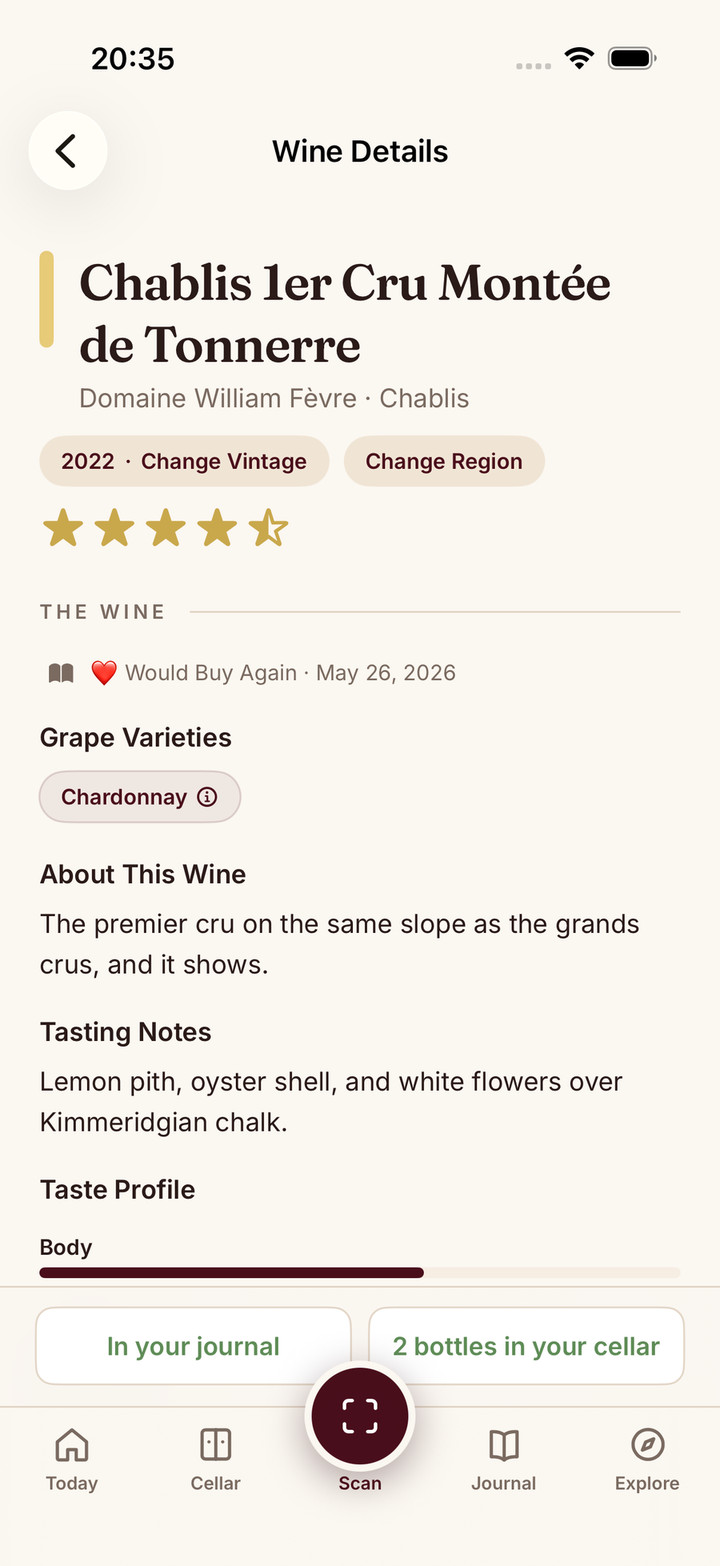
The grape name only tells you so much; a Chablis and a ripe Napa bottle are both Chardonnay. Scan the label in Sommo to see the region, likely style and pairing ideas, then log the glass in your journal so your notes show over time whether you lean light, sharp or rich. Download Sommo and keep track of the whites you actually enjoy.