Bordeaux is the safer buy for most drinkers: blended, structured, produced in volume, and reliable from $15 up, with blackcurrant and cedar built around Cabernet Sauvignon and Merlot. Burgundy is the riskier, more thrilling one, 100 percent Pinot Noir for reds, lighter and silkier, and priced higher because production is tiny. Choose Bordeaux for steak, lamb, and cellaring on a budget; choose Burgundy for duck, salmon, mushrooms, and terroir chased for its own sake. Whites split the same way: oak-aged Sauvignon and Semillon blends against the world's benchmark Chardonnay. If the price on the label stings, Bordeaux forgives; Burgundy rarely does.Quick answer
Side by side.
| Attribute | Bordeaux | Burgundy |
|---|---|---|
| Body | Medium plus to full | Light to medium |
| Tannin | Medium plus to high, firm | Low to medium, silky and fine |
| Acidity | Medium to medium plus | High |
| Sweetness | Dry | Dry |
| Typical alcohol | 13 to 14.5% | 12.5 to 13.5% |
| Flavor profile | Blackcurrant, plum, cedar, tobacco, graphite | Red cherry, raspberry, violet, mushroom, forest floor |
| Serving temperature | 62 to 66F (17 to 19C) | 55 to 60F (13 to 16C) |
| Price range | $10 to $1000 plus, value at cru bourgeois | $15 to $5000 plus, value at village level |
| Aging potential | 5 to 30 years plus for classified growths | 5 to 25 years plus for Premier and Grand Cru |
Taste profile, side by side.
Which one should you open tonight?
When to choose which.
Bordeaux
Choose Bordeaux when you want a bold, structured red for grilled meats and hearty dishes, or when you want reliable quality across a wide price range.
Burgundy
Choose Burgundy when you want an elegant, terroir-driven wine for refined dishes like duck or mushroom-based cuisine, and you value nuance over power.
Bordeaux and Burgundy are the two most celebrated wine regions in France, and arguably in the entire world. They represent fundamentally different philosophies of winemaking, terroir expression, and classification. For anyone serious about understanding wine, grasping the distinctions between these two regions is essential. While both produce exceptional reds and whites, they approach winemaking from opposite ends of the spectrum in nearly every respect.
Geography and Climate
Bordeaux
Bordeaux is located in southwestern France along the Atlantic coast, centered around the city of Bordeaux and the confluence of the Garonne and Dordogne rivers, which merge to form the Gironde estuary. This geographic feature divides the region into its two most important areas: the Left Bank to the west and south, and the Right Bank to the east.
The climate is maritime, moderated by the Atlantic Ocean and the vast pine forests of Les Landes to the south. Bordeaux experiences mild winters, warm summers, and the ever-present risk of rain during the growing season and harvest. This marginal climate means that vintage variation plays a significant role, with the best years producing wines of extraordinary depth and the challenging years requiring skill and intervention in the vineyard.
Burgundy
Burgundy (Bourgogne) stretches along a narrow strip of eastern France, running roughly 150 kilometers from Chablis in the north to Beaujolais in the south. The heart of the region lies in the Cote d’Or, a limestone escarpment divided into the Cote de Nuits in the north and the Cote de Beaune in the south.
Burgundy has a continental climate with cold winters and warm summers. The region’s vineyards are situated on east-facing slopes that catch the morning sun, with altitude, aspect, and soil composition varying dramatically over short distances. This patchwork of micro-climates and soil types is the foundation of Burgundy’s obsessive focus on terroir.
The Grapes
Bordeaux Grapes
Bordeaux is a region defined by blending. Red Bordeaux typically combines two or more of the following varieties:
- Cabernet Sauvignon: The king of the Left Bank, providing structure, tannin, and blackcurrant intensity.
- Merlot: The dominant grape of the Right Bank, contributing roundness, plum fruit, and approachability.
- Cabernet Franc: Used as a blending component on both banks, adding aromatic complexity and mid-palate freshness.
- Petit Verdot: A minor but important addition in some blends, contributing deep color and spice.
- Malbec: Occasionally included in small amounts for color and flesh.
White Bordeaux is based on Sauvignon Blanc and Semillon, with Muscadelle as an occasional minor partner. The sweet wines of Sauternes and Barsac are made primarily from Semillon affected by noble rot (botrytis cinerea).
Burgundy Grapes
Burgundy is a region of varietal purity. Nearly all red Burgundy is made from a single grape:
- Pinot Noir: Responsible for virtually all red wine production in the Cote d’Or, producing wines that range from light and ethereal to deep and profoundly complex.
White Burgundy is almost exclusively:
- Chardonnay: From the steely minerality of Chablis to the rich, nutty complexity of Meursault and the refined elegance of Puligny-Montrachet.
Gamay is grown in Beaujolais, which is technically part of greater Burgundy, and Aligote produces a small amount of crisp white wine throughout the region. But the story of Burgundy is overwhelmingly the story of Pinot Noir and Chardonnay.
Winemaking Philosophy
Bordeaux: The Art of the Blend
Bordeaux winemaking revolves around assemblage, the art of blending different grape varieties to create a harmonious whole. A chateau’s winemaker selects the best lots from the vintage, adjusting the proportions of each variety to achieve the desired style. This blending allows for consistency across vintages and enables winemakers to compensate for the strengths and weaknesses of each grape in a given year.
The use of new French oak barriques is widespread in Bordeaux, particularly among the classified growths. Top wines may spend eighteen to twenty-four months in oak, with varying percentages of new barrels depending on the producer’s style and the richness of the vintage.
Burgundy: Terroir Above All
Burgundy’s philosophy is fundamentally different. Here, the singular focus is on expressing the character of individual vineyard sites, known as climats. The winemaker’s role is often described as that of a custodian, guiding the grape from vineyard to bottle with as little intervention as possible.
Single-vineyard wines are the norm rather than the exception. A producer like Domaine Romanee-Conti or Domaine Leroy may produce a dozen or more wines from different plots, each one reflecting the unique soil, aspect, and microclimate of its origin. Whole-cluster fermentation, indigenous yeasts, and restrained use of new oak are common practices aimed at letting the terroir speak.
Classification Systems
Bordeaux Classification
Bordeaux’s most famous classification dates to 1855, when the wines of the Medoc and Graves were ranked into five tiers (Premier Cru through Cinquieme Cru) based on market prices. This system has been modified only once, in 1973, when Chateau Mouton Rothschild was elevated to Premier Cru status.
The Right Bank has its own systems. Saint-Emilion conducts a reclassification roughly every ten years, ranking estates as Premier Grand Cru Classe A, Premier Grand Cru Classe B, and Grand Cru Classe. Pomerol has no official classification, relying instead on market reputation.
Burgundy Classification
Burgundy’s classification system focuses on the land rather than the producer. The hierarchy, from lowest to highest, is:
- Regional appellations (Bourgogne Rouge, Bourgogne Blanc): Wines from anywhere in the region.
- Village appellations (Gevrey-Chambertin, Meursault): Wines from a specific commune.
- Premier Cru: Wines from designated superior vineyards within a village, with the vineyard name on the label.
- Grand Cru: Wines from the most exceptional vineyards, which carry their own appellation (e.g., Chambertin, Le Montrachet). There are 33 Grand Cru vineyards in the Cote d’Or.
This terroir-based classification means that a Grand Cru vineyard retains its status regardless of who farms it, in stark contrast to Bordeaux where the classification follows the estate.
Wine Styles
Red Bordeaux
Red Bordeaux is typically full-bodied with firm tannins, dark fruit flavors (blackcurrant, plum, dark cherry), and pronounced oak influence (cedar, tobacco, vanilla). Left Bank wines are more structured and austere in youth, requiring years of cellaring to reach their peak. Right Bank wines are generally softer and more approachable, with plush texture and ripe fruit.
Top Bordeaux is built to age, with the finest vintages from classified growths capable of improving for thirty to sixty years in the cellar.
Red Burgundy
Red Burgundy is lighter in color and body than Bordeaux but often more aromatically complex. Expect red fruit (cherry, raspberry, strawberry), floral notes (violet, rose), and earthy, savory characteristics (mushroom, truffle, forest floor) that develop with age. The texture is silky rather than grippy, with fine tannins and vibrant acidity.
Great Burgundy is intellectually stimulating in a way that rewards contemplation. Its subtlety and complexity are legendary, though they demand patience and attention from the drinker.
White Wines
White Bordeaux ranges from crisp, citrusy Sauvignon Blanc-dominant wines to rich, oak-aged blends of Sauvignon Blanc and Semillon. The sweet wines of Sauternes are among the world’s greatest dessert wines.
White Burgundy, made from Chardonnay, spans an equally wide range. Chablis is lean and mineral, the Cote de Beaune produces wines of remarkable depth and complexity, and the Maconnais offers approachable, fruit-forward Chardonnay at accessible prices.
Price and Accessibility
Bordeaux produces significantly more wine than Burgundy, which generally makes it more accessible at the entry level. Solid, enjoyable Bordeaux can be found for under fifteen dollars, and excellent cru bourgeois wines are available for twenty to forty dollars. The classified growths climb steeply in price, with First Growths regularly exceeding five hundred dollars per bottle.
Burgundy’s tiny vineyard holdings and the fragmentation of ownership among many small producers mean that production volumes for individual wines are extremely small. This scarcity drives prices higher across the board. Entry-level regional Burgundy starts around fifteen to twenty dollars, village wines run thirty to sixty dollars, and Premier and Grand Cru wines quickly reach into the hundreds and thousands.
Food Pairing
With Bordeaux
- Grilled or roasted lamb with herbs
- Beef Wellington or filet mignon
- Rich stews and casseroles like cassoulet
- Aged hard cheeses
- Duck confit
With Burgundy
- Roasted chicken with root vegetables
- Coq au vin
- Grilled salmon or tuna (lighter reds)
- Mushroom-based dishes
- Epoisses and other washed-rind cheeses
Collecting and Cellaring
Both regions are cornerstones of any serious wine collection. Bordeaux offers the advantage of larger production volumes, making it easier to acquire multiple bottles of a given wine for long-term cellaring. Burgundy’s scarcity means that securing allocations from top producers often requires established relationships with importers and retailers.
For investment, both regions have strong track records, though Burgundy has seen more dramatic price appreciation in recent decades as demand from global collectors has outstripped the tiny supply.
Which Should You Choose?
- Choose Bordeaux if you enjoy bold, structured reds with dark fruit flavors and significant aging potential. The region’s blending tradition produces wines of consistent quality, and its broad production offers excellent value at multiple price points.
- Choose Burgundy if you are drawn to wines of finesse, subtlety, and terroir expression. Pinot Noir and Chardonnay from Burgundy offer a unique drinking experience that rewards patience and contemplation.
The truth is that every wine lover should explore both. Bordeaux and Burgundy represent two fundamental approaches to winemaking, and understanding them enriches your appreciation of wine from every corner of the world.
Explore Bordeaux and Burgundy with Sommo
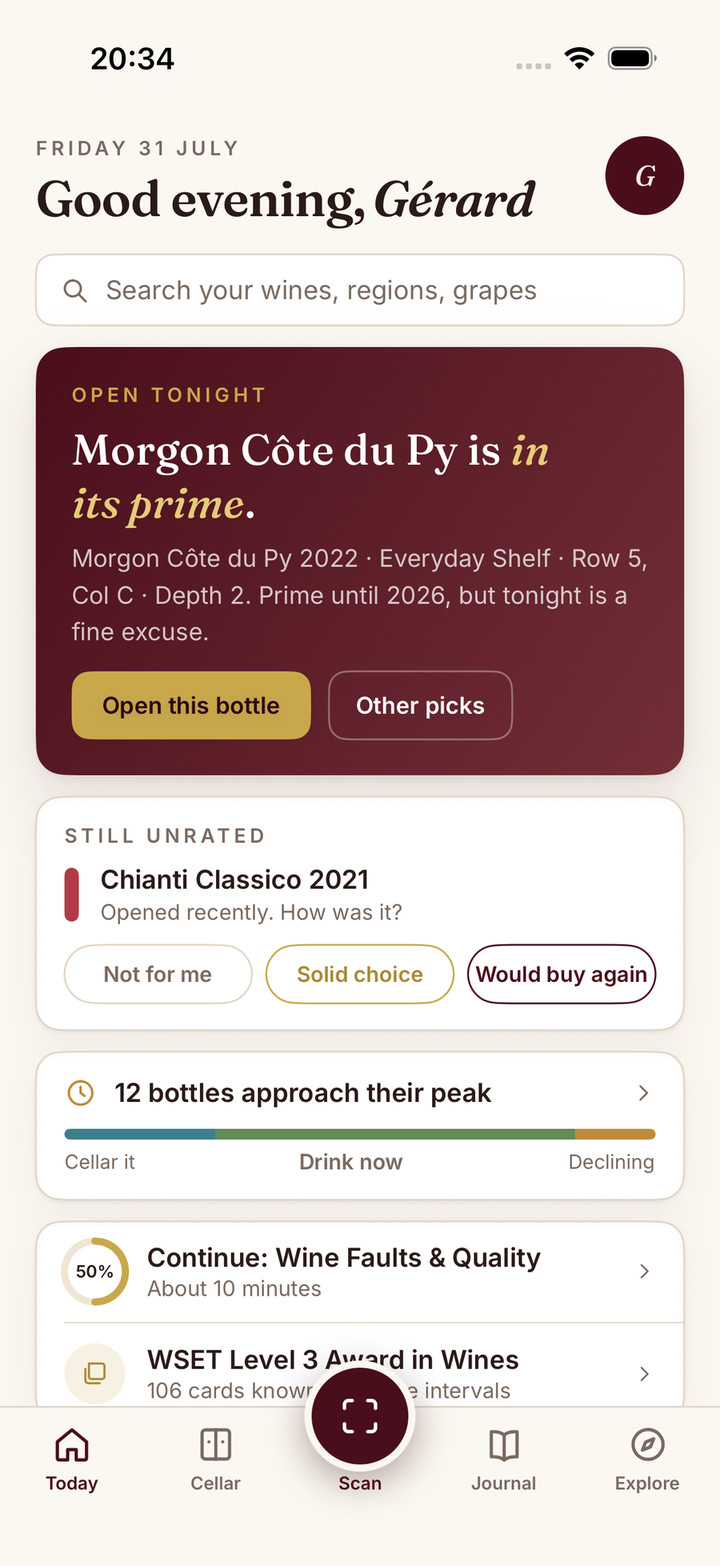
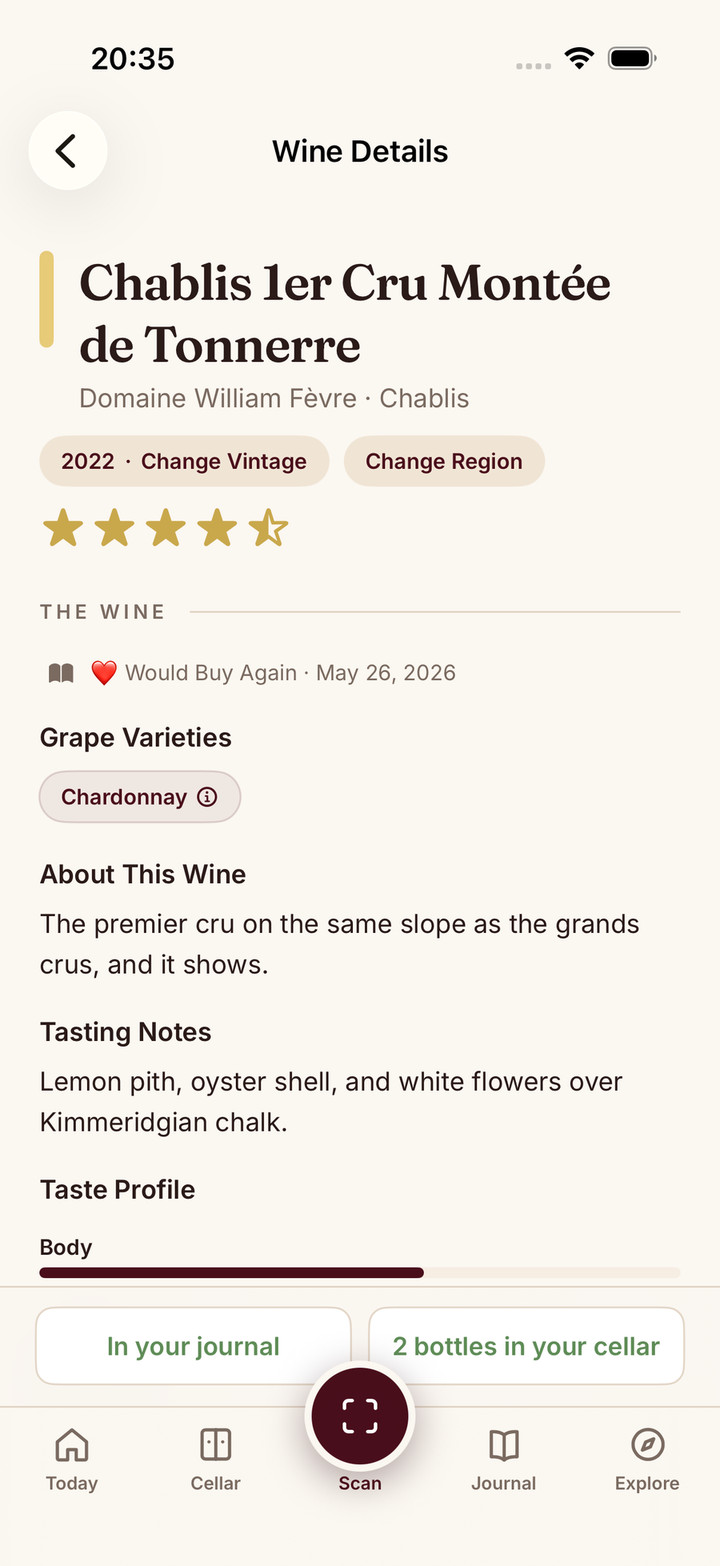
Navigating the complexities of Bordeaux and Burgundy is easier with Sommo by your side. The app’s AI-powered label scanner identifies any bottle and provides instant context about its region, classification, grape varieties, and recommended food pairings. Track your tastings from both regions in your personal journal, compare wines side by side, and dive deeper with structured learning modules covering French wine regions in detail. Whether you are exploring your first Bordeaux or hunting for your next great Burgundy, Sommo is the perfect companion. Download Sommo and start exploring.