The WSET Level 4 Diploma in Wines is widely regarded as the most demanding wine qualification you can earn outside of the Master of Wine or Master Sommelier programmes. It sits at the very top of the WSET framework and signals genuine expertise, not just enthusiasm, to the wine trade.
If you’ve passed WSET Level 3 and you’re wondering whether the Diploma is the right next step, this guide covers everything you need to know: the unit structure, realistic study timelines, what makes it so much harder than Level 3, and the strategies that actually help candidates pass.
The current official WSET Level 4 qualification page sets a minimum of 500 study hours: 116 hours with a course provider, 370 hours of private study and revision (including D6), and 11 hours 50 minutes of examinations across D1 to D5. WSET says completion normally takes 18 months to three years.
What Is the WSET Level 4 Diploma?
The WSET Level 4 Diploma in Wines is a professional-level qualification awarded by the Wine & Spirit Education Trust, a London-based body that has been running wine education programmes since 1969. It’s pitched at people already working in the wine industry, or seriously committed enthusiasts, who want a deep, analytical understanding of wine production, style, quality, and trade.
Holding the Diploma entitles you to use the post-nominal letters DipWSET. It’s recognised globally and often listed as a prerequisite or strong advantage for roles in wine buying, importing, journalism, education, and senior commercial positions.
The Diploma is also a stepping stone. Passing it (along with meeting other criteria) qualifies you to apply for the Master of Wine programme, the highest academic wine qualification in the world.
The Unit Breakdown: D1 Through D6
The Diploma is divided into six units, each with its own examination. You don’t have to sit them all at once, and most candidates stagger them over multiple exam sessions.
D1: Wine Production
D1 covers the science and practice of viticulture and winemaking. You’ll study grape growing (climate, soil, vine management, harvest decisions), fermentation, maturation, and the winemaking choices that shape a wine’s style. Expect questions on specific techniques: why a producer might choose whole-bunch fermentation, or the commercial implications of organic certification.
Assessment: A 1½-hour closed-book examination made up of open-response questions.
D2: Wine Business
D2 examines the commercial side of wine. Topics include supply chain management, marketing, distribution, pricing strategies, regulatory frameworks, and current industry trends. This unit is about applying business thinking to wine: you need to construct arguments, not just recall facts.
Assessment: A one-hour closed-book examination made up of open-response questions.
D3: Wines of the World
D3 is the largest and most content-heavy unit. It covers every significant wine-producing region in the world: their climates, grape varieties, classifications, quality levels, and stylistic identities. This is where the sheer volume of the Diploma becomes apparent. You need to know why Barolo tastes different from Barbaresco, how Margaret River Chardonnay differs from Burgundy, and what’s driving the rise of English sparkling wine.
Assessment: Two consecutive days. Day one is a two-part theory examination lasting 3 hours 20 minutes (one two-hour paper and one 80-minute paper). Day two is a two-part blind tasting examination of 12 wines, with two 1½-hour papers. Many candidates find this the most difficult unit because of the breadth of knowledge required.
D4: Sparkling Wines
D4 focuses exclusively on sparkling wine production, styles, and regions. From Champagne’s traditional method to Prosecco’s tank method, you’ll study the technical, stylistic, and commercial dimensions of fizz worldwide.
Assessment: A 1½-hour closed-book examination combining open-response questions with a blind tasting of three sparkling wines.
D5: Fortified Wines
D5 covers Sherry, Port, Madeira, and other fortified wines. You’ll study the production methods that make these wines unique (flor ageing, solera systems, mutage) and the commercial challenges facing these often-undervalued categories.
Assessment: A 1½-hour closed-book examination combining open-response questions with a blind tasting of three fortified wines.
D6: Independent Research Assignment
D6 is not a timed exam. You research a specified wine-related subject and submit a 3,000-word assignment with evidence and proper referencing. It is the only unit assessed through extended independent research, so project planning matters as much as wine knowledge. Start the source work earlier than feels necessary.
Assessment: One independent research assignment of 3,000 words.
How Hard Is It Compared to WSET Level 3?
If WSET Level 3 felt like a stretch, the Diploma is a different order of magnitude. Here’s how they compare:
| Aspect | WSET Level 3 | WSET Level 4 Diploma |
|---|---|---|
| Study hours | 80-100 | 500+ |
| Duration | 4-8 months | 18 months - 3 years |
| Exam style | Short answers + SAT tasting | Essays, case studies, 12-wine blind tasting |
| Depth | Structured knowledge of key regions | Critical analysis across all regions |
| Tasting standard | SAT intermediate | SAT advanced with commercial justification |
| Pass expectation | Recall and apply | Argue, analyse, and evaluate |
The biggest shift is not the volume of content (though that’s substantial) but the change in what the examiners expect. Level 3 asks you to demonstrate knowledge. Level 4 asks you to use that knowledge to construct reasoned arguments, evaluate quality in commercial context, and write coherently under pressure.
Pass rates and the reality of retakes
WSET does not publish a current global unit-by-unit or first-attempt pass-rate table for the Diploma. A provider may publish results for its own students, but those figures reflect its selection, teaching model and cohort rather than every Diploma candidate. Treat any precise global percentage without a named source and date as an estimate, not an official benchmark.
Retakes are normal and carry no stigma. Many successful DipWSET holders retook one or two units. The key is to treat a failed unit as diagnostic feedback, not a verdict on your ability.
A Realistic Study Timeline
Most candidates follow one of two approaches:
The 18-month sprint: Sit units across three or four exam sessions, studying intensively throughout. This works best if you can dedicate 15-20 hours per week and have strong Level 3 foundations.
The 2-3 year steady pace: Spread units across five or six sessions, allowing time to digest material and practise tasting between exams. This is more common for candidates working full-time.
A suggested sequence:
- D1 + D2 first: they build foundational knowledge in production and business that supports every other unit.
- D3 next: tackle the largest unit when your study momentum is highest.
- D4 + D5: sparkling and fortified are more focused and manageable as a pair.
- D6 alongside the rest: pick your research question early, then write it in the gaps between the examined units.
Proven Study Strategies
Write practice essays constantly
The Diploma is fundamentally an essay-writing qualification. If you can’t construct a clear, well-structured argument in 25 minutes, you’ll struggle regardless of how much you know. Practise timed essays weekly from the start.
Build a tasting group
Blind tasting alone is inefficient. Find three to five other Diploma candidates and taste together regularly, ideally weekly. Compare notes, challenge each other’s assessments, and calibrate your palate against the group. On the days in between, the free blind tasting trainer keeps the deduction habit sharp without opening a bottle.
Use past papers as your syllabus
Past exam papers reveal exactly what the examiners prioritise. Study the question patterns, note which regions and topics recur, and ensure you can answer every question from the last five years’ papers.
Map the syllabus, then fill the gaps
Create a spreadsheet of every topic in the official study guide. Rate your confidence on each (1-5), then spend your time on the weakest areas rather than revising what you already know.
Don’t neglect D2
Many candidates underestimate the business unit because it feels less “wine-y” than D3. But D2 requires clear commercial thinking and structured writing, skills that take practice. Give it proper attention.
Taste systematically and often
For D6, aim to taste at least 50-100 wines blind before the exam. Use the WSET SAT at Diploma level every time. Track your accuracy in identifying origin, quality level, and style.
Who Is the WSET Level 4 Diploma For?
The Diploma is not for everyone, and that’s fine. It makes most sense for:
- Wine trade professionals who want formal recognition of deep expertise: buyers, importers, educators, and journalists.
- Career changers moving into the wine industry who need a credential that signals serious commitment.
- WSET Level 3 graduates who genuinely enjoyed the study process and want to go deeper, not just collect another certificate.
- Aspiring Masters of Wine for whom the Diploma is a required stepping stone.
If you’re unsure whether the Diploma is worth the investment of time and money, read our breakdown of whether WSET certification is worth it and our comparison of WSET vs the Court of Master Sommeliers to put the qualification in broader context.
What Comes After the Diploma?
Passing all six units earns you the DipWSET and the right to use those post-nominal letters professionally. From there, the main academic pathway is the Master of Wine programme, though only a small percentage of Diploma holders pursue it.
For most, the Diploma itself opens doors: promotions, new roles, consulting opportunities, and the confidence that comes from genuinely deep wine knowledge.
Start Building Your Foundation Now
Whether you’re preparing for the Diploma or still working through Level 3 and Level 4 study materials, building strong tasting and theory habits early makes every unit easier.
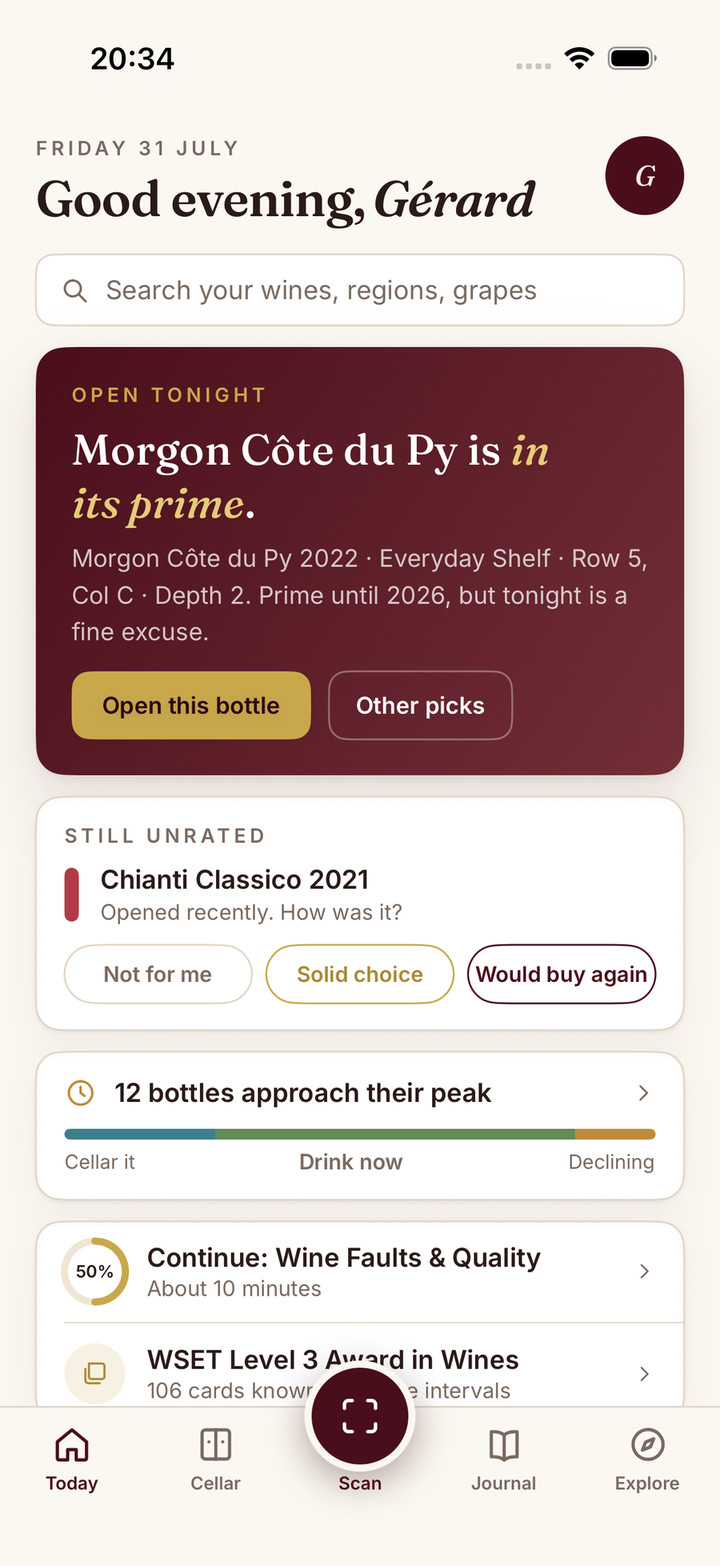
Sommo helps you develop both. Use the AI-powered label scanner to build a personal wine journal, practise with WSET-aligned flashcards and quizzes, and track your progress across every unit. The structured tasting notes feature trains the exact SAT methodology the Diploma demands, so when exam day arrives, the format feels familiar, not foreign.