WSET Level 3 Study Guide: Pass First Time With This Study Plan (2026)
Study timeline, blind tasting strategy, and essay tips that helped candidates pass WSET Level 3 first time. Avoid the mistakes most people make.
WSET Level 3 is where wine education stops being about memorizing facts and starts being about defending arguments. If Level 2 asks “what grape makes Barolo?” then Level 3 asks “explain why Barolo from the Serralunga valley tends to produce more structured wines than Barolo from La Morra, and assess the quality implications.”
That shift, from recall to analysis, is what makes Level 3 a genuine challenge. It’s also what makes it worth doing.
What Is WSET Level 3?
The WSET Level 3 Award in Wines is an advanced qualification. It’s designed for wine professionals and serious enthusiasts who want to go beyond identifying grape varieties and into understanding why wines taste the way they do.
Level 3 holders can:
- Assess wine quality with a structured, defensible rationale
- Explain how growing conditions, winemaking decisions, and regional regulations shape wine style
- Blind taste wines with analytical precision
- Communicate about wine at a professional level
It’s the highest single-unit WSET qualification before the Diploma (Level 4), which takes two to three years.
How Level 3 Differs from Level 2
This is not “Level 2 with more regions.” The entire approach changes:
| Aspect | Level 2 | Level 3 |
|---|---|---|
| Exam format | Multiple choice | Short answer + essay + blind tasting |
| Depth | Broad survey | Deep analysis |
| Thinking style | Recall facts | Apply knowledge, justify opinions |
| Tasting | Practice only (not examined) | Examined: two wines blind |
| Study time | 4-8 weeks | 3-6 months |
| Typical cost | $400-$700 | $600-$1,200 |
At Level 2, you learned what. At Level 3, you need to explain why and so what.
The Exam Format
The Level 3 exam has two papers, both of which you must pass:
Paper 1: Theory (2 hours)
- Part A: Short-answer questions covering the full syllabus
- Part B: One essay question (chosen from a selection) requiring detailed analysis
The short answers test breadth. The essay tests depth. Both require you to write clearly and support your points with specific examples.
Paper 2: Tasting (30 minutes)
- Two wines tasted blind using the WSET Level 3 Systematic Approach to Tasting (SAT)
- You must describe each wine’s appearance, nose, palate, and conclusions
- You’ll be asked to assess quality and identify key characteristics
- Tasting notes must be precise, structured, and justified
Both papers are graded Pass, Merit, Distinction, or Fail. You need to pass both to receive the qualification.
What the Syllabus Covers
Level 3’s syllabus is organized around understanding the factors that influence wine style and quality:
Terroir and environment:
- Climate types (cool, moderate, warm, hot) and their effects on grape ripening
- Soil composition, drainage, and water availability
- Aspect, altitude, and proximity to water bodies
Viticulture:
- Vine management decisions (pruning, canopy management, yield control)
- Harvest timing and its impact on style
- Organic, biodynamic, and sustainable practices
Vinification:
- Fermentation choices (temperature, vessel, yeast selection)
- Pre- and post-fermentation techniques (cold soaking, maceration, pressing)
- Oak influence (new vs. old, barrel size, toast level, alternatives)
- Maturation and aging decisions
World regions in depth:
- France (Bordeaux, Burgundy, Rhône, Loire, Alsace, and more)
- Italy, Spain, Portugal, Germany, Austria
- New World (USA, Australia, New Zealand, South Africa, Chile, Argentina)
- Each region studied through the lens of how environment + decisions = style
Quality assessment:
- Using the SAT framework to evaluate wines objectively
- Identifying quality markers (balance, intensity, complexity, length)
- Linking what you taste to how and where the wine was made
Recommended Study Timeline
Plan for 3 to 6 months of consistent study. Level 3 is not something you cram for in a couple of weeks.
Months 1-2: Build the Framework
- Read the entire WSET Level 3 textbook once through
- Focus on understanding the logic behind winemaking and viticulture decisions
- Start building flashcards for regions, grapes, and classification systems
- Begin regular tasting practice (2 to 3 wines per week minimum)
Months 3-4: Go Deep on Regions
- Study each major region in detail, linking climate and soil to wine style
- Practice writing short-answer responses, concise, factual, specific
- Ramp up tasting practice and start blind tasting with a study group
- Work through past exam questions if your course provider shares them
Months 5-6: Exam Preparation
- Practice full essay responses under timed conditions
- Refine your tasting vocabulary and SAT note structure
- Take mock exams to simulate real conditions
- Review weak areas identified through practice
Study Tips for Level 3
Master Essay Writing
The essay is where many candidates struggle. You’re not writing a creative piece, you’re building an argument.
- Answer the question directly. Read it twice. Underline the key terms.
- Use specific examples. “Burgundy uses Pinot Noir” is fine for Level 2. Level 3 wants “Pinot Noir in the Côte de Nuits produces wines with higher tannin and darker fruit compared to the Côte de Beaune, due to differences in soil composition and mesoclimate.”
- Structure your answer. Introduction, key points with evidence, conclusion. Examiners reward organized thinking.
- Practice under time pressure. You’ll have roughly 30 to 40 minutes for the essay. That’s tight.
Take Blind Tasting Seriously
The tasting paper requires disciplined, systematic notes. Here’s how to prepare:
- Taste regularly using the SAT framework. Every single time. No shortcuts.
- Taste in pairs or groups. Comparing wines side-by-side sharpens your palate faster than tasting alone.
- Calibrate your vocabulary. Is that acidity “medium” or “medium(+)”? Level 3 expects precision.
- Link what you taste to what you know. High acidity + pale lemon + citrus + mineral? That could be Chablis, Muscadet, or Riesling. Use your knowledge to narrow it down.
Connect Everything
Level 3 rewards candidates who can connect the dots. When you study a region, trace the full chain:
Climate → grape choice → viticulture decisions → winemaking decisions → wine style → quality level
If you can walk through this chain for every major region, you understand the material at the right level.
Common Mistakes
Writing vague essay answers. “France makes good wine because of its climate” earns no marks. Be specific about which region, which climate type, which grapes, and why it matters.
Neglecting the tasting paper. Some candidates focus entirely on theory and under-prepare for tasting. Both papers must be passed. You can’t compensate a failed tasting with a strong theory score.
Memorizing without understanding. Level 3 examiners can tell the difference between a candidate who memorized facts and one who understands relationships. Focus on the why.
Skipping sparkling, fortified, and sweet wines. These appear in the exam. Champagne method, Port production, noble rot, know the processes and how they affect style.
Poor time management in the exam. Practice writing under timed conditions. Many candidates run out of time on the essay or rush their tasting notes.
What Does It Cost?
WSET Level 3 typically costs $600 to $1,200 USD, depending on your location, course provider, and whether classroom instruction is included. This covers the course, textbook, tasting wines, and exam fees.
Retake fees for individual papers (if you fail one but pass the other) are usually $100 to $200.
What’s Next After Level 3?
Passing Level 3 opens doors:
| Path | Description |
|---|---|
| WSET Diploma (Level 4) | The expert-level qualification, taking 2-3 years of intensive study |
| Wine industry roles | Buyer, educator, sommelier, brand ambassador, journalist |
| Master of Wine | The pinnacle, requires the Diploma as a prerequisite |
| Continued exploration | Many Level 3 holders simply enjoy wine more deeply |
Level 3 is a meaningful credential. It signals to employers, colleagues, and yourself that you understand wine at a professional level.
Frequently Asked Questions
Do I need Level 2 to take Level 3? WSET recommends Level 2 as a prerequisite, and most course providers require it. The jump from Level 2 to Level 3 is significant, Level 2 knowledge is assumed.
How long is the certification valid? Forever. WSET certifications don’t expire.
What’s the pass rate? WSET doesn’t publish official pass rates, but Level 3 is generally estimated at around 50-60% on the first attempt. Proper preparation matters.
Can I retake just one paper? Yes. If you pass one paper but fail the other, you can retake only the failed paper within a certain window (usually 12 months).
Is Level 3 worth it for non-professionals? If you’re genuinely passionate about wine and want to understand it at a deeper level, absolutely. Many Level 3 holders are enthusiasts, not industry professionals.
How does the tasting exam work? You’ll receive two wines (typically one white, one red) with no information about what they are. You taste each using the SAT framework, writing structured notes on appearance, nose, palate, and conclusions within 30 minutes.
WSET Level 3 is the qualification that separates casual interest from real expertise. It demands time, consistent practice, and a willingness to think critically about wine. But if you put in the work, you’ll come out the other side with a fundamentally different understanding of what’s in your glass. Sommo’s WSET Level 3 study tools include spaced repetition flashcards that cover the full syllabus and mock exams that mirror the real test format, useful for reinforcing the volume of regional and varietal knowledge Level 3 demands. Pair that with regular tasting practice and a solid course, and you’ll walk into exam day prepared.
Liked this read? Try the app.
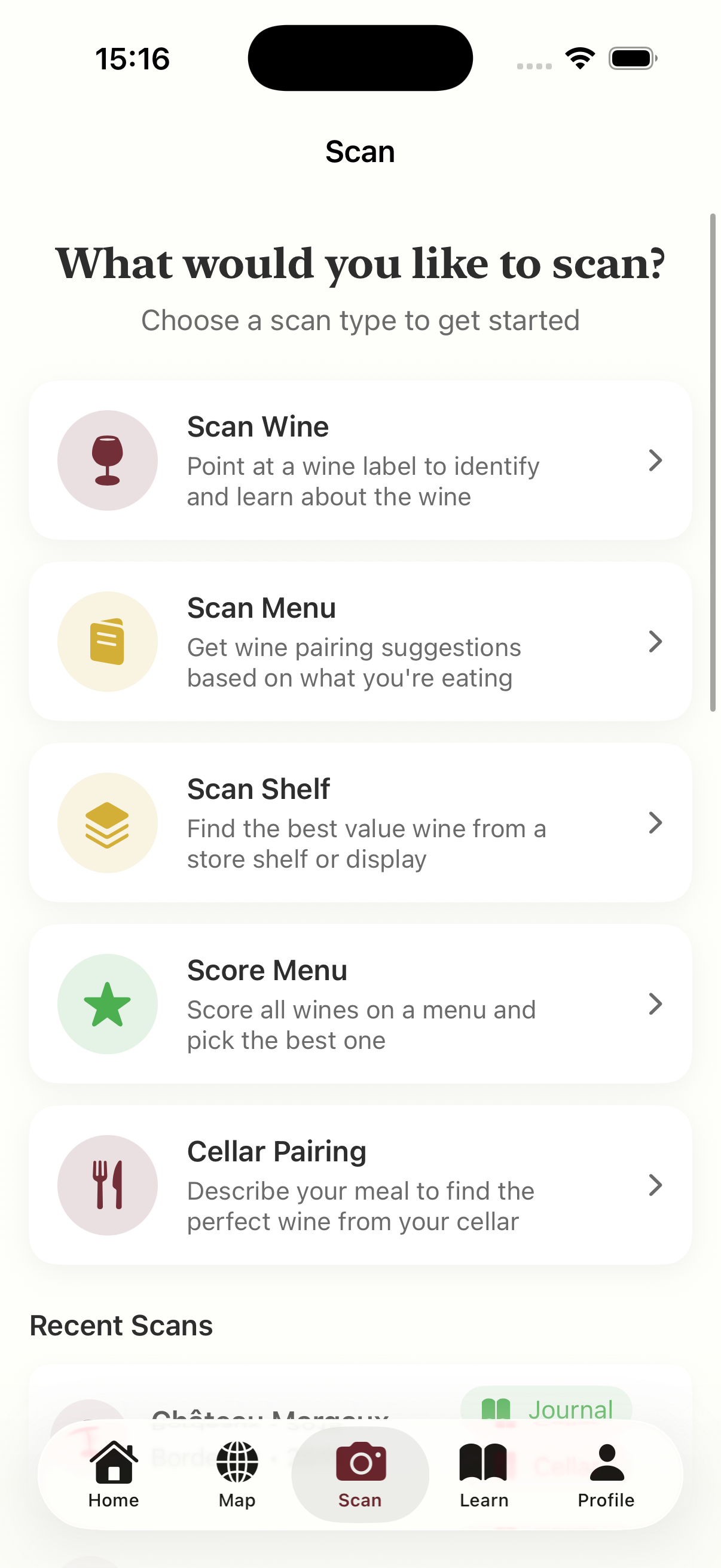
Scan any wine label with AI, build your tasting journal, and learn wine your way.