A mock score tells you how many answers you got right today. It does not tell you which connection failed, whether a correct answer was a guess, or what to study tomorrow. The useful work begins after the timer stops.
WSET’s current Level 2 Award in Wines qualification page describes a one-hour, closed-book assessment with 50 multiple-choice questions. Check which specification version your course provider uses. Sommo’s Level 2 mock test is independent practice, not an official paper or a substitute for your study materials.
Do Not Start with the Percentage
Before looking at the final score, mark every answer in three ways: sure, unsure but reasoned, or guess. A correct guess needs review just as much as a wrong answer. If you only study red crosses, an apparent improvement can hide weak knowledge behind lucky options.
Now read the explanation for each uncertain or wrong answer. Do not copy a sentence verbatim into a notebook. Write the fact or relationship in your own words and ask which clue in the question should have led you to it.
For example, “Chablis is Chardonnay” is a fact. “A cool-climate Chardonnay from Chablis is more likely to have high acidity than a warm-climate example” is a usable connection. The latter helps with an unfamiliar question, not just the one you have already seen.
Give Every Error a Cause
Use four short labels:
| Label | What happened | Next action |
|---|---|---|
| Knowledge gap | The grape, region or method was unknown | Return to the official material, then retrieve it without notes |
| Confusion | Two similar terms were mixed up | Make a side-by-side contrast and explain the difference aloud |
| Question reading | A negative, comparison or qualifier was missed | Reread the stem and underline its deciding word |
| Lucky guess | The answer was right without a clear reason | Treat it as unresolved until you can justify it |
Our guide to common Level 2 exam mistakes covers these traps in broader revision. The point here is to assign a next action to the actual question you missed, rather than writing “revise Italy” beside a 68% score.
Map the Gap to the Specification
Look up the relevant learning outcome in the current specification supplied by WSET or your provider. Study that piece of the official material first. A practice explanation can illuminate a connection, but the qualification specification defines the scope. If a third-party question seems to conflict with it, do not memorise the conflict; check with your provider.
Keep the error log small. One row might read: “Confused Barolo with Chianti; both are Italian place names, but Barolo is Nebbiolo and Chianti is Sangiovese; retest Thursday.” The Level 2 questions breakdown helps with region-and-grape patterns that often generate this kind of error.
Retest Without the Options
The next day, cover your answer and retrieve the relationship from a blank prompt. If you missed a grape-region link, test it in both directions. If you missed a winemaking cause and effect, explain how the process changes the wine’s style. If you misread the stem, slow down on a fresh set and mark the qualifier before looking at choices.
Only after those focused checks should you take another unfamiliar full mock under timed conditions. Repeating the same questions immediately can raise the score because you remember the sheet, not because the underlying knowledge improved. Compare error types between attempts: fewer confusion and lucky-guess labels is a better sign than a higher number alone.
Use the Mock as a Map
Sommo’s practice questions can help surface weak areas; your official course material is the authority for what you need to know. Keep a brief log, revisit the stubborn links and stop practising only the topics you already enjoy. One carefully reviewed mock can teach more than several taken and forgotten.
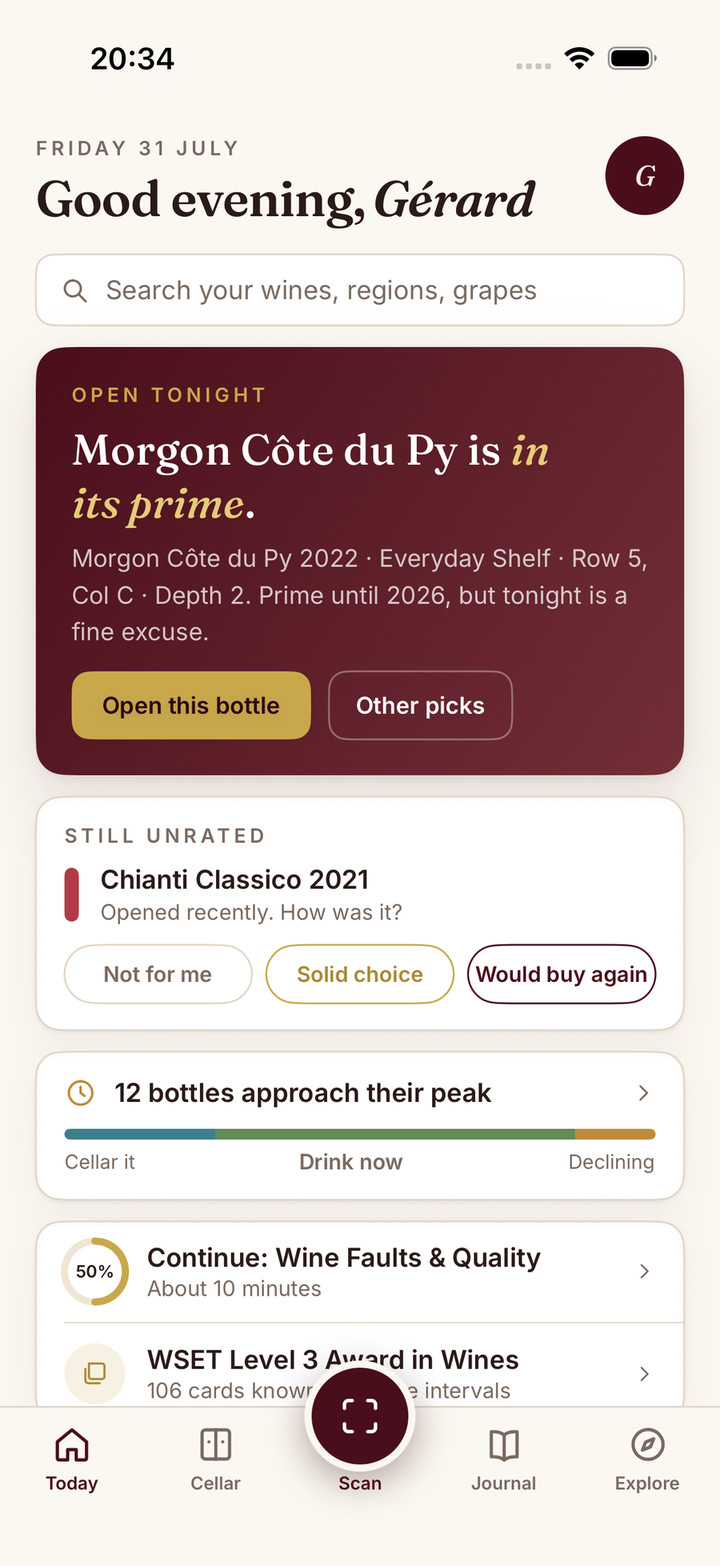
Download Sommo and make your next practice session more deliberate.