WSET Level 1 Award: Complete Study Guide (2026)
Pass the WSET Level 1 exam first try. Covers all 30 MCQs, key grape varieties, and the one-day course format. Start preparing today.
Your complete roadmap to passing the Wine & Spirit Education Trust’s entry-level certification.
Thinking about getting into wine professionally? Or just want to prove to yourself (and maybe your friends) that you actually know what you’re talking about?
The WSET Level 1 Award in Wines is the perfect starting point.
It’s the world’s most recognized wine certification for beginners. It’s achievable in a single day. And it gives you a legitimate credential that says “I understand wine.”
This guide covers everything you need to know: what the exam covers, how to study, what to expect on test day, and how to pass on your first try.
Let’s get you certified.
What Is WSET?
The Wine & Spirit Education Trust is the global leader in wine and spirits education. Founded in London in 1969, WSET qualifications are recognized in over 70 countries and held by more than 500,000 people worldwide.
WSET offers four levels of wine certification:
| Level | Name | Difficulty | Time Investment |
|---|---|---|---|
| Level 1 | Award in Wines | Beginner | 1 day |
| Level 2 | Award in Wines | Intermediate | 2 to 3 days |
| Level 3 | Award in Wines | Advanced | 5+ days |
| Level 4 | Diploma in Wines | Expert | 2 to 3 years |
Level 1 is designed for complete beginners or industry newcomers. No prior knowledge required. It’s the foundation everything else builds on.
Who Should Take WSET Level 1?
This certification is ideal for:
- Wine enthusiasts who want structured knowledge
- Hospitality newcomers entering restaurants, hotels, or retail
- Career changers exploring the wine industry
- Anyone who wants to understand wine basics with a credential to show for it
You don’t need to be a sommelier or work in wine. You just need curiosity.
What Does Level 1 Cover?
The WSET Level 1 syllabus focuses on practical wine knowledge. Here’s what you’ll learn:
1. Types and Styles of Wine
Still wines:
- White, red, and rosé
- Dry to sweet spectrum
- Light-bodied to full-bodied
- How bubbles get into wine
- Major styles (Champagne, Prosecco, Cava)
- What “fortified” means
- Sherry, Port, and other styles
2. Common Grape Varieties
You’ll learn to identify the characteristics of these nine key grapes:
White grapes:
| Grape | Key Characteristics |
|---|---|
| Chardonnay | Ranges from crisp/citrus (unoaked) to rich/buttery (oaked) |
| Sauvignon Blanc | High acidity, herbaceous, citrus, tropical |
| Pinot Grigio | Light, dry, subtle fruit |
| Riesling | Aromatic, high acidity, dry to sweet |
Red grapes:
| Grape | Key Characteristics |
|---|---|
| Cabernet Sauvignon | Full-bodied, high tannin, black fruit, often oaked |
| Merlot | Medium to full body, softer tannins, plum, smooth |
| Pinot Noir | Light to medium body, low tannin, red fruit, earthy |
| Syrah/Shiraz | Full-bodied, dark fruit, pepper, spice |
| Grenache | Medium body, red fruit, higher alcohol, spice |
3. How to Taste Wine
The Systematic Approach to Tasting (SAT) is WSET’s structured method:
Appearance:
- Clarity (clear or hazy)
- Intensity (pale, medium, deep)
- Color (specific hue)
Nose:
- Condition (clean or faulty)
- Intensity (light, medium, pronounced)
- Aromas (fruit, floral, spice, oak, etc.)
Palate:
- Sweetness (dry to sweet)
- Acidity (low to high)
- Tannin (low to high, red wines only)
- Body (light to full)
- Flavor intensity
- Finish (short to long)
4. Food and Wine Pairing
Basic principles of matching food and wine:
- Match weight: Light wines with light dishes, bold wines with rich dishes
- Consider acidity: High-acid wines cut through fatty foods
- Think about sweetness: Wine should be sweeter than the food
- Regional pairing: Foods and wines from the same region often work together
5. Wine Storage and Service
Storage basics:
- Cool, constant temperature (around 55°F/13°C)
- Away from light and vibration
- Bottles on their side (for cork)
Service temperatures:
| Wine Type | Temperature |
|---|---|
| Sparkling | 6 to 10°C (43 to 50°F) |
| Light white/rosé | 7 to 10°C (45 to 50°F) |
| Full white/light red | 10 to 13°C (50 to 55°F) |
| Medium/full red | 15 to 18°C (59 to 64°F) |
The Exam Format
The Level 1 exam is straightforward:
| Component | Details |
|---|---|
| Format | Multiple choice |
| Questions | 30 questions |
| Duration | 45 minutes |
| Passing score | 70% (21 correct) |
| Resources | Closed book |
There is no tasting component at Level 1. It’s purely theory.
How to Study
Option 1: Take a Course
Most people take a WSET Approved Programme Provider (APP) course. These typically include:
- One full day of classroom instruction (6 to 8 hours)
- The official WSET study guide
- Wine tasting samples
- The exam at the end of the day
Cost: $150 to $300 depending on location
Find a provider near you at wsetglobal.com
Option 2: Self-Study (If Available)
Some providers offer online or self-study options. You’ll still need to take the exam through an approved provider.
Study Timeline
| Approach | Recommended Prep |
|---|---|
| Intensive course | Read the study guide once before class |
| Self-study | 2 to 3 weeks, 30 to 60 minutes daily |
Study Tips That Actually Work
1. Focus on the Nine Grapes
The grape varieties are the core of Level 1. Create flashcards with:
- Grape name on one side
- Key characteristics on the other
Quiz yourself until you can instantly recall each grape’s profile.
2. Learn the Tasting Framework
Memorize the SAT structure. Even though there’s no tasting exam, questions will test whether you understand:
- What to look for in appearance
- How to describe aromas
- What sweetness, acidity, tannin, and body mean
3. Practice with Real Wine
Taste wines made from the nine key grapes. Try to identify:
- Is it dry or sweet?
- Is the acidity high or low?
- Is it light-bodied or full-bodied?
- What fruit flavors do you notice?
This makes the theory come alive.
4. Use the Official Study Guide
WSET provides a study guide with every course. Read it cover to cover. The exam questions come directly from this material.
5. Take Practice Quizzes
Sample questions to test yourself:
Question 1: Which grape variety typically produces wines with high tannin and flavors of blackcurrant?
- a) Pinot Noir
- b) Merlot
- c) Cabernet Sauvignon
- d) Grenache
Question 2: What is the ideal serving temperature for a full-bodied red wine?
- a) 6 to 10°C
- b) 10 to 13°C
- c) 15 to 18°C
- d) 18 to 22°C
Question 3: Which of the following is NOT a characteristic of Sauvignon Blanc?
- a) High acidity
- b) Herbaceous notes
- c) Oaky, buttery flavors
- d) Citrus aromas
(Answers: 1-c, 2-c, 3-c)
Exam Day Tips
Before the Exam
- Get a good night’s sleep
- Eat a proper meal (you’ll be tasting wine in class)
- Review your flashcards one more time
- Arrive early
During the Exam
- Read each question carefully
- Eliminate obviously wrong answers first
- Don’t overthink. Your first instinct is usually right
- Flag difficult questions and return to them
- You have plenty of time (45 minutes for 30 questions)
Common Mistakes to Avoid
- Confusing Syrah and Cabernet Sauvignon: Both are full-bodied and dark, but Syrah has pepper/spice notes while Cab has blackcurrant
- Mixing up Pinot Grigio and Pinot Noir: Same “Pinot” family, but one is white (Grigio) and one is red (Noir)
- Forgetting service temperatures: Sparkling is coldest, reds are warmest
- Overthinking pairing questions: Stick to basic principles (match weight, consider acidity)
What Happens After You Pass?
Congratulations! You’ll receive:
- WSET certificate (mailed to you)
- WSET pin to show your achievement
- Digital badge for LinkedIn
What’s Next?
Many Level 1 graduates continue to:
| Path | Description |
|---|---|
| WSET Level 2 | Deeper dive into grape varieties and regions |
| Wine industry job | Entry-level positions in retail, restaurants, or hospitality |
| Continued learning | Self-directed exploration with a solid foundation |
Level 1 is a beginning, not an end. It gives you the vocabulary and framework to keep learning.
Frequently Asked Questions
How much does WSET Level 1 cost? Typically $150 to $300 USD, depending on location and provider. This includes the course, materials, and exam.
How long is the certification valid? Forever. WSET certifications don’t expire.
What if I fail? You can retake the exam. There’s usually an additional fee ($50 to $100). Most people pass on the first try with basic preparation.
Is Level 1 worth it? If you’re new to wine and want structured knowledge with a recognized credential, absolutely. If you already have significant wine knowledge, you might start at Level 2.
Can I skip Level 1 and go straight to Level 2? Yes. Level 1 is not a prerequisite for Level 2. However, Level 1 provides a gentler introduction if you’re completely new to wine.
Key Takeaways
- WSET Level 1 is achievable: One day of study, 30 multiple-choice questions, 70% to pass
- Focus on the nine grapes: This is the core knowledge you’ll be tested on
- Learn the SAT framework: Understanding how to taste systematically is essential
- Practice with real wine: Theory becomes meaningful when you taste it
- Don’t overthink the exam: It’s designed for beginners, and most people pass
Start Your Wine Education Journey
WSET Level 1 gives you the foundation. But wine education doesn’t stop at certification.
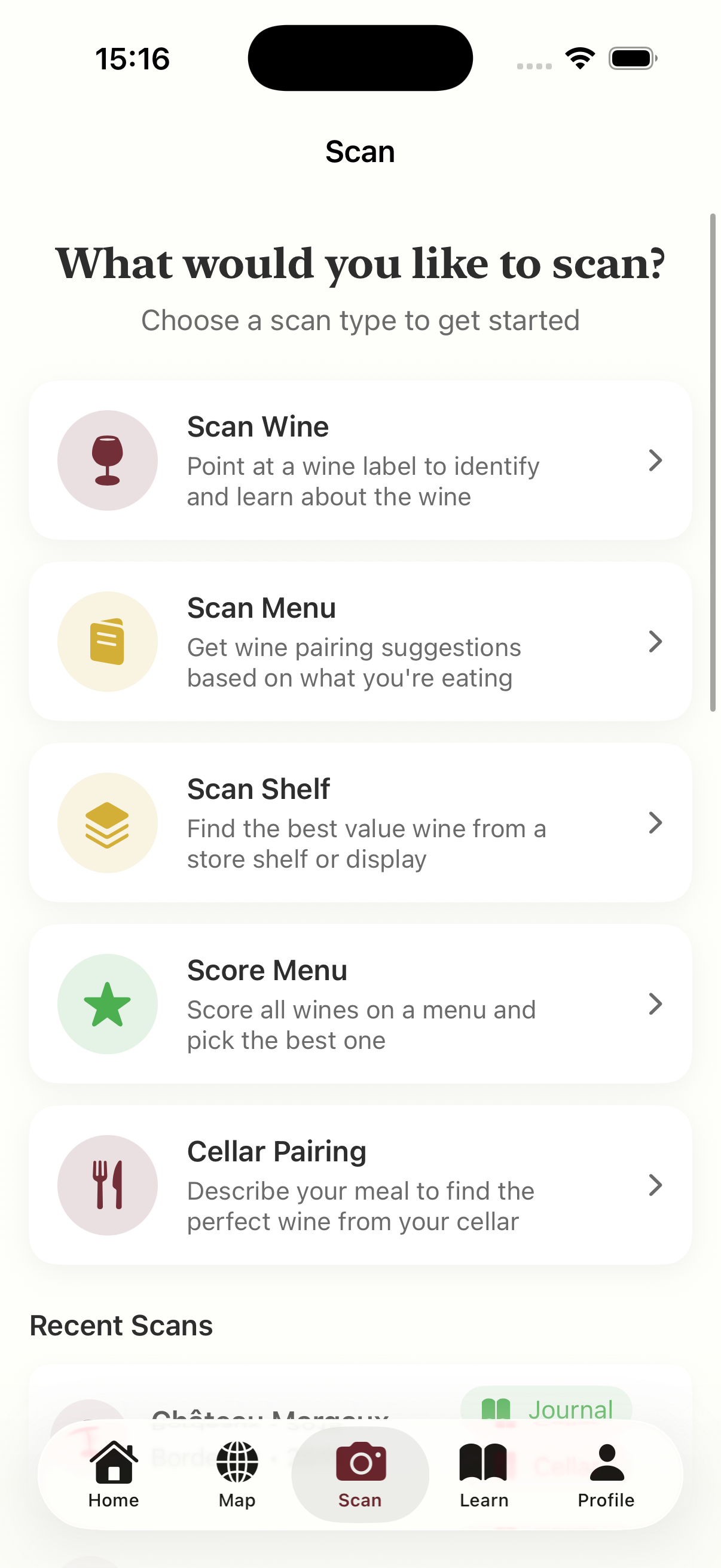
Sommo’s learning modules complement your WSET studies with bite-sized lessons, quizzes, and a gamified progression system that makes learning wine fun. Scan any bottle to instantly learn about its grape varieties, region, and tasting profile.
Whether you’re preparing for WSET or continuing your education after certification, having a pocket sommelier helps reinforce what you’ve learned.
Liked this read? Try the app.
Scan any wine label with AI, build your tasting journal, and learn wine your way.