An invitation to join a winery list can feel like an offer you should accept quickly. Before you do, find the sentence that says what happens next: do you request bottles, choose whether to buy a release, or authorise a shipment and a charge?
An allocation request is not the same as an automatic wine club order. Neither label gives you the complete commitment. Read the actual written terms for quantity, total cost, payment, delivery and how to decline or leave. If those terms do not fit your budget or cellar, declining is a sensible decision.
Translate the Offer into an Action
Winery language varies. Use these distinctions as questions to answer from the offer, rather than universal definitions binding every producer.
| Wording you encounter | What to establish |
|---|---|
| Waitlist or mailing list | Is this only permission to receive offers? Is there a fee? |
| Allocation request | Is supply confirmed, discretionary or still being considered? |
| Optional release offer | Must you actively order before a deadline? |
| Reserved quantity | Is stock merely held, or have you already agreed to pay? |
| Automatic club shipment | What is charged and shipped unless you take action? |
A saved card, an account or an enthusiastic welcome email does not answer all those questions. Look for the order confirmation and enrolment terms. If a promise arrives by phone, ask for it in writing before relying on it.
The wine delivery guide covers choosing a delivery model. This decision comes earlier: what are you agreeing to receive and pay for?
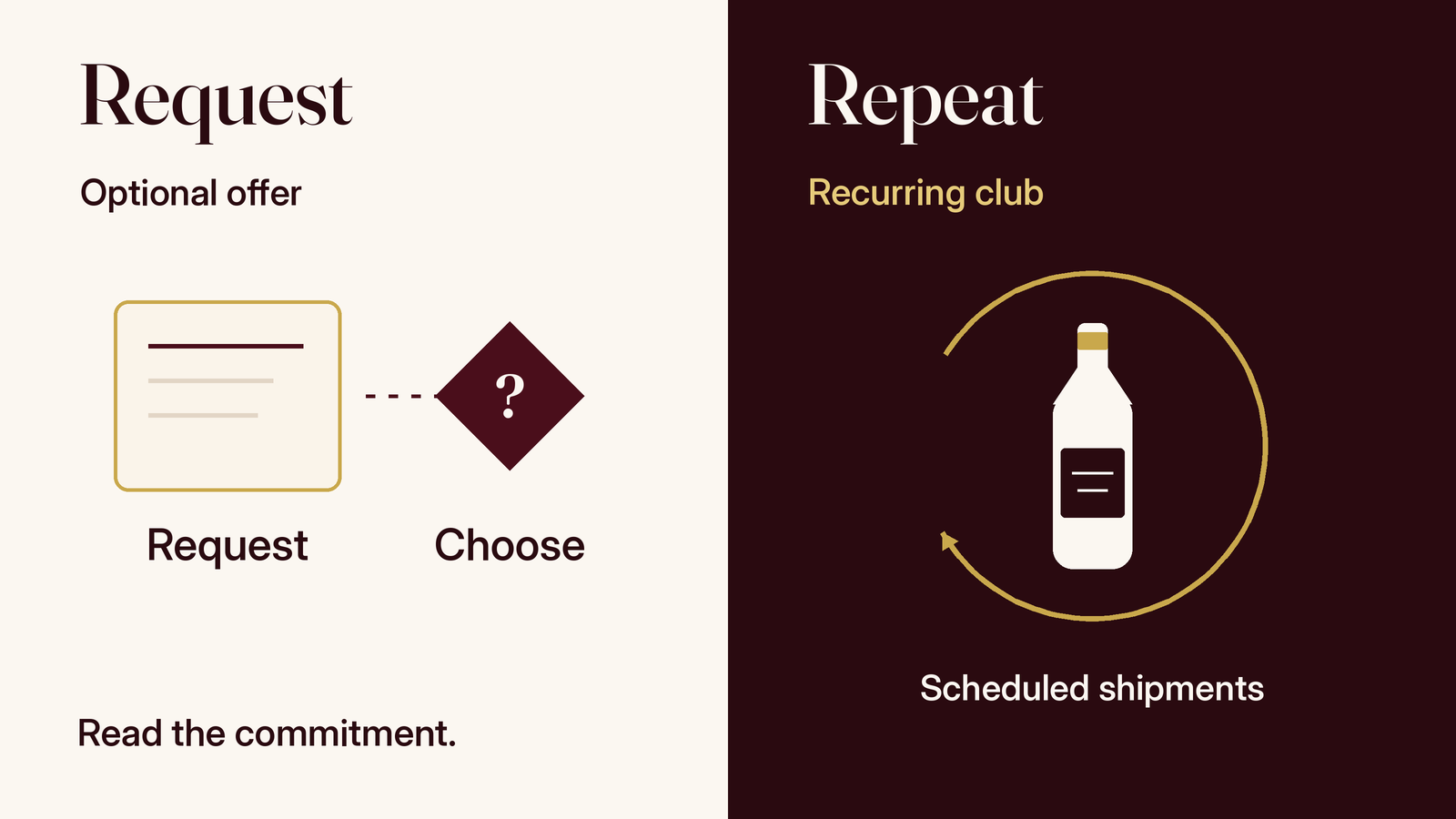
Two Official Pages, Two Different Starting Points
We checked these examples on 16 October 2026. They illustrate what can be established publicly; they are not complete reviews of either programme or substitutes for your own offer.
Harlan Estate’s allocation page invites a request. Submitting it should not be read as a guarantee of supply: the public form does not confirm bottles, a price or delivery. Harlan also states that resale within two years of release may affect future allocations. That is the producer’s allocation policy, not a reason to expect a financial return.
Ridge’s member FAQs describe programme-specific shipment quantities and schedules. They say members pay for wine plus applicable shipping and tax, and that club shipments are within the US. A club name alone therefore cannot tell you the annual bottle count or delivered cost.
The accessible FAQ did not establish the exact skip, hold and cancellation procedure for a proposed enrolment. We have left those details unverified. Obtain the current written procedure directly before enrolling; terms from another club cannot fill the gap.
A Dated Side-by-Side Commitment Check
Use this original worksheet on the day you decide. The completed entries below come only from the public pages checked on 16 October 2026. “___” means unknown, not zero, free or permitted. The club column uses Ridge’s ATP four-bottle shipment option as an example; verify its current enrolment terms before acting.
| Check | Harlan public request | Ridge ATP example |
|---|---|---|
| Action described | Request allocation | Scheduled club shipments |
| Confirmed personal supply | ___ | ___ |
| Quantity described | ___ | Four bottles per shipment, three shipments yearly |
| Written minimum commitment | ___ | ___ |
| Wine price for your order | ___ | ___ |
| Tax and shipping total | ___ | Additional; exact total ___ |
| Charge date and authority | ___ | ___ |
| Delivery date and address eligibility | ___ | US club shipping; date ___ |
| Offer/change deadline | ___ | ___ |
| Skip or hold procedure | ___ | ___ |
| Cancel method/effective date | ___ | ___ |
| Saved terms and check date | Allocation page; 16 October | Member FAQ; 16 October |
Three shipments of four bottles means 12 bottles in a full year at that described frequency. It does not establish a minimum purchase, the first partial year’s schedule or your exact bill. Ask those questions separately.
For your own two offers, copy the checklist and replace every cell with the exact term, document date and source. Add a named contact for unresolved points. Keep a copy of the offer and your confirmation outside your cellar app; a changing webpage is a poor archive of what you accepted.
Put the Commitment Beside Your Actual Stock
An attractive bottle is still another bottle to store and eventually enjoy. Before adding a programme, count what you already own in the styles it sends. If your rack holds 24 bottles, contains 19 and you expect a four-bottle shipment, it leaves one space before other purchases. That arithmetic may matter more than a membership benefit.
Ask whether the wines suit the occasions you actually have. A programme dominated by long-ageing reds may be a poor fit if you mostly open fresh whites. If you have not tried the style, one independently purchased bottle or a tasting can be a smaller decision than recurring deliveries, where available.
Budget from a written delivered total. For a fictional offer, four bottles at £25 are £100. Add £12 shipping and a separately quoted £8 tax charge and the shipment is £120, or £30 per bottle. Three identical shipments would be £360, but only if quantities, prices and charges stayed unchanged. These are worksheet numbers, not Harlan or Ridge prices or cross-border tax guidance.
If building storage is the real problem, start with the first wine cellar guide before accepting more stock.
Make the Next Action Explicit
Before joining, fill in: “I am authorising ___; the next charge is ___; I must act by ___; the method is ___.” Leave the decision pending if any essential answer is missing. Keep deadlines in your usual calendar, including time to obtain a reply.
An allocation can remain a request. A release can be declined. A club can be unsuitable even when you like its wines. Choose on those practical grounds rather than scarcity language or hopes of resale.
Sommo’s cellar can help you see the bottles already in storage and record arrivals once received. It does not manage winery allocations, recurring charges, skips or cancellations. Keep your cellar record in Sommo, and keep the purchase agreement where you can retrieve and act on it.