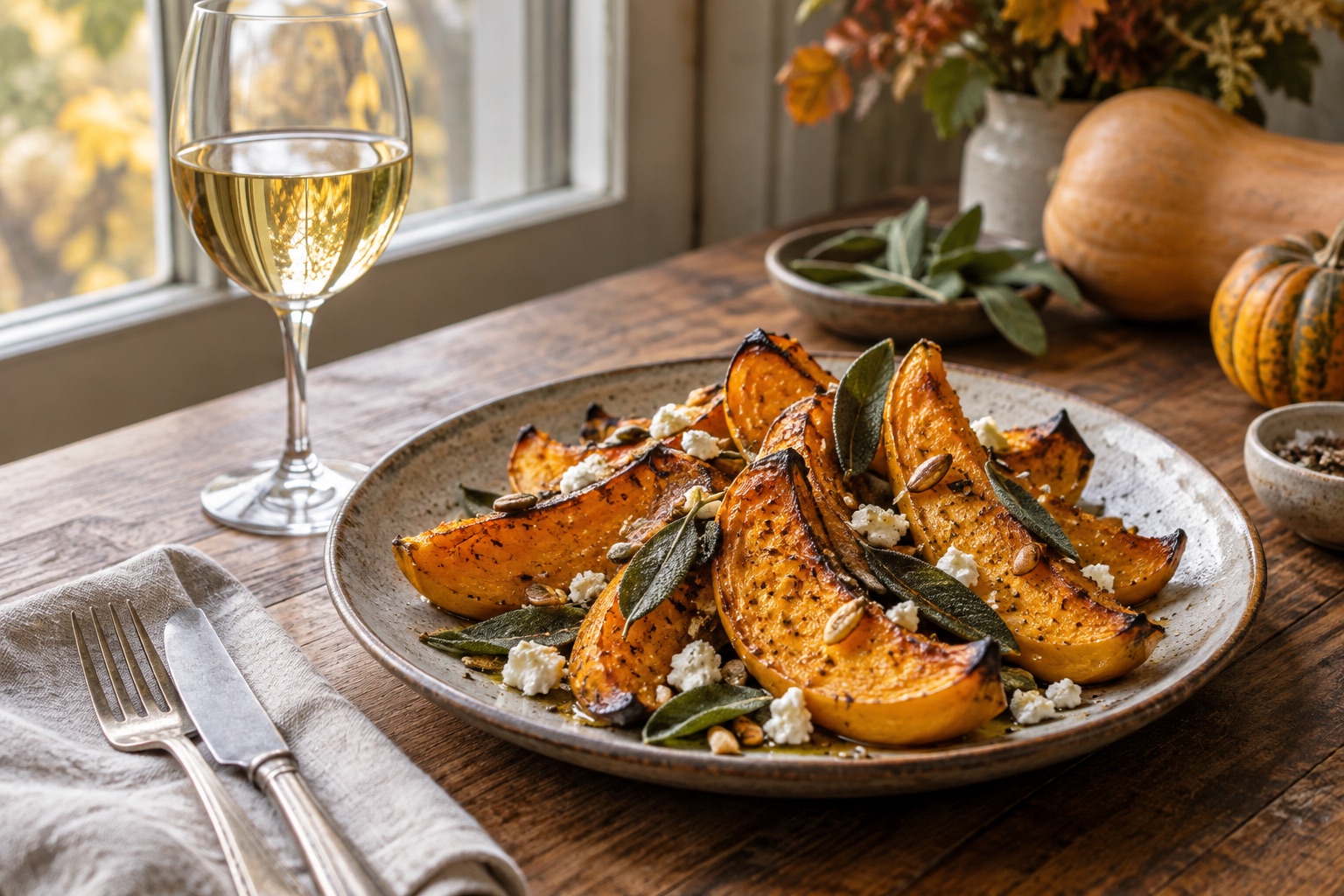
For plain roast squash, start with dry Chenin Blanc. It has enough texture for the soft vegetable and enough freshness to lift its sweetness. But the bottle changes when the tray comes out of the oven with sage butter, salty feta or chilli. Match the strongest flavour on the plate, not the word squash on the shopping list.
This is a more specific question than our broader guide to wine with vegetarian food. Roast squash brings natural sweetness and caramelised edges; the fat, salt and spice you add determine whether a wine feels bright or dull. WSET’s food-matching principles offer the useful starting point: look at the finished dish’s dominant tastes and texture.
Choose by what is on the tray
| Roast squash dish | First wine to try | Why it works |
|---|---|---|
| Olive oil, salt and herbs | Dry Chenin Blanc | Orchard-fruit flavour and lively acidity meet sweetness without adding more sugar. |
| Sage butter or a creamy gratin | Rounded dry Chardonnay | A little weight matches the butter; freshness prevents a heavy finish. |
| Feta, tahini or toasted seeds | Dry rosé or light Gamay | Fruit balances salt and the wine does not fight the earthy topping. |
| Harissa, chilli or warm spices | Off-dry Riesling | A touch of sweetness eases heat while acidity resets the palate. |
Treat the table as a route to a first bottle, not a verdict on the only correct one. Squash roasted until deeply browned tastes more savoury than squash gently steamed inside its skin. A sharp lemon dressing also changes the answer: it can make a low-acid white taste flat, so keep the wine fresh.
When a red makes sense
Squash alone rarely needs a powerful red. Add mushrooms, lentils or slow-cooked onions, though, and the dish gains earthy depth. That is when a lightly chilled Gamay or Pinot Noir can take over from white wine. Both provide fruit without the firm tannin that can overpower a vegetable-led plate. If mushrooms dominate, our wine with mushrooms guide takes the next step.
For a nut roast or a plate crowded with several autumn vegetables, decide which element you actually taste most. A vinegar-heavy dressing may matter more than the squash; an aged cheese may matter more than the herbs. Taste the food first, then the wine. The autumn wine guide helps if you want one bottle to carry the rest of the meal.
What to avoid
Avoid choosing a very tannic red purely because the dish has been roasted. Browning creates savoury flavour, but it does not give squash the protein or fat of a steak. Also resist a bone-dry, delicate white with a sticky maple glaze. Sweet food can make a dry wine seem sour or bitter. In that case, reduce the glaze, add a salty topping, or choose a wine with a little sweetness of its own.
You need not turn dinner into a tasting exam. Pour a small glass with a bite that includes sauce and topping; if the wine tastes flatter after the food, move towards more freshness or fruit next time.
Keep the pairing you liked
Use Sommo to note the actual preparation, not just “squash”. A photo or short journal note saying sage butter, Chardonnay worked is much more useful next autumn than a score without context. The pairing finder can suggest a starting style, and your own record tells you whether it suits your table.
Download Sommo to save the bottles and dishes worth repeating.