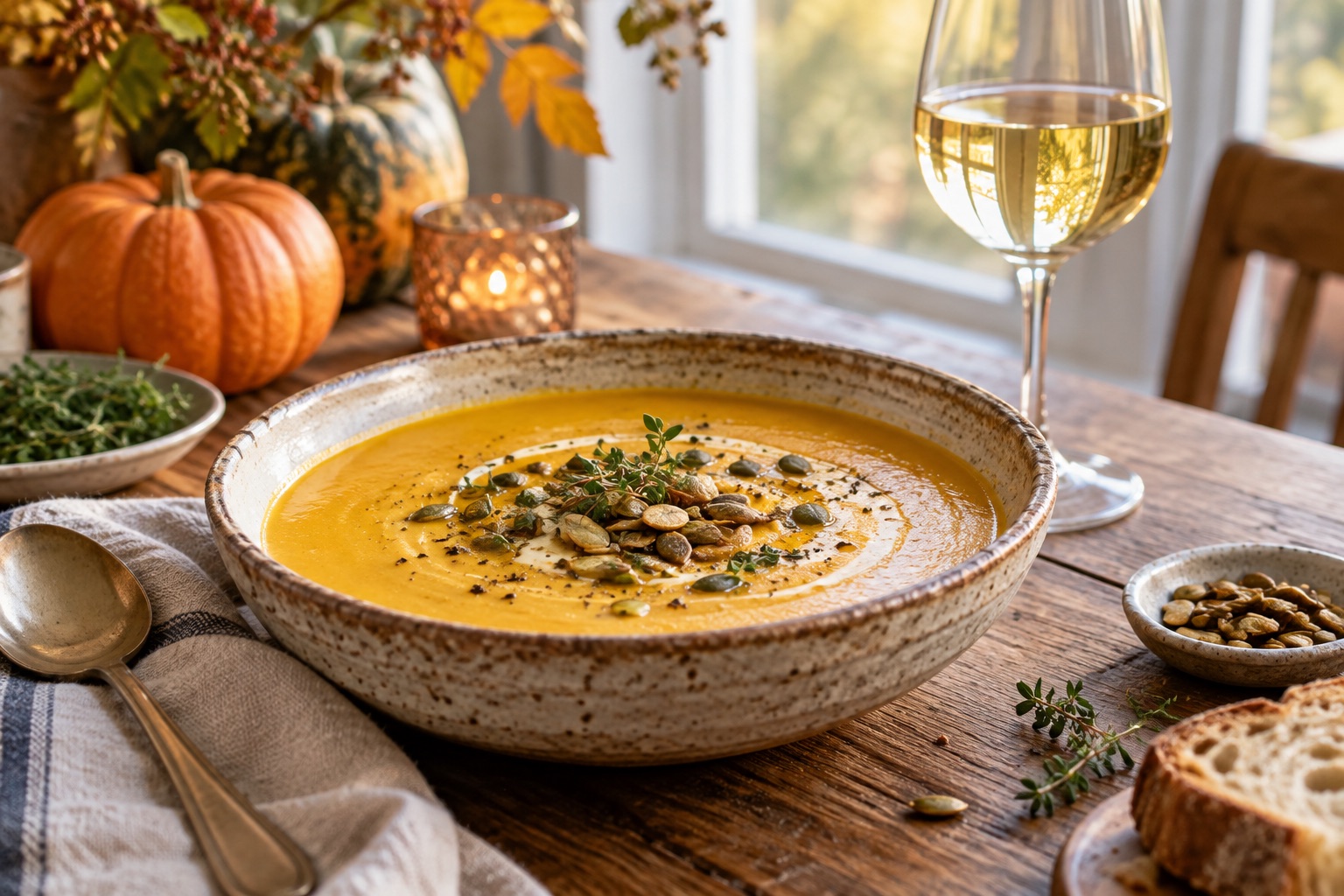
For classic, gently seasoned pumpkin soup, pour Chenin Blanc with fresh acidity and a little texture. If the soup is spicy, switch to off-dry Riesling. If the pumpkin was deeply roasted and topped with savoury ingredients, a light Gamay becomes possible. The recipe matters more than the colour of the squash.
Pumpkin soup sits in an awkward pairing space: naturally sweet vegetables, sometimes cream, sometimes chilli, sometimes smoky bacon. A very dry, thin white can taste sour beside sweet roasted squash, while a powerful tannic red can flatten the whole bowl. Work from the ingredients on your spoon, not a single “pumpkin wine” rule.
| Soup in the bowl | First wine to try | Why it works |
|---|---|---|
| Smooth pumpkin, herbs, little cream | Dry Chenin Blanc | Acidity and orchard fruit meet gentle sweetness |
| Creamy pumpkin or squash | Textured Chenin or lightly oaked Chardonnay | Enough weight for cream, with a fresh finish |
| Chilli, ginger or curry spice | Off-dry Riesling | Fruit and modest sweetness temper heat |
| Roast pumpkin, sage, bacon or mushrooms | Gamay or Pinot Noir | Light tannin keeps the vegetables in focus |
| Pumpkin soup with crisp croutons | Dry traditional-method sparkling | Bubbles lift rich texture and toasted garnish |
Creamy soup needs freshness
Cream rounds out pumpkin’s sweetness and gives the soup a velvety texture. A wine with no acidity can make that combination feel tiring after a few spoonfuls. Chenin Blanc is a flexible starting point: dry versions can be crisp yet broad enough not to vanish beside the soup. Check the individual label because the grape spans dry and sweet styles.
A lightly oaked Chardonnay works when the soup is particularly rich or finished with browned butter. Keep the oak subtle. Heavy vanilla and sweetness from the wood can turn a delicate first course into something that feels like dessert. If the bowl has coconut milk, look at the spices before deciding: ginger and chilli often make Riesling a better choice than Chardonnay.
Roast and savoury toppings change the answer
Roasting creates deeper, sweeter flavours than simmering. Sage, mushrooms, crisp bacon or toasted seeds then add savoury contrast. That is the moment a red can work, provided it stays light. Gamay from Beaujolais offers fresh red fruit and little tannic grip; a restrained Pinot Noir is another option.
Do not choose Cabernet merely because the topping contains bacon. The bowl is still mostly mild vegetable. If mushrooms dominate the recipe, our mushroom pairing guide gives more precise red and white options.
Spice asks for a different white
Hot chilli can make alcohol and tannin feel more aggressive. An off-dry Riesling brings a little sweetness and plenty of acidity, a combination that can calm the heat without losing the soup. For a gently spiced curry version, a dry aromatic white may be enough; taste the soup before assuming you need a sweet wine.
If serving a whole autumn menu, think beyond this first course. The autumn wine guide can help carry the bottle into the main, while the wine pairing finder is useful for a different soup or topping. Keep a note of your exact recipe and the wine that worked in Sommo. Next time, you will be pairing your soup rather than an imaginary standard version.