Record ullage with a dated photograph, a clear reference point and the bottle’s identity. Compare like bottle shapes, and keep the visible observation separate from a judgement about quality. A low fill can be a reason to ask questions; a high fill cannot certify authenticity, storage or how the wine will taste.
Ullage describes the space left above the wine, commonly discussed through the fill level. The wine glossary gives the short definition. For a buyer or collector, the practical task is to document the particular bottle well enough that another person can understand the observation.
Why “looks low” is an incomplete record
The same-looking gap can mean different things in bottles with different shoulders, necks and capacities. A sloping Burgundy-style bottle and a high-shouldered Bordeaux-style bottle do not offer identical landmarks.
Christie’s London wine conditions, checked on 10 October 2026, describe ullage in relation to age and inspection. They also explain the limits of condition reports and images. Use the seller’s current terminology for that particular sale, rather than borrowing a universal acceptable-fill threshold.
A measurement from one reference point cannot be compared directly with another. “25 mm below the top of the glass” and “25 mm below the cork” are different statements. Specify the reference and method, and retain the photograph that shows what you meant.
A repeatable photographic record
Work where you can see the liquid line without heating or repeatedly disturbing the bottle. Handle valuable or fragile bottles minimally; request a specialist’s condition report when inspecting them yourself is inappropriate.
- Identify the bottle. Photograph the front and back labels, format and any visible identifying reference.
- Use a consistent position. Where safe, photograph it upright, with the camera level rather than looking steeply down or up.
- Show the fill clearly. Use gentle lighting and a plain background; take more than one view if glass colour or reflections hide the line.
- Include a reference. If measuring, put a scale beside the bottle in the same plane, name the reference point and avoid false precision.
- Record the date and context. Say whether it is your inspection, a seller’s image or a later check after arrival.
Keep the original images. Cropping can help show a detail, but do not retain only a close-up that removes the bottle’s identity or disguises the viewing angle.
An example with three levels of certainty
This is an invented condition record, not an assessment of a real wine:
| Field | Entry | What it establishes |
|---|---|---|
| Bottle | Alder Estate red 1998, 750 ml, personal reference C07 | Which bottle the note concerns |
| Fill observation | Liquid visible in upper neck; see dated front/side photographs | A visible position at inspection |
| Measurement | Not taken; shoulder/neck photograph retained | No invented numerical precision |
| Closure observation | Capsule creased; no visible seepage in supplied images | What the images show, not what is hidden |
| Storage history | Seller states cool storage; supporting records requested | An attributed statement, still unconfirmed |
“No visible seepage” is more accurate than “no leakage”. “Seller states” is more accurate than presenting an unverified storage history as your own knowledge. These small distinctions keep the record honest when someone reviews it later.
Ask about the closure and history together
For an older bottle, ask whether it has been recorked or otherwise reconditioned, who performed the work and what documentation exists. Keep the answer alongside the fill observation. Do not remove a capsule merely to complete a photograph without considering the bottle and obtaining appropriate guidance.
A fresh-looking label or capsule is neither proof of good storage nor proof of fraud. Likewise, ullage alone cannot distinguish ordinary ageing from every possible cause of wine loss. Bottle identity, age, format, closure and provenance belong in the assessment together.
If you have inherited several bottles, the first-weekend collection plan covers broader handling and ownership decisions. This recording method is useful for one bottle whether you intend to keep it, ask a seller about it or obtain a condition opinion.
Keep the evidence with the record
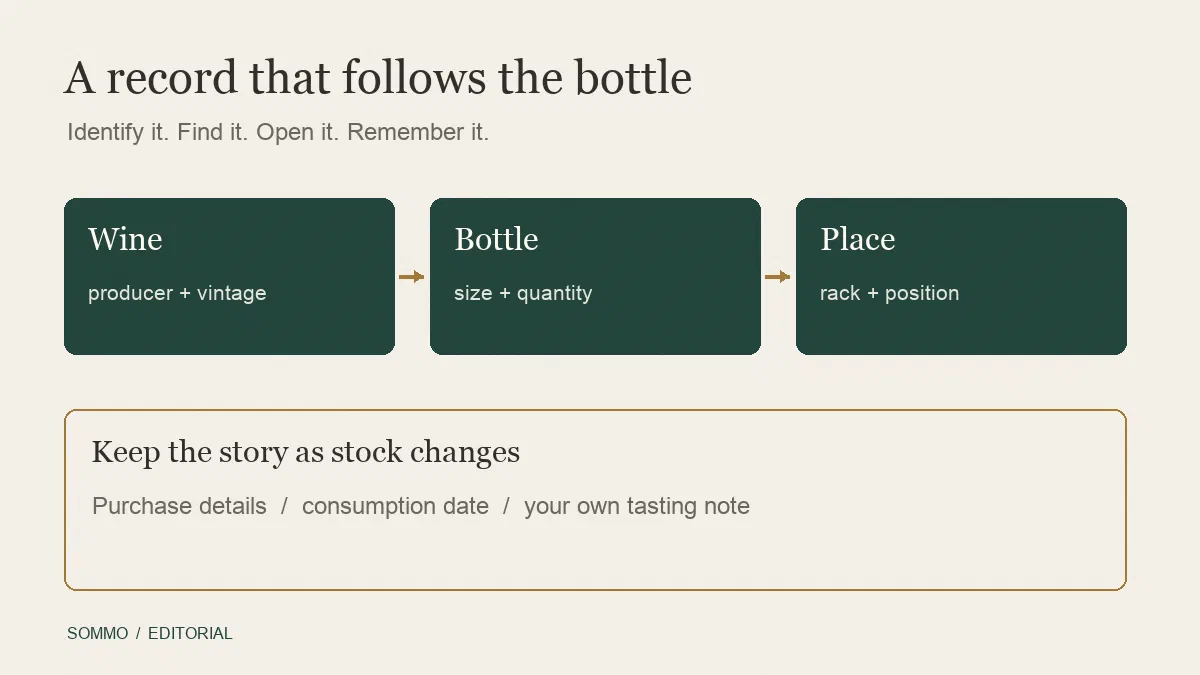
Use a bottle register to connect your reference, photographs, receipts and correspondence. Do not replace the record each time: add a new dated observation so any apparent change can be examined against the original method.
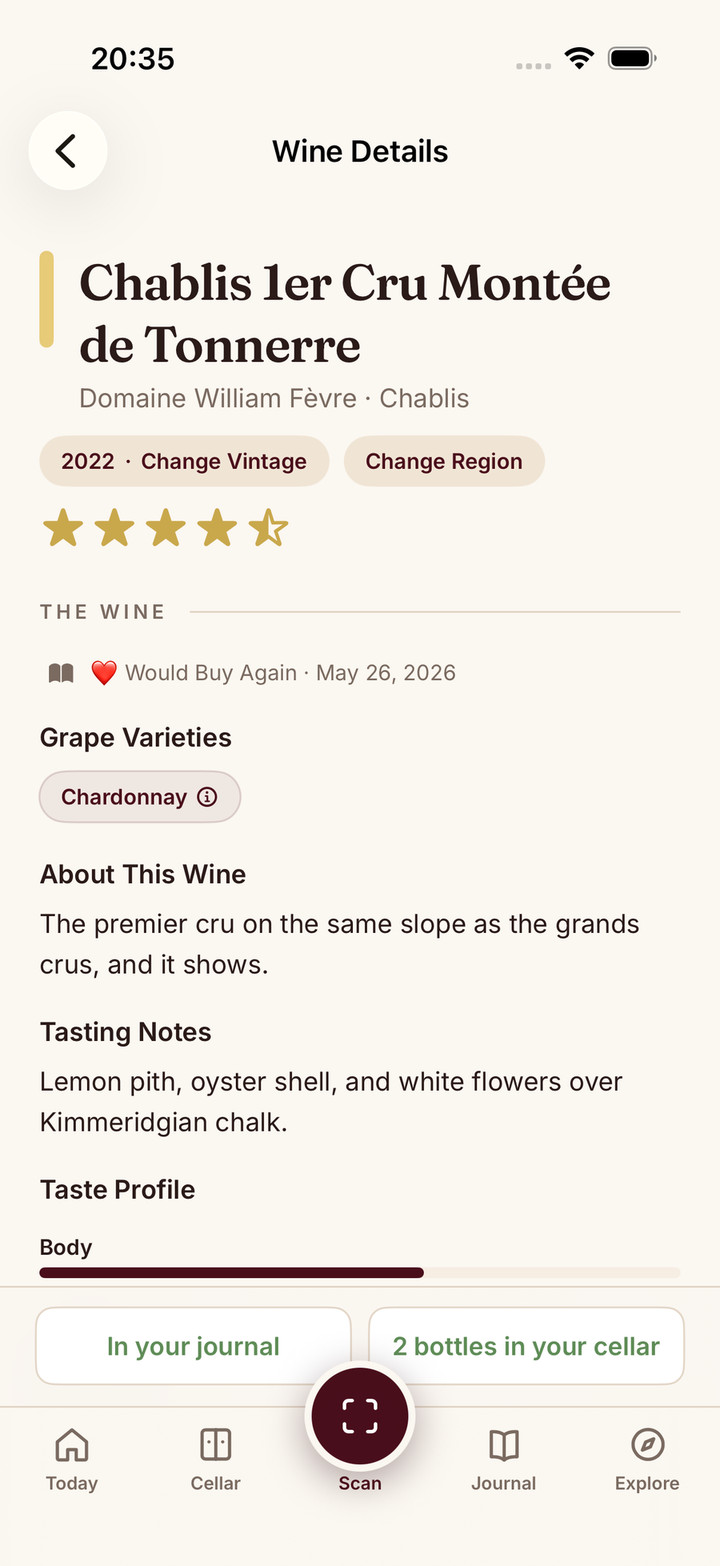
Sommo’s Premium cellar supports personal notes on owned wine. You can add a factual fill-level observation to a wine record, while keeping the original condition photographs and provenance documents separately. Grouped stock notes are not independent histories for every bottle in the group.
Before buying a potentially valuable old bottle, obtain the relevant condition information and specialist advice rather than trying to convert the gap into a taste score or a guaranteed value. The purpose of a good ullage record is to make the question clearer, not to manufacture certainty.