Wine Vocabulary: 20 Terms You Actually Need
Sommeliers use 500+ wine terms. You need exactly 20. Here's the vocabulary that lets you order confidently and understand labels.
“Do you prefer wines with higher tannin structure or are you looking for something with more malolactic character?”
If that sentence makes you want to flee the restaurant, you’re not alone. Wine vocabulary has become a gatekeeping mechanism, a way for insiders to identify outsiders.
Here’s the truth: Master Sommeliers use 500+ technical terms. You need exactly 20.
These 20 terms cover every situation you’ll encounter: ordering at restaurants, shopping at wine stores, reading labels, and holding your own in conversations. Everything else is optional knowledge for enthusiasts.
Print this. Screenshot it. Reference it. You’ll never feel lost in a wine conversation again.
Tier 1: The 8 Terms You’ll Use Every Week
1. Dry
What it means: No perceptible sweetness. The opposite of sweet. Most wine is dry.
Why you need it: When someone asks “Do you prefer dry or sweet wine?” they’re asking the most fundamental question about your preferences.
Key insight: “Dry” doesn’t mean bitter or harsh. A wine can be dry, fruity, and delicious simultaneously.
2. Body
What it means: How heavy the wine feels in your mouth. The difference between skim milk and whole milk.
The scale:
- Light-bodied: Pinot Grigio, Riesling, Beaujolais
- Medium-bodied: Pinot Noir, Merlot, Chardonnay
- Full-bodied: Cabernet Sauvignon, Malbec, Barolo
Why you need it: “I’d like something medium-bodied” is the single most useful sentence when ordering wine.
3. Tannin
What it means: That astringent, mouth-drying sensation in red wine (like overbrewed tea). Comes from grape skins and oak barrels.
Why you need it: If you find red wine “too harsh” or “too bitter,” you’re describing high tannin. Ask for “low tannin reds” instead.
Low-tannin reds: Pinot Noir, Gamay (Beaujolais), Grenache
4. Acidity
What it means: Tartness. Brightness. That lip-smacking quality that makes you salivate.
Why you need it: High-acid wines taste refreshing and pair brilliantly with food. Low-acid wines feel rounder and richer.
High-acid wines: Sauvignon Blanc, Riesling, Champagne, Sangiovese
5. Oaked vs. Unoaked
What it means: Whether the wine aged in oak barrels (adds vanilla, toast, spice flavors) or steel tanks (preserves pure fruit).
Why you need it: Oaked and unoaked Chardonnay taste like completely different wines. Knowing your oak preference prevents expensive mistakes.
Oaked indicators: Vanilla, butter, caramel, toast, coconut Unoaked indicators: Crisp, fresh, fruity, mineral
6. Varietal
What it means: A wine named after its grape variety (Chardonnay, Cabernet Sauvignon, Riesling).
Why you need it: Most New World wines (USA, Australia, Chile) are labeled by varietal. Knowing grape names = knowing what to expect.
7. Vintage
What it means: The year the grapes were harvested.
Why you need it: Weather varies. Some years produce better wine than others. “What’s a good vintage for Bordeaux?” is a legitimate question.
Practical rule: For wines under $25, vintage rarely matters. For $50+, it can matter a lot.
8. Brut
What it means: Dry sparkling wine. The standard style for Champagne.
Why you need it: Sparkling wine sweetness levels are confusing. Brut = dry. Memorize that, ignore the rest.
Tier 2: The 7 Terms You’ll Use Monthly
9. Appellation
What it means: A legally defined wine region with specific rules (like Champagne, Napa Valley, Rioja).
Why you need it: Appellations guarantee authenticity. Only wine from Champagne can be called Champagne.
10. Blend
What it means: Wine made from multiple grape varieties.
Why you need it: Bordeaux is a blend. Champagne is a blend. Many great wines combine grapes for complexity.
11. Reserve / Reserva / Riserva
What it means: Supposedly higher quality. But it depends where you are.
- Spain (Reserva): Legal meaning. Aged longer. Usually better.
- Italy (Riserva): Legal meaning. Aged longer. Usually better.
- USA (Reserve): Means nothing. Pure marketing.
12. Estate
What it means: The winery grew the grapes themselves (didn’t buy from other farms).
Why you need it: Estate wines often indicate higher quality control and site-specific character.
13. Finish
What it means: How long flavors linger after you swallow.
Why you need it: Long finish = higher quality. If the taste vanishes immediately, the wine is probably simple.
14. Terroir (tare-WAHR)
What it means: The total environment that shapes a wine: soil, climate, altitude, local traditions.
Why you need it: When someone says “This wine really expresses its terroir,” they mean it tastes distinctively like its origin.
15. Old Vines / Vieilles Vignes
What it means: Grapes from vines typically 40+ years old.
Why you need it: Old vines produce fewer, more concentrated grapes. Often indicates more complex wine.
Tier 3: The 5 Terms for Intermediate Enthusiasts
16. Sommelier
What it means: A trained wine professional, usually working in restaurants.
Why you need it: Sommeliers exist to help you, not judge you. “Can you recommend something?” is exactly what they want to hear.
17. Decanting
What it means: Pouring wine into a wide vessel before serving to expose it to oxygen.
Why you need it: Young, tannic reds often taste better after 30 to 60 minutes in a decanter.
18. Corked
What it means: Wine contaminated with TCA, a compound that makes wine smell like wet cardboard.
Why you need it: The only legitimate reason to send wine back at a restaurant. Affects 3 to 5% of bottles with natural cork.
19. Vertical Tasting
What it means: Tasting multiple vintages of the same wine side by side.
Why you need it: Shows how wine evolves over time. Useful if you’re building a collection.
20. Horizontal Tasting
What it means: Tasting different wines from the same vintage.
Why you need it: Shows how different producers interpret the same year. Common at tasting events.
Terms You Can Completely Ignore (Unless You Want to Become a Sommelier)
| Term | Why You Can Skip It |
|---|---|
| Malolactic fermentation | Winemaking technique. Doesn’t help you order. |
| Brix | Sugar measurement at harvest. For winemakers. |
| Négociant | French business structure. Irrelevant for drinking. |
| Bâtonnage | Stirring lees in barrels. Extreme inside baseball. |
| Phenolic ripeness | Tannin development. For wine critics. |
| Maceration | Skin contact time. Technical term. |
| Pigeage | Punching down grape skins. French winemaking. |
| Lees | Dead yeast cells. Nerdy but not essential. |
You can learn these later if wine becomes a serious hobby. For now, they’re noise.
How to Use These 20 Terms in Real Situations
At a restaurant: “I’d like something medium-bodied and not too oaky. What would you recommend?”
At a wine shop: “I prefer dry wines with high acidity. Do you have any good Sauvignon Blancs?”
At a dinner party: “This has a really long finish. What grape is it?”
Reading a wine label: Look for: Varietal, vintage, appellation, and any quality designations (Reserve, Estate, Old Vines).
The Vocabulary Learning Hack
Don’t memorize definitions. Connect terms to experiences:
- Drink a high-tannin Cabernet. Feel your mouth dry out. That’s tannin.
- Taste oaked Chardonnay, then unoaked Chablis. Notice the vanilla versus citrus difference. That’s oak influence.
- Try a Riesling from Germany’s Mosel region, then a Malbec from Argentina. Feel the weight difference. That’s body.
Vocabulary sticks when it’s tied to physical sensation. Sommo lets you record these tasting experiences so you build a personal vocabulary grounded in what you’ve actually tasted.
Liked this read? Try the app.
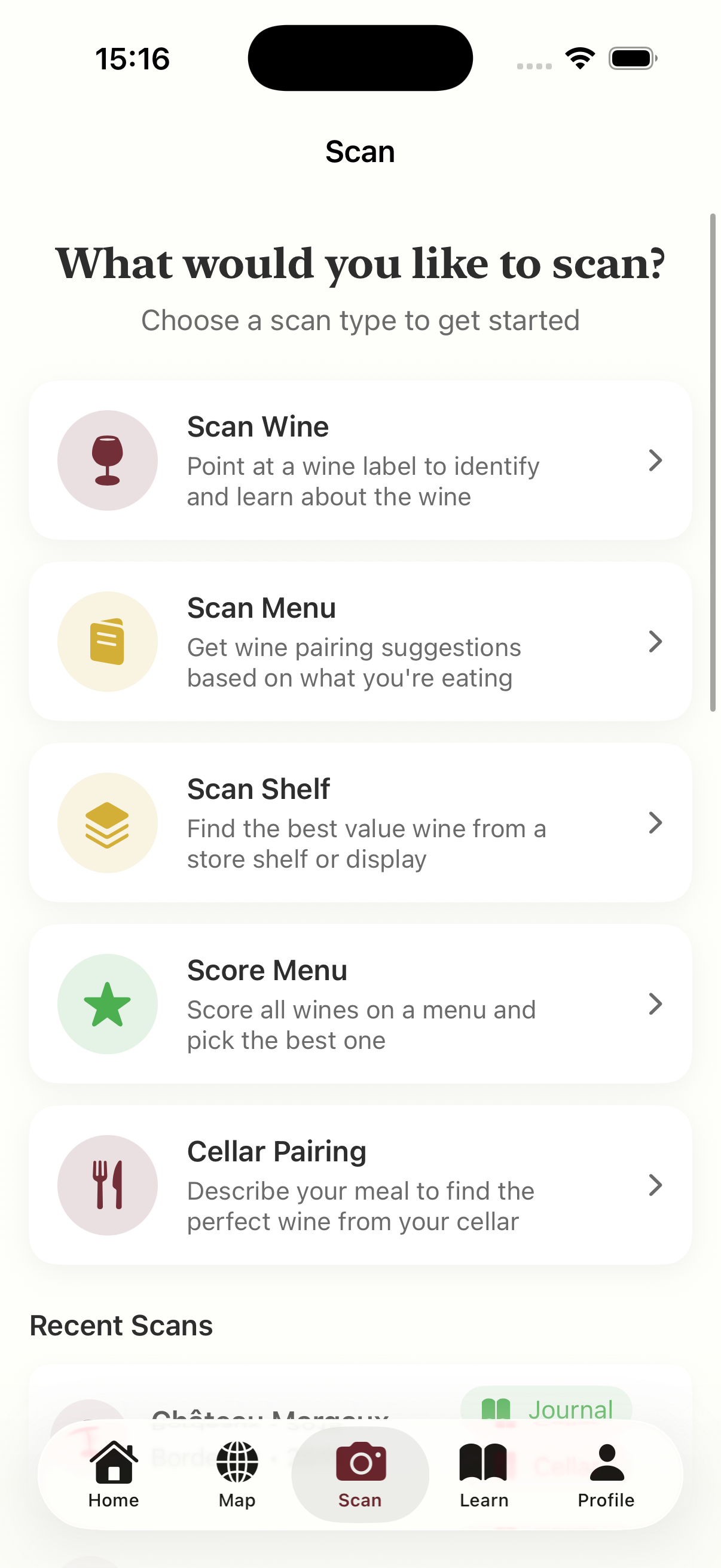
Scan any wine label with AI, build your tasting journal, and learn wine your way.