Keep unopened wine somewhere cool, dark and reasonably stable, away from a radiator or sunny window. For bottles you intend to age, controlled storage matters more than a decorative rack. For bottles you will open soon, start by choosing the least exposed space you already have.
Storage and serving are different jobs. A cellar temperature is not a target for every glass; use the serving temperature guide when it is time to pour. An opened bottle needs its own preservation routine.
Start with the bottle and the time horizon
| Your situation | First useful action | What to check before spending |
|---|---|---|
| A few bottles for the next meals | Find a dark spot away from heat | Whether the spot warms up while cooking or in afternoon sun |
| Bottles you plan to keep for years | Compare controlled storage options | Measured conditions, capacity and access to the bottles |
| Wine stored in several places | Give each location a clear name | Whether your record matches the physical stock |
| A bottle exposed to heat or showing leakage | Record what happened and ask the seller or producer | Its identity, exposure history and condition; a calendar cannot diagnose it |
The categories are a planning aid, not a promise that a bottle will improve with age. Check the producer’s guidance for the particular wine rather than assigning every red the same lifespan.
Temperature: measure the place you actually use
WSET’s storage guidance recommends cool, constant conditions at 10 to 15°C for long-term storage. The Australian Wine Research Institute’s heat and light review explains why prolonged heat and light exposure can change wine quality. Neither makes a drinking-window estimate a guarantee of condition.
Before turning a cupboard into your cellar, put a thermometer where the bottles will sit. Record morning and evening readings during normal use and check again during warmer weather. A single cool reading does not describe the whole year.
A kitchen cupboard beside an oven, an uninsulated garage and a sunny shelf deserve particular scrutiny. If you cannot maintain suitable conditions for long storage, compare a wine fridge or an off-site facility. Check what the specific appliance controls and what the storage contract includes; humidity control and insurance are not universal features.
Light, closures and packaging
Keep bottles out of bright light. A dark bottle is useful packaging, but it is not a reason to leave wine on a windowsill. Separate bottles used for display from the stock you plan to drink.
WSET advises laying cork-sealed bottles on their side for long storage; screwcap bottles can stand upright. Check producer instructions where a bottle needs particular handling.
Do not try to reach a universal humidity number by putting a bowl of water in a cupboard. Inspect the room and packaging for damp, condensation or damage, and follow the storage equipment’s instructions. Room conditions, label condition and the wine inside a sealed bottle are separate questions.
A small home-storage audit
Imagine six bottles split between a kitchen rack and an interior cupboard. This is a worked example, not a tested storage recommendation.
- Name the locations, such as Kitchen A and Cupboard B.
- Count the bottles and write down producer, wine, vintage and closure.
- Check each location for heat and light at different times of day.
- Move bottles only after checking the receiving space, then update the record.
- Mark which bottles you intend to open soon and which need longer-term storage.
This avoids buying a larger rack before discovering that the location is the problem. The inventory template gives you a portable starting record; the rack planner helps name positions consistently.
Keep a record that helps you find and open wine
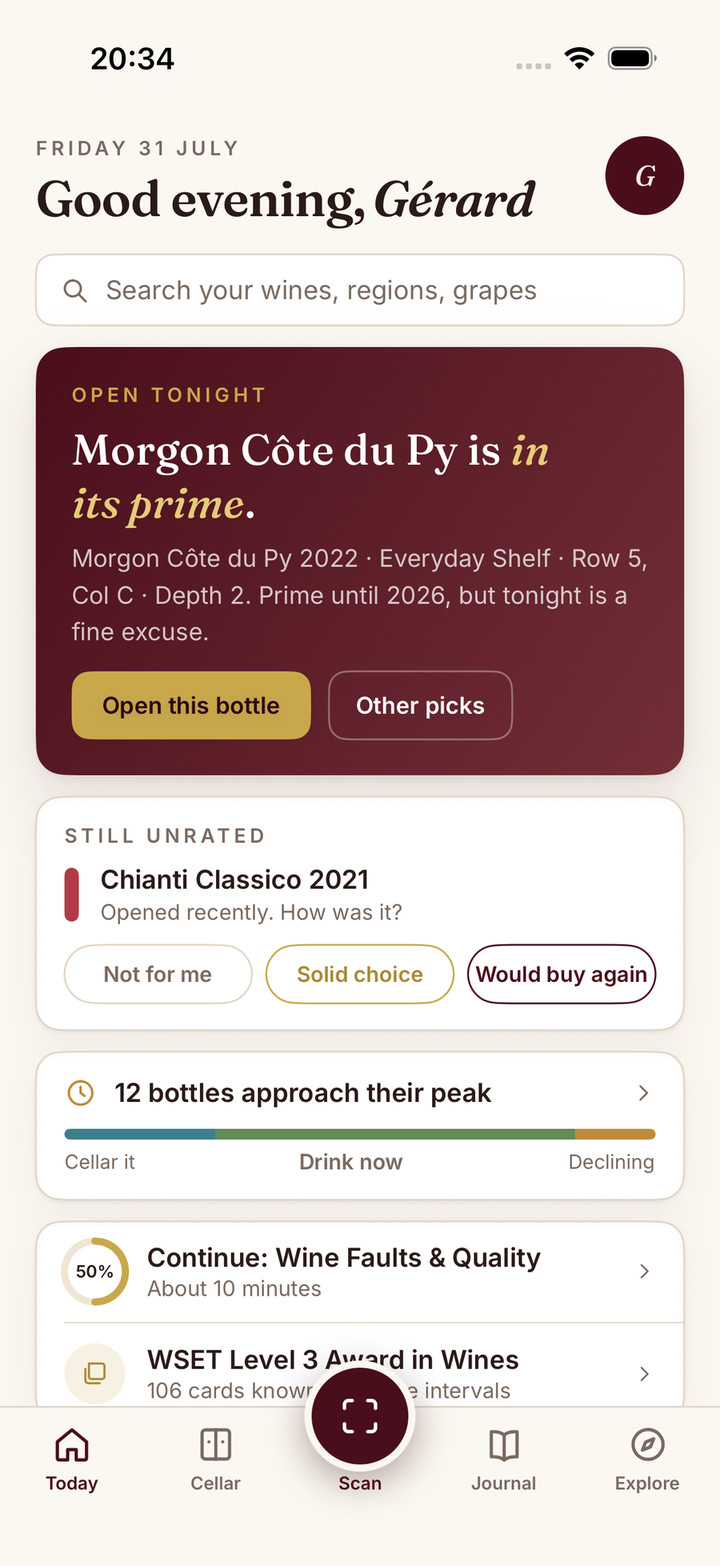
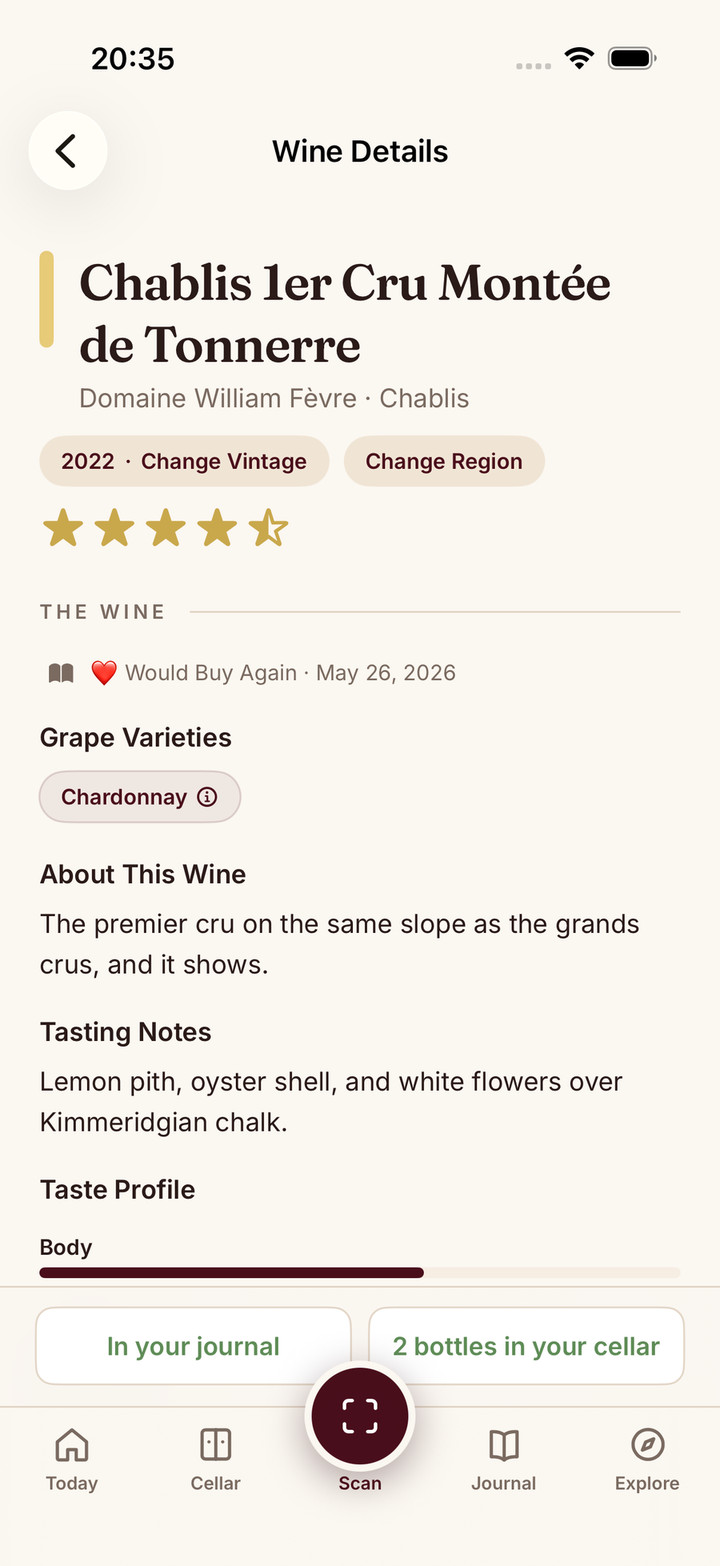
Sommo’s Premium wine cellar records stock and rack positions alongside estimated drinking windows. Its journal records what you thought when you tasted a wine. These are different records: a tasting note alone does not establish how many bottles remain or where they are stored.
Use an estimated window as a prompt to review a bottle, alongside producer advice and your storage history. Sommo does not measure your room temperature or certify a bottle’s condition. If you want to try the habit first, start with a saved wine note in Sommo. Check the Premium cellar before moving your inventory into it.
Storage is only half the challenge when the bottles change address. The wine collection moving checklist covers inventory, packing and temperature during the journey.