You ordered a 2020, but the bottle in the box says 2021. The producer looks right and the merchant says it is the current release. Compare the complete order with the delivered bottle, decide whether that year was essential, and contact the merchant before opening a disputed item. Another vintage may suit an everyday dinner while failing the purpose of a birthday gift or vertical tasting.
A vintage change is not automatically a quality upgrade or downgrade. It is first a question of what you ordered, what was agreed and what you now want to do. Our vintage explainer covers why years differ; this guide helps reconcile the transaction.
Compare more than the big year on the label
Put the order confirmation beside the actual bottle. Check producer, wine or cuvée, vintage, bottle size and quantity. A similarly named second wine, a half bottle or a mixed-vintage case can look plausible at first glance. Use the wine label guide when the naming is unclear.
Check the product description and any substitution wording you saved when ordering. A generic bottle photograph may show an older label. A personal email confirming “2016 only” is also relevant evidence. Keep both rather than trying to remember which page you saw first.
| Comparison field | Ordered → received |
|---|---|
| Producer and cuvée | ______ → ______ |
| Vintage | ______ → ______ |
| Size and quantity | ______ → ______ |
| Written substitution agreement | ______ |
| Essential purpose and date | ______ |
| Merchant contact and case reference | ______ |
Photograph the actual labels, the bottles together and the packing slip. Keep the packaging while the issue is unresolved. Record damage separately: a wrong year and a leaking bottle are different problems and may need different handling. Do not open a disputed bottle simply to decide whether its flavour compensates for the mismatch.
Check this merchant’s policy
Two policies checked on 16 October 2026 show why a single assumption is unreliable. Aitken’s terms allow another vintage if a particular year runs out and warn that the pictured vintage may differ from stock. They ask buyers who need a specific year to contact the merchant. The wording about emailing before dispatch refers to substituting a different wine, so do not assume it promises prior agreement for every vintage change.
Champagne King’s vintage terms say the team would normally contact a buyer about a change, but may send the available vintage for a time-sensitive order if contact fails. They also ask customers to check availability where the year is crucial.
These are examples of merchant policy, not an explanation of your legal rights or a judgement about the terms’ enforceability. Read the terms and correspondence for your own order. If you need advice on a disputed entitlement, use an appropriate local consumer-advice service rather than treating another shop’s policy as the answer.
Before dispatch: make the choice explicit
Use this decision tree when the merchant proposes a different year, or when you notice uncertainty while checking out:
- Is the exact year essential? Say so and request confirmation that the actual stock matches. If it does not, ask about cancellation or another agreed route before dispatch.
- Is the purpose flexible? Ask for the proposed producer, cuvée, vintage, size, quantity and final price. Check that it suits the intended style and opening date.
- Do you accept the proposal? Reply with the exact details you approve and save the confirmation. If you do not, state the outcome you are requesting.
- Has the merchant confirmed the arrangement? Keep it with the order and verify the bottles on arrival. An unanswered message is not confirmation.
Here is an original message blank to adapt:
Order [number]: I ordered [producer, cuvée, vintage, size, quantity]. The exact year [is essential because / is flexible provided that] [purpose]. Please confirm the physical stock before dispatch. If it is unavailable, please contact me about [requested option] before sending an alternative. My required arrival date is [date].
The wine delivery ordering guide covers address, timing and delivery arrangements. Give the merchant enough time to answer, especially if the wine is a gift going directly to someone else.
On arrival: pause, document, contact
First establish whether the parcel matches an agreed substitution. If it does, check the remaining details and update your records to the bottles received. If it does not, separate the disputed bottles, keep them appropriately stored and contact the merchant promptly through its stated channel. Check any notification deadline rather than assuming you can wait until the intended dinner.
Explain the mismatch and the purpose, attach clear photographs where the merchant accepts them, and state the resolution you want to discuss. Ask for written instructions about collection, return, replacement or any price adjustment, including who arranges transport and its cost. Do not send bottles back without agreed arrangements.
Order [number], delivered [date]: the confirmation lists [ordered details], but I received [actual details]. I have kept [bottles/packaging] and attached [photos]. This matters because [purpose]. Please advise about [requested resolution] and confirm the next steps, timing and any transport costs in writing. My contact details are [details].
Two possible decisions
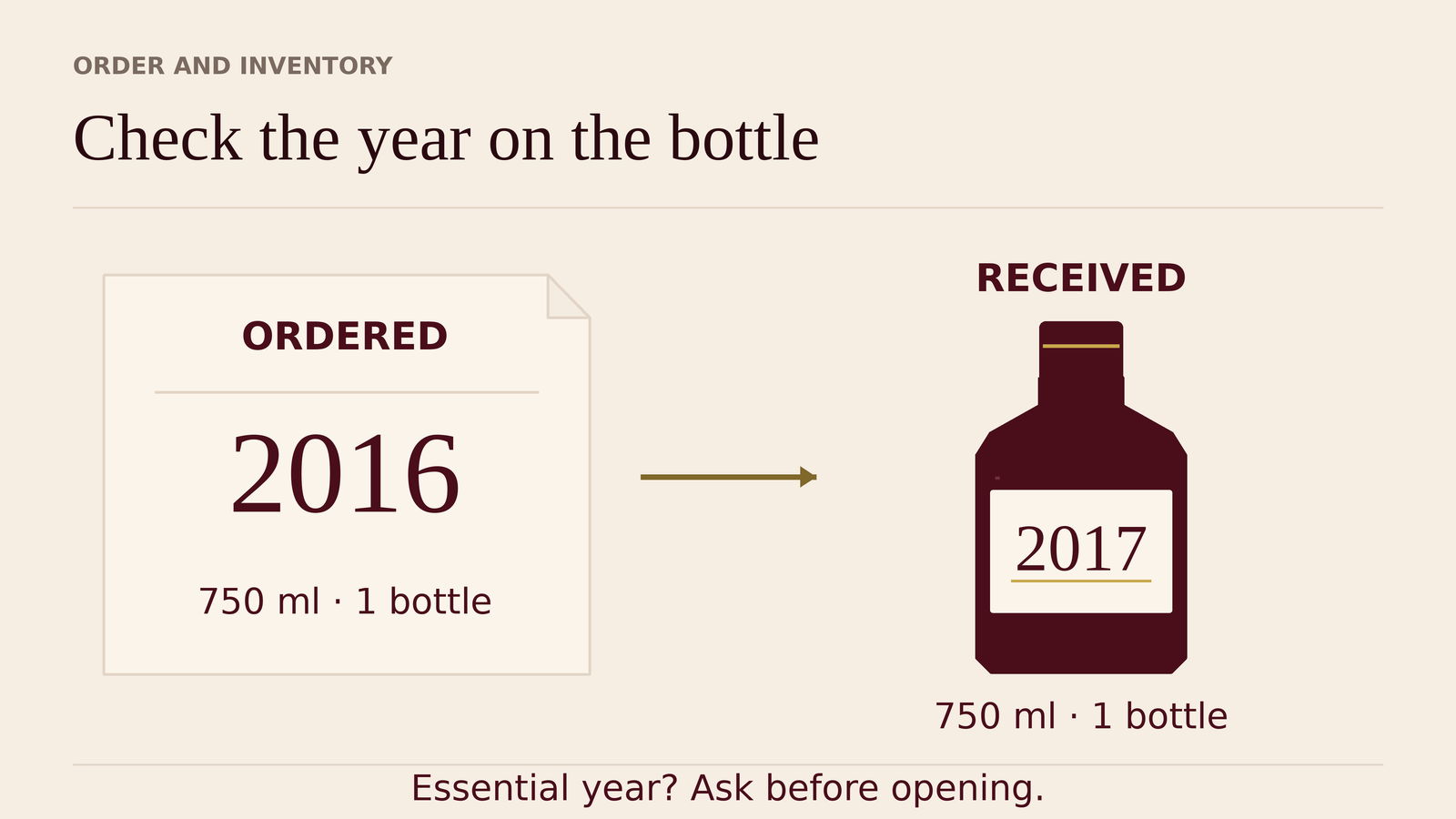
Synthetic case: the year is the gift. A buyer orders a 2016 bottle for a tenth wedding anniversary and receives 2017. The price is unchanged, but the date was the point. They keep it unopened, send the order confirmation and label photograph, and ask whether the merchant can replace it with the confirmed 2016 or discuss a return. They do not claim that 2017 is inferior; it fails the stated purpose. The outcome depends on the actual agreement and the merchant’s response.
Synthetic case: a flexible dinner order. A buyer orders six 750 ml bottles of an everyday 2023 white. Before dispatch, the merchant offers the same cuvée in 2024, with the same size, quantity and £72 delivered total. The buyer confirms that proposal in writing. On arrival, six matching 2024 bottles cost £72 ÷ 6 = £12 each delivered. They record 2024 in the inventory. This is an assumed example, not a live price or evidence that every new vintage tastes the same.
After accepting and checking a delivery, add the actual vintage and quantity to Sommo’s cellar. Keep the purchase agreement and any unresolved merchant conversation separately. Sommo can help track the bottles; it does not monitor substitution emails, negotiate a return or issue a refund.