Give guests a short list of wines you are offering tonight, with enough information to choose a glass. Your full cellar inventory is a different document. Prices paid, remaining quantities, storage locations and personal notes usually have no useful job on a dinner menu.
You can make a thoughtful list in a document or on paper. A shareable cellar link is convenient only if you understand what it reveals, whether it changes and who can open it later.
Choose the wines before choosing the format
Start with the menu and the bottles you are willing to serve. Check that they are physically present, and keep any uncertain bottle out of the essential line-up. A pending purchase should not appear as an available choice.
Three or four options can be more helpful than a catalogue: a welcome sparkling wine, a white, a red and perhaps a sweet finish. If the meal calls for one wine, a one-wine list is entirely sufficient. Our dinner-party wine guide can help with the selection.
Include the producer, wine, vintage where relevant, and one useful description. “Dry, fresh white for the starter” tells a guest more than a string of scores. Make clear whether you are offering a choice or serving a fixed sequence, so nobody assumes every listed bottle is already open.
Remove fields that belong to the owner
Review the guest version independently of your inventory. Omit acquisition costs, market estimates, full stock counts and exact rack or offsite locations. Remove private comments about gifts, sellers, condition disputes or another guest’s preferences.
If a detail will help the meal, translate it into a serving decision. A private note saying “one unreliable bottle from a warm delivery” should lead you to select a dependable alternative, rather than become an alarming menu footnote. Keep a reserve bottle on your own host sheet.
For a fictional mushroom dinner, the two documents might look like this:
| Guest list | Private host record |
|---|---|
| Welcome: dry traditional-method sparkling wine | Two available; one chilled, one reserve |
| Starter: fresh Chardonnay, served cool | Chosen bottle in fridge; purchase price omitted |
| Main: Pinot Noir with red-fruit character | One selected from six; rack position and stock kept private |
The guest list communicates the evening. The host record supports preparation. Neither needs to disclose the whole collection.
Check whether a link is live or a snapshot
These behave differently after you send them. A live inventory view can change when you add or remove bottles. A PDF or snapshot may continue displaying a wine you have since finished.
CellarTracker’s wine-list documentation describes a subscription feature with selections including delivered bottles, pending bottles and specific lists. A bookmarked preview can refresh with inventory changes. Choose the selection deliberately rather than assuming the default means “tonight’s bottles”.
InVintory’s documentation, checked on 10 October 2026, describes paid wine lists with selectable fields. Its shared links are snapshots, anyone with the link can open them without an account, and a sent link cannot be switched off. That makes careful selection and redaction more useful than treating the link as temporary access.
For either service, check the feature and available controls on the platform and plan you actually use. Documentation is not a hands-on test of your generated list.
Read the guest version as a guest
Before sending, open the exported file or link in a signed-out browser. Check the visible fields, all pages, any attachments and the title. If you are using a shared document, inspect its access settings and any visible comments. A clean first page does not establish that the rest is suitable to share.
Assume recipients can forward a link or save a copy. For a menu intended only for the evening, a deliberately limited PDF or printed sheet can be easier to understand than a broad inventory view. Reissue it if the selection changes, with the dinner date on the document.
Record the wines that were actually served
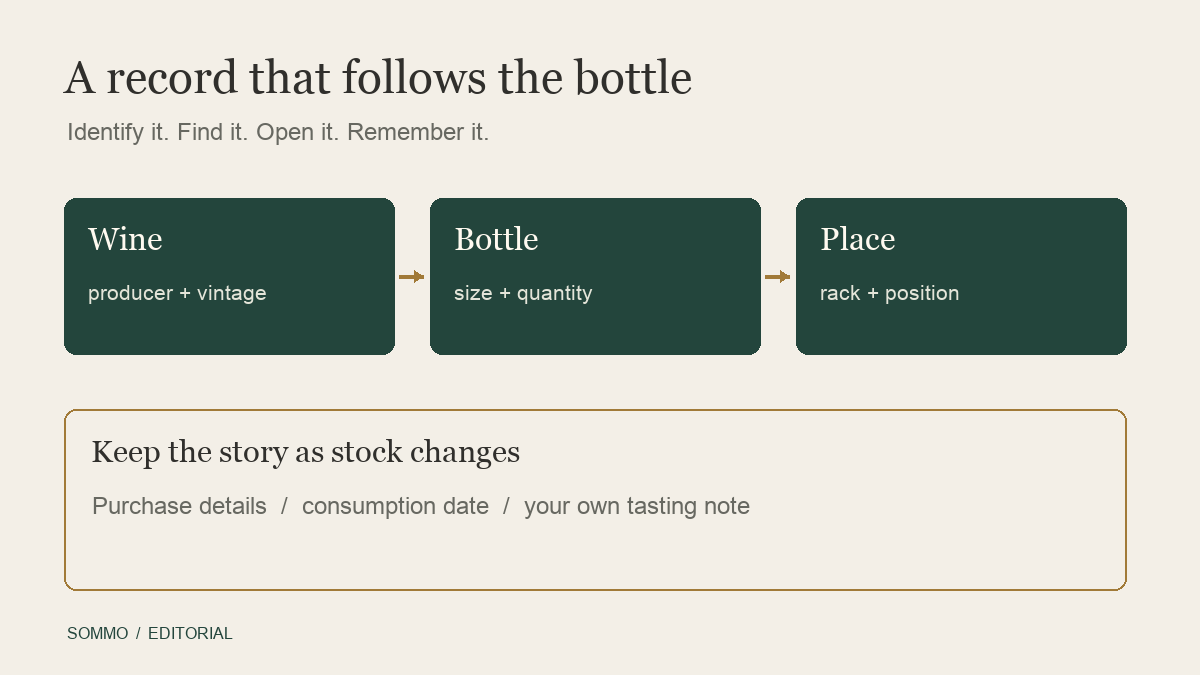
After dinner, reconcile opened bottles with stock and write a short tasting note about the wine you drank. Keep the unserved reserve in your inventory. This closes the loop without turning the invitation list into a claim about consumption.
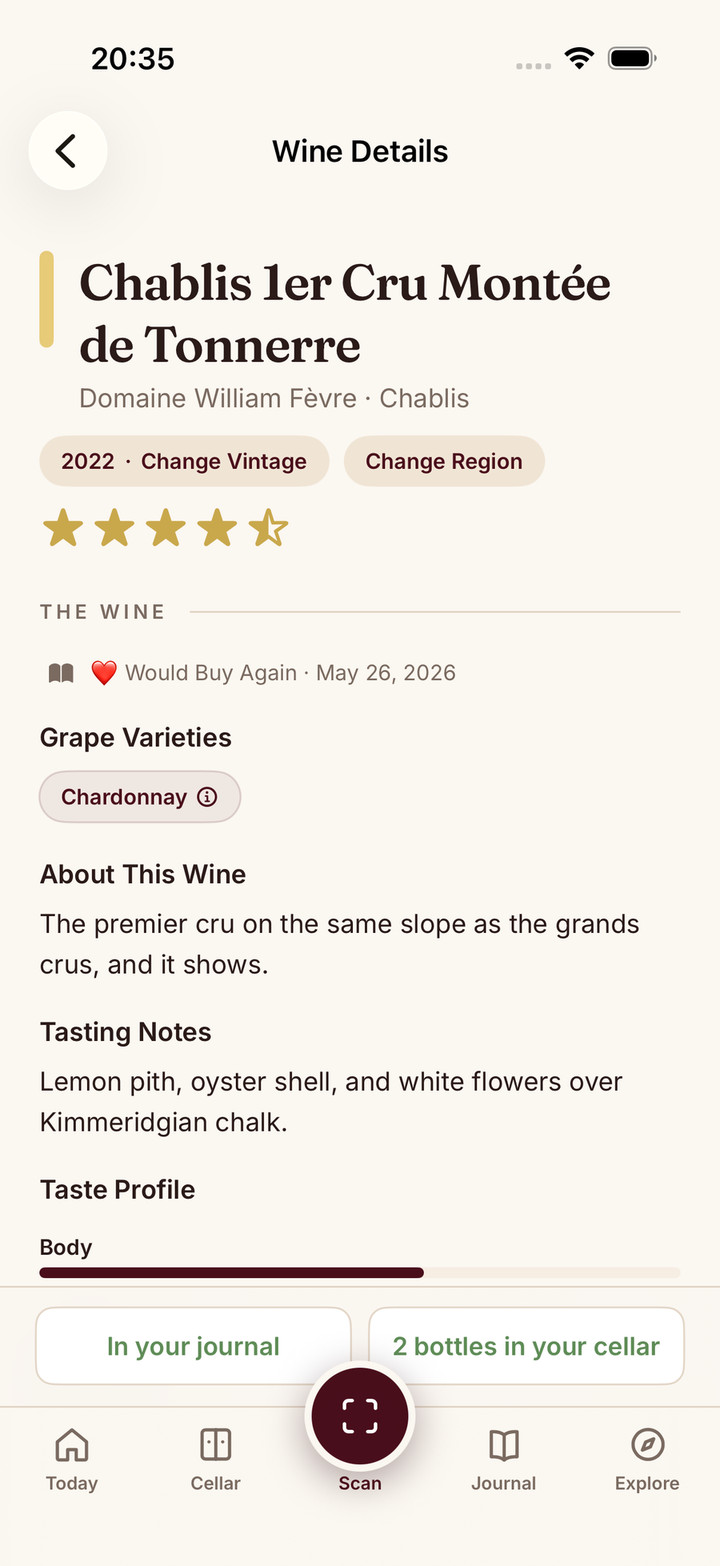
Sommo’s cellar book is a collection presentation, not a verified builder for a selectively redacted guest menu. Make the guest shortlist separately. The wine journal can hold your actual tasting; Free access covers the recent 30 days, while the cellar is Premium.
Download Sommo to remember the bottle and the meal after your guests have gone home.