A paper wine notebook is better for quiet, focused observation. A wine journal app is better for searching old bottles, comparing patterns and connecting a note to the label, cellar or next recommendation. Neither improves your palate automatically. Choose the format that makes you record the glass now and revisit the lesson later.
The Short Comparison
| Decision | Paper notebook | Wine journal app |
|---|---|---|
| Starting a note | Open and write | Find or scan the wine, then enter |
| Distraction | Minimal | Notifications and screens can intrude |
| Tasting structure | Whatever you draw or print | Prompts and scales where supported |
| Finding an old bottle | Page-by-page memory | Search, filters and bottle images |
| Seeing patterns | Manual review | Can aggregate grapes, regions and ratings |
| Ownership | The book is physically yours | Depends on export and account access |
| Best for | Focus and personal ritual | Retrieval and long-term learning |
The trade-off is focus now versus usefulness later. A good system should protect both.
Why Paper Still Works
Paper slows the tasting down. There is no crowd score waiting behind the next tap and no suggested vocabulary deciding what you smell. You can sketch the label, write around the margin and leave uncertainty visible instead of forcing every observation into a field.
It is also durable in a simple way. A notebook needs no account, subscription or battery. The free wine tasting journal template adds enough structure to separate aroma, palate, quality and preference without turning the page into an examination.
Paper becomes weaker as the journal grows. Finding a Barolo tasted three years ago depends on memory or a careful index. Comparing every high-acid white you enjoyed means rereading pages. A notebook remembers each evening well but struggles to reveal the pattern across them.
Why an App Becomes More Useful
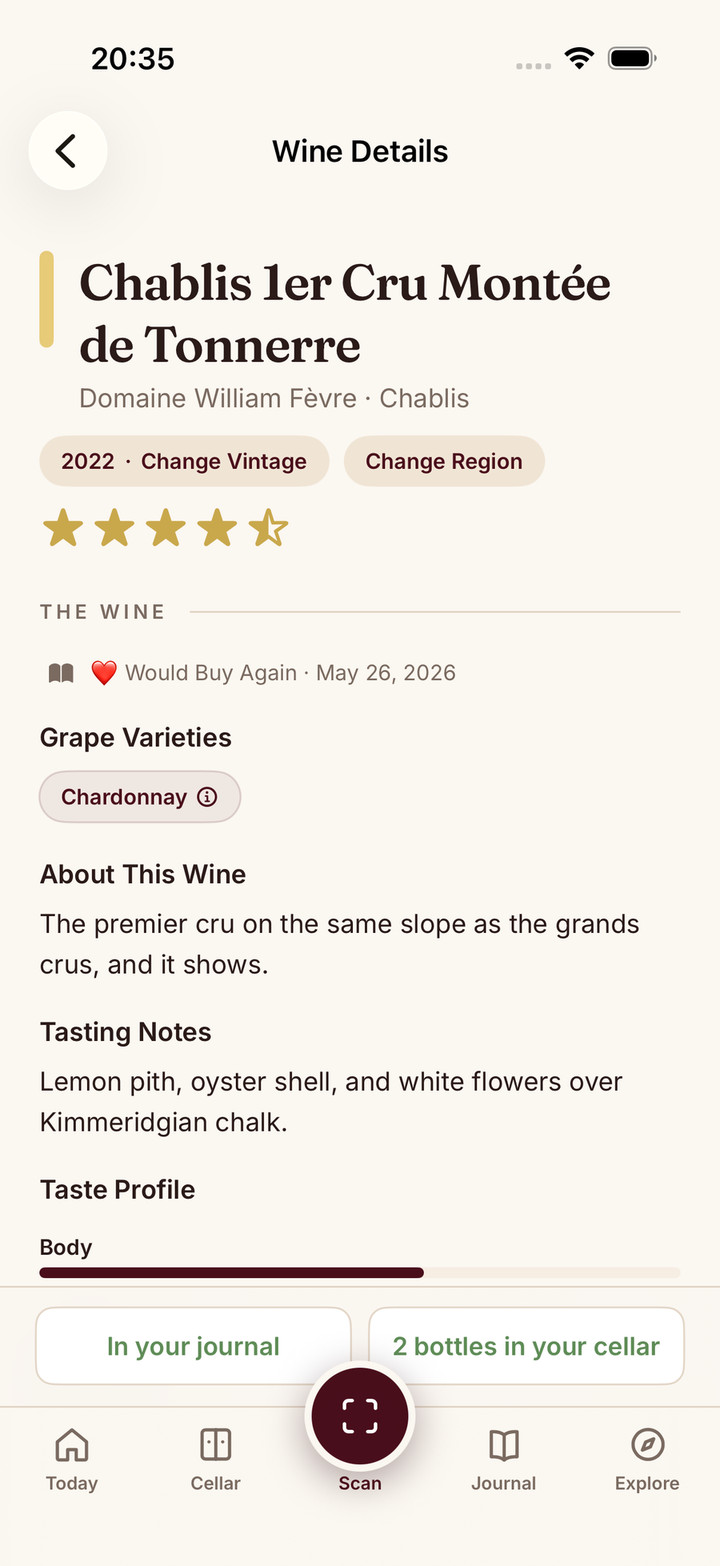
A journal app can attach the note to the exact producer, wine and vintage. Search and filters make the record reusable in a shop or restaurant, when the useful question is not what you wrote last night but whether you enjoyed this grape, region or style before.
Structure also makes comparisons fairer. If every entry asks about acidity, tannin, body and finish in the same order, the notes become easier to compare. The guide to writing wine tasting notes explains how to keep that structure useful rather than mechanical.
The cost is friction of a different kind. An app that asks for too many fields will be abandoned. One that only saves a score records preference but teaches little. Before committing, make one entry, find it again and export a sample. The best wine journal apps compares those jobs across the leading approaches.
Pick the Smallest Repeatable Habit
Do not begin by promising a formal note for every glass. Use a two-speed system:
- Record the bottle, context and honest personal verdict every time.
- Add structured appearance, aroma, palate and conclusion when the wine or tasting deserves attention.
Consistency matters more than word count. Five comparable notes can teach more than fifty poetic descriptions written in different formats.
Using Paper and Digital Together
The formats can share the job. Use paper during a focused tasting so the screen stays away. Photograph or transfer the conclusion afterwards so the bottle joins a searchable history. Keep the paper sheet for the working observation and the app for the lasting record.
If transfer becomes a chore, choose one source of truth. Duplicate journals are worse than either format alone because neither can be trusted.
Where Sommo Fits
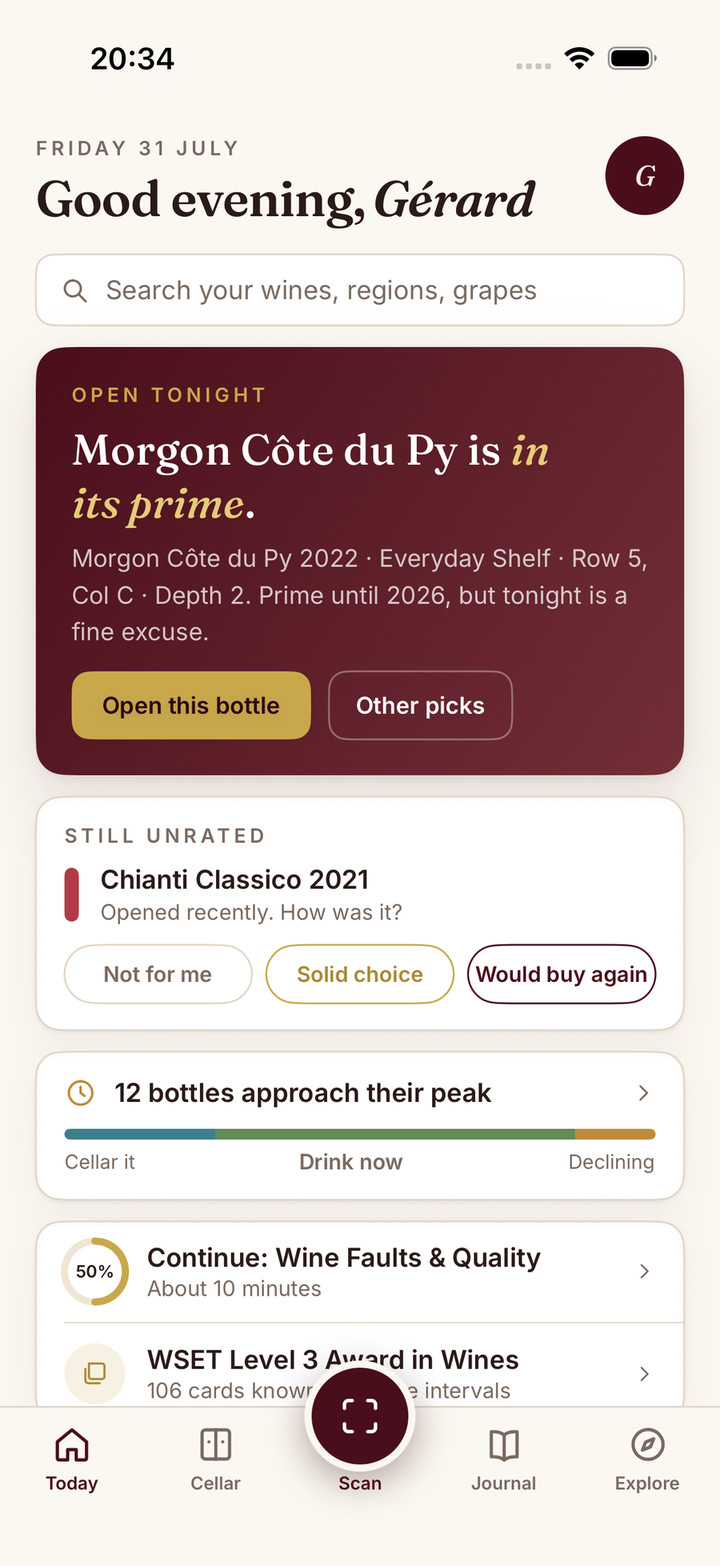
Sommo’s wine journal supports a quick personal reaction or a guided tasting note. Entries connect to the cellar, palate insights, regions and the wines you explore next. The three-choice personal rating also stays separate from the more analytical tasting structure.
Start with paper if that helps you pay attention. When the notes need to become searchable and teach across bottles, try Sommo and save the next wine in the format you can repeat.