A useful wine insurance pack connects the bottles you own to photographs, purchase evidence and a dated inventory. Build that record first, then ask your insurer or broker what they require for your particular policy. An app total, a receipt or a photograph alone may leave important questions unanswered.
This is a way to organise evidence, rather than a promise that a collection is covered. Policy terms, country, storage arrangements and the circumstances of a loss determine what an insurer accepts and pays.
Start with the bottles that are actually there
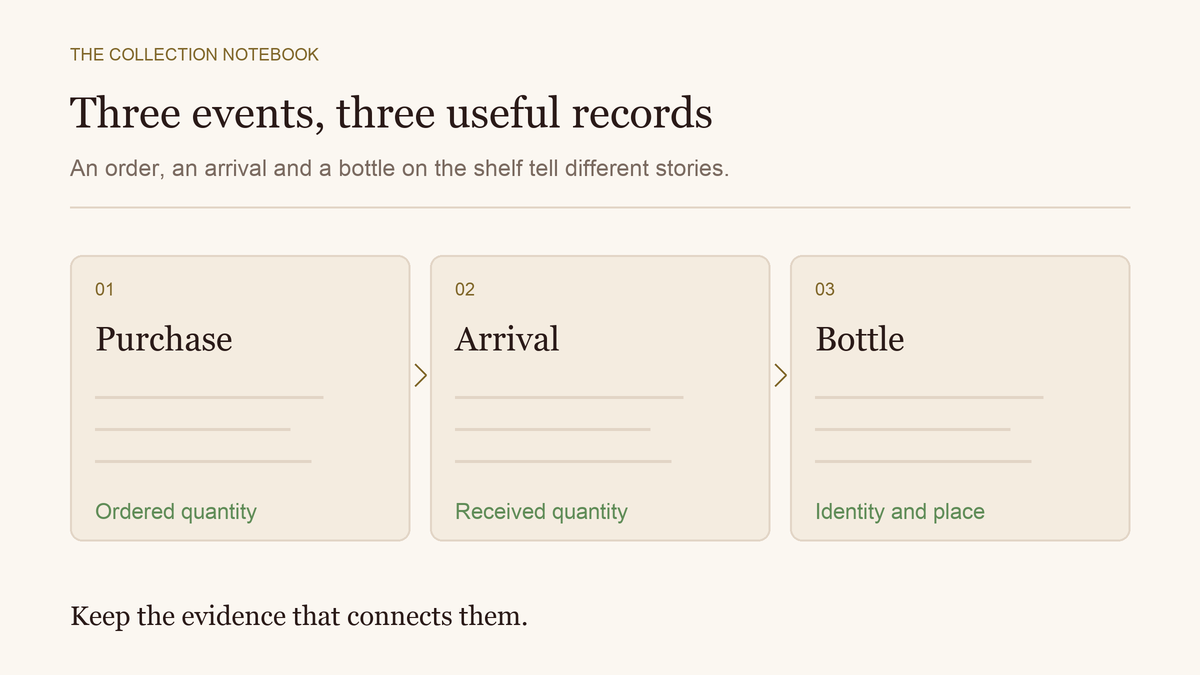
Reconcile your inventory with the rack and any offsite holdings. Record producer, wine, vintage or non-vintage designation, bottle size, quantity and storage location. Separate bottles received from orders still awaiting delivery. Note the date you checked the count.
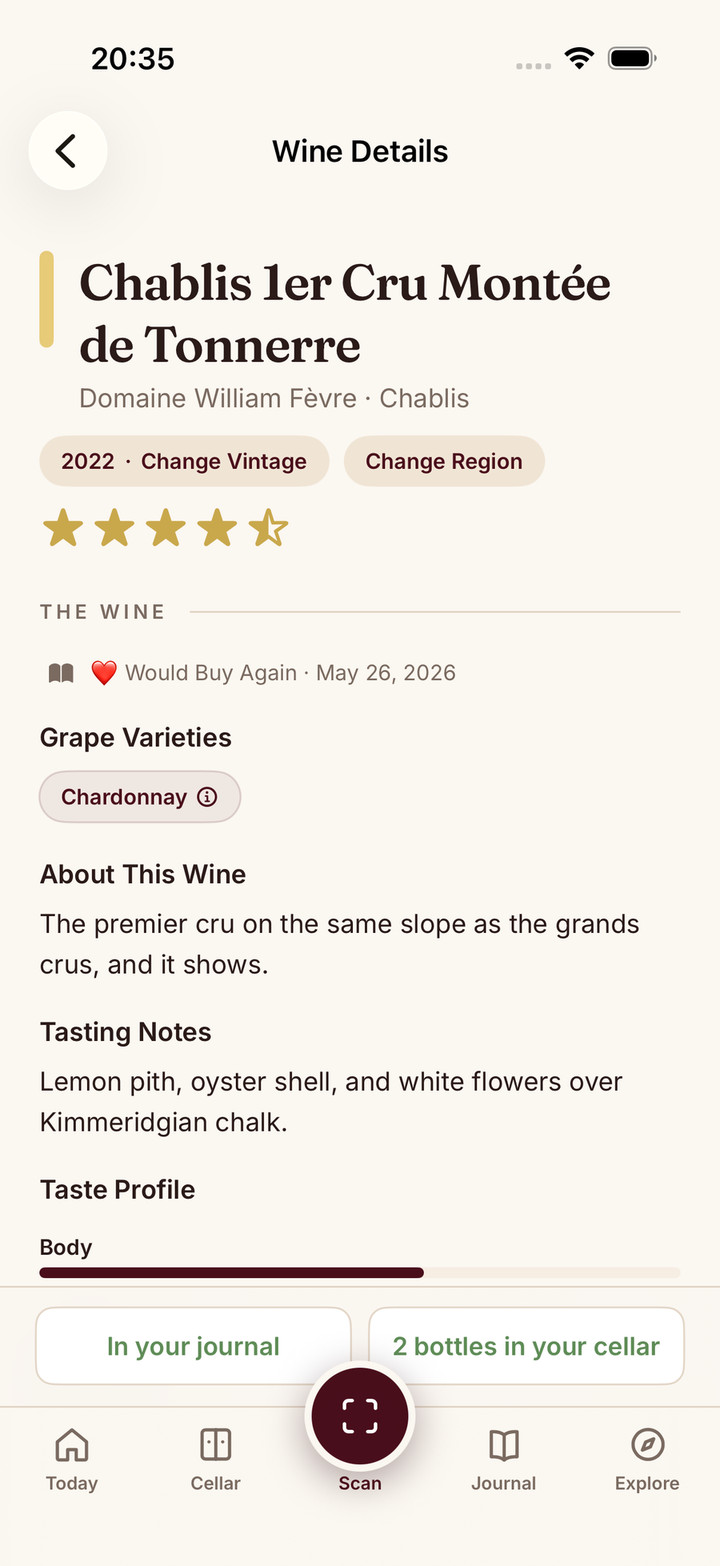
Give records an identifier that survives a filename change. For example, CELLAR-014 can connect an inventory row, its photographs and the invoice that includes it. If three bottles have different condition or purchase histories, keep enough detail to distinguish them even when your cellar app groups the wine under one entry.
Our cellar inventory template is a useful starting point for the physical count. Add evidence references to your own copy rather than trying to squeeze every document into a wine name.
Keep purchase price and value evidence separate
A receipt establishes what was bought and paid at that time. It does not automatically establish today’s replacement value or the amount insured. Keep the original invoice, seller details, purchase date, quantity, currency and bottle description together.
If a price document covers a mixed case, show which line refers to each wine. Do not divide the full invoice equally between bottles unless that really reflects the purchase. Mark missing evidence openly: “gift received; original receipt unavailable” is more useful than an invented price.
For any separate value estimate, record its source, date, currency and basis. An advertised retail price, a completed sale and a professional appraisal are different forms of evidence. Ask your insurer which they need, and whether tax, shipping or fees should form part of the figure.
Chubb’s US collection guidance recommends keeping receipts, descriptions and bottle photographs, and updating the inventory. That supports the recordkeeping approach. It does not establish requirements for a UK policy or for another insurer.
Photograph identity and condition
Take a clear label photograph and another view showing the full bottle. Where relevant, photograph the capsule, closure, fill level, original case and visible damage. Keep the original files with their dates, rather than relying entirely on compressed images pasted into a document.
Describe what you can observe: “label torn at lower edge” or “fill below comparable bottles”. Avoid turning a photograph into a conclusion about authenticity, storage history or the wine inside. A bottle image cannot prove uninterrupted temperature control.
Store a backup somewhere you can access if the cellar or your usual device is affected. Limit access to the pack: it may reveal valuable holdings, addresses and precise storage locations.
A small example of a connected record
Imagine a collector with three bottles of the same 2018 red. Two came from one merchant in 2023; the third was a gift in 2025. One purchased bottle has a damaged label.
| Record | Supporting evidence | Uncertainty to retain |
|---|---|---|
| Two purchased 750 ml bottles | Invoice INV-2023-08, dated photos and storage location | Invoice price is historical, not a current appraisal |
| One gifted 750 ml bottle | Gift date, giver’s information if appropriate and dated photos | Original purchase receipt and earlier storage history unavailable |
| Damaged label on one purchased bottle | Separate close-up linked to its bottle identifier | Any effect on value needs qualified assessment |
The inventory still totals three. The evidence does not pretend all three have identical provenance. If one bottle is opened later, update the count and preserve the old dated pack as a historical snapshot.
Ask specific questions before relying on the pack
Send your insurer or broker the inventory summary and ask what additional evidence is required, how valuations should be updated, and how new purchases or storage moves should be reported. Ask separately about bottles in transit and offsite storage. Keep their response with the policy documents so you can distinguish your own working assumptions from their instructions.
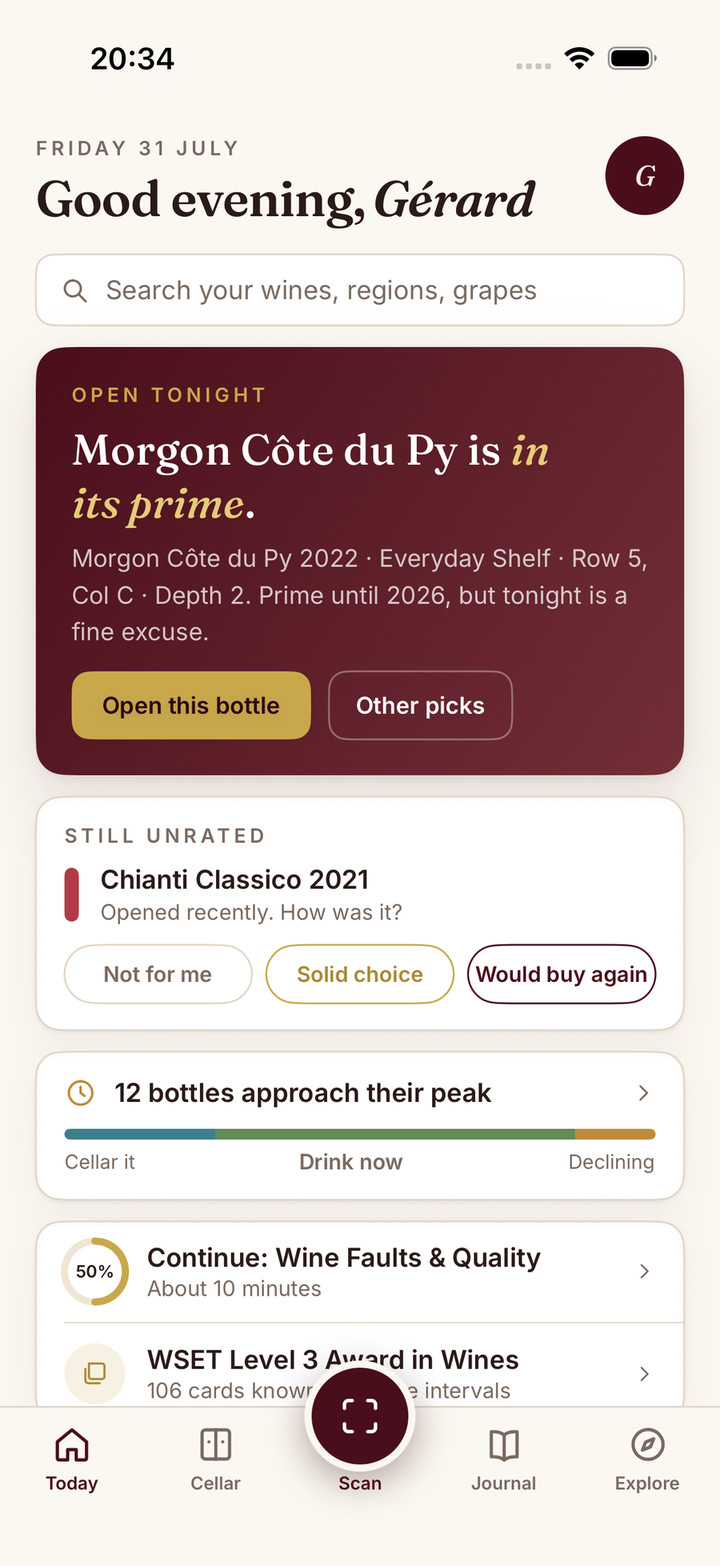
Sommo’s Premium cellar can help maintain current wine counts, locations and metadata. It is not an appraisal or a guarantee of insurance acceptance, and additions of the same wine merge rather than creating independent purchase lots. Keep invoices and bottle-specific evidence in the accompanying pack; our app versus spreadsheet guide helps you decide where those different records belong.
Download Sommo to maintain the current inventory, then reconcile it with the physical bottles before each documentation update.