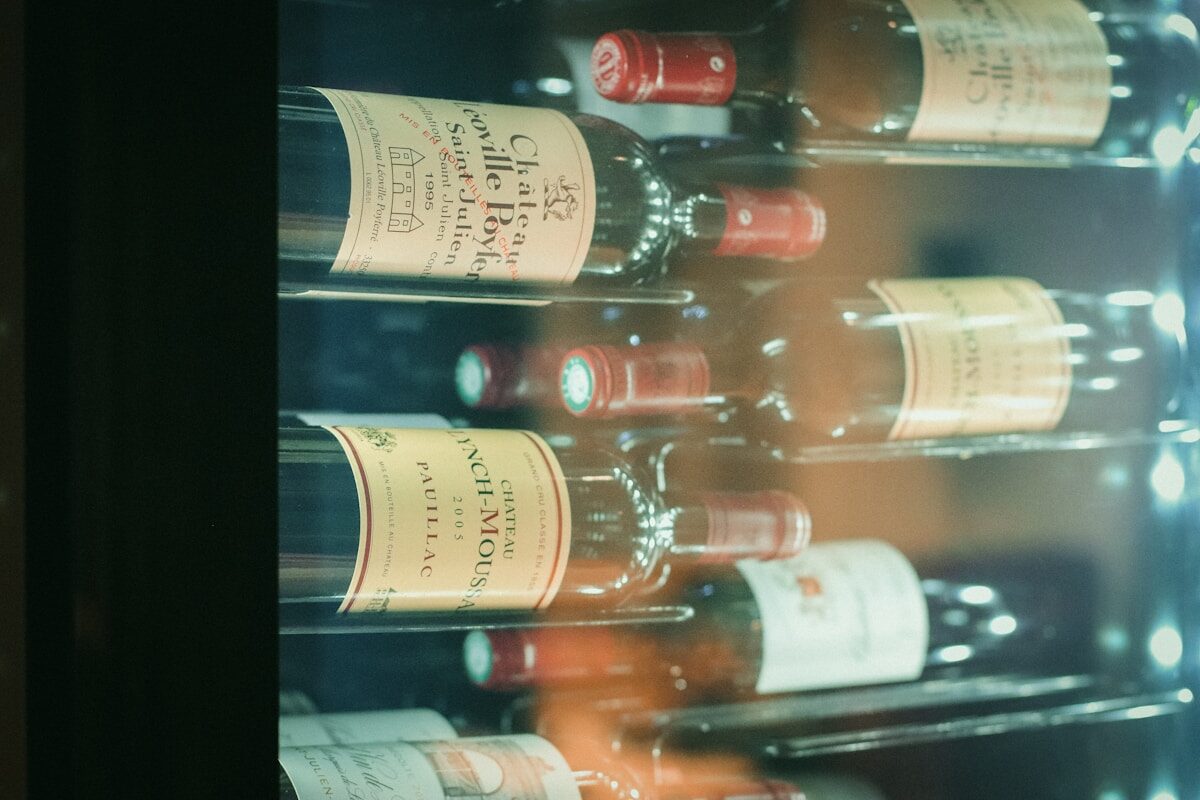
Wine fridges are one of those purchases that can feel both essential and entirely unnecessary, depending on who you ask. Some people swear by them. Others keep perfectly good wine in a cupboard under the stairs for years without incident.
The truth is somewhere in between. A wine fridge solves a specific set of problems, and if you don’t have those problems, you don’t need one. This guide helps you figure out whether you do, and if so, which type to buy without overspending.
Do You Actually Need a Wine Fridge?
Before spending anything, answer these questions honestly:
How many bottles do you typically have at home? If you rarely have more than six bottles and you drink them within a few weeks of buying them, you almost certainly don’t need a wine fridge. A cool, dark spot in your home will do fine.
Are you storing wine for ageing? If you’re buying wines to drink months or years from now, consistent temperature and humidity matter. A wine fridge helps, though it’s not the only solution.
Does your home get warm? If your house regularly exceeds 24°C in summer and you don’t have air conditioning, a wine fridge protects your bottles from heat damage. Heat is the single biggest enemy of wine storage.
Do you drink both red and white wine regularly? If you like having white wine chilled and ready to drink at all times, a wine fridge is genuinely convenient. Your kitchen fridge is too cold for white wine (typically 3 to 5°C vs the ideal 8 to 12°C), and it’s far too cold for reds.
When a Cool Dark Cupboard Is Fine
For most casual wine drinkers, a cupboard, wardrobe, or space under the stairs is perfectly adequate, provided it meets three basic criteria:
- Temperature: Stays below 20°C year-round, ideally between 12°C and 16°C
- Darkness: No direct sunlight or bright artificial light
- Stability: Temperature doesn’t swing dramatically between day and night or season to season
If your home offers this, you can store wine happily for months without any special equipment. Most wines sold in supermarkets and high-street shops are designed to be drunk within a year or two of purchase and are not particularly fussy about storage conditions.
The people who genuinely benefit from a wine fridge are those who: store wine for more than a few months, collect bottles worth protecting, live in warm or variable-temperature homes, or want the convenience of perfectly chilled whites and properly tempered reds on demand.
Wine Fridge vs Kitchen Fridge
Your kitchen fridge is designed for food, not wine. The differences matter:
| Factor | Kitchen Fridge | Wine Fridge |
|---|---|---|
| Temperature | 3 to 5°C | 5 to 18°C (adjustable) |
| Humidity | Very low (dries out corks) | 50 to 80% (preserves corks) |
| Vibration | Compressor cycles frequently | Designed to minimise vibration |
| Odours | Food smells can taint wine | Sealed, odour-free environment |
| Light | Bright interior light | UV-filtered glass or solid door |
| Storage orientation | Shelves not designed for bottles | Horizontal racking standard |
A kitchen fridge works fine for chilling a bottle of white wine for a few hours before serving. It’s not suitable for storing wine for weeks or months. The low humidity dries out corks (allowing air in), the cold temperature mutes flavours, the vibration disturbs sediment, and the constant opening introduces temperature fluctuations and food odours.
Single-Zone vs Dual-Zone
This is the most important decision after deciding to buy.
Single-Zone
One temperature throughout the cabinet. You set it to a single temperature, typically somewhere between 10°C and 14°C.
Best for: People who store mostly one type of wine, or who use the fridge purely for medium-term storage (keeping everything at cellar temperature and then chilling whites in an ice bucket before serving).
Pros: Simpler, cheaper, more reliable (fewer components to fail), more efficient use of space.
Cons: Can’t simultaneously store reds at 16°C and whites at 8°C.
Dual-Zone
Two independently controlled temperature zones, usually with the cooler zone at the top (since cold air sinks) and the warmer zone below.
Best for: People who drink both red and white wine regularly and want both ready to serve at the right temperature. Also useful if you want one zone for long-term storage and another for serving temperature.
Pros: Flexibility, convenience, both reds and whites at ideal serving temperatures simultaneously.
Cons: More expensive, slightly less total capacity (the divider takes space), more components that can potentially fail.
The verdict: If you regularly drink both red and white, a dual-zone is worth the premium. If you mostly drink one type, or if you’re happy to chill whites separately before serving, single-zone gives you better value and more usable space.
Compressor vs Thermoelectric
Wine fridges use one of two cooling technologies:
Compressor
Works like your kitchen fridge: a compressor circulates refrigerant to cool the interior. This is the standard technology for most wine fridges above 20 bottles.
Pros: Powerful cooling (can reach lower temperatures), works well in warm environments, handles larger capacities efficiently, generally more durable.
Cons: Produces some vibration (though modern wine fridges minimise this), slightly louder, uses more electricity.
Thermoelectric
Uses an electrical current flowing through a semiconductor to create a temperature differential. No moving parts, no refrigerant.
Pros: Virtually silent, vibration-free, more energy efficient at small scales, no refrigerant (environmentally friendlier).
Cons: Limited cooling power (struggles if ambient temperature exceeds 25 to 28°C), only practical for small capacities (typically under 20 bottles), can’t cool as far below ambient temperature, less reliable in warm rooms.
The verdict: For most buyers, compressor is the safer choice. Thermoelectric units work well for small collections in temperature-controlled rooms, but they’re limited. If your home gets warm in summer, a thermoelectric unit may not cope.
Sizing: How Many Bottles Do You Need?
Wine fridge manufacturers are optimistic with their bottle counts. A fridge advertised as “46 bottles” usually means 46 standard Bordeaux bottles (750ml, slim profile) stacked perfectly. In practice, Burgundy bottles, Champagne bottles, and anything with an unusual shape will reduce the count significantly.
A good rule of thumb: assume you’ll fit about 70 to 80% of the advertised capacity with a realistic mix of bottle shapes.
Here’s a sizing guide based on how you buy and drink:
| Buying Habit | Recommended Size | Typical Dimensions |
|---|---|---|
| A few bottles for the week | 8 to 12 bottles | Countertop or compact |
| Regular buyer, small collection | 20 to 30 bottles | Under-counter or slim freestanding |
| Serious collector, mixed drinking | 40 to 60 bottles | Full-height freestanding |
| Dedicated cellar replacement | 80 to 200+ bottles | Large freestanding or built-in |
Buy bigger than you think you need. This is the most common advice from wine fridge owners, and it’s consistently true. A wine collection has a way of growing, and a half-empty fridge today is a full fridge in six months. If you’re not sure which styles to fill it with, the free wine quiz is a decent starting point.
Key Features to Look For
Essential
- Temperature range: Should cover at least 5°C to 18°C. Anything narrower limits your options.
- UV-protected glass door: If the fridge has a glass door (most do), it must filter UV light. UV degrades wine over time.
- Adjustable shelves: Sliding, removable shelves that accommodate different bottle sizes. Fixed shelves are frustrating.
- Humidity control: Active or passive humidity management. The interior should maintain around 50 to 70% humidity to keep corks healthy.
Nice to Have
- Interior LED lighting: Soft, low-heat lighting that lets you see your bottles without opening the door. LEDs are better than incandescent bulbs because they produce almost no heat.
- Door lock: Useful if you have children, housemates, or simply want to pace yourself.
- Charcoal filter: Helps prevent odour build-up inside the fridge.
- Alarm: Alerts you if the door is left open or the temperature rises unexpectedly.
- Reversible door hinge: Practical for fitting the fridge into different spaces.
Skip
- Wi-Fi connectivity: Some premium models offer app-based temperature monitoring. In practice, this is a feature you’ll check once and forget. It’s not worth paying a premium for.
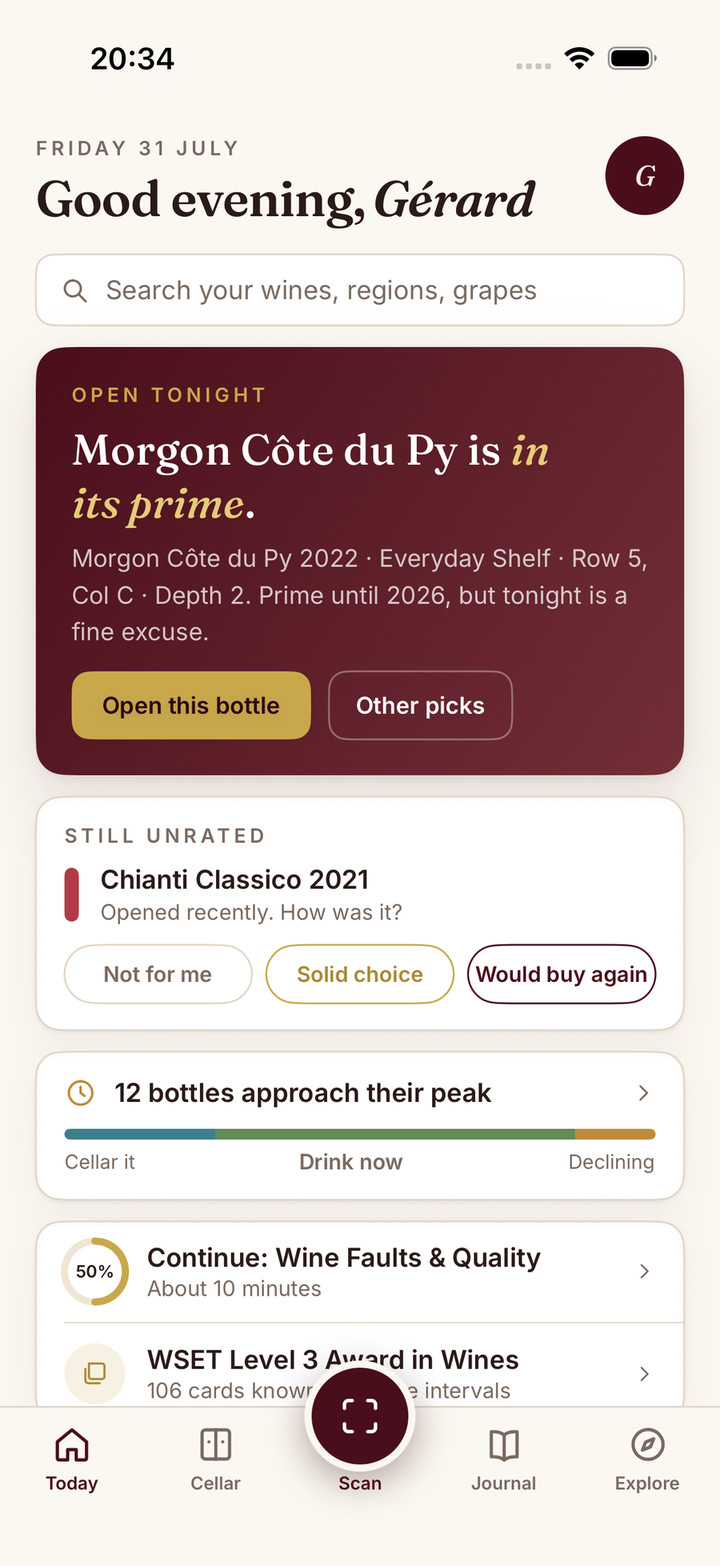
- Built-in inventory systems: Clunky, hard to update, and quickly abandoned. Use a dedicated app like Sommo’s wine cellar feature instead, which lets you track your bottles with tasting notes, drinking windows, and AI food pairing suggestions.
Budget Tiers
Under £150: The Basics
At this price point, you’re looking at small, thermoelectric or compact compressor units holding 8 to 16 bottles. Single-zone only.
What you get: Basic temperature control, a glass door, and enough space for a week or two of drinking. These are functional, no-frills appliances.
Best for: People who want chilled white wine on demand without using the kitchen fridge, or who live in a warm flat and want to keep a few bottles safe in summer.
Watch out for: Thermoelectric models that struggle in warm rooms, flimsy shelving, and noisy fans. Read reviews carefully before buying.
£150 to £400: The Sweet Spot
This is where the selection opens up significantly. You’ll find compressor units holding 20 to 40 bottles, dual-zone options, better build quality, and more reliable temperature control.
What you get: Dual-zone capability (at the higher end), adjustable wooden or metal shelves, UV-protected glass, and enough capacity for a modest collection. Build quality is noticeably better than the budget tier.
Best for: Regular wine buyers who want proper storage for a growing collection. This range covers most people’s needs comfortably.
Recommendations: Look for established appliance brands rather than generic imports. Dual-zone models in the 30 to 40 bottle range offer the best combination of flexibility and value.
£400 and Above: Serious Storage
Above £400, you’re into larger capacities (50 to 200+ bottles), premium build quality, precise temperature and humidity control, whisper-quiet operation, and designs that look good in a kitchen or living space.
What you get: Large capacity, robust compressor cooling, multiple zones, premium shelving (often beechwood), excellent insulation, and significantly quieter operation. Many models in this range are designed to be built into cabinetry.
Best for: Collectors, anyone replacing an actual wine cellar, or households that buy wine by the case rather than the bottle.
Worth noting: Above £1,000, you’re paying partly for aesthetics and brand. A well-chosen £600 wine fridge will store your wine just as safely as a £1,500 model. The premium buys you quieter operation, better design integration, and nicer materials, not fundamentally better wine storage.
Placement and Installation
Where you put your wine fridge matters:
- Ventilation: Freestanding units need airflow around them, especially at the back and sides. Don’t push a freestanding unit flush into a cabinet or alcove unless it’s specifically designed for built-in installation.
- Ambient temperature: Place the fridge in a room that doesn’t get extremely hot or cold. A kitchen is usually fine; a conservatory that hits 35°C in summer is not.
- Level surface: Wine fridges must sit level. An uneven surface causes vibration, uneven cooling, and potentially noisy operation.
- Away from heat sources: Don’t place the fridge next to an oven, radiator, or in direct sunlight.
- Built-in vs freestanding: Built-in (or integrated) wine fridges are designed to vent from the front rather than the back, so they can sit flush in cabinetry. They cost more. If you’re planning a kitchen renovation, consider specifying a built-in wine fridge space: it’s much easier to plan it in advance than to retrofit.
Common Mistakes
Buying too small: The most common regret. Your collection will grow. Buy at least one size up from what you think you need.
Ignoring noise levels: Check the decibel rating, especially if the fridge will sit in a kitchen or living area. Anything under 40dB is generally considered quiet. Thermoelectric units are quieter but have the cooling limitations mentioned above.
Storing wine too cold: White wine stored at 4°C (kitchen fridge temperature) will taste muted and flat. The ideal serving temperature for most whites is 8 to 12°C, and for full-bodied whites like oaked Chardonnay, closer to 12°C. Set your wine fridge accordingly.
Forgetting about running costs: A wine fridge runs 24/7. Energy efficiency varies significantly between models. Check the energy rating and estimated annual running cost before buying. Larger, well-insulated models are often more efficient per bottle than small, cheap units.
Overfilling: A packed wine fridge restricts airflow and can create temperature inconsistencies. Leave some breathing room between bottles.
Do You Need One? The Quick Test
Answer yes or no to each:
- You regularly have more than 12 bottles at home
- You store wine for more than two months before drinking it
- Your home gets above 22°C in summer
- You buy wine worth more than £15 per bottle that you’d hate to waste
- You drink both red and white wine and want both at the right temperature
0 to 1 yes answers: You don’t need a wine fridge. A cool cupboard is fine.
2 to 3 yes answers: A wine fridge would be a worthwhile investment. Look at the £150 to £400 range.
4 to 5 yes answers: A wine fridge is strongly recommended. Consider your capacity needs and look at dual-zone options.
Managing Your Collection
A wine fridge solves the storage problem, but it doesn’t solve the organisation problem. Once you have more than a dozen bottles, remembering what you have, when to drink it, and what to pair it with becomes its own challenge.
This is where a digital cellar tool pays for itself. Sommo’s wine cellar feature lets you catalogue every bottle, track drinking windows so you never miss a wine’s peak, and get AI-powered food pairing suggestions for whatever you’re cooking tonight. When you open a bottle, log your tasting notes in the wine journal so you know whether to rebuy.
The combination of proper physical storage (your wine fridge) and proper digital tracking (your cellar app) means you’ll drink better wine, waste fewer bottles, and always know what’s in your collection.
The Bottom Line
A wine fridge is a worthwhile purchase for anyone who stores more than a handful of bottles, lives in a warm home, or wants the convenience of properly chilled wine on demand. It’s not essential for casual drinkers who buy a bottle or two at a time and drink them within the week.
If you do buy one, prioritise capacity (bigger than you think), cooling type (compressor for most people), and zone configuration (dual-zone if you drink both reds and whites). Spend your budget on a well-built mid-range unit rather than overpaying for features you’ll never use.
And remember: the fridge stores the wine, but it takes a good system to track it.
Track Every Bottle with Sommo
Sommo’s wine cellar keeps your collection organised, reminds you when wines hit their peak, and suggests perfect food pairings with AI. Scan any label with the wine scanner to instantly add bottles and learn what you’re drinking.
Download Sommo free and start managing your cellar the smart way.