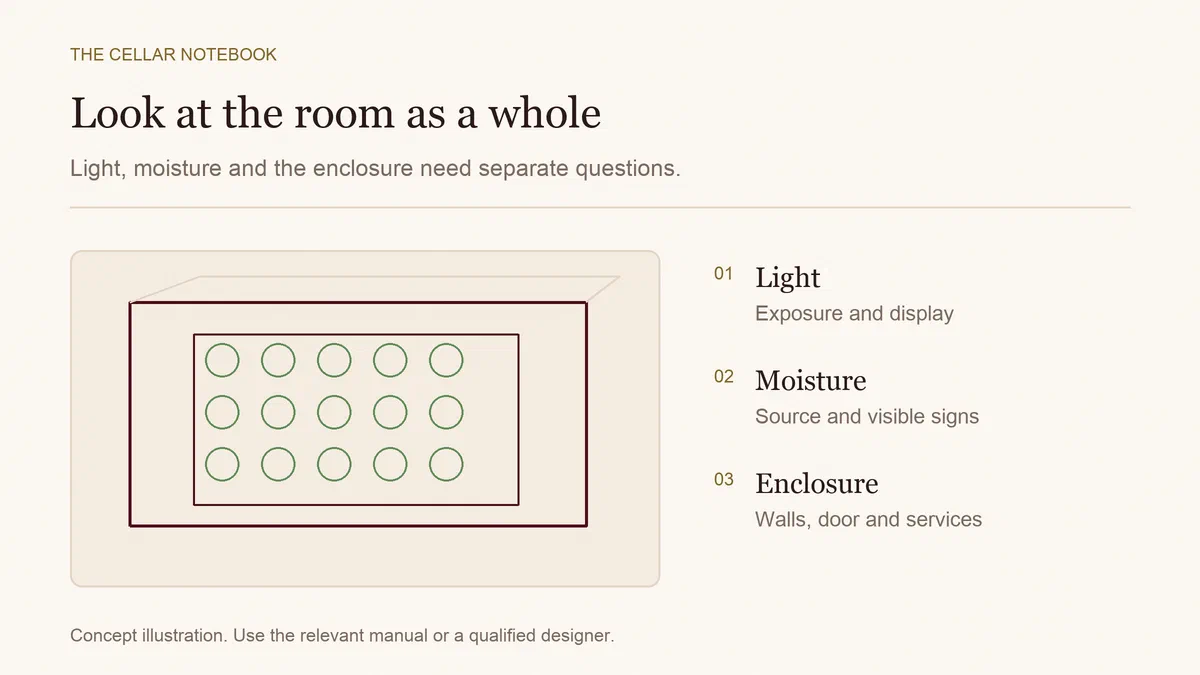
Light the route and the labels when you need them, while keeping wine held for ageing out of prolonged exposure. A cellar does not need to glow continuously to be useful. Start with the tasks you perform there: entering safely, reading the right label, lifting a bottle and checking the rack behind it.
That gives you a better brief than choosing a strip light because it makes every bottle look beautiful. The general storage guide explains the importance of darkness. Here, the aim is a practical lighting arrangement that still lets you find dinner.
Decide what is stored and what is displayed
Mark the bottles you intend to keep for years, those you will drink soon and any shelf whose main purpose is display. Long-term stock should not become a permanent feature beside a bright window or illuminated sign simply because the glass looks dark.
The Comité Champagne’s 2025 storage guidance recommends darkness for Champagne and, preferably, dummy bottles in display spaces. An empty or purpose-made display bottle can preserve the visual effect while the wine stays elsewhere. That is a Champagne-specific recommendation with a useful design lesson: the display and the collection need not be the same objects.
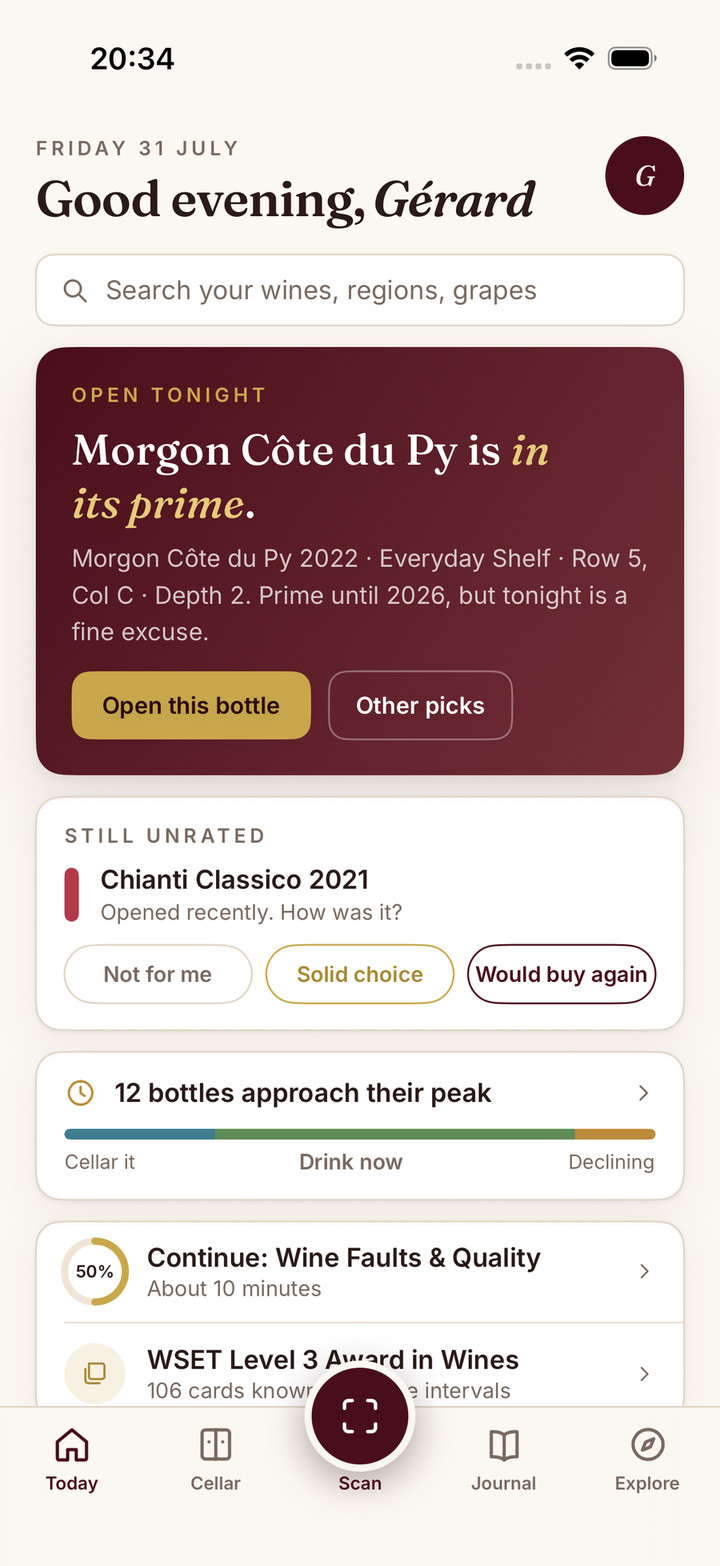
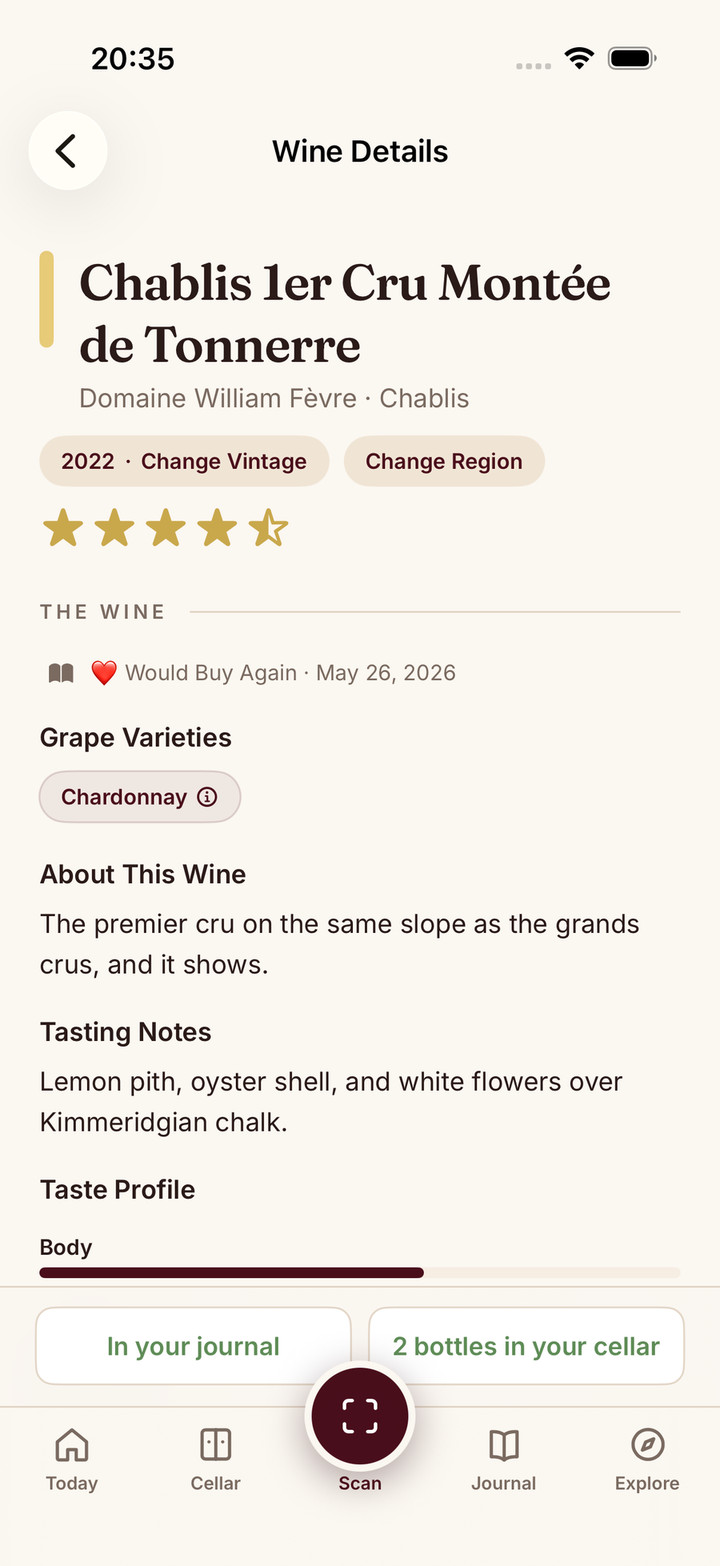
Keep a record when wine moves behind an opaque door or into another rack. A protective arrangement becomes frustrating if it also makes the collection impossible to find.
Do not let “LED” finish the specification
LED lighting can be practical, but the name describes a technology rather than proving that a bottle can remain under it indefinitely. Ask about the actual light source, its spectrum, heat, position and intended use. Colour temperature and a warm appearance do not, by themselves, establish a safe exposure duration.
Research in OENO One examines bottle transmission and light-source spectra, including wavelengths spanning ultraviolet and part of visible light. This is why a simple UV claim is not a complete assessment of the light reaching wine. The glass, label coverage and lighting arrangement also matter. Do not turn a laboratory comparison into one universal number of safe hours for your cellar.
For a wine cabinet, check the maker’s built-in lighting instructions before adding another source. Our wine-fridge guide discusses doors and lighting among the buying decisions; it does not certify a particular lamp’s effect on wine.
Walk through the cellar with the lights operating
Check the approach, threshold and walking route first. Then stand where you normally choose a bottle. Can you read its producer and vintage without a bright reflection hiding the text? Can you see the bottle behind it without shifting a whole row?
Try the same checks in daylight and after dark. A fixture positioned for a photograph may leave the lower shelves in shadow or shine into your eyes while you carry bottles. Ask the designer to improve useful visibility rather than simply increasing brightness everywhere.
Keep fittings clear of handling space and preserve the ventilation and maintenance access required by any cooling equipment. Let an appropriately qualified installer determine the electrical arrangement and suitability for the room’s conditions.
A worked layout: four racks and one display shelf
Imagine a small room with two racks of ageing wine, one everyday rack, one back-up rack and a shelf facing a glass door.
Your brief could put the ageing racks behind opaque doors, use display bottles on the visible shelf and provide task lighting for the aisle and shelf labels. Specify a straightforward way to turn the lights off after use. If considering occupancy controls, test whether they remain on while someone stands still reading a label and whether all lights actually switch off when the room is empty.
The rack planner can help name positions in this example, but it does not calculate illumination or exposure. Keep the physical lighting plan with the installer.
Review exposure as well as appearance
After installation, observe how the room is actually used. Does a display mode stay on overnight? Does sunlight reach stored bottles at a different time of day? Are you leaving a door open because the inner labels are hard to read?
Change the arrangement when those observations reveal a problem. Reducing unnecessary on-time, shielding stock from daylight and keeping display bottles separate are practical choices; none proves that existing wine has suffered damage or guarantees a particular ageing outcome.
Update the inventory after moving bottles. If you use Sommo Premium, align the cellar positions and notes with the new storage arrangement. Keep lighting specifications and any measured observations separately. The useful result is a room you can navigate comfortably and a collection you can locate without keeping it constantly on show.