The classic wine pairing rule taught in every beginner class is built around European food. Tannic reds with red meat. Crisp whites with fish. Champagne with celebration. The framework works beautifully for steak frites and roast chicken and almost falls apart the moment you put a plate of pad thai, Korean barbecue, or chicken tikka masala in front of it.
The problem is not the food. The problem is the framework. Asian cuisines (and there is no single “Asian food,” but a constellation of dramatically different traditions) bring flavour profiles that European wine pairing rules were never designed for: chilli heat, soy and miso umami, fish sauce, sweet-sour balance, fresh herbs, and complex spice blends. Pair these foods with the wrong wine and you get clashing bitterness, blown-out heat, or a wine that disappears entirely. Pair them with the right wine and you get some of the best food and wine matches available.
This guide covers the principles that actually work, followed by specific recommendations for the major Asian cuisines you are likely to be eating at home or ordering as takeout. The framework is built on five flavour challenges and the wine traits that solve each.
The Five Flavour Challenges and Their Wine Solutions
1. Chilli Heat
Capsaicin (the active compound in chillies) amplifies the perception of alcohol, tannin, and oak. A high-alcohol Cabernet with spicy Sichuan food feels like drinking lighter fluid. A soft, low-tannin wine with a touch of sweetness mutes the heat and lets the food’s other flavours come through.
Wine solution: Off-dry whites (Riesling Spätlese, Gewurztraminer, off-dry Vouvray), low-alcohol reds (Beaujolais, light Pinot Noir), or sparkling wine. Avoid high-alcohol reds, heavy oak, and high tannins.
2. Umami (Soy, Miso, Mushroom, Fermented Sauces)
Umami compounds (glutamates) make wine taste more bitter and more tannic than it actually is. A wine that tastes balanced on its own can feel harsh next to a dish heavy in soy sauce, miso, or fish sauce.
Wine solution: Wines with their own umami character. Aged Champagne, dry Sherry (especially Fino and Manzanilla), aged Riesling, Pinot Noir from cool regions, mature white Burgundy. The shared umami creates harmony rather than conflict.
3. Sweet-Sour Balance
Many Asian dishes balance sweetness and acidity (Vietnamese nuoc cham, Thai sweet chilli sauce, Chinese sweet and sour). Wines that lack acidity feel flat next to these flavours. Wines that match the sweetness in the dish often work better than fully dry wines.
Wine solution: High-acidity whites (Riesling, Grüner Veltliner, Albariño), off-dry whites that match the dish’s sweetness, or sparkling wine that brings both acidity and a hint of dosage sweetness.
4. Fresh Herbs and Aromatics
Thai basil, coriander, lemongrass, mint, ginger, and other fresh herbs are central to many Asian dishes. They reward wines with their own aromatic complexity rather than wines that rely on power.
Wine solution: Aromatic whites (Gewurztraminer, Riesling, Sauvignon Blanc, Albariño, Grüner Veltliner) or floral, fragrant reds (Pinot Noir, Beaujolais, Etna Rosso).
5. Frying and Richness
Many Asian cuisines feature fried foods (Japanese tempura, Chinese spring rolls, Korean fried chicken). The fat needs to be cut by acidity or refreshed by carbonation.
Wine solution: Sparkling wine (Champagne, Cava, Crémant, dry sparkling Riesling). The acidity and bubbles cut through fat the way no still wine can.
For more on the fundamentals of pairing, see how to pair wine with food, or try the free wine pairing finder for an instant match.
Pairings by Cuisine
Japanese
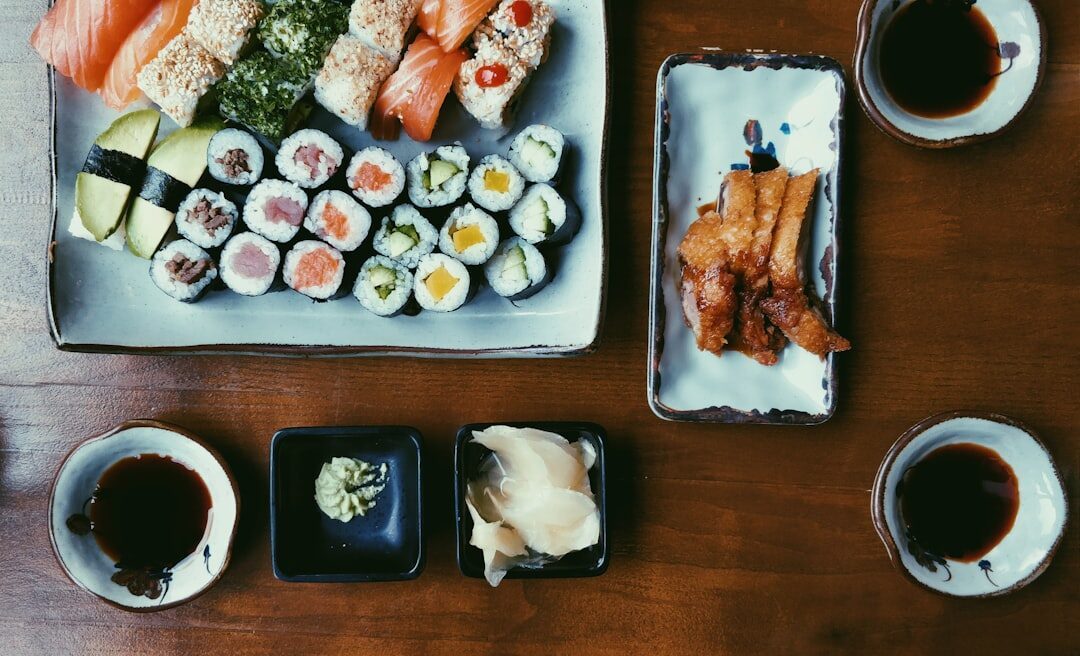
Japanese cuisine is the easiest Asian tradition to pair with wine. The cooking style emphasises clean flavours, umami, freshness, and texture, and these qualities reward wines with similar values.
Sushi (raw fish, soy sauce, wasabi): Champagne or quality traditional-method sparkling is the textbook pairing. Aged Champagne (around 10 years) is even better. For still wine, an aged dry Riesling from Mosel or Alsace, or a top Chablis. Avoid red wine with raw fish: it almost always clashes.
Tempura: Sparkling wine cuts the fried batter. A Crémant de Loire or Cava works at every price point.
Ramen: A bowl of ramen is harder to pair than people realise. The broth’s intensity calls for richer wines than typical sushi pairings. Pinot Noir, aged Chardonnay, or even a light Spätburgunder can work. For spicy tonkotsu or miso, lean into off-dry Riesling or Gewurztraminer.
Yakitori (grilled skewers, tare sauce): The umami-rich tare sauce calls for Pinot Noir, light Beaujolais, or aged Riesling. The pairing is one of the best food and wine matches in any tradition.
Chinese
Chinese cooking is enormous in scope. The regional cuisines (Cantonese, Sichuan, Hunan, Shanghainese, Northern) demand different approaches. A few rules cut through the complexity.
For a full sauce-by-sauce table, open the dedicated guide to wine with Chinese food. It separates dim sum, Peking duck, Sichuan heat, Cantonese seafood and sweet-and-sour takeaway rather than treating them as one pairing.
Dim Sum: Brut Champagne or quality sparkling. The variety of small plates demands a versatile pour, and acidity plus bubbles handle the breadth.
Cantonese (steamed fish, light stir-fries): Albariño, Grüner Veltliner, dry Riesling, or a light unoaked Chardonnay. The clean cooking style rewards mineral, precise whites.
Sichuan (mala, chilli, peppercorn): Off-dry Riesling Spätlese or Vouvray Demi-Sec. The sugar tames the heat; the acidity refreshes the palate. For reds, a chilled Beaujolais or a light Pinot Noir.
Peking duck: Pinot Noir. This is one of the great pairings. The duck’s richness, the savoury sauce, and the green onions all align with cool-climate Pinot Noir. Burgundy at any price level works.
Mapo tofu: Off-dry Gewurztraminer or aged Riesling Auslese. The numbing heat and umami need both sweetness and aromatic complexity.
Thai
Thai food is a balance of sweet, sour, salty, and spicy, often with bright herbs and lime. The pairing strategy mirrors that complexity.
Pad thai: Off-dry Riesling or a quality Gewurztraminer. The dish’s sweet-sour balance rewards an aromatic white with matching residual sugar.
Green curry: Off-dry Riesling Kabinett or Vouvray Demi-Sec. The coconut richness and chilli heat together demand sweetness, acidity, and aromatic lift.
Red curry: Slightly riper Riesling or aged dry Riesling from a top vintage. For reds, try a chilled Beaujolais Cru.
Tom yum: High-acid whites with strong aromatic presence. Sauvignon Blanc from Marlborough or a dry Riesling.
Som tam (green papaya salad): Bright, herbaceous whites. New Zealand Sauvignon Blanc or a dry Albariño.
Korean
Korean food’s combination of grilling, fermentation, chilli heat, and umami is one of the most wine-friendly traditions once you understand it.
The dedicated Korean BBQ wine guide now separates bulgogi, galbi, samgyeopsal, gochujang and kimchi, including the point where off-dry Riesling becomes safer than red.
Korean BBQ (bulgogi, galbi, samgyeopsal): Pinot Noir is the classic match. The marinade’s soy-and-sugar character, the smoke, and the rich pork or beef all align with cool-climate Pinot. For something more adventurous, a serious Beaujolais Cru like Morgon Côte du Py.
Bibimbap: A versatile dish. Off-dry Riesling or Gewurztraminer for the gochujang heat. A light Pinot Noir for beef versions.
Kimchi-heavy dishes: Off-dry Riesling. The lactic fermentation and chilli of kimchi demand both acidity and sweetness.
Korean fried chicken: Sparkling wine. The crisp batter and gochujang glaze beg for Champagne, Cava, or quality Prosecco DOCG.
Vietnamese
Vietnamese cooking emphasises fresh herbs, light proteins, and balanced sauces. The flavour profile rewards clean, aromatic whites and light reds.
The full guide to wine with Vietnamese food separates pho, bánh mì, fresh and fried spring rolls, bun cha and caramelised fish by broth, sauce and cooking method.
Pho: Light, aromatic whites or quality sparkling. Riesling or Gewurztraminer for the aromatic depth.
Bánh mì: Crémant or Cava. The acidity cuts through the richness, the bubbles handle the variety of fillings.
Bun cha: Off-dry Riesling or a chilled Beaujolais. The grilled pork pairs beautifully with both.
Goi cuon (fresh rolls): Sauvignon Blanc, Grüner Veltliner, or dry Riesling.
Indian
Indian cooking is the most challenging cuisine for wine pairing, partly because of its breadth and partly because the spice complexity overwhelms many wines. Lean into aromatic, off-dry, and fragrant styles.
Tandoori chicken or paneer: Gewurztraminer or Viognier. The aromatic richness matches the spice without competing.
Butter chicken / chicken tikka masala: Off-dry Riesling or a lightly oaked Chardonnay. The dish’s creaminess and gentle spice reward both styles.
Lamb rogan josh: A serious Pinot Noir or a chilled Cru Beaujolais. Avoid heavy tannic reds, which clash with the spices.
Vindaloo: Off-dry Riesling Spätlese or a sweet sparkling Moscato d’Asti. The heat demands sugar.
Dal and vegetarian curries: Albariño, Grüner Veltliner, or dry Riesling.
Biryani: Aromatic whites (Gewurztraminer, Viognier, off-dry Riesling) or quality Cava.
Other Southeast Asian (Malaysian, Indonesian, Filipino)
These cuisines share many of the principles above. Coconut richness, chilli heat, fish sauce, and aromatic herbs dominate. The same off-dry aromatic whites that work for Thai food work here. Sparkling wine works for the fried and crisp dishes. Pinot Noir handles the grilled meats.
The Champagne Hack
If you cannot remember any of the above, one rule covers 70 percent of Asian food and wine pairings: drink brut Champagne. The combination of high acidity, dosage sweetness, bubbles, and aged umami character handles spice, fat, soy, raw fish, and fried food better than almost any other wine. Quality Cava, Crémant, or English sparkling all serve similar functions at lower prices.
For more on sparkling wine pairings, see the sparkling wine guide and Champagne for beginners.
The Riesling Hack
The second hack: Riesling handles almost everything Asian. From dry to off-dry to sweet, the grape has unmatched flexibility. A pantry of three Rieslings (a dry one from Alsace or Wachau, an off-dry Spätlese from Mosel, and a sweeter Auslese for very spicy food) will cover almost any Asian dish you order or cook.
For more on Riesling, see our Riesling wine guide.
What to Avoid
Three categories that consistently disappoint with Asian food.
Heavy oaked Chardonnay: The buttery, oaky character clashes with most Asian flavour profiles. Save it for grilled chicken or cream-based pasta.
Big tannic reds: Cabernet, young Bordeaux, Australian Shiraz, Napa Cab. The tannins amplify chilli heat and the alcohol burns. Avoid with most Asian food.
Heavily oaked Rioja Gran Reserva: Despite its prestige, the oak and tannin profile clashes with most Asian cuisines.
A Working Pantry
If you want a single small set of wines to handle Asian food well, four bottles cover the field:
- A brut traditional-method sparkling (Champagne, Cava, Crémant): For fried food, sushi, dim sum, and emergencies.
- A dry to off-dry Riesling Kabinett from Mosel: For spicy food, fragrant dishes, and weeknight Thai.
- A serious Beaujolais Cru: For grilled meats, Peking duck, Korean BBQ.
- A Pinot Noir from cool climate: Burgundy or Willamette Valley. For the umami-rich dishes (yakitori, soy-glazed meats, mushroom-heavy dishes).
A $100 spend across these four bottles gives you a working Asian-food cellar. The principles behind them (sugar against heat, acid against fat) are precisely what the WSET Level 2 food pairing quiz tests.
Explore with Sommo
Pairing wine with Asian food is exactly the kind of problem AI handles well. Sommo’s AI pairing feature takes a description of what you are eating (or a photo of the menu) and suggests bottles from your own cellar that will work, ranked by fit. Over time, the app learns which pairings you actually enjoy (you can rate each combination after the meal), and the recommendations get sharper. For more on this, see our piece on how AI is changing wine pairing.
Download Sommo free and stop guessing what to drink with takeout.