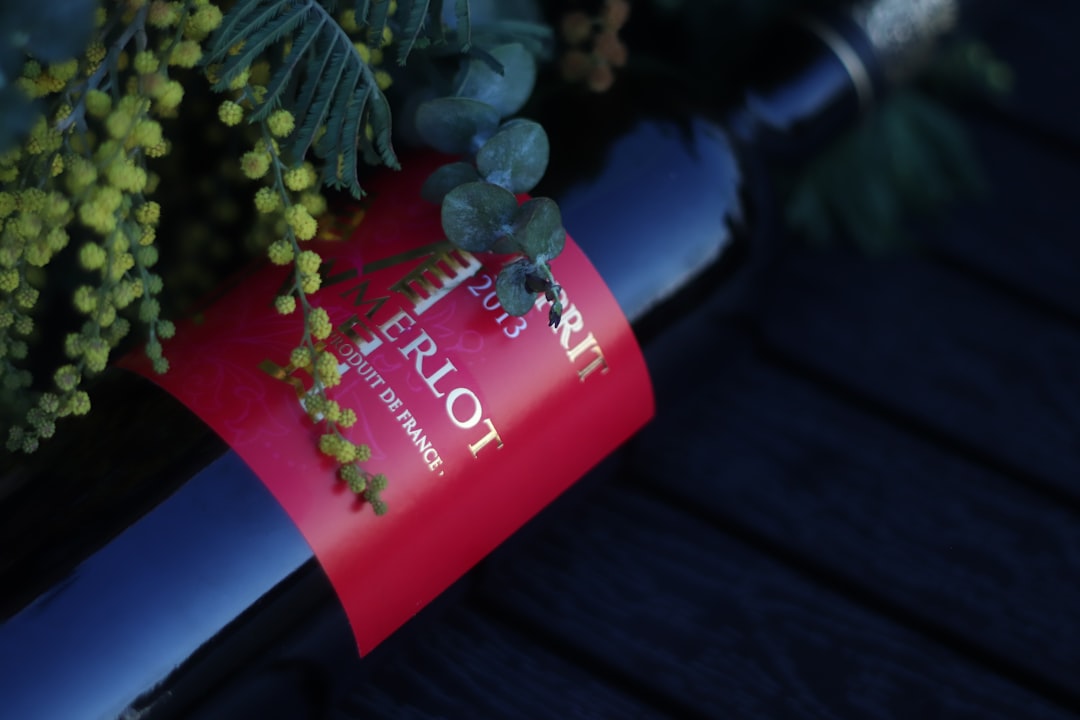
Of all the wines whose reputations were destroyed by a single cultural moment, Merlot’s collapse is the cleanest example. The 2004 film Sideways included a now-famous scene where the protagonist refuses to drink Merlot (“If anyone orders Merlot, I’m leaving”). Within three years, US Merlot sales had dropped meaningfully and the grape’s image had calcified as a basic, boring choice. The Pinot Noir the same character championed surged.
Two decades later, Merlot remains one of the most-planted red wine grapes in the world and one of the most undervalued. The Bordeaux region still relies on it as the dominant grape in some of its most prestigious wines. Tuscany’s most expensive Super Tuscans are often Merlot-based. Washington State produces world-class single-varietal Merlot at prices that look absurd compared to Cabernet Sauvignon from the same vineyards. The grape never deserved its bad reputation; it deserved better drinkers.
This guide makes the case for Merlot in 2026: what the grape actually does, where it produces its best wines, which producers to know, and how to use Merlot’s discount reputation to your advantage. If you have drifted away from the grape, this is the chapter that pulls you back.
What Merlot Actually Is
Merlot is a thin-skinned red grape originally from Bordeaux’s right bank. The name comes from the French “merle” (blackbird), reportedly because the birds love to eat the early-ripening berries. It is one of the parent grapes of Cabernet Sauvignon (the other being Sauvignon Blanc, in a cross from the 17th century), which explains why Merlot and Cabernet Sauvignon often blend so seamlessly together in Bordeaux blends.
The grape’s characteristics:
- Thinner skin than Cabernet Sauvignon: produces wines with lower tannin, softer texture, and more immediate approachability.
- Earlier ripening: works in cooler climates where Cabernet would not fully ripen.
- Higher sugar at ripeness: produces wines with more body and weight, often higher alcohol than expected.
- More flexible: can be made as a varietal wine, a Bordeaux blend, or in many other configurations.
Merlot is essentially Cabernet Sauvignon’s softer, friendlier sibling. The two grapes are genetically close, but their characters in wine are distinctly different. Cabernet is muscular and tannic and demands food. Merlot is silkier and rounder and works on its own.
The Sideways Effect: A Brief Reality Check
The cultural moment that hurt Merlot was based on a misunderstanding. The character in Sideways was complaining about a specific style of cheap, mass-produced California Merlot that had flooded the market in the 1990s. He was, ironically, ordering Cheval Blanc later in the film (one of the world’s most expensive wines, which is Merlot-dominant). The movie’s writers understood this; most viewers did not.
The damage was real anyway. Merlot plantings in California dropped. Average prices fell. Producers stopped emphasising Merlot on their labels. Some moved their Merlot vines over to Cabernet.
The unintended consequence was good for wine drinkers paying attention. Merlot’s price-to-quality ratio improved dramatically because demand softened. The grape is now one of the best values in serious red wine, particularly at the $20 to $40 tier where it consistently outperforms Cabernet Sauvignon at the same price.
The Major Styles of Merlot
The grape produces wines along a clear range depending on region and winemaking choices.
Style 1: Right Bank Bordeaux (the Classic Standard)
The original Merlot heartland. The right bank of Bordeaux (specifically the Saint-Émilion and Pomerol appellations) produces some of the most age-worthy and expensive Merlot in the world.
What it tastes like: Plum, black cherry, chocolate, tobacco, leather, sometimes truffles with age. Medium to full body. Moderate tannin. Long finish. Wines that age 20 to 50 years from top producers.
Producers to know:
- Pomerol: Château Pétrus (the most expensive Merlot in the world), Le Pin, Château Lafleur, Château L’Évangile, Château La Conseillante.
- Saint-Émilion: Château Cheval Blanc (also Merlot-dominant), Château Ausone, Château Pavie, Château Angélus.
Price range: $80 for accessible right-bank wines. The famous bottlings (Pétrus, Le Pin) reach $5,000 to $50,000+ per bottle.
Less expensive entries: “Petit château” Saint-Émilion or Pomerol from less famous estates can be excellent value at $25 to $60.
Style 2: Washington State (the American Pinnacle)
The most exciting place in America for serious Merlot. Washington’s Columbia Valley produces wines with the structure of Bordeaux and the fruit generosity of California, at prices that haven’t yet caught up with quality.
What it tastes like: Black cherry, plum, herbs, dark chocolate, sometimes smoky. More fruit-forward than Bordeaux, less heavy than warmer California examples. Medium to full body. Excellent ageability.
Producers to know: Leonetti Cellar, Andrew Will, L’Ecole No 41, DeLille Cellars, Pepper Bridge, Northstar.
Price range: $30 to $80 for serious bottlings. The price-to-quality ratio is among the best in any wine category.
For more on the region, see our Columbia Valley wine region guide.
Style 3: Super Tuscan and Italian Merlot
Italy produces some of the world’s most expensive Merlot, particularly in Tuscany’s coastal Bolgheri zone. These wines are part of the “Super Tuscan” movement that started in the 1970s when winemakers planted Bordeaux grapes outside the traditional Sangiovese-dominated zones.
What it tastes like: Concentrated dark fruit, Mediterranean herbs, espresso, slightly more structure than Bordeaux Merlot due to the warmer climate. Full body. Built to age.
Producers to know: Masseto (one of the world’s most expensive Merlots), Tua Rita Redigaffi, Castello di Ama L’Apparita, Petrolo Galatrona.
Price range: Masseto reaches $1,000+ per bottle. Tua Rita Redigaffi sits at $200 to $400. Castello di Ama L’Apparita is around $150. Other Tuscan Merlots can be found at $30 to $60.
For more on the region, see our Tuscany wine region guide.
Style 4: Chilean Merlot
Chile produces some of the most reliable everyday Merlot in the world. The Maipo, Colchagua, and Casablanca valleys all produce Merlot, often confused historically with Carmenère (which Chile only definitively identified as a separate grape in the 1990s).
What it tastes like: Bright red and dark fruit, herbal notes, smoother and more immediately approachable than European versions. Generally moderate alcohol and body.
Producers to know: Concha y Toro (the largest producer), Casa Lapostolle, Errazuriz, Montes, Veramonte.
Price range: $10 to $30 for serious bottlings. The best value tier for everyday Merlot drinking.
Style 5: California Merlot
The style that started the backlash, and the one that has had the most rehabilitation work done in the last 15 years. The mass-market California Merlot of the 1990s was over-extracted, jammy, and unbalanced. The modern California Merlot is significantly better, with serious producers in Napa, Sonoma, and Paso Robles making wines that hold their own against any in the world.
Producers to know: Duckhorn, Pride Mountain Vineyards, Twomey, Pahlmeyer, Shafer.
Price range: $25 to $80 for serious bottlings. Duckhorn’s basic Napa Valley Merlot at $40 to $50 is one of the most reliable.
How to Read a Merlot Label
A few signals tell you the style.
Region first: Right Bank Bordeaux signals serious, age-worthy. Washington signals power and value. Tuscan or Italian Merlot signals concentration. Chilean signals approachable everyday. California signals modern, polished, depending on producer.
Vintage matters: Top vintages for Merlot in recent years include 2010, 2015, 2016, 2018, and 2020 for Bordeaux. For Washington, 2016, 2018, and 2019 are particularly strong.
Alcohol level: Merlot from cooler regions (Bordeaux) tends to be 12.5 to 13.5 percent. Warmer regions (California, Tuscany) reach 14 to 14.5 percent. The number tells you about body and richness.
Pairing Merlot With Food
The grape’s softer tannin profile makes it one of the most food-flexible reds.
Classic matches:
- Roast beef and lamb (any cut)
- Duck (especially with cherry sauce)
- Mushroom dishes (the earthiness of mushrooms aligns with Merlot’s plummy character)
- Tomato-based pasta (lighter Merlot only)
- Hard cheeses (aged cheddar, Manchego, Comté)
- Roast pork with sage or rosemary
Less obvious matches:
- Grilled tuna (lighter Merlot)
- Coq au vin
- Cassoulet
- Buffalo or bison
- Mole poblano
Avoid pairing with:
- Very spicy food (the alcohol amplifies heat)
- Light fish (overwhelms the food)
- Crisp, acidic dishes (Merlot’s roundness can read as soft against bright acidity)
For more pairing detail, see wine and lamb pairing and how to pair wine with food.
Comparing Merlot to Other Reds
The grape’s character becomes clearer in context.
Merlot vs Cabernet Sauvignon
Merlot is softer, plummier, less tannic, more immediately approachable. Cabernet is more structured, more cassis-and-cedar in flavour, and benefits from longer ageing. Merlot drinks well young. Cabernet usually wants a few years. In a Bordeaux blend, Merlot fleshes out Cabernet’s structure. For the full comparison, see Merlot vs Cabernet Sauvignon.
Merlot vs Pinot Noir
Merlot is fuller-bodied and more structured. Pinot Noir is more aromatic and lighter on the palate. Merlot leans plum and chocolate; Pinot Noir leans cherry and earth. Both can be elegant, but they occupy different parts of the red wine spectrum. For the comparison, see Pinot Noir vs Merlot.
Merlot vs Malbec
Merlot is smoother and more refined in good examples. Malbec is darker, plummier, and often more rustic. Argentine Malbec sits in roughly the same body range as Merlot but with a different fruit character. For more, see Malbec vs Merlot.
The Best Merlot Values in 2026
The Sideways discount is still real. Here is where to find great Merlot at prices that have not caught up with the quality.
Under $25:
- L’Ecole No 41 Merlot (Washington)
- Northstar Merlot (Washington)
- Concha y Toro Marqués de Casa Concha Merlot (Chile)
- Casa Lapostolle Cuvée Alexandre Merlot (Chile)
- Petit château Saint-Émilion (look for less famous producers from good vintages)
$25 to $50:
- Duckhorn Napa Valley Merlot
- Andrew Will Sorella (Washington blend)
- Pepper Bridge Merlot (Washington)
- Château Larcis Ducasse Saint-Émilion Grand Cru
- Château La Couspaude Saint-Émilion
$50 to $100:
- Pride Mountain Vineyards Merlot (Napa)
- Leonetti Cellar Merlot (Washington)
- Château L’Évangile Pomerol
- Tua Rita Per Sempre Sangiovese (small amounts of Merlot blend)
Beyond $100:
- The Pomerol and Saint-Émilion classics
- Masseto (Tuscany)
- The cult Washington wines
A Merlot Mini-Cellar
If you want to explore the grape seriously, six bottles cover the territory:
- A Chilean everyday Merlot ($15 to $20): Concha y Toro Marqués or similar.
- A Washington State Merlot ($25 to $35): L’Ecole No 41 or Northstar.
- A California serious Merlot ($40 to $50): Duckhorn or Twomey.
- A right-bank Bordeaux ($35 to $60): A small-estate Saint-Émilion or Pomerol from a good vintage.
- A Super Tuscan Merlot ($60 to $80): Tua Rita or Castello di Ama L’Apparita.
- A serious bottle for ageing ($80 to $150): A Pomerol from a known producer like L’Évangile or La Conseillante.
Drinking these back-to-back will give you a working understanding of what Merlot is capable of, well beyond the supermarket version that fed the backlash. It also sets you up nicely for the WSET Level 2 grape varieties quiz, where Merlot’s profile comes up constantly.
A Note on Aging Merlot
Merlot often ages better than Cabernet Sauvignon at equivalent quality, despite its softer tannin profile, because of its higher fruit concentration. Aging windows:
- Basic Chilean or California Merlot: 3 to 8 years.
- Serious California or Washington: 8 to 20 years.
- Saint-Émilion and Pomerol top estates: 15 to 50+ years.
- Pétrus, Cheval Blanc, Le Pin: 30 to 80+ years.
For more on ageing windows, see our wine ageing cheat sheet.
Explore with Sommo
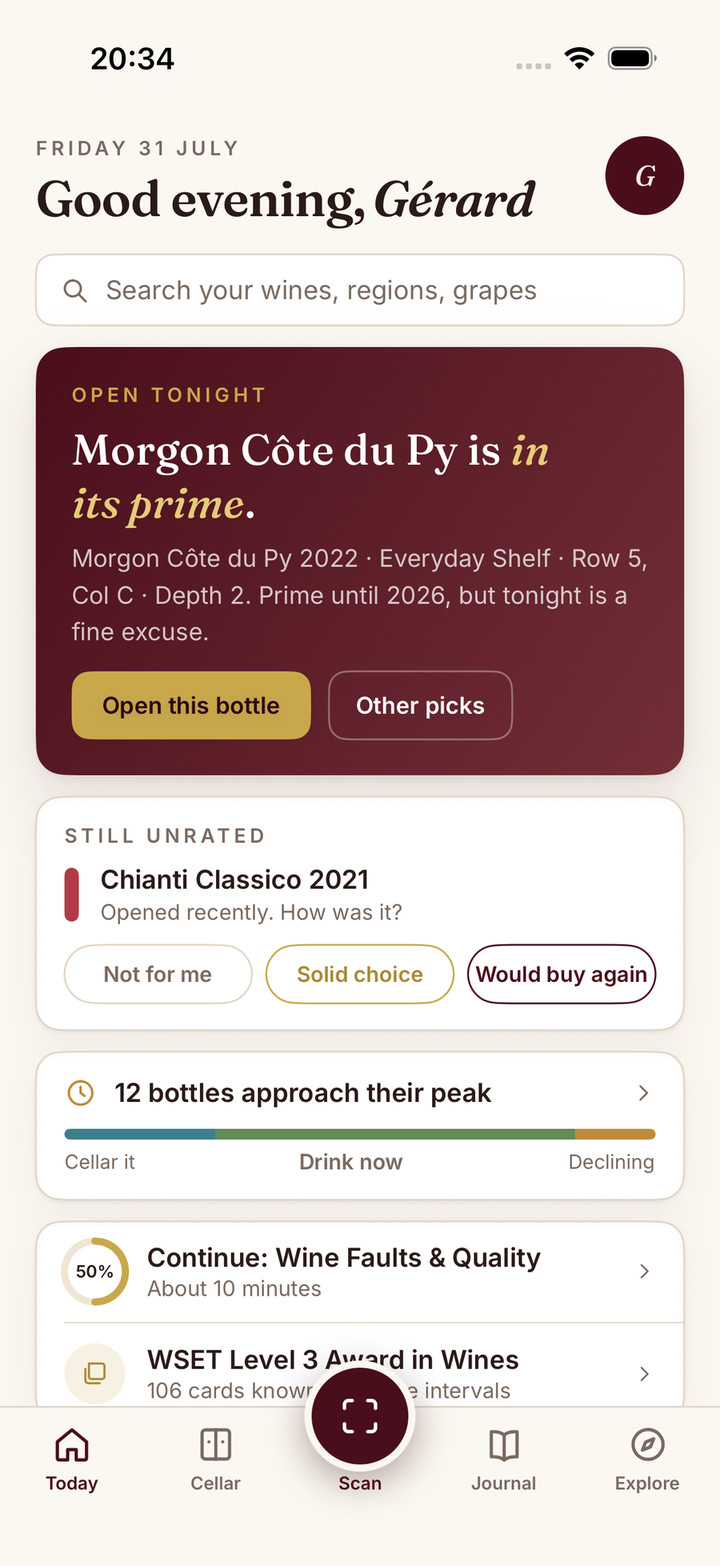
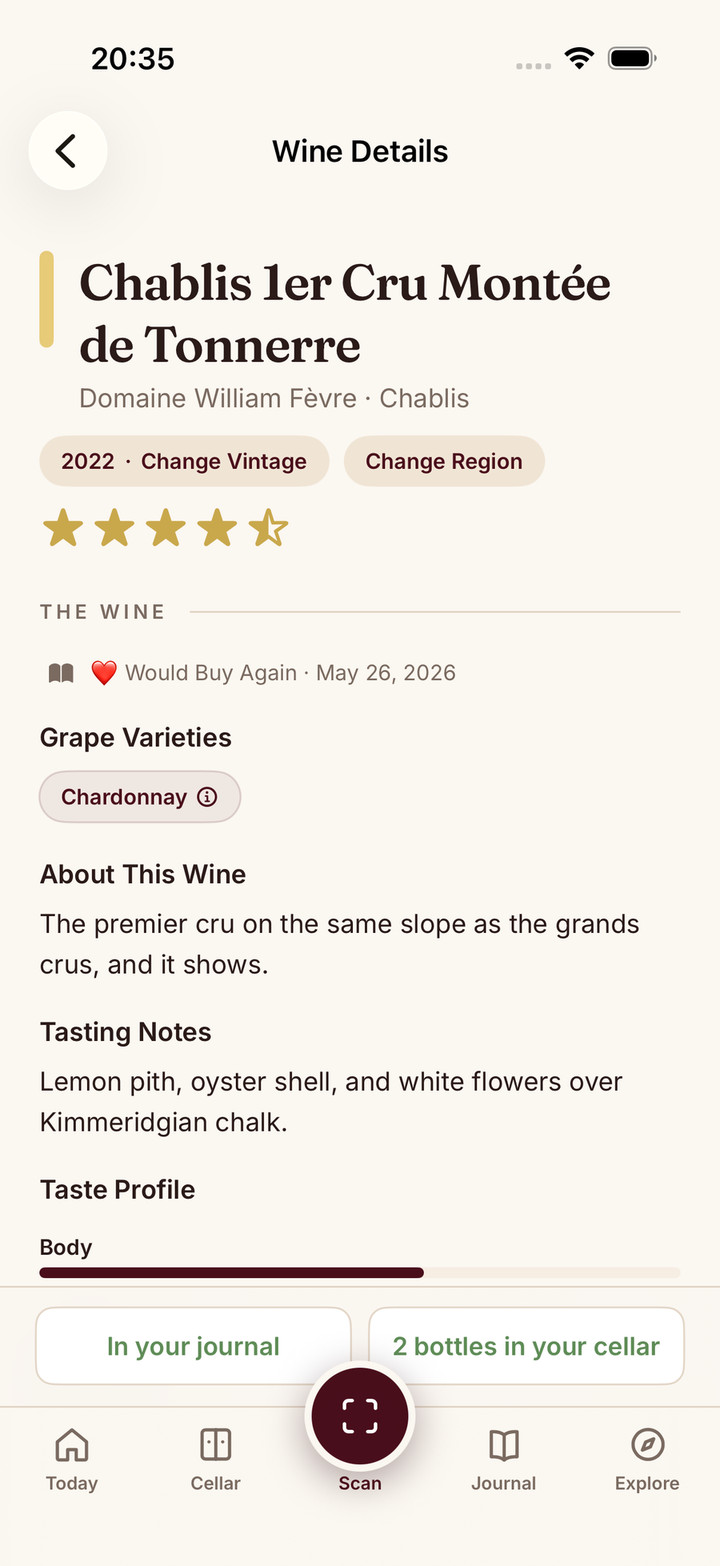
Merlot rewards a structured approach. The grape’s range is wide and the price tiers vary dramatically, so a personal record of what works best at each price point compounds quickly. Sommo lets you log every Merlot you try, track which producers and vintages you rate highest, and build a personal map of where the grape’s best value lives. Over a year of focused exploration, you will have a far better Merlot mental model than any guide can provide.
Download Sommo free and rediscover a grape that never deserved its bad reputation.