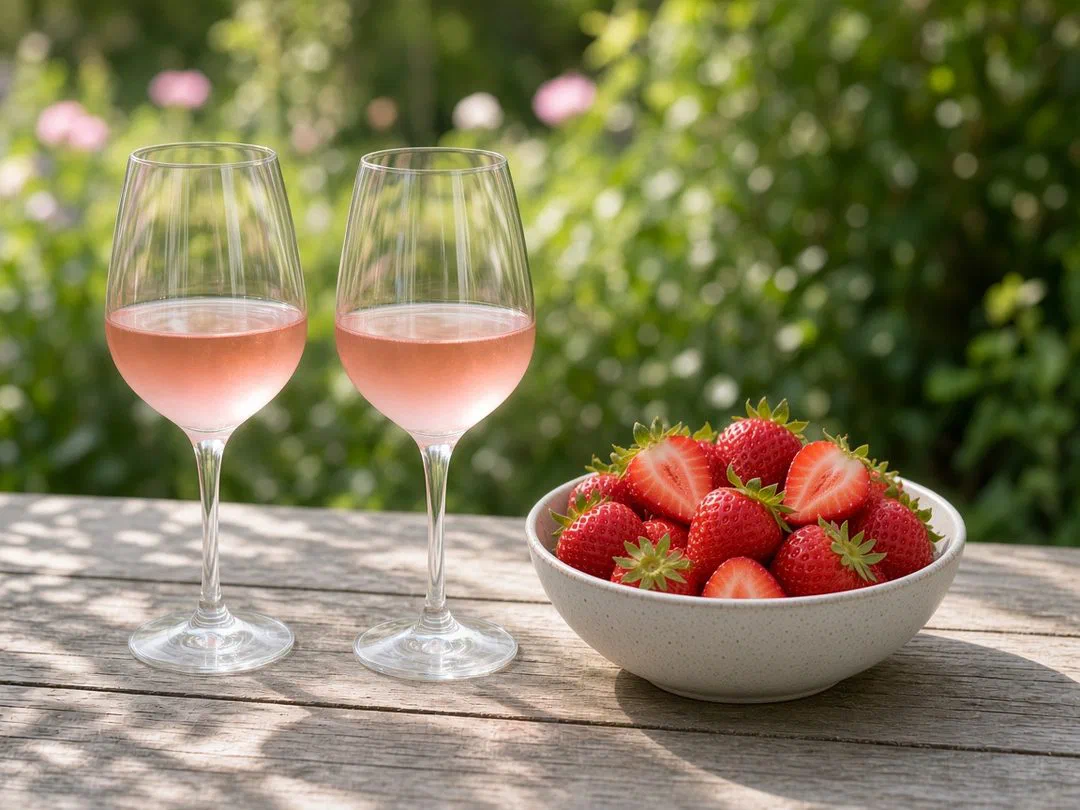
White Zinfandel is a pink wine made from red Zinfandel grapes, usually in a light, fruity style with some sweetness. Its blush colour comes from very short contact with the grape skins, while its sweetness depends on how the wine is made.
The name can make a simple bottle sound confusing. It is not a white grape, and it does not taste like a pale version of a big red Zinfandel. When I am choosing a bottle, I separate the questions: what colour and texture do I want, and how much sweetness do I enjoy? White Zinfandel answers the first fairly clearly. For the second, the individual bottle matters.
Why White Zinfandel is pink
Zinfandel grapes have dark skins, but the juice can make a pale wine when it spends little time against those skins. The winemaker separates the juice from the skins early, taking enough colour for a pink blush without extracting the structure associated with a red wine.
That is the basic rosé principle. More skin contact generally brings more colour and extraction, although the finished shade also depends on the grapes and the producer’s choices. A pale glass does not tell you exactly how sweet the wine will be.
The word “white” describes the approach to making a lighter wine from a red grape, rather than the final colour in your glass. “Blush” is another useful description you may encounter. In practical terms, put White Zinfandel in the pink-wine part of your thinking: chilled, fresh and usually softer in texture than red Zinfandel.
How sweet it usually tastes
White Zinfandel commonly has noticeable sweetness, ranging from a gentle off-dry impression to a more clearly sweet style. Expect approachable red-fruit flavours, often suggesting strawberry or watermelon, with freshness that helps keep the wine from feeling heavy. Those are flavour comparisons, not added ingredients.
Fruitiness and sweetness are different things. A dry wine can smell of ripe strawberries without leaving a sweet impression on the palate. Sweetness comes from sugar remaining in the finished wine; acidity changes how balanced or sharp that sweetness feels. This is why similarly fruity bottles can taste quite different.
I would look for an explicit description such as “off-dry”, “medium-sweet” or “dry” before buying. If the label gives no useful clue, ask for a sweetness description rather than simply asking for a fruity wine. That gives a shop or restaurant a clearer idea of what you want.
Dry rosé of Zinfandel exists too. It can share the grape’s red-fruit character and pink colour while tasting crisp rather than sweet. Do not assume every pink wine made from Zinfandel follows the familiar White Zinfandel style, or that a deeper pink automatically means more sugar.
The Sutter Home story, without the myth-making
The widely told Sutter Home story connects the familiar sweet style with a stuck fermentation. Fermentation stopped while sugar remained, and the resulting pink wine helped establish the style people now associate with White Zinfandel.
That story explains a style association, not a rule every bottle must follow. A stopped fermentation leaves sweetness because the yeast has not converted all the available sugar into alcohol. Producers can make deliberate choices about their finished style; a sweet wine is not necessarily an accidental or faulty wine.
The useful takeaway is to judge the balance in the glass. Does the fruit feel fresh? Does the sweetness suit your taste and the food? Those questions tell you more about whether you will enjoy it than treating its origin story as a verdict on quality.
White Zinfandel versus red Zinfandel
The grape is the same, but the drinking experience can be far apart. Red Zinfandel ferments with its skins for longer, extracting deeper colour and tannin. It is generally dry and fuller in body, with fruit that can lean towards ripe berries and darker, sometimes jammy flavours.
White Zinfandel usually feels lighter, with much less tannic grip and a sweeter finish. Red Zinfandel is more likely to suit someone seeking a substantial red for a rich savoury meal. The blush style suits someone wanting a chilled glass with gentle fruit and little drying sensation.
Neither colour guarantees quality, and neither tells you everything about a producer’s choices. If you enjoy White Zinfandel, a red Zinfandel may still surprise you: the shared name does not promise shared sweetness. For more background on the grape itself, I would start with the story of Zinfandel and Mission grapes.
Where Primitivo fits
Primitivo and Zinfandel are names associated with the same grape variety. They are not names for matching finished wines. Place, growing conditions and winemaking all shape what ends up in the bottle.
A wine labelled Primitivo is generally a red wine, so buying it as a substitute for White Zinfandel can lead to disappointment. Shared grape identity does not carry over the pink colour, lighter texture or familiar blush sweetness. Think of the grape as the starting material and the wine style as the finished choice.
If the connection is what interests you, the Zinfandel versus Primitivo comparison explores that relationship. For a shopping decision, first decide between a pink and a red wine, then check sweetness and body.
How to serve it
Serve White Zinfandel chilled, in an ordinary wine glass with enough room to smell the fruit. It does not need a special glass or a decanter. If it tastes almost flavourless straight from the fridge, let the glass warm slightly and try again before deciding it lacks character.
Keep the bottle cool between pours, especially outdoors. Warmth can make sweetness feel more prominent and reduce the refreshing impression that makes this style appealing. Conversely, extreme cold can hide both its aromas and the balance you are trying to assess.
I prefer to taste a small pour before serving the whole table. That makes it easier to decide whether the bottle belongs beside a savoury dish, with a salty snack, or simply as a chilled glass on its own.
What to eat with it, and who it suits
Gently sweet White Zinfandel can work well with mildly spicy food. Try a fragrant noodle dish or lightly spiced chicken, keeping fierce chilli heat in check rather than expecting sweetness to solve every pairing. A dry Zinfandel rosé will give a different result, so check the style first.
Glazed pork, picnic sandwiches and salty snacks are other sensible starting points. Match a sweeter glaze with a bottle that has enough sweetness to avoid tasting sharp beside it. For salads, watch the dressing: very sour vinegar can overwhelm a soft, fruity wine, while a gentler dressing is easier to accommodate.
Do not assume White Zinfandel is sweet enough for every dessert. A very sweet pudding can make a lightly sweet wine seem thin or tart. I would sooner put it beside savoury food with a sweet or spicy element than make it the automatic choice for cake.
It suits drinkers who enjoy chilled fruit flavours, some sweetness and little tannin. If you prefer a crisp, dry finish, ask specifically for dry rosé of Zinfandel. If you want a fuller, firmer glass, choose red Zinfandel instead. The useful choice is the style you enjoy, with its sweetness made clear before you pour.