Barolo is one of the great age-worthy reds, and also one of the easiest to open too soon. Pull the cork on a young one and you can meet a wall of tannin and acid that makes you wonder what the fuss is about. Wait, and the same wine unfurls into one of the most haunting things you can drink. So the question matters: when is Barolo actually ready?
The short answer is that most Barolo needs at least eight to ten years from the vintage, and the best examples from structured years can drink beautifully for two or three decades. The longer answer depends on the grape, the year, the producer, and how the bottle has been kept.
Why Barolo ages so long
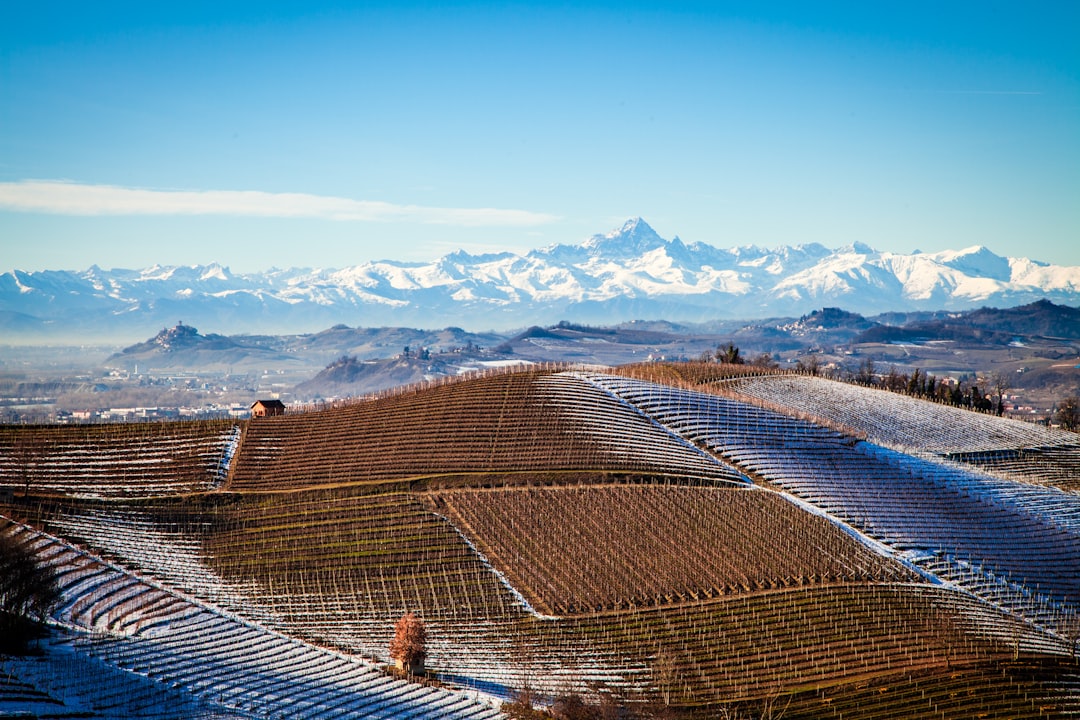
Barolo is made from Nebbiolo, grown in the Langhe hills of Piedmont in north-west Italy. Nebbiolo is built for the long haul because it brings two things in abundance: fierce tannin and high acidity. Those are the two structural elements that let a wine evolve for years rather than fade. Pale in colour and deceptively delicate-looking, Nebbiolo is anything but delicate on the palate when young.
The law reflects this. Barolo cannot even be released until it has aged for over three years, including at least eighteen months in wood. A Barolo Riserva must age for five. (Release rules like these are exactly the sort of detail the WSET Level 2 quiz on Italian and Spanish wine regions likes to ask about.) By the time a bottle reaches a shop it has already had a head start, and it still usually needs several more years in your rack.
How the window changes
Three things move Barolo’s window more than anything else.
The vintage. This is the big one. A cooler, classically structured year builds wines with more tannin and acid that need longer and reward patience. A warmer, riper year gives softer, more generous wines that come round sooner but may not hold as long. Two bottles of the same Barolo from different years can be ready a decade apart, so it always pays to know what kind of year you are holding.
Producer style. There is a long-running split in the Langhe between traditional and modern winemaking. Traditional Barolo, made with long macerations and aged in large old casks, tends to be more austere and tannic in youth and asks for more time. Modern Barolo, made with shorter macerations and often smaller barrels, is usually more approachable younger. Neither is better. They simply have different windows, and knowing which camp your producer sits in tells you a lot.
The tier. A village-level Barolo, or one from a younger-vine or blended bottling, is generally ready earlier, often around six to ten years. A single-vineyard cru from a top site and a strong vintage is the bottle that rewards fifteen, twenty, sometimes thirty years.
A rough drinking-window guide
Treat these as starting points, not promises, and always adjust for vintage and storage:
| Style of Barolo | Roughly ready | Often best |
|---|---|---|
| Village or entry-level, warmer vintage | 5 to 7 years | 7 to 12 years |
| Classic village or cru, average vintage | 8 to 12 years | 12 to 20 years |
| Top cru, structured vintage | 12 to 15 years | 15 to 30+ years |
How to tell if your bottle is ready
If you cannot wait, here is how to read one without wasting it:
- Check the year. Work out the wine’s age and whether the vintage was structured or forward.
- Know your producer. Traditional leaning means more patience; modern leaning means you can start earlier.
- Decant a young one. If you open a Barolo that still tastes tight, decanting for a couple of hours can coax out aromatics that are otherwise locked away. It will not fully mature a too-young wine, but it makes the case for waiting on the rest.
- Buy more than one. The honest way to learn a wine’s curve is to open one early and hold the others.
If you enjoy Barolo, it is worth knowing its neighbour and its Tuscan rival too: see Barolo vs Barbaresco for the softer, slightly earlier-drinking sibling from the same grape, and Barolo vs Brunello for how it stacks up against Italy’s other great ager.
Let your cellar track the window
The trouble with a wine like this is that the wait is long enough to forget. A Barolo you bought on a trip can sit in the rack for a decade, and the whole point is to catch it in its window, not after.
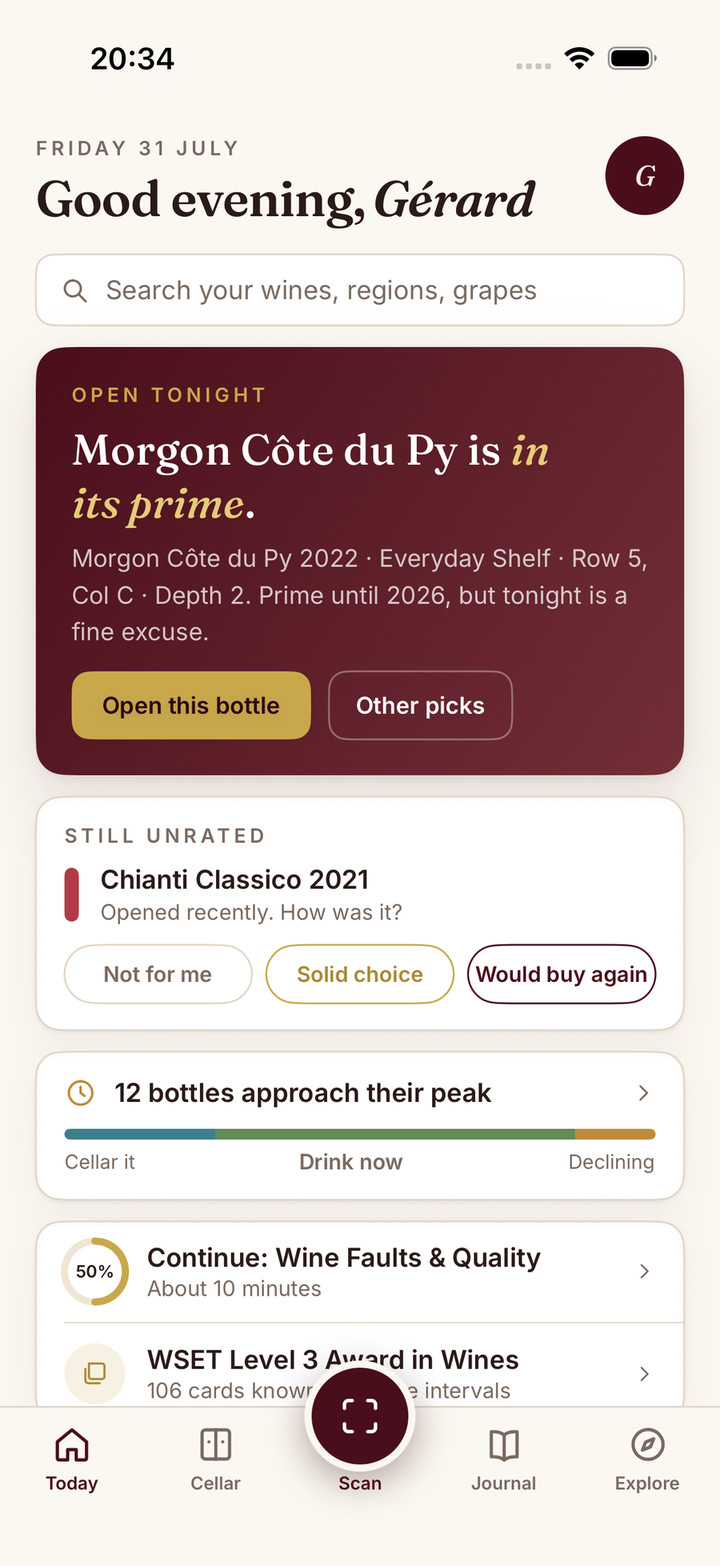
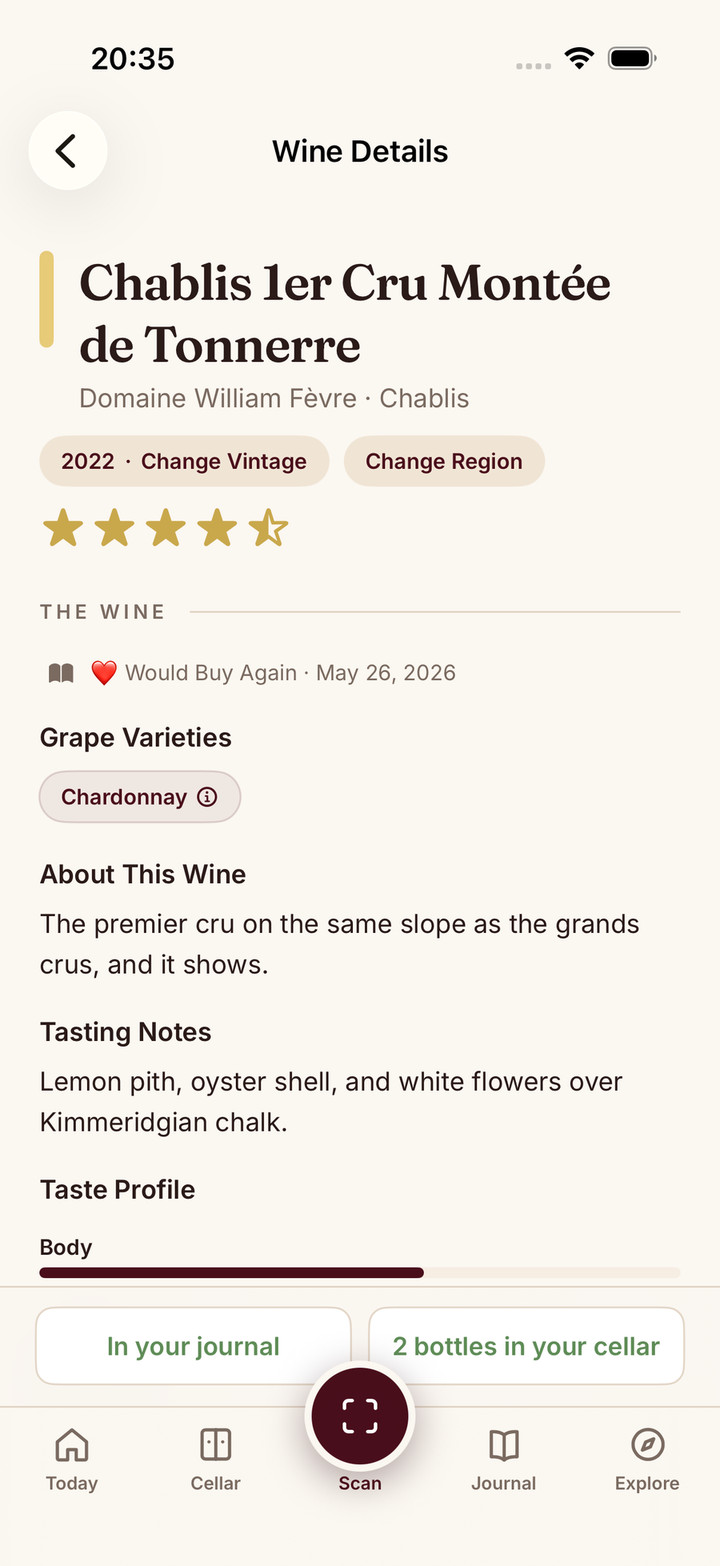
This is exactly what Sommo’s wine cellar is for. Scan the bottle when you buy it and Sommo estimates the full drinking window, folding in how strong the vintage was, and shows you where the wine sits on the curve today. Tell it how the bottle is stored and the window adjusts. When the Barolo enters its peak, the app surfaces it so you actually open it in time. For the full picture of how that estimate is built, read how Sommo estimates drinking windows.
Keep reading
Got a Barolo waiting in the rack? Download Sommo and let it tell you when to open it.