What Is WSET? The Complete Guide to Wine Certification
WSET is the world's leading wine qualification, recognised in 70+ countries. Here's everything you need to know about the 4 levels, costs, books, and how to prepare.
Most wine qualifications are regional. WSET is the one that travels.
A WSET certificate earned in Tokyo is recognised in London, Cape Town, and New York. It’s the global standard — used by sommeliers, wine buyers, importers, flight attendants, and increasingly, by enthusiasts who simply want to understand what’s in their glass. Over 100,000 students sit WSET exams every year across 70+ countries.
If you’ve ever wondered whether WSET is worth your time and money, here’s everything you need to know.
What WSET Actually Is
WSET stands for Wine & Spirit Education Trust. Founded in London in 1969, it’s not a school — it’s an awarding body. WSET sets the syllabus, writes the exams, and issues the certificates. The teaching is done through a global network of Approved Programme Providers (APPs): wine schools, colleges, hospitality training centres, and some online providers.
That distinction matters. When you “take a WSET course,” you’re studying through a local provider but earning an internationally recognised WSET qualification. The certificate comes from WSET, not the school.
You can find an accredited provider anywhere in the world at wset.co.uk.
The Four WSET Levels
There are four qualifications in the WSET wines pathway. You don’t have to take them in order — most people start at Level 2.
WSET Level 1: Award in Wines
Who it’s for: Absolute beginners, hospitality staff needing a quick credential. Format: One day of instruction, 30 multiple-choice questions. Difficulty: Low — the pass mark is achievable for anyone who pays attention.
Level 1 is an introduction: major wine styles, basic grape varieties, simple food pairing. If you already drink wine and read about it occasionally, you’ll find most of Level 1 familiar. It’s most useful for front-of-house staff in restaurants and bars who need a foundational certificate fast.
WSET Level 2: Award in Wines
Who it’s for: Wine enthusiasts, trade professionals, anyone who wants real knowledge. Format: 3-5 days of study (classroom or online), 50 multiple-choice questions. Difficulty: Moderate — requires genuine study and memorisation.
Level 2 is where WSET earns its reputation. You’ll learn about dozens of grape varieties, major wine regions across France, Italy, Spain, Germany, the New World, and beyond, plus winemaking processes, sparkling and fortified wines, and the WSET Systematic Approach to Tasting (SAT). Most enthusiasts start here — and many stop here, because Level 2 knowledge is genuinely transformative.
WSET Level 3: Award in Wines
Who it’s for: Serious wine enthusiasts, aspiring sommeliers, trade professionals. Format: Multiple sessions over 3-6 months part-time, written theory exam + tasting exam. Difficulty: High — a significant step up from Level 2.
Level 3 goes deep. You’re expected to explain why wine regions produce the styles they do — the interplay of climate, soil, viticulture, and winemaking. The tasting exam requires you to assess wines using the SAT and reach logical quality and style conclusions. This is the qualification that starts to feel genuinely professional.
WSET Level 4: Diploma in Wines
Who it’s for: Professionals pursuing serious wine careers. The prerequisite for the Master of Wine. Format: Six units over 2-3 years, multiple written exams, blind tasting components, research assignment. Difficulty: Very high — comparable to a postgraduate degree in academic rigour.
The Diploma is the highest WSET wine qualification. It’s the standard pathway into the Master of Wine programme and signals expert-level knowledge to any employer in the wine trade. Most people who complete it have been working in the industry for years.
Who Is WSET For?
WSET was designed for trade professionals — the buyers, sommeliers, importers, and retailers who need structured wine knowledge to do their jobs. It’s still heavily used in that context.
But the majority of WSET students today are enthusiasts. People who travel to wine regions, spend real money on bottles, and want to understand more than just “I like this.” If wine is a genuine hobby rather than a casual drink, WSET gives you the vocabulary, structure, and depth to engage with it properly.
WSET makes sense if:
- You find yourself reading wine labels and wishing you understood them better
- You travel to wine regions and want to get more out of the experience
- You spend £30-50+ per bottle and want to know what you’re buying
- You want to taste more analytically using a recognised framework
- You’re considering a career in wine, hospitality, or retail
WSET isn’t necessary if:
- You enjoy wine casually and don’t want to study it
- You’re happy learning informally through tasting and reading
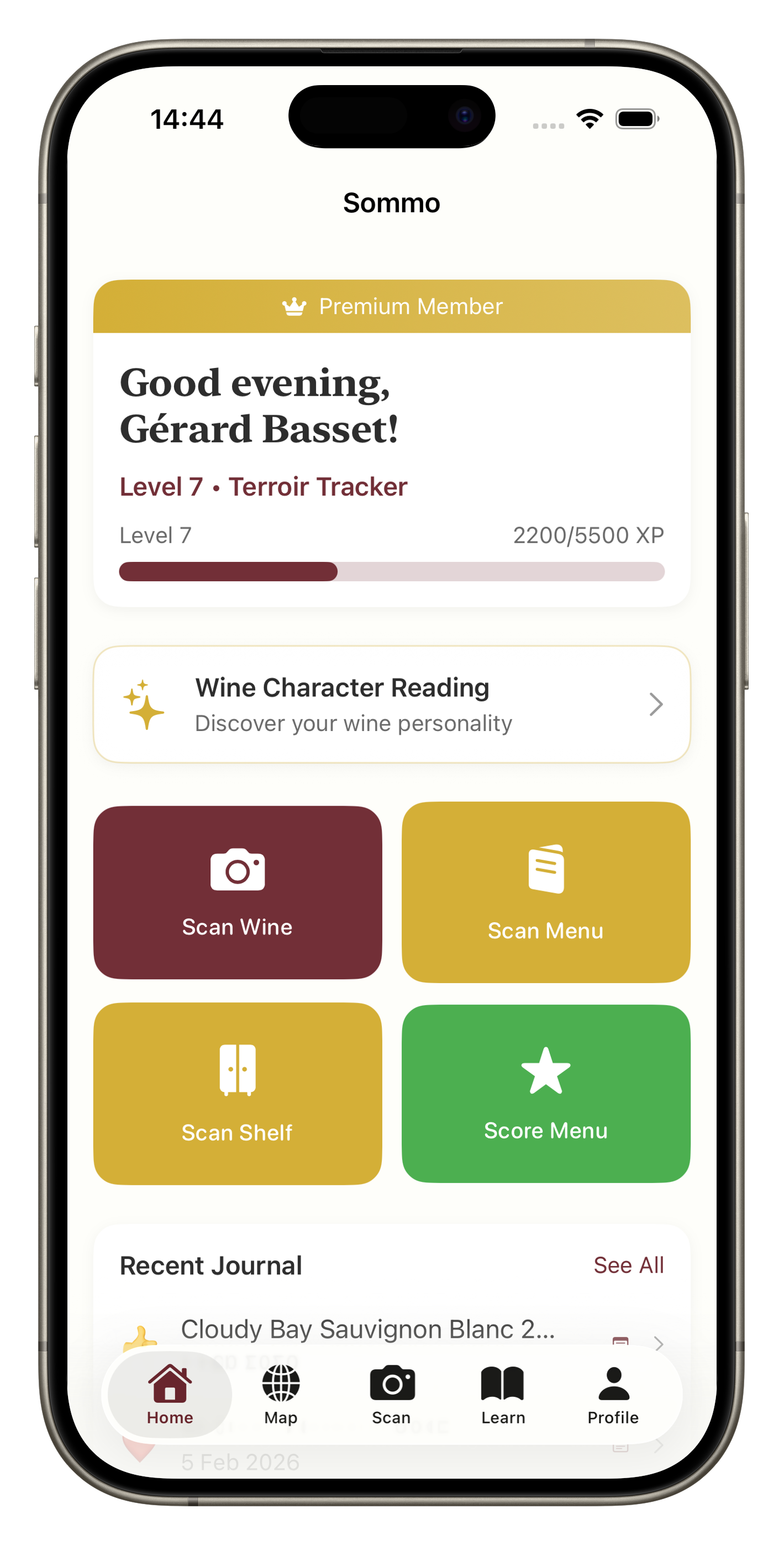
Before committing to a course, the Sommo app is a useful way to explore WSET-level content — grape varieties, regions, tasting notes — at your own pace, with no exam pressure.
The Official Study Materials
The WSET Study Pack comes with every registered course. It includes the official textbook and, for Level 2 and above, the SAT (Systematic Approach to Tasting) guide. These are the canonical source materials — the exam is written directly from them. Don’t try to pass without reading them cover to cover.
Beyond the official pack, these books are genuinely useful:
Wine Folly: The Master Guide by Madeline Puckette The best visual companion for Level 2 study. The maps, infographics, and flavour diagrams make geography and grape variety relationships click in a way that dense text alone doesn’t. Particularly useful if you’re a visual learner struggling with regional coverage.
The World Atlas of Wine by Hugh Johnson & Jancis Robinson The definitive wine atlas. Indispensable for Level 3, where you need to understand regional geography in detail — appellation boundaries, sub-regions, key producers, climate variations. Get the most recent edition. You’ll use it throughout Level 3 and beyond.
The Oxford Companion to Wine edited by Jancis Robinson & Julia Harding The encyclopaedic reference. Over 4,000 entries covering every grape variety, region, producer, and winemaking concept you’ll encounter at Level 3 and Diploma. Not a book you read cover to cover — it’s a reference you live in. JancisRobinson.com offers the same depth in digital format, with a subscription worth considering for Level 3+.
Jancis Robinson’s Wine Course A more narrative, accessible read than the Companion. Good for building context and understanding the story of wine alongside the facts. Pairs well with flashcard-based study.
For online resources: wset.co.uk for official syllabi, provider finders, and specimen exam papers. Wine Folly’s free articles are strong for visual learners at Level 2. JancisRobinson.com for deep-dive articles at Level 3+.
How Much Does WSET Cost?
Prices vary by provider and location. As a rough guide:
- Level 1: $400–550 total
- Level 2: $650–1,000 total
- Level 3: $1,000–1,600 total
- Level 4 Diploma: $5,500–10,000+ total
UK prices tend to be lower; major cities tend to be higher. The cost includes the study pack, tuition, and exam fee — though exam resits cost extra.
For the complete breakdown by level, see our WSET cost guide.
How to Prepare
The single most important thing: start early. WSET exams reward depth of knowledge over last-minute cramming, and genuine depth takes weeks to build.
For Level 2:
- Read the study pack in full before the course starts
- Practice the SAT tasting method on real wines — buy bottles that feature on the syllabus
- Use spaced repetition for factual recall (grape varieties, regions, classification systems)
For Level 3: Add contextual reading from the Atlas and Companion. Spend serious time on the tasting exam — it requires both technical accuracy and logical structure.
Sommo’s WSET flashcard decks cover the entire Level 2 and Level 3 syllabus using the SM-2 spaced repetition algorithm — the same method medical students use to retain anatomy. The app tracks your progress and schedules reviews automatically, so well-known cards appear less often and weak spots get reinforced. You can download Sommo and start with the flashcards before your course even begins.
Sommo also offers WSET mock tests that replicate the format and timing of the real exam. Taking two or three under timed conditions in the weeks before your exam is one of the highest-leverage things you can do.
For more on the study method: How to Study for WSET Using Spaced Repetition.
WSET vs Other Wine Qualifications
WSET vs CMS (Court of Master Sommeliers) CMS is more service and hospitality-focused, with a strong emphasis on blind tasting and tableside performance. It’s particularly prominent in the US restaurant industry. WSET is more academic, more analytical, and more globally recognised. They’re not direct competitors — many professionals hold both. See our full comparison: WSET vs Court of Master Sommeliers.
WSET vs Master of Wine (MW) The MW is the pinnacle of the wine world — extraordinarily difficult and rare (fewer than 450 MWs worldwide). WSET Level 4 Diploma is the standard entry pathway. They’re complementary: WSET builds the foundation; MW is the peak.
WSET vs generic online courses Plenty of online platforms offer wine courses. They’re fine for casual exploration, but they lack WSET’s independent examination, international recognition, and standardised rigour. If you want a credential that means something in the industry, WSET is the benchmark.
Where to Start
Step 1: Decide your level. Most people start at Level 2. If you’re brand new to wine study and work in hospitality, consider Level 1 first. If you already have solid wine knowledge, jump to Level 2 directly.
Step 2: Find a provider at wset.co.uk/find-a-course. Compare classroom vs online formats — both produce the same qualification, but classroom courses offer tasting sessions that are harder to replicate at home.
Step 3: Get your study pack early. Don’t wait for the course to start reading.
Step 4: Use Sommo alongside your coursework. Flashcard decks, mock tests, and the wine scanner all reinforce what you’re studying in the classroom. Download it here.
You can also browse our full WSET hub for level-specific guides, cheatsheets, and practice resources.
WSET won’t make you a wine snob. It’ll make you a better drinker — one who understands what’s in the glass, why it tastes the way it does, and how to find more of what you love.
Photo by Aliis Sinisalu on Unsplash