A wine drinking window is the span of time during which a bottle is at, or near, its best. Open it before the window and the wine can taste tight, hard, or closed. Open it long after, and the fruit has faded and the wine is on its way out. Hit the window, and you taste the wine the way its maker hoped you would.
The single most common wine mistake is not buying the wrong bottle. It is opening the right bottle at the wrong time. This guide explains how windows work, what moves them, and how to tell when a bottle is ready.
A window is a curve, not a deadline
It helps to stop thinking about a single “drink by” date and start thinking about a curve. Most age-worthy wines move through four broad phases:
- Too young. The structure is there but unresolved. Tannins feel firm, the fruit is primary and a little brash, the parts have not knitted together yet.
- Approaching. The edges soften. The wine starts to show what it will become.
- At its peak. Fruit, tannin, acidity, and developed, savoury notes are all in balance. This is the stretch you are aiming for.
- Past its peak. Fruit recedes, the wine thins out, and the savoury, dried character takes over. Some people love this stage; most prefer to drink earlier.
The “window” is really that peak stretch plus the approach to it. For an everyday wine it might be the next twelve months. For a serious one it can be a decade or more.
What decides how long a wine ages
Four things do most of the work.
Tannin and acidity. These are a wine’s skeleton. High-tannin reds like Nebbiolo and Cabernet Sauvignon, and high-acid whites like Riesling and Chablis, have the backbone to evolve for years. Soft, low-acid wines are built to drink young. If structural terms like these still feel slippery, the WSET glossary pins down every one of them.
The vintage. A cool, structured vintage often ages longer than a hot, ripe, generous one from the same vineyard. Two bottles of the same wine from different years can have windows a decade apart.
The producer and the wine’s tier. Within a region, a serious single-vineyard wine usually ages far longer than the entry-level bottle. Village Burgundy is not Grand Cru Burgundy.
Storage. This is the one people forget. Steady, cool, dark storage lets a wine age slowly and gracefully. Heat and temperature swings age it fast and unevenly. A wine kept warm can reach and pass its peak years earlier than the same wine kept in a proper cellar.
How to tell if a bottle is ready
Without opening it, you are estimating, but you can estimate well:
- Start with the style. Is this a wine built to age, or one made to drink now? A crisp Pinot Grigio is a now wine. A classified Bordeaux is not.
- Factor in the vintage. Look up whether the year was structured or ripe and forward.
- Be honest about storage. If the bottle has lived somewhere warm, shorten your estimate.
- When in doubt, buy two. Open one early, see where it is on the curve, and you will know whether to hold the other.
For a fast first pass, the free drinking window tool turns grape, region, and vintage into an estimated curve.
If you do open one early and it tastes tight, decanting can help a young wine show more of itself, though it will not turn a five-year-too-soon bottle into a mature one.
Let the app do the maths
Estimating windows by hand across a whole collection is tedious, which is exactly why it gets skipped, and why good bottles get forgotten until they are over the hill. This is the job Sommo’s wine cellar was built for.
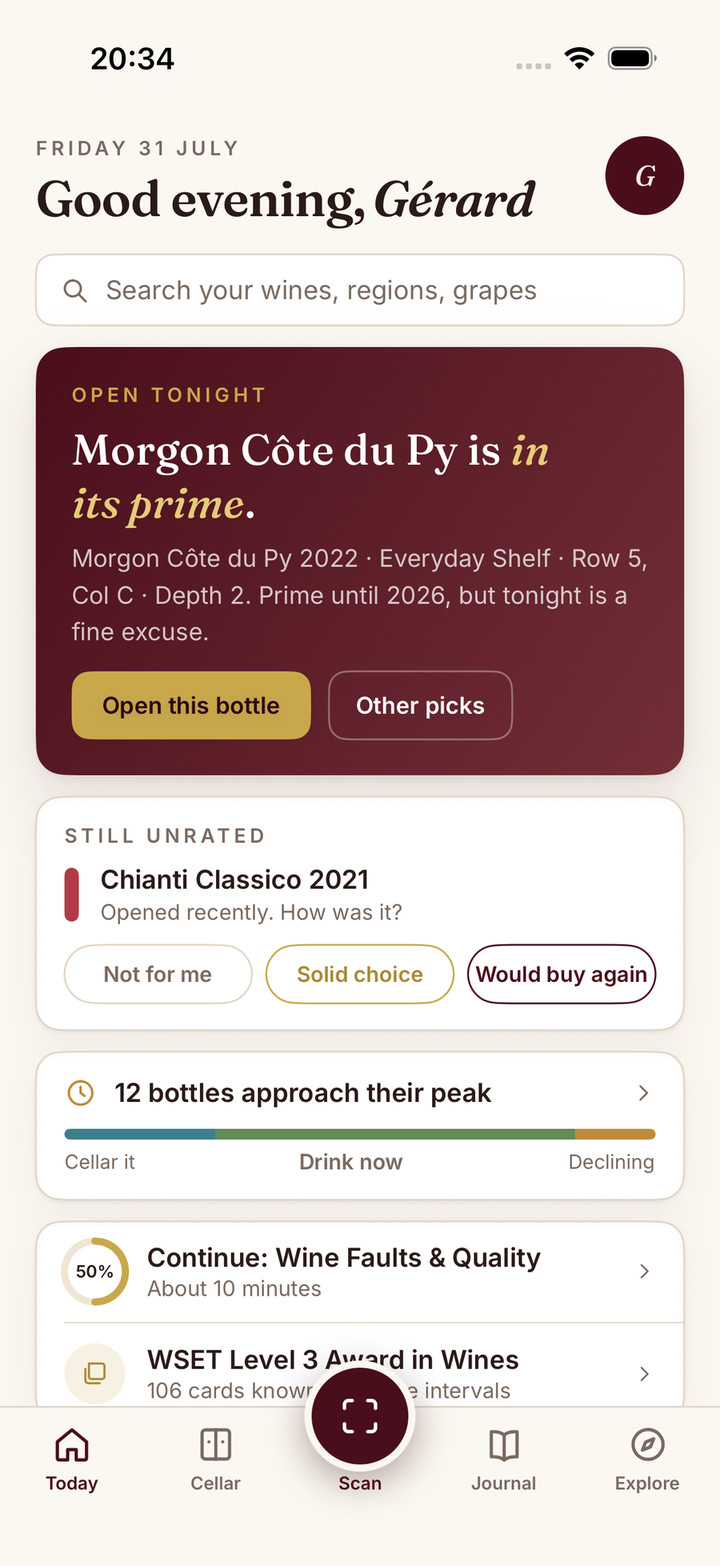
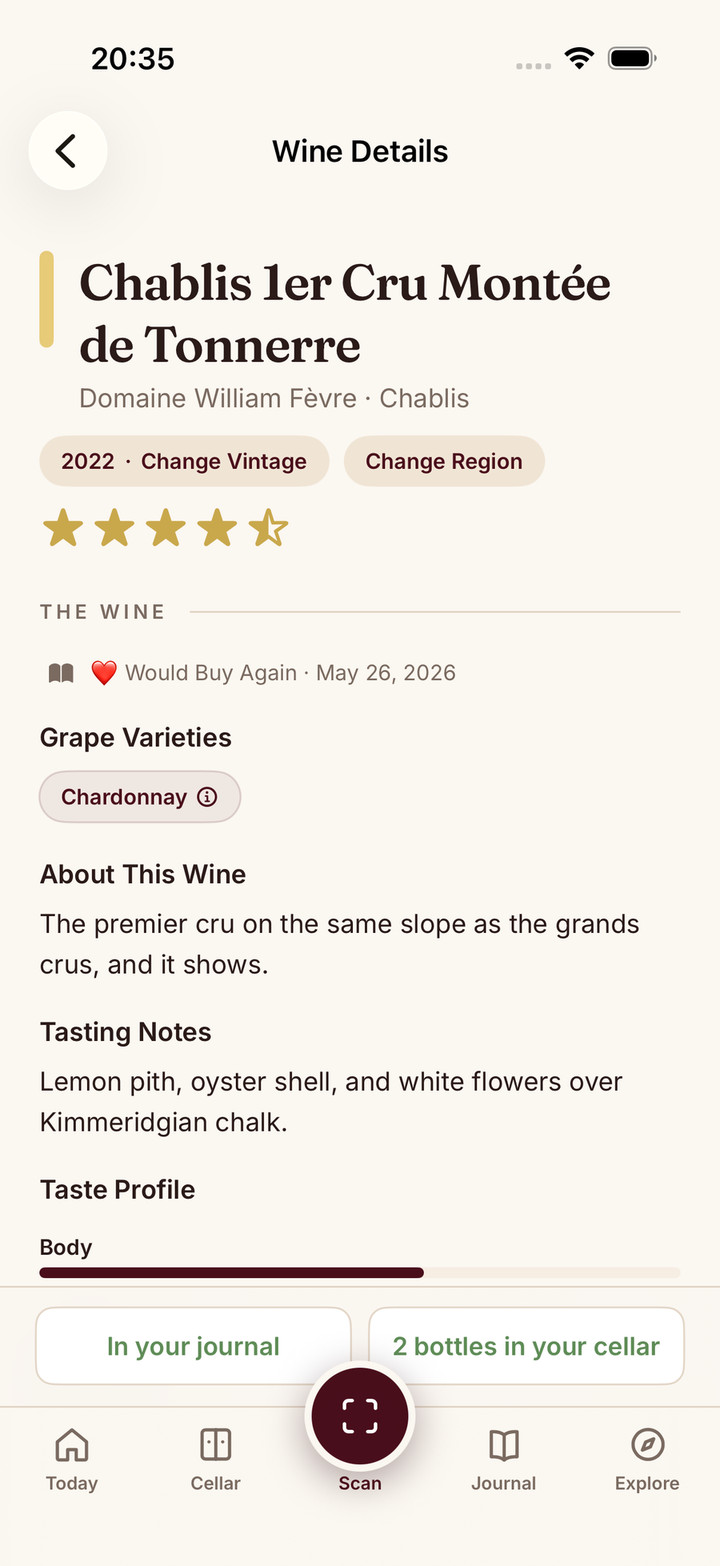
Scan a bottle and Sommo estimates its drinking window for you: not a single date, but the full too-young, ready, and past-its-peak curve, with the strength of the growing year folded in. Tell it how the bottle has been stored and the window tightens to match. Rate the bottles you open and it learns your palate, nudging future windows toward how wine actually tastes to you. When something is entering its peak, the app surfaces it, so a good wine never quietly dies in the back of the rack.
If you want the full picture of how that estimate is built, layer by layer, read how Sommo estimates drinking windows.
Keep reading
- When is Barolo ready to drink? the long, slow window of Piedmont
- How long does Burgundy age? reds and whites compared
- How to build your first real wine cellar
Stop guessing when to open a bottle. Download Sommo and let your cellar tell you.