A bottle accessed with Coravin is still a physical bottle, but it is no longer untouched stock. Keep a separate status and access record for that particular bottle. Record a tasting when you drink the wine, and reduce whole-bottle stock when the bottle leaves the collection under your chosen counting rule.
One glass should not accidentally remove an entire bottle from the rack. Nor should a count of “three bottles” imply that all three contain their original volume.
Give the accessed bottle its own identity
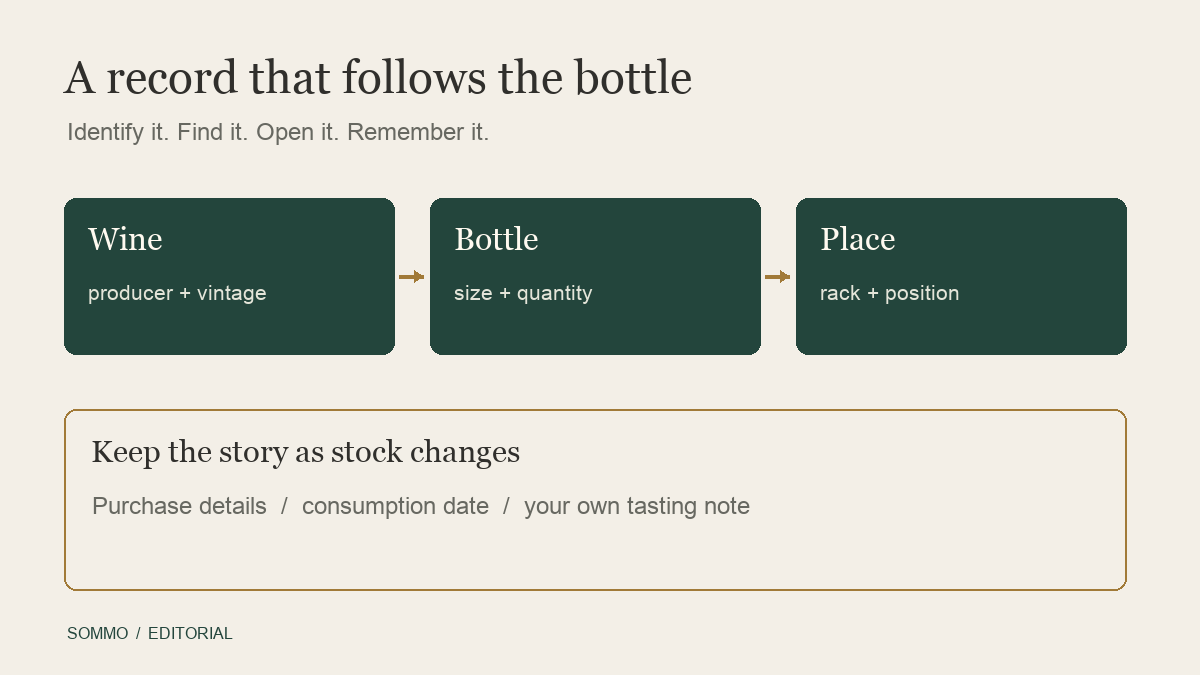
Producer and vintage are insufficient if you own several identical bottles. Assign a practical identifier, such as R2-B04-A, and put a removable tag on the bottle or use a reliable position record. Check that you can distinguish it from the untouched bottle next to it.
Use three clear states in your supplementary record: sealed, accessed and empty or removed. Add the date of first access, subsequent dates and any observations about the closure or bottle. These are recordkeeping states, not guarantees about how long the wine will remain enjoyable. Follow the instructions for your particular device and closure.
CellarTracker’s Coravin guidance recommends individual bottle notes with a consistent searchable term, while keeping tasting notes separate from consumption. The page is dated October 2020, so use that underlying distinction rather than assuming its old interface instructions match today’s app.
Keep pours and remaining volume distinct
A pour log records what you measured or estimated. Remaining volume is a calculation unless you actually measure what is left. If you pour casually, avoid giving the result an appearance of laboratory precision.
For example, this fictional 750 ml bottle has two recorded pours:
| Date | Access recorded | Tasting or condition note |
|---|---|---|
| 10 October | 100 ml, measured | Fresh red fruit; firm tannin |
| 13 October | About 125 ml, estimated | More open with dinner; no closure issue noticed |
| After second pour | About 525 ml by subtraction | Estimate assumes original 750 ml and no unrecorded loss |
The arithmetic is 750 minus 100 minus 125. Because the second pour is estimated, so is the remainder. Do not relabel it as an exact 525 ml reading. Any unrecorded pour or loss makes the estimate less dependable.
If measuring pours makes the evening tedious, record the access date and a rough state such as “several glasses remaining”. An honest coarse record is better than a precise number you cannot support.
Choose what your stock count means
There are two different questions: “How many physical bottles are still here?” and “How many full bottles can I offer?” Write down which your main inventory answers.
Suppose you own three identical bottles: two sealed and one accessed. A physical count is three, with one marked accessed. A dinner plan requiring three full bottles is still short. Your supplementary record should make the difference visible before someone selects the tapped bottle as a gift.
Do not repeatedly use an app’s whole-bottle opening or consumption action for each glass. Check what that action changes before using it for a partial pour. Keep independent tasting records if you want to compare the wine across several evenings.
What Sommo can and cannot represent
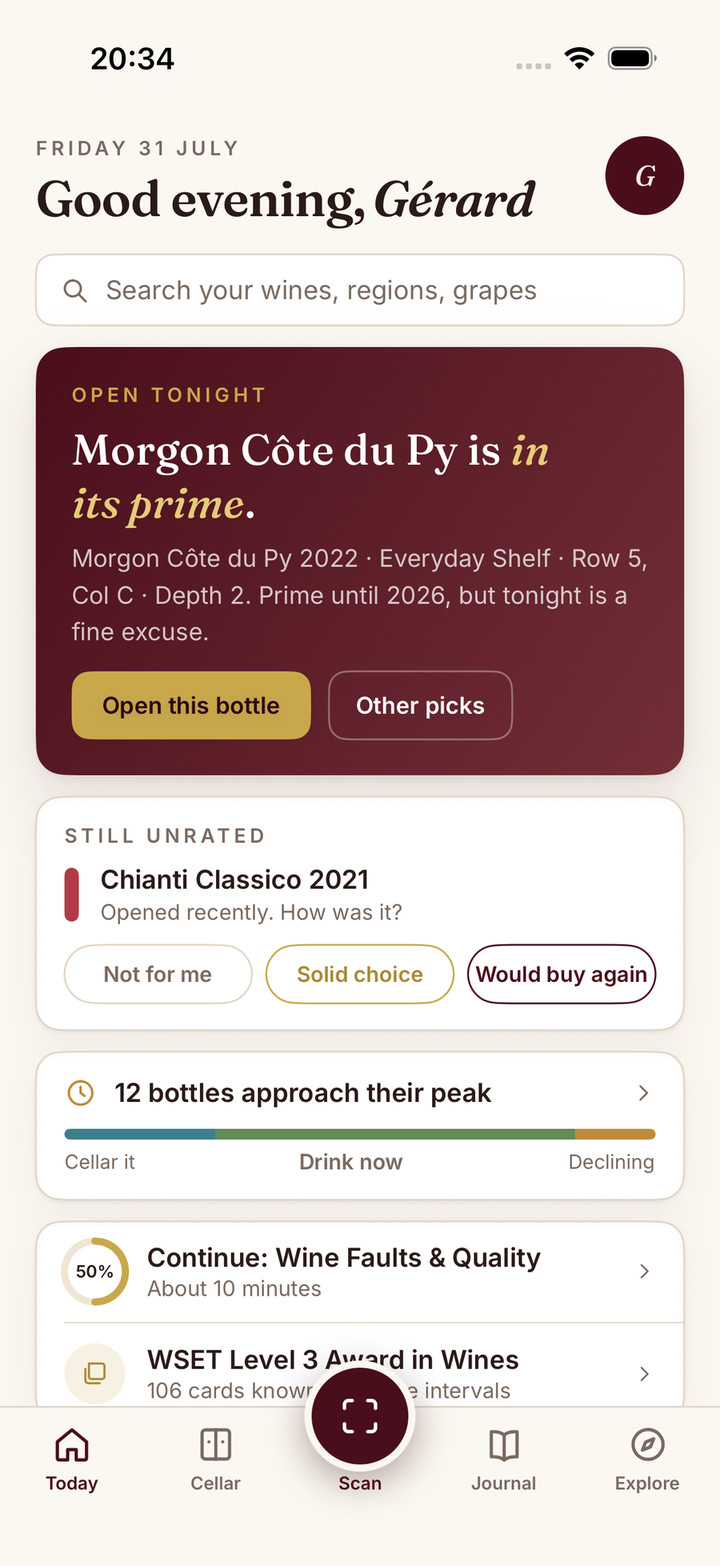
Sommo’s Premium cellar stores integer bottle quantities and current entry metadata. It does not maintain a fractional remaining-volume register or a dedicated Coravin access ledger. Adding the same wine again merges its stock into the existing entry, rather than creating independent lots with separate access histories.
For several identical bottles, keep the bottle identifiers and pour history in a separate sheet or notebook. A cellar note can point you to that record, but should not imply that a shared entry note belongs to only one of its bottles. Check the actual bottle before moving or opening it.
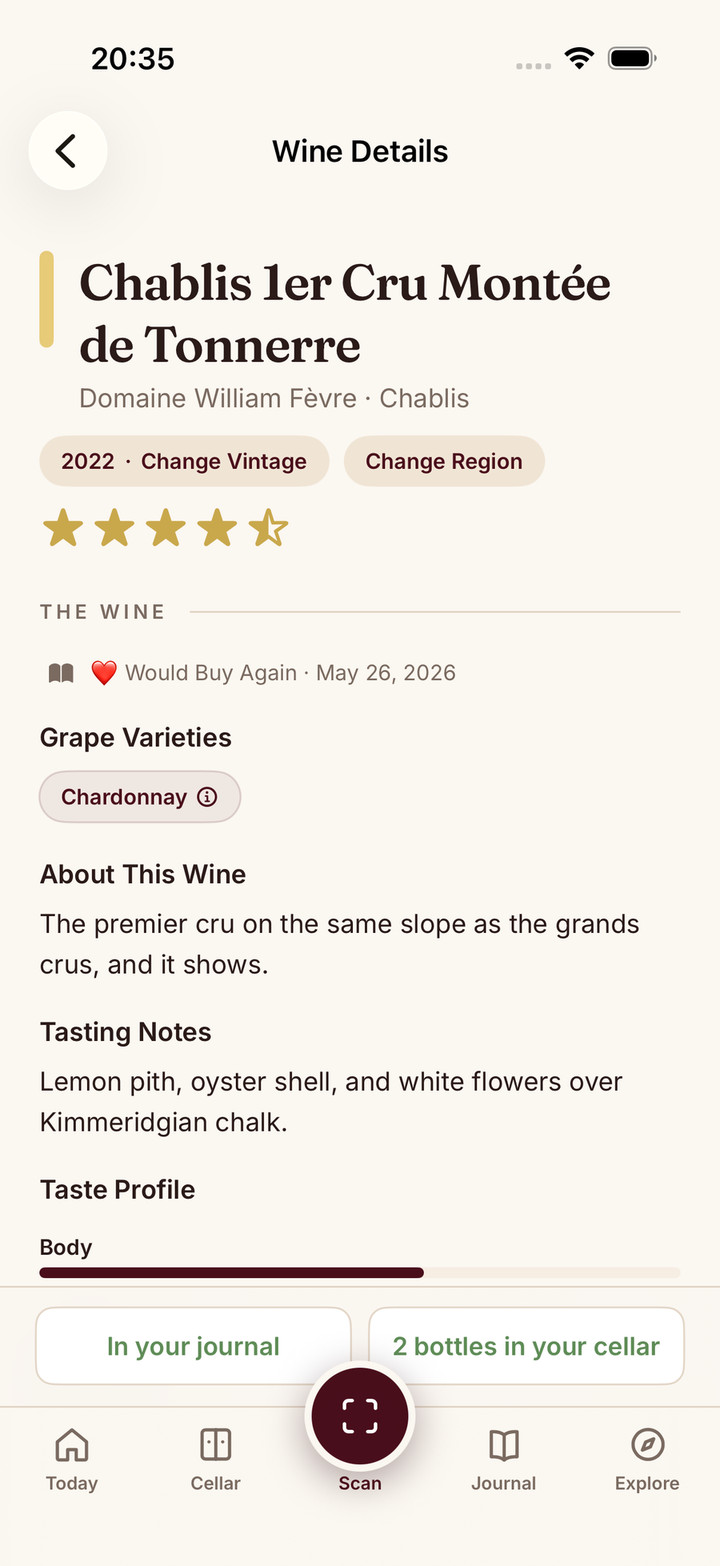
The wine journal is useful for the tasting itself. Record the bottle identifier and access date in your note when they affect the comparison. Free journal access covers the recent 30 days; Premium gives access to the full history.
Close the record when the bottle is finished
When the bottle is empty or leaves the cellar, update the whole-bottle count once and close its supplementary record. Preserve earlier tastings without turning the final stock change into an extra tasting you did not have.
For storage questions after conventional opening, see our opened-wine guide. Its advice is a separate subject from a device-specific preservation promise.
Download Sommo to record the tastings, while keeping bottle access and estimated volume in a record suited to those details.