Summer is when wine country gets crowded. Tuscany’s Chianti road becomes a slow conga line of rental cars. Napa’s main wineries sell out their tasting slots months in advance. Bordeaux’s flagship estates triple their prices for July and August visitors. None of this is news, and none of it is the only option.
The truth is that some of the most rewarding wine regions in the world are still quiet in summer. They produce wines that rival the famous names, they sit in landscapes that genuinely stop you in your tracks, and you can usually walk into a winery on a Tuesday afternoon and find the winemaker at the bar pouring for whoever shows up. This guide is built for that kind of trip. Here are ten regions to consider for summer 2026 if you want great wine without the queues.
How We Picked These Regions
Three criteria shaped the list. First, the wines have to be genuinely interesting, not just affordable alternatives to famous regions. Second, the region has to be welcoming to independent travellers in summer, with walk-in tastings, manageable distances between estates, and decent food. Third, the crowds have to be noticeably thinner than in the headline destinations. We have personally felt the difference between a packed July weekend in Chianti and a sleepy August afternoon in Wachau, and we wrote this with the second feeling in mind.
1. Wachau, Austria
The Danube cuts a narrow gorge through this stretch of Lower Austria, and the south-facing slate terraces above the river produce some of the most precise white wines on earth. Wachau is Grüner Veltliner and Riesling country, with both grapes reaching a level of mineral focus that genuinely rivals top white Burgundy at a fraction of the price.
Summer here is about cycling the Danube path, stopping at riverside heurigers (the seasonal wine taverns), and tasting through producers like Knoll, F. X. Pichler, and Hirtzberger if you can secure an appointment. The villages of Dürnstein, Spitz, and Weissenkirchen are small enough to walk through in an hour and beautiful enough to keep you for three days. Trains from Vienna take just over an hour, so a long weekend is entirely workable.
What to drink: Smaragd-level Grüner Veltliner from a top producer, served with Wiener schnitzel and a green salad. The combination is religious.
2. Mosel, Germany
The Mosel is the most visually dramatic Riesling region in the world. The river loops through a deep valley in slow, mirror-like curves, and the vineyards climb the slate slopes at gradients steep enough to require funicular winches. Some sites tilt at over 65 degrees. Walking them is a serious workout, and the wines that come out of them carry a tension and clarity that no other region can quite replicate.
What makes Mosel work in summer is the dual personality of the wines. The off-dry Spätlese and Kabinett styles, served properly chilled, are some of the best hot-weather wines you can pour. They have the sugar to balance heat, the acidity to refresh the palate, and an alcohol level (often under 9 percent) that lets you drink across an entire afternoon without feeling defeated. Producers like Joh. Jos. Prüm, Egon Müller, Selbach-Oster, and Willi Schaefer are all approachable to thoughtful visitors.
Where to stay: Bernkastel-Kues if you want a base with restaurants. Piesport or Trittenheim if you want quiet villages.
3. Rías Baixas, Spain
Galicia is wetter, greener, and cooler than the Spain most travellers picture. Rías Baixas sits on the Atlantic coast in the northwest corner of the country, and its calling card is Albariño, a white grape that pairs almost perfectly with the seafood pulled out of the rías (coastal estuaries) every morning.
Summer here is about long lunches in fishing villages, percebes (gooseneck barnacles) eaten with your hands, and chilled Albariño poured by the carafe. The region is split into five subzones, and the most ambitious producers like Pazo de Señorans, Forjas del Salnés, and Zárate are now making age-worthy single-vineyard wines that complicate the old stereotype of Albariño as a simple summer quaffer. Cambados is the unofficial capital and a good base. The Festa do Albariño in early August is worth timing a trip around if you do not mind a slightly busier week.
Don’t miss: A boat ride out to one of the mussel-farming platforms (bateas) in the Arousa estuary, paired with a bottle straight from the producer.
4. Douro Valley, Portugal
The terraced vineyards of the Douro Valley are a UNESCO World Heritage site for good reason. The schist hillsides drop almost vertically into the Douro river, and the vineyards step their way up in narrow shelves carved by hand over centuries. The scale is genuinely difficult to convey in photographs.
Most visitors come for Port wine, and they are right to. But the modern story of the Douro is its unfortified table wines: powerful, mineral-driven reds from indigenous grapes like Touriga Nacional, Touriga Franca, and Tinta Roriz, and a small but exciting movement of white wines from old-vine field blends. Quinta do Crasto, Quinta do Vallado, Niepoort, and Wine & Soul are essential stops.
Summer is hot here, sometimes punishingly so in the Douro Superior subregion. Plan your tastings for the morning, lunch slowly in the shade, and save the river boat trip for the late afternoon when the light turns gold and the heat softens. Pinhão is the prettiest base. Porto is two hours away by car or train if you want a city counterweight.
5. Beaujolais, France
If you have read our Beaujolais guide, you already know the story: ten Cru villages producing terroir-driven Gamay that rivals Burgundy at a fraction of the price. The relevant point for summer travel is that Beaujolais is genuinely empty compared to its famous neighbour to the north.
You can drive between Fleurie, Morgon, Moulin-à-Vent, and Chiroubles in under an hour, and the granite hills are gorgeous in July and August. The wines themselves are summer-friendly: light to medium-bodied reds that are served slightly chilled, which means they work even on the warmest days. Producers like Jean Foillard, Marcel Lapierre, Yvon Métras, and Château Thivin are happy to host visitors who arrange ahead. Lyon is 30 minutes south and one of the great food cities of France, so a base in Lyon with day trips into the Crus is an easy plan.
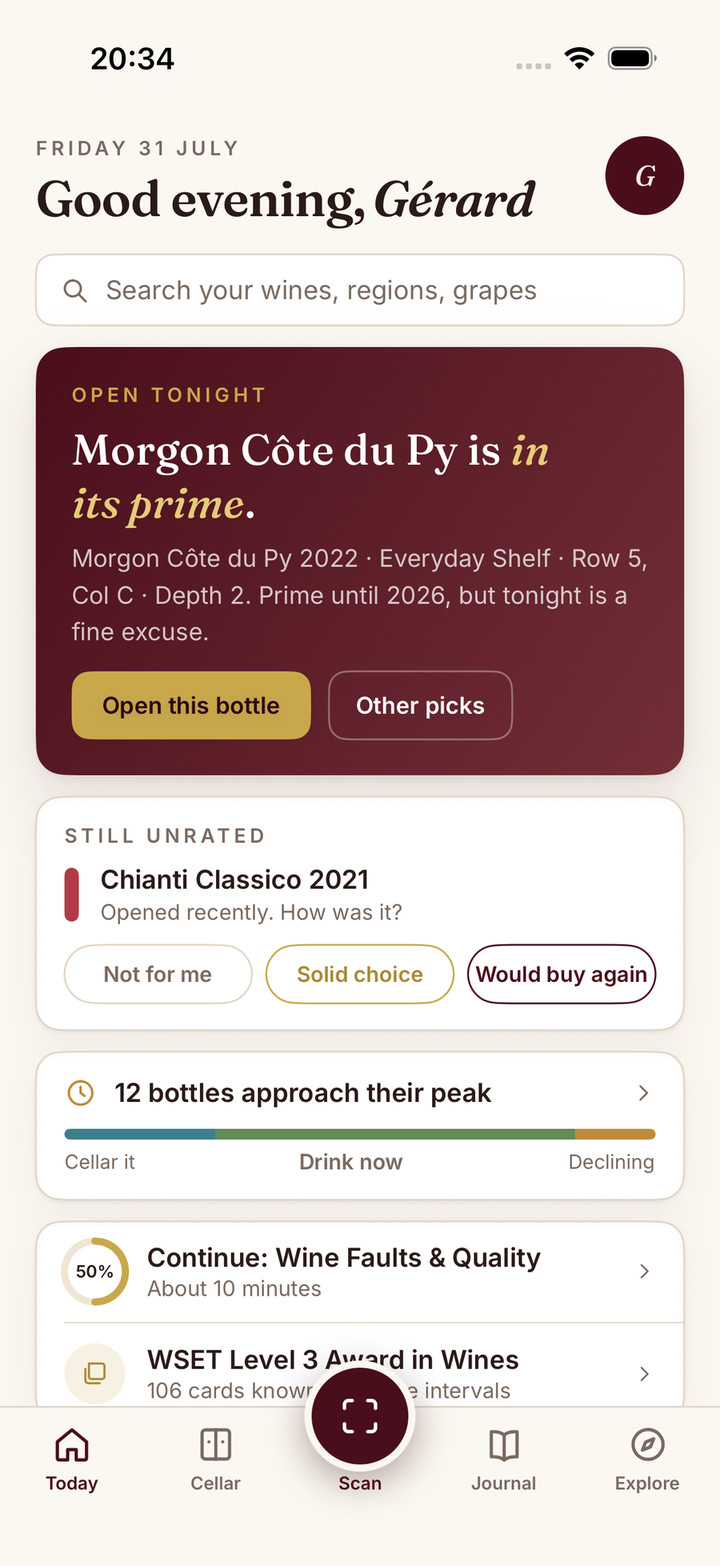
What to drink: Morgon Côte du Py from a recent vintage, served at around 14 degrees. It will change what you thought you knew about Gamay.
6. Loire Valley, France
The Loire Valley stretches for hundreds of kilometres along France’s longest river, and it produces the most stylistically diverse wines in the country: bone-dry Sancerre, off-dry Vouvray, sparkling Crémant de Loire, mineral Muscadet, fragrant Cabernet Franc from Chinon and Bourgueil, and dessert wines from Coteaux du Layon. There is something for almost every palate, which is why a Loire trip works for groups that cannot agree on a wine style. The Loire’s appellations also anchor the WSET Level 2 wine regions of France quiz, if you want to arrive with them already straight in your head.
The châteaux of the central Loire (Chenonceau, Chambord, Villandry) are the headline tourist draw and worth a half-day each. But the wine villages of Sancerre, Vouvray, Chinon, and Saumur are quiet enough in summer that you can wander into a cellar door and find yourself in conversation with the winemaker. Cycling routes along the river are excellent and well signposted.
Don’t miss: A cold bottle of Sancerre with a goat cheese platter from a Chavignol producer, eaten outdoors with the river in view. It is one of the great regional food and wine matches in France.
7. Willamette Valley, Oregon
The Willamette Valley is the only American region on this list, and it earns the spot because of how relaxed it remains compared to Napa and Sonoma. The valley produces some of the most compelling Pinot Noir outside Burgundy, with cool nights, volcanic and sedimentary soils, and a generation of producers (Eyrie, Bergström, Bethel Heights, Cristom, Beaux Frères) committed to elegance over weight.
Portland is 45 minutes from the heart of the valley by car, and the small towns of Dundee, Newberg, and McMinnville are the natural bases. Summer is warm and dry but rarely oppressive, and the rolling hills covered in vines and Oregon white oak are easy on the eye. Tasting rooms here tend to be small, family-run, and welcoming. You will rarely feel rushed, and prices are still reasonable compared to top California regions.
Where to stay: The Allison Inn in Newberg if you want luxury. The Atticus Hotel in McMinnville for something more design-led and walkable.
8. Sonoma County, California
Including Sonoma County on a list of underrated regions might raise eyebrows, but the contrast with Napa just over the Mayacamas range is genuine. Sonoma is bigger, more rural, more agriculturally diverse, and dramatically less crowded. You can find empty back roads, family-run wineries, and tasting rooms that feel like farmhouses rather than corporate visitor centres.
The Russian River Valley, Sonoma Coast, and Dry Creek Valley produce California’s most exciting cool-climate Pinot Noir, Chardonnay, and Zinfandel. Producers like Littorai, Hirsch, Williams Selyem, Ridge (at Lytton Springs), and Bedrock have national reputations but local-feeling tasting experiences. Healdsburg is the most stylish town to base from, with a plaza of excellent restaurants, but Forestville and Occidental offer quieter alternatives.
Don’t miss: A drive west from Healdsburg toward the coast at Jenner, with a stop at one of the Sonoma Coast Pinot Noir producers along the way. The fog rolling in off the Pacific is worth the detour by itself.
9. Priorat, Spain
Priorat is the wildest landscape on this list. It sits in the rugged hills of Catalonia, about two hours southwest of Barcelona, and the vineyards are planted on llicorella, a dark slate-and-quartz soil that fragments under the sun and forces vines to dig deep for water. The result is concentrated, mineral, age-worthy reds from old-vine Garnacha and Cariñena, often blended with Cabernet Sauvignon or Syrah.
This is not an easy region to visit. The roads are winding, the villages are sleepy, and many top estates require advance booking. But the wines are extraordinary, the scenery is genuinely cinematic, and the food in nearby Tarragona is some of the best in Spain. Producers like Álvaro Palacios, Clos Mogador, Mas Doix, and Terroir al Límit are at the top of the modern movement. The medieval village of Siurana, perched on a cliff above a reservoir, is worth the drive for the view alone.
What to drink: A bottle of L’Ermita or Finca Dofí from Álvaro Palacios if your budget allows. If not, the Camins del Priorat from the same producer is a brilliant introduction at a fraction of the price.
10. Etna, Sicily
The slopes of Mount Etna, the most active volcano in Europe, have quietly become one of the most exciting wine regions in the world over the last fifteen years. Vines grow on terraces of black volcanic soil, sometimes at altitudes over 1,000 metres, and the indigenous grapes (Nerello Mascalese for reds, Carricante for whites) produce wines of extraordinary purity and tension. The comparison to Burgundy is reflexive and increasingly justified.
Summer on Etna is warmer in the day and surprisingly cool at night, which is why these wines retain such bright acidity. Producers like Frank Cornelissen, Passopisciaro, Tenuta delle Terre Nere, and Pietradolce are the names to know. The northern slope (Contrade Randazzo) is the most prestigious. Catania is 90 minutes south by car and worth a day for its baroque architecture and food markets.
Don’t miss: A guided hike on the volcano followed by a tasting at a producer on the same slope. Drinking wine grown in the soil you just walked across is a strange and memorable experience.
Planning a Trip Like This
A few practical notes that apply to all ten regions:
- Book ahead, but only the essentials. Top producers in any of these regions still require advance appointments. But leave most of your days unstructured. The best wine experiences usually come from walking into a small estate at three in the afternoon.
- Hire a driver for at least one day. Tasting flights add up quickly, and rural roads in places like Priorat or the Mosel are not where you want to be testing your reflexes.
- Eat where the locals eat. Wine regions are food regions. The pairing matters, and a roadside place packed with farmers usually beats the destination restaurant with the tasting menu.
- Travel light on luggage, heavy on cellaring capacity. Many of these producers sell wines you cannot easily find at home. A wine suitcase or a shipping account with a specialist is worth the investment.
For more on building a smarter wine trip, our guide to your first European wine trip covers logistics in more depth, and the seven-day European wine country itineraries post offers route-by-route planning.
Explore with Sommo
Wine travel is one of the few experiences that genuinely benefit from a journal. The wines you taste in their place of origin will mean more later, but only if you remember them. Sommo lets you scan every bottle you taste, log structured notes through our tasting wizard, and pin each producer to your personal map of the world’s wine regions. By the time you come home, you have a record of the trip that is more useful than any photograph.
Download Sommo free and start mapping your summer.