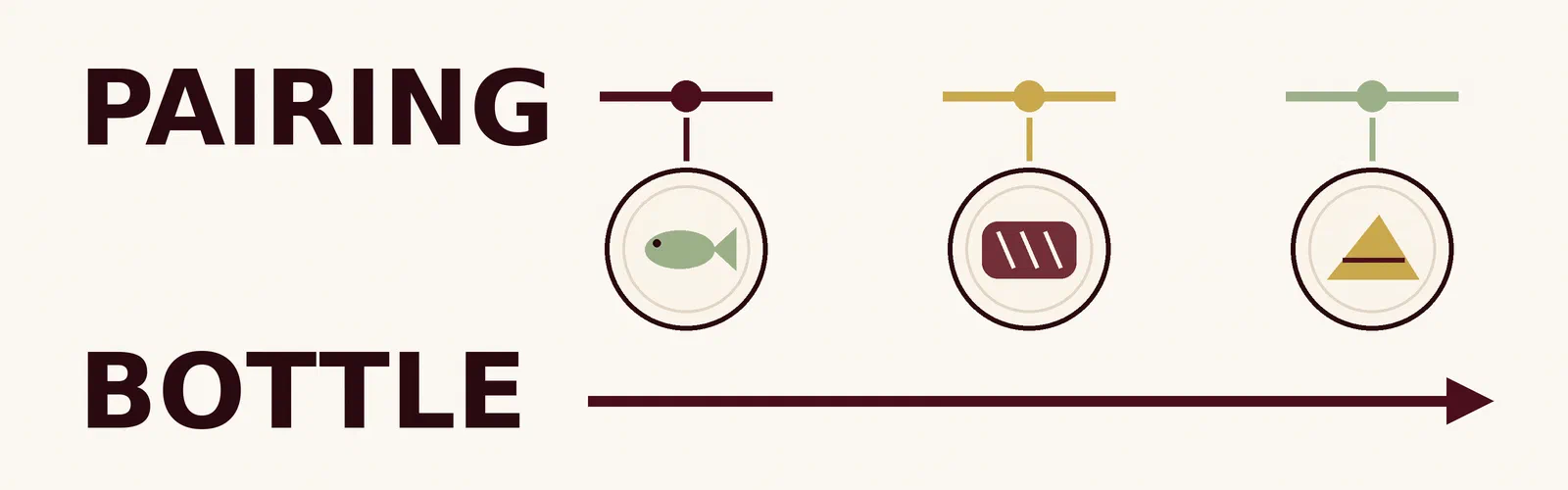
Choose a tasting-menu pairing when you want the restaurant to guide a sequence of drinks through the courses and its confirmed offer fits your preferences and budget. Choose a bottle or selected glasses when you want more control over the wines, pace or amount. Decide per person first, then check how the drinks work across the meal and what the complete bill will be.
The pairing price alone cannot settle it. You need to know which courses it covers, what will actually be poured and whether the restaurant can accommodate different choices at the same table. A diner who wants to discover unfamiliar wines and a diner who prefers no alcohol need not have the same experience.
Find out what “pairing” includes
Ask how many pours there are, their individual measures and which dishes they accompany. A pairing might cover each main course, group several snacks under one drink or leave an aperitif outside the quoted package. Ask about wine identities, vintages and substitutions; if these are not disclosed in advance, record that uncertainty rather than judging an imaginary line-up.
Check whether a supplement changes both the dish and the drinks charge. Premium, reserve and other tiers need their own explanation: what changes, and is the additional cost per diner or per pour? Ask whether tax and service are included and whether water, coffee or other extras are separate. A deposit applied to food does not necessarily settle drinks or the final bill.
Real restaurants illustrate why these questions matter. On 16 October 2026, The Clove Club’s official menus page listed different food-menu prices by service and day and said prices could change. Confirm the food menu for your booking and the current pairing terms before comparing the complete options.
An independently accessible example is Claudine’s official FAQ, checked on the same date. It lists a Chef’s Wine Pairing at $100, a Reserve Wine Pairing at $200 and a Non-Alcoholic Pairing at $75. It describes beverages, taxes and gratuity as separate from the food-menu price and permits choosing a pairing on arrival. The FAQ does not give pour counts, sizes or wine identities. Those prices establish advertised options, not an answer about which offers better wine or more suitable quantities.
Follow the progression of the food
Look at the menu as a sequence rather than hunting for one perfect wine for every ingredient. Delicate opening dishes, a richer savoury course and dessert may make different demands. Sauces, sweetness, spice and texture can matter more than the headline ingredient.
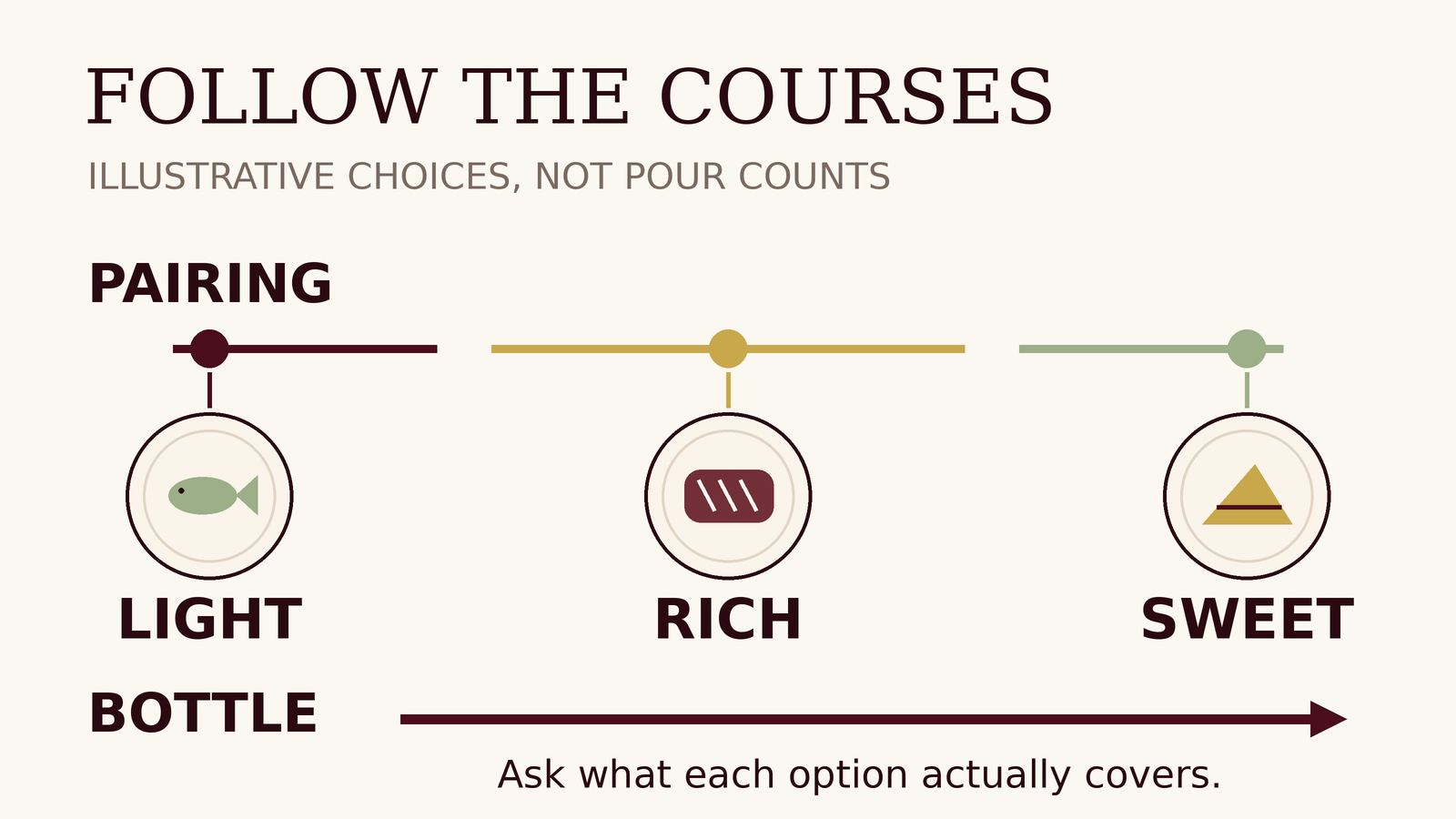
A pairing provides changes chosen by the team, plus the chance to learn why they made them. Its value to you may be discovery and conversation. Ask how the team handles dislikes: “I enjoy fresh whites, but strongly oxidative styles are difficult for me” gives them something concrete to work with. Changes depend on the restaurant’s offer, stock and service.
A bottle offers continuity. You can follow a wine over several courses and choose something the table already wants. It can also force a compromise when one diner wants a delicate white and another a fuller red. Our glass-or-bottle guide covers the ordinary price comparison; a tasting menu adds the problem of matching different stages and different people.
Take this course worksheet to the conversation
Fill it from the current menu and the server’s answers. Leave unknown details visible.
| Course or group | Drink and terms to confirm |
|---|---|
| Snacks and opening dishes | ___; included or extra? ___ |
| Delicate savoury course | ___; identity, vintage, measure ___ |
| Richer savoury course | ___; new pour or existing wine? ___ |
| Cheese, if offered | ___; course/drink supplement ___ |
| Dessert | ___; covered, optional or skipped? ___ |
Below it, write each diner’s goal and preferred pace, the pairing count and measures, any allowed substitutions, and the total including applicable tax, service and extras. A selection of glasses, a half bottle, a shared bottle, tea, an alcohol-free pairing or reduced pours can be worth asking about where offered. These are possibilities to confirm, not entitlements.
Two diners with different goals
Synthetic desk example, with invented prices and service terms: Ana wants a guided introduction to unfamiliar wines; Ben wants no alcohol and an equally considered progression. The fictional restaurant confirms five wine pours of 60 mL for £90, an alcohol-free pairing for £55, and a £120 food menu per diner. All quoted prices include tax. A discretionary 12.5% service charge applies to the complete subtotal. They order no supplements or other charged extras.
The fictional team confirms this course coverage:
| Stage | Ana / Ben |
|---|---|
| Snacks and first course | First pairing drink accompanies both. |
| Fish | Second drink, adapted separately for each diner. |
| Vegetable course | Third drink; wine identity explained at service. |
| Meat | Fourth drink; Ben’s remains alcohol-free. |
| Dessert | Fifth drink; no extra charge. |
Food is 2 × £120 = £240. Drinks are £90 + £55 = £145. The subtotal is £385; 12.5% service is £48.125, rounded to £48.13. The complete illustrated bill is £433.13.
Bottle route: in the same fictional offer, Ana can choose a 375 mL half-bottle of the invented “Example Estate Supper Red 2024” for £44. Ben keeps his £55 alcohol-free pairing. The fictional team plans Ana’s wine for the vegetable and meat courses only; she chooses included tap water with the snacks and first course, fish and dessert. Those stages have no wine in this order.
Food £240 + half-bottle £44 + Ben’s pairing £55 gives a £339 subtotal. Service at 12.5% is £42.375, rounded to £42.38, making the complete bill £381.38. That saves £51.75 against the wine-pairing route. Ana gets one wine to follow across two courses, with fewer changes and less course coverage. The bottle contains 375 mL, compared with the pairing’s stated 300 mL, so the lower price does not mean a smaller quantity. It is not an amount to finish; ask how the restaurant handles unfinished wine before ordering.
Selected-glasses route: Ana could instead choose two 125 mL glasses, hypothetically offered at £18 and £20 for the fish and meat courses, with included tap water at the other stages. Food £240 + glasses £38 + Ben’s pairing £55 totals £333 before service. Service rounds to £41.63, giving £374.63 overall. That saves £58.50 against the wine pairing and £6.75 against the half-bottle. It offers two wines and a smaller stated quantity, with gaps between them.
Which arrangement meets Ana’s goal is a preference question; price or volume alone cannot answer it. The specified measures describe the fictional service, not an amount she should finish or an allowance for safe consumption. No meal was attended and no pairing was tasted for this example. It checks a decision structure and bill arithmetic only. These options do not imply that a real restaurant will permit those selections.
Make the order clear, then keep the useful details
Tell the team who wants which arrangement, confirm the full price and explain any firm preferences before service begins. Nobody needs to match another diner’s pace or finish a pour. Choose no alcohol if that suits you, and arrange transport that does not require driving if drinking.
The restaurant ordering guide helps with that conversation, while the menu-scoring guide helps you consider wines that are actually listed. Sommo can help you explore a visible wine list; it cannot know undisclosed pairing pours or optimise the whole menu from missing information.
Afterwards, save exact wine names, vintages, dishes and your own impressions in the wine journal. “Enjoyed this with the mushroom course; would choose it again” is a more useful record than declaring the pairing good value before you knew what it contained.